The BLUE PRESS JOURNAL

We aim to be a voice in the ongoing political discourse, providing both factual information and opinionated analysis, from a progressive or center-left perspective, free from the direct influence of major
established Main Street Media.

  • From “Cadet Bone Spurs” to Barron’s Challenge: Ventura’s Scathing Indictment of Trump’s Military Hypocrisy

    Blue Press Journal – Former Minnesota Governor and decorated Navy SEAL Jesse Ventura has issued a provocative challenge to Barron Trump, urging the president’s youngest son to “do something your father didn’t have the courage to do”—voluntarily enlist in the armed forces. Speaking on Piers Morgan’s Uncensored, Ventura articulated a stringent philosophy regarding military conflict: wars are only morally defensible when those who orchestrate them are willing to sacrifice their own children to the fight, a standard he argues Donald Trump has categorically failed to meet.

    The critique strikes at the heart of longstanding questions surrounding Trump’s military legacy. While he often claims the mantle of commander-in-chief, records from The New York Times reveal he received five Vietnam-era deferments—four for education while attending Fordham University and the University of Pennsylvania, plus a medical deferment in 1968 for bone spurs. This classification was later upgraded to 4-F (permanently ineligible), which rendered moot his claim of receiving a high draft lottery number. The contrast between his education at New York Military Academy and his avoidance of active duty earned him the nickname “Cadet Bone Spurs” from critics like Senator Tammy Duckworth, as noted by Business Insider.

    Yet Ventura’s condemnation extends beyond draft avoidance to alleged active contempt for those who served. The Atlantic reported that Trump privately referred to fallen World War I Marines at Aisne-Marne American Cemetery as “suckers” and “losers,” sentiments corroborated by former White House Chief of Staff General John Kelly. The former president allegedly questioned the utility of honoring deceased soldiers and reportedly requested that wounded veterans—whose visible injuries he reportedly found discomforting—be excluded from military parades, stating “no one wants to see that.” His infamous dismissal of Senator John McCain’s POW experience—”I like people who weren’t captured”—further cemented a pattern of derision toward service members.

    This record contrasts starkly with Trump’s aggressive foreign policy posture. General Mark Milley labeled the president as “fascist to the core,” while Admiral William McRaven and Secretary Jim Mattis have condemned his leadership. Ventura’s challenge highlights a “chickenhawk” critique: the president’s readiness for conflict with Iran while shielding his family from war’s costs, demanding sacrifices from working-class families his own evaded during Vietnam. For a commander-in-chief who struggled to understand why Americans volunteered for service—asking “What was in it for them?”—the SEAL veteran’s dare is a moral audit of privileged bellicosity.
  • Trump Rejects Bipartisan Governance While Exploiting Voting Methods He Calls ‘Corrupt’

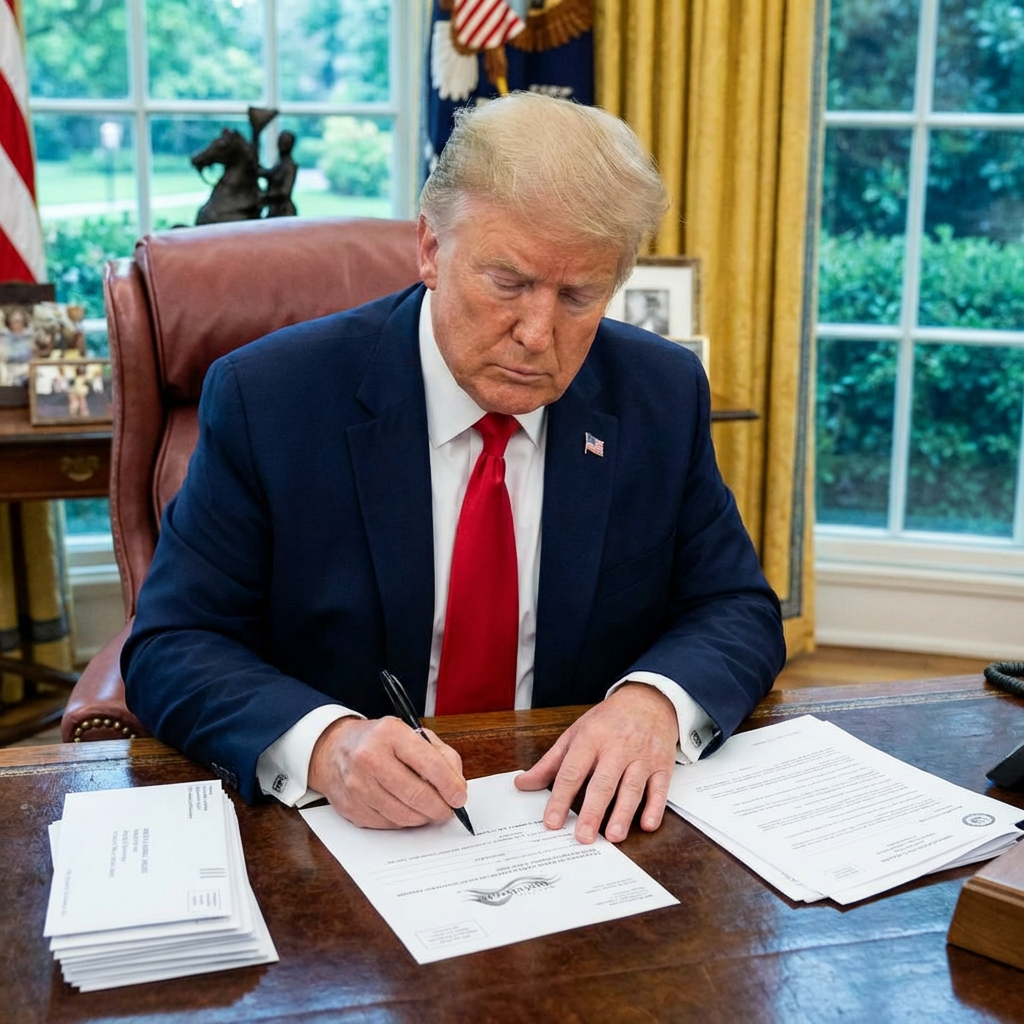
    Donald Trump signing official documents while seated at the Resolute Desk in the Oval Office.

    Blue Press Journal – Senator John Kennedy (R-La.) revealed that President Donald Trump recently blocked a bipartisan agreement to fund the Department of Homeland Security, refusing a compromise that would have reopened the agency immediately while deferring ICE disputes to a separate reconciliation process (Politico). According to Kennedy, Trump dismissed the deal solely because it required negotiating with Democrats, opting instead for prolonged shutdown tactics that prioritize partisan warfare over public safety.

    The revelation underscores Trump’s contradictory approach to governance, particularly regarding election integrity. While demanding nationwide restrictions on mail-in voting—labeling the practice “corrupt as hell” and “mail-in cheating”—records show Trump personally cast his ballot via mail for Florida’s recent special election (Associated Press). This apparent double standard suggests the former president advocates strict rules for average citizens while reserving convenient exemptions for himself, raising questions about his commitment to democratic principles versus personal political convenience.

  • Why Donald Trump’s War on Iran Was a Costly Mistake

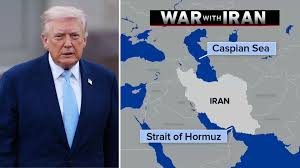
    Blue Press Journal – Donald Trump’s decision to launch a full‑scale war on Iran has already proven disastrous for the U.S. economy. By disrupting the Strait of Hormuz—through which about 20 % of global oil shipments flow—the conflict spiked crude prices by nearly 12 % in just two weeks, Reuters. Higher pump prices translate directly into elevated consumer‑price inflation, eroding purchasing power for American families already strained by lingering post‑pandemic price hikes, Bloomberg.

    Beyond the immediate fuel shock, the war has forced the Federal Reserve to confront a new inflationary spiral, prompting talks of an accelerated rate‑hike cycle that could choke off economic growth,Wall Street Journal. The longer‑term fallout is even more severe: sustained military spending drains fiscal resources, drives up the national debt, and distorts capital allocation away from productive sectors such as renewable energy and infrastructure—areas critical for long‑term competitiveness, NY Times.

    Critics argue that Trump’s reckless foreign policy ignored diplomatic alternatives and ignored expert warnings that a regional conflict would trigger a global supply‑chain crunch, AP News. The result is a distorted economy, soaring living costs, and an American public paying the price for a war that could have been avoided.

  • Senate Republicans Block Critical DHS Funding, Leaving TSA Agents and Disaster Preparedness in Limbo

    Blue Press Journal – Senate Republicans have obstructed five emergency appropriations measures designed to sustain essential Department of Homeland Security operations, according to legislative records and reporting from The Hill. The blocked proposals would have immediately funded the Transportation Security Administration, Federal Emergency Management Agency, Cybersecurity and Infrastructure Security Agency, and Coast Guard—agencies critical to national infrastructure and civilian safety.

    The maneuver aligns with President Donald Trump’s hardline immigration agenda, as GOP lawmakers demand expanded Immigration and Customs Enforcement funding without accountability reforms. “Republicans are holding TSA agents’ paychecks hostage because they want to provide more money to ICE, without basic reforms,” stated Senator Patty Murray (D-WA), Vice Chair of the Senate Appropriations Committee, highlighting the human cost of political brinkmanship.

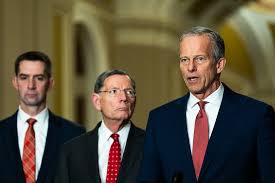
    Senate Majority Leader Chuck Schumer condemned the obstruction, noting that while Republicans protect unaccountable enforcement tactics, disaster relief resources hang in the balance (Reuters). Critics argue this domestic brinksmanship mirrors the reckless unilateralism that characterized failed Iran War policies—prioritizing aggressive intervention over stability and American worker welfare.

  • Troop Dissent Surges in Trump’s Iran War, What Is It For??

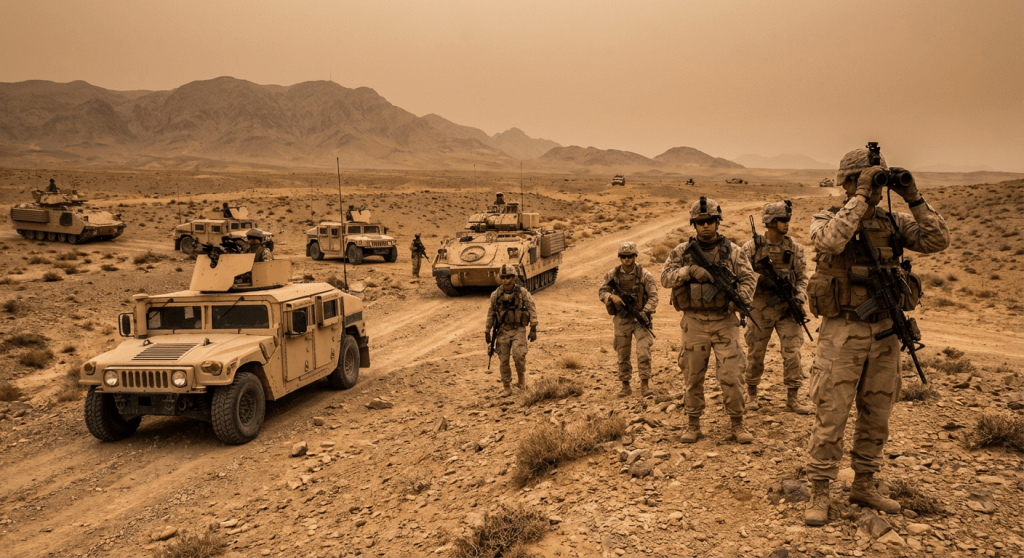
    Blue Press Journal – As the U.S.-Israel war on Iran enters its fourth week, President Donald Trump’s deployment of thousands of additional sailors and Marines faces a crisis of legitimacy from within the ranks. Active-duty soldiers, reservists, and military healthcare providers report plummeting morale, with personnel describing themselves as “political pawns” vulnerable to Iranian ballistic missile strikes and drone attacks that have killed thirteen service members and wounded at least 232 to date, according to casualty reports confirmed by The New York Times and military medical sources.

    Medical officials treating evacuated troops at Germany’s Landstuhl Regional Medical Center describe suffering from “inadequate force protection and planning,” warning that U.S. forces remain unable to adequately defend regional bases. One military official characterized a potential ground invasion as “an absolute disaster,” citing the absence of coherent strategy—a critique echoing assessments from the Council on Foreign Relations regarding the administration’s lack of exit planning.

    Conscientious objection inquiries have spiked 1,000% this March, according to the Center for Conscience and War, with service members citing the February 28 Minab school strike—allegedly involving U.S. munitions that killed 175 civilians, including schoolgirls—as a moral breaking point. Unlike the 1991 Gulf War, which Catholic just war theorists conditionally supported, church leaders have not validated the current campaign; the United States Conference of Catholic Bishops and Vatican officials emphasize that preemptive strikes fail to meet classical just war requirements of last resort and proportionality.

    Polling reveals broader generational shifts driving this dissent. An NBC News survey indicates 63% of voters under 34 now hold negative views of Israel—up from 37% in 2023—reflecting attitudes among young recruits who witnessed the devastation in Gaza and question serving as proxies in an undefined conflict.

  • Trump’s Shadow War: Are U.S. Boots on the Ground in Iran Inevitable?

    7% AMERICANS SUPPORT TROOPS IN IRAN WAR. Source: Public Opinion Poll Data (Stylized).

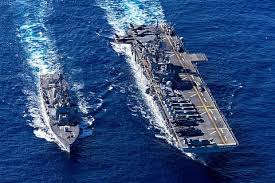
    Blue Press Journal – Despite President Trump’s insistence that he is “not putting troops anywhere,” The Hill reports the Pentagon is rapidly deploying thousands of Marines to the Middle East, fueling speculation that ground forces will soon enter Iran. Military sources confirm the 11th Marine Expeditionary Unit, comprising over 2,200 personnel, is heading to U.S. Central Command aboard the USS Boxer, even as the administration publicly denies escalation plans.

    The contradiction highlights growing Republican anxiety over the conflict’s third week. GOP lawmakers now engage in semantic contortions, with Rep. Haridopolos suggesting to C-SPAN that occupying Kharg Island—handling 90% of Iranian oil exports—would not constitute “boots on the ground.” Meanwhile, Reuters reports that 65% of Americans believe Trump will order a large-scale ground war, yet only 7% support such action. With casualty counts rising to 232 wounded and 13 killed, according to defense officials, the administration’s refusal to pursue ceasefires while accelerating troop deployments reveals a dangerous disconnect between military reality and political deception.

  • Trump’s Iran War Sparks a Chaotic Market Correction: Stocks Plunge as Economic Turmoil Escalates

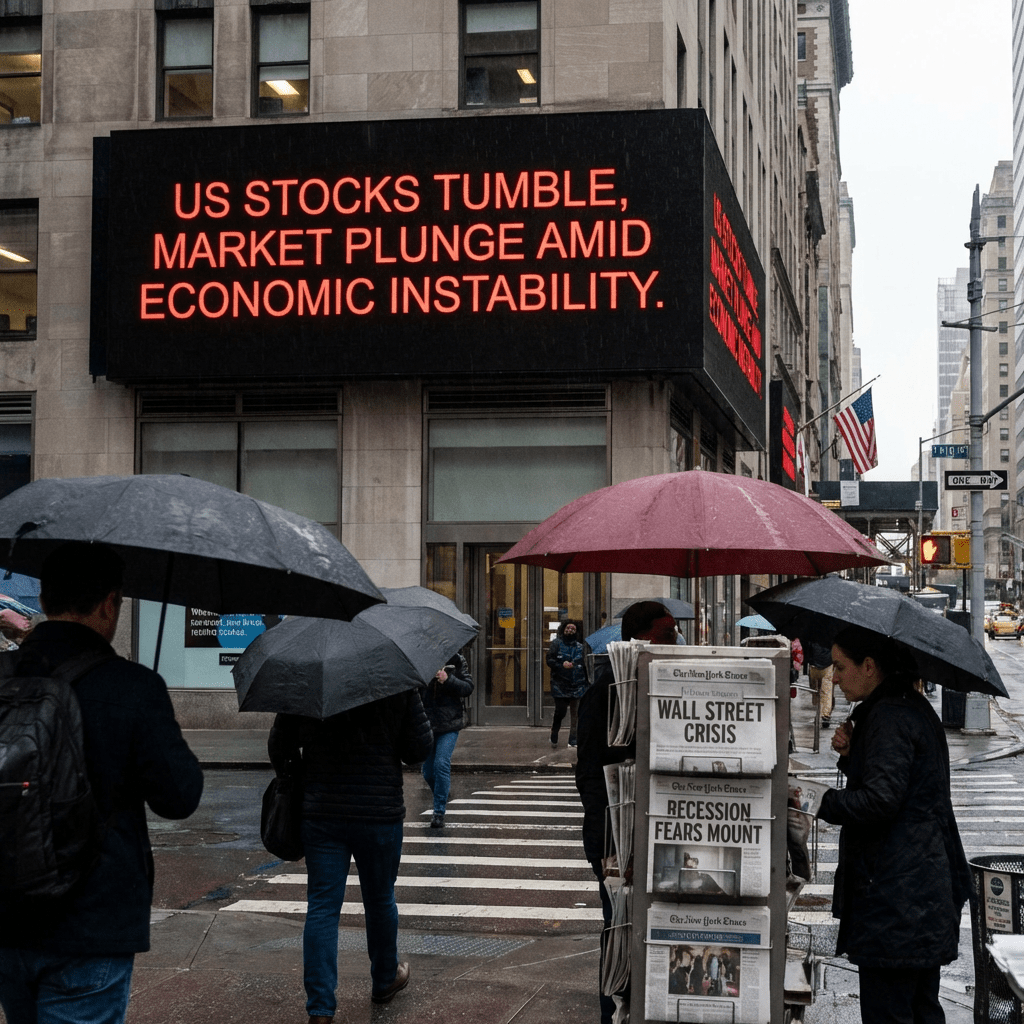
    Digital sign: US STOCKS TUMBLE, MARKET PLUNGE AMID ECONOMIC INSTABILITY. Newspapers: WALL STREET CRISIS, RECESSION FEARS MOUNT.

    Blue Press Journal – President Donald Trump’s escalating military confrontation with Iran has precipitated a severe market selloff, sending U.S. stocks tumbling Friday as investors grapple with mounting economic instability. The aggressive posture toward Tehran has triggered widespread anxiety across global financial centers, with the Russell 2000 index of small-cap firms plunging 2.7% into official correction territory—defined as a decline exceeding 10% from recent peaks—according to CNN.

    Major indices suffered parallel losses, with the Dow Jones Industrial Average dropping 444 points (0.96%), the S&P 500 sinking 1.51%, and the Nasdaq Composite falling 2.01%, briefly entering correction territory during Friday’s session. “The stock market remains in negative territory for the year, and has made new 2026 lows this week, which suggests that the market may not have yet found its bottom,” David Laut, chief investment officer at Kerux Financial, told CNN.

    The administration’s war strategy has exacerbated inflationary risks as energy costs spike, forcing central banks worldwide to reconsider interest rate trajectories. This uncertainty propelled U.S. Treasury yields to their highest levels since last July, while gold experienced its worst weekly performance since 1983, Reuters reports. Business leaders now face heightened volatility as military expansion threatens sustained economic disruption.

  • The Fulton County Raid: A Blueprint for Election Interference in 2026?

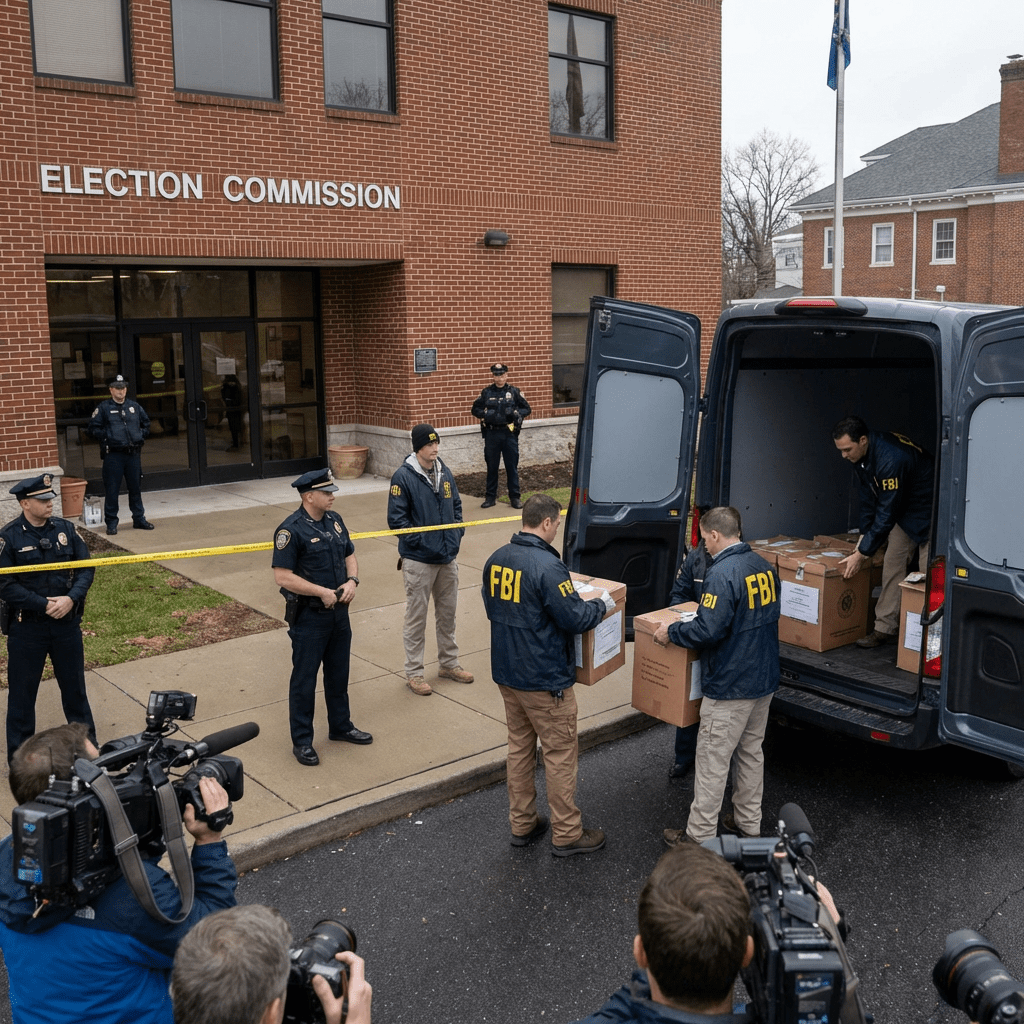
    FBI agents load boxes from an Election Commission building into a van under police watch.

    Blue Press Journal – The 2026 Department of Justice raid on a Fulton County, Georgia election office, seizing ballots and machinery, was a watershed moment. While framed as an investigation into the 2020 election, legal experts and election officials nationwide interpreted it as a dangerous escalation and a potential dress rehearsal for future electoral disruption.

    Election law scholar Richard Hasen of UCLA Law warned in Slate that the action appeared less about the past and more like a “test run for messing with election administrators” in upcoming contests. This aligns with a persistent pattern of baseless election fraud claims being used to justify unprecedented federal overreach into state-run elections.

    The prospect of similar ballot seizures during or after the 2026 midterms raises profound legal and constitutional alarms. As the Brennan Center for Justice’s Wendy Weiser stated, such actions would be “wildly illegal,” requiring judicial warrants or subpoenas that are meant to serve as a check on power. However, the legally questionable Fulton County warrant, now itself being challenged in court for its “Material Omissions and Misstatements,” demonstrates how these safeguards can be exploited.

    In response, Democratic secretaries of state are not standing idle. Officials in states like Colorado and Minnesota have publicly outlined their preparations to immediately challenge any federal interference in the courts. “We’ve been preparing for this event and many other scenarios of federal disruption,” Colorado’s Jena Griswold noted, underscoring the heightened state of alert.

    A potential legal defense may ironically come from a recent Supreme Court decision, Bost v. Illinois State Board of Elections. As analyzed by SCOTUSblog, this ruling could provide candidates standing to sue in advance to prevent actions—like seizing ballots—that threaten a “fair process and an accurate result,” offering a new tool to preempt interference before it occurs.

    While the administration seeks to expand its electoral power, a coalition of state officials, legal experts, and judicial checks stands as a barrier to these efforts in 2026.

  • Geopolitical Turbulence: How the Iran Conflict, Ignited Under Trump, Threatens Global Economic Stability

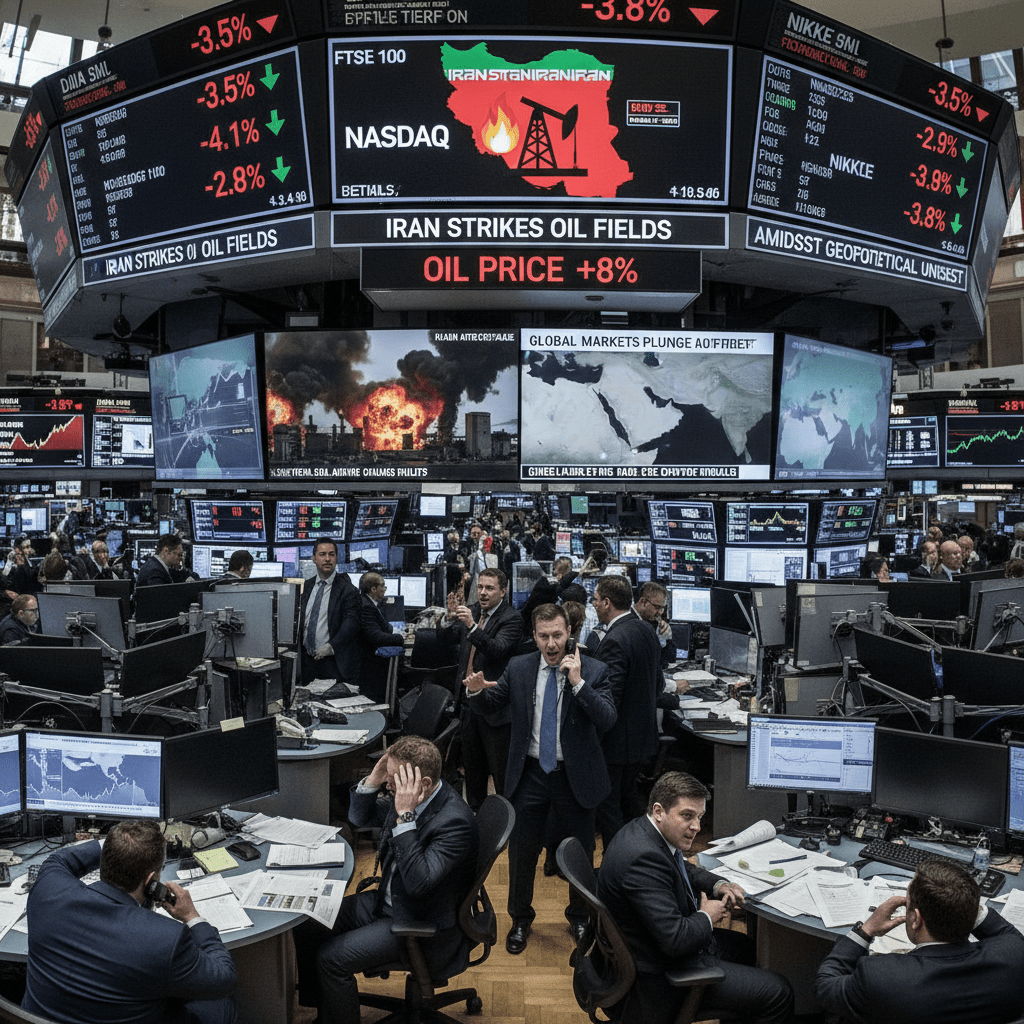
    Trading floor with screens showing IRAN STRIKES OIL FIELDS and falling stock indices.

    The Economic Fallout of Trump’s Iran Conflict

    Blue Press Journal – The global energy landscape is currently facing a catastrophic destabilization. Following targeted Iranian strikes on critical energy infrastructure in the Gulf—specifically two major refineries in Kuwait and Qatar’s vital Ras Laffan natural gas terminal—Brent crude has surged toward the $115 mark. As Tehran’s offensive disrupts the flow of approximately 20% of the world’s liquefied natural gas (LNG), the specter of a “macro wrecking ball” hanging over the global economy has become a grim reality.

    A Manufactured Crisis and the Trump Administration

    While the physical damage to the Strait of Hormuz and surrounding facilities is undeniable, financial analysts and geopolitical experts are increasingly pointing the finger at the White House. Critics argue that the Trump administration’s decision to initiate this conflict was a strategic blunder of historic proportions. According to reports from The New York Times, high-level security officials previously indicated there was no immediate or imminent security threat from Iran that warranted a full-scale kinetic engagement. 

    By prioritizing a hawkish foreign policy over regional stability, the administration has arguably invited the very energy crisis it claimed to prevent. This “war of choice” has now pushed the national average price of gas to a staggering $3.88 per gallon as of March 19, 2026, placing an immense burden on American households.

    Global Market Contagion

    The economic repercussions are being felt far beyond U.S. borders. On Thursday, Brent crude jumped 6% to $113.77 per barrel, a massive leap from the sub-$73 levels seen prior to the commencement of hostilities. The Financial Times reports that European natural gas benchmarks have doubled in just thirty days, threatening a wave of “debilitating inflation” across the continent.

    Global indices are reflecting this instability:

    • Japan’s Nikkei 225 plummeted 3.4% as the Bank of Japan froze interest rates.
    • Germany’s DAX and London’s FTSE 100 both saw losses exceeding 2%.
    • Wall Street futures remain in the red as the Federal Reserve warns that persistent inflation, fueled by the war, limits their ability to provide further interest rate relief.

    As the Strait of Hormuz remains effectively shuttered to tanker traffic, the question remains: was the pursuit of this conflict worth the systematic dismantling of global economic stability? For now, the world pays the price at the pump and in the markets for a war that many intelligence experts claim was entirely avoidable.