We aim to be a voice in the ongoing political discourse, providing both factual information and opinionated analysis, from a progressive or center-left perspective, free from the direct influence of major established Main Street Media.
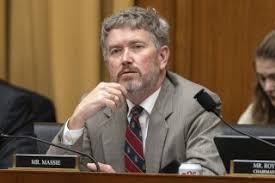
Blue Press Journal – In a sharply worded interview on ABC’s This Week, Representative Thomas Massie (R‑KY) accused President Donald Trump, senior cabinet members, and top White House officials of deliberately shielding a network of wealthy individuals tied to the late convicted sex offender Jeffrey Epstein. Massie called the effort a “systematic cover‑up” designed to protect what he labeled the “Epstein class” – a circle of billionaires who allegedly mingle with names appearing in the heavily redacted documents.
Massie reminded viewers that Trump had once promised full transparency after acknowledging social outings with Epstein‑linked guests in New York City and West Palm Beach. “He said he would be open about the issue,” Massie said, “yet he remains entrenched in the very class he vowed to expose.”
Since Epstein’s 2019 death (during Trumps first term) —officially ruled a suicide, though contested by his family—political pressure to release the remaining files has intensified. During the 2024 campaign, Trump and his allies pledged to make every Epstein‑related record public. After taking office, however, the administration stalled, dismissing the files as a “Democrat hoax” and delivering only heavily redacted versions from the Justice Department.
The limited disclosures have already raised fresh questions. According to a recent statement by Rep. Jamie Raskin (D‑MD), a search of unredacted text for “Don,” “Donald,” and “Trump” generated more than one million hits. The same files suggest deeper ties between Trump’s inner circle—Commerce Secretary Howard Lutnick, CMS Administrator Mehmet Oz, and former strategist Steve Bannon—and Epstein than previously reported.
While no direct criminal evidence against Trump or his aides has emerged, the growing web of connections fuels mounting political scrutiny. Massie seized the moment to label the current administration the “Epstein administration,” accusing it of retaliating against his push for full disclosure. In turn, Trump has publicly attacked Massie and even endorsed Massie’s primary opponent, underscoring the partisan stakes surrounding the dossier.
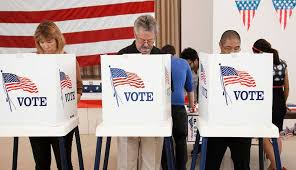
Blue Press Journal – The integrity of our democratic elections is a cornerstone of American society. Yet, alarming patterns of federal interference, particularly from U.S. Immigration and Customs Enforcement (ICE), threaten to undermine this fundamental right. It is unequivocally illegal for ICE or any federal agents to be present at polling sites, actively interfering with the electoral process. This isn’t just about preserving norms; it’s about upholding federal and state law against a dangerous trend of voter intimidation.
The Illegality of Federal Presence at Polling Sites
Multiple federal statutes explicitly prohibit the presence of armed federal agents at or near polling locations. The bedrock of these protections includes:
18 U.S. Code § 592 – Troops at polls: This critical federal law makes it a crime for any officer or member of the Armed Forces, or “any officer or employee of the United States,” to “bring troops or armed men to the place where a general or special election is held, unless it be necessary to repel armed enemies of the United States.” This clearly applies to federal agents like ICE, whose presence, particularly if armed or uniformed, is designed to intimidate, not to repel foreign enemies. Source: Cornell Law – 18 U.S. Code § 592
The Voting Rights Act of 1965, Section 11(b): This landmark civil rights legislation prohibits any person from intimidating, threatening, or coercing any other person for voting or attempting to vote. The presence of federal agents, especially those known for aggressive enforcement, inherently creates an intimidating environment, directly violating the spirit and letter of this act. Source: U.S. Department of Justice – The Voting Rights Act of 1965
Beyond federal statutes, numerous state laws reinforce these protections, often prohibiting armed personnel, electioneering, or interference within a specified distance of polling places. These state-level mandates underscore a bipartisan commitment to ensuring unfettered access to the ballot box, free from overt or implied coercion.
Trump’s Dangerous Playbook: Suppressing the Vote Through Fear
As leading investigative journalists have meticulously documented, Donald Trump has consistently demonstrated an unconcealed disdain for democratic elections that could undermine his pursuit of total power, his 2020 Big Lie is a prime example. Concerns about ICE’s role in this authoritarian agenda first emerged with alarming clarity in 2025. Trump launched aggressive immigration enforcement operations in major cities like Los Angeles and Chicago, then threatened to deploy National Guard troops to back them up.
Figures like California Governor Gavin Newsom and Illinois Governor J.B. Pritzker, both Democrats, immediately recognized these operations for what they were: not merely about deporting undocumented immigrants, but a preview for leveraging armed federal agents to seize control of elections and suppress dissent. Congressional Democrats have increasingly voiced alarm, especially as chaos related to these tactics escalated in communities like Minnesota. This experience shows that even absent ICE directly surrounding polls, Trump’s immigration enforcement operations spread enough fear and chaos to terrorize minority communities and significantly transform how campaigns are run.
Targeting Democracy’s Pillars
This tactic is no accident. Black, Latino, and Asian communities are major components of the Democratic Party coalition. Instilling fear and creating a climate of uncertainty within these communities serves a clear purpose: to suppress their votes and unfairly aid the Republican Party. The GOP’s historical reliance on voter suppression, whether through restrictive ID laws or purges of voter rolls, finds a new and profoundly dangerous iteration in the weaponization of federal law enforcement.
Yet, despite these brazen attempts to tear apart communities and suppress the vote, there’s a powerful counter-narrative emerging. In places like Minnesota, Trump’s actions have, ironically, spurred a rise in dispersed community networks. These grassroots efforts document ICE activities, challenge arrests, and provide mutual aid to those too afraid to leave their homes. This resilience demonstrates that while the threat to our democracy is real, so is the will of the people to protect it.
The presence of ICE at polling sites is not merely an act of intimidation; it is an assault on American democracy, a flagrant violation of federal and state laws designed to protect the sanctity of the ballot. We must remain vigilant, hold leaders accountable, and ensure that our elections remain free, fair, and accessible to every eligible voter, without fear of federal interference.
TAGS: ICE, polling sites, voter suppression, election integrity, federal law, state law, Donald Trump, GOP, democracy, civil rights, voting rights, voter intimidation, election interference, 18 U.S. Code 592, Voting Rights Act, political weaponization
Trump Tariffs Increase your Valentine’s Day Your Sweet Treat Costs
Blue Press Journal – This Valentine’s Day, many are noticing that their beloved chocolates come with a higher price tag. Beyond general inflation, a specific economic policy is playing a significant role: import tariffs on cocoa and chocolate.
During the Trump administration, the U.S. imposed substantial tariffs, impacting the global chocolate supply chain. Cocoa-producing countries faced average tariffs of 15% on their exports to the U.S., while finished chocolate products from the European Union saw duties as high as 20%. Given that the vast majority of cocoa used in American chocolate is imported, these tariffs directly escalated costs for manufacturers.
When companies pay more to import essential ingredients or ready-made chocolate, these expenses inevitably trickle down, leading to higher prices at checkout. If your Valentine’s candy budget feels strained this year, these historical trade adjustments explain the extra cost. Trump promised to lower prices day one…he lied.
Trump’s White House Ballroom: A Lavish Distraction from America’s Core Challenges
Blue Press Journal (DC)
President Donald Trump frequently promised to revitalize the American economy, lower healthcare costs, and put “America First.” Yet, a controversial “East Wing Modernization” project, centered around plans for a sprawling new ballroom, revealed a glaring disconnect between rhetoric and perceived reality. This ambitious, and ultimately legally challenged, renovation proposal only raised eyebrows for its scale and potential disregard for historical preservation but also for its murky funding mechanisms, bypassing traditional congressional oversight.
Renderings Revealed, Then Removed: A Glimpse into Presidential Ambition
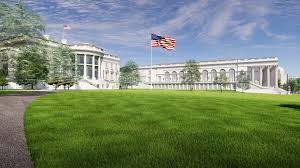
In a curious turn of events, new architectural renderings of what was dubbed President Donald Trump’s “East Wing Modernization” ballroom project briefly surfaced on the National Capital Planning Commission’s website, only to be swiftly removed without public explanation, as reported by The Washington Post (Philip Kennicott, “White House project plan briefly visible on commission website”). Shared by the architectural firm managing the project, these images depicted a massive 90,000-square-foot expansion, designed to maintain the White House’s existing height. One particularly contentious rendering showcased the removal of a large triangular pediment from the southern portico – a significant alteration to an iconic structure.
Further insights came from a White House memo also posted to the site, which, ironically, claimed the White House was “excellently preserved” during the demolition associated with the East Wing project. This memo also detailed engineering studies exploring the addition of a second story to the colonnade connecting the White House to the West Wing, all “in the interest of creating symmetry.” These proposals ignited a firestorm of criticism, questioning the administration’s priorities.
A “Rube Goldberg Contraption”: Bypassing Oversight with Private Funds
Perhaps the most troubling aspect of the proposed ballroom was its funding strategy. Instead of seeking appropriations through standard congressional channels, the Trump administration indicated an intent to finance the project through private donations. This approach immediately drew the skepticism of U.S. District Court Judge Richard Leon, who presided over a challenge brought by the National Trust for Historic Preservation.
In a pivotal hearing, Judge Leon pressed an administration lawyer on the legal authority behind the renovations and the legitimacy of private funding, famously labeling the proposed mechanism a “Rube Goldberg contraption” that would effectively “evade congressional oversight,” as reported by CNN Politics(“Judge skeptical of Trump administration arguments over White House East Wing renovation”). The precise monetary value of the project, shielded by the private donation model, remained largely opaque, further fueling concerns about accountability and the potential for undue influence. The lack of transparency around the East Wing Renovation Cost was a significant point of contention.
The National Trust for Historic Preservation filed a lawsuit to halt the construction, insisting that the project undergo the federal review process standard for such federal building projects and allow for public comment on the proposed changes. This legal challenge highlighted a deep concern that the White House, a national treasure, was being treated as a personal property rather than a revered public institution.
Beyond the Ballroom: A Question of Presidential Priorities
For many, the focus on an extravagant ballroom project stood in stark contrast to the pressing issues facing the nation. Voters elected Donald Trump on promises of decreasing prices on day one, boosting the economy, and reforming healthcare policy. Yet, while these critical areas demanded full attention, the administration seemed preoccupied with a vanity project shrouded in secrecy and legal challenges. This perceived misdirection of energy and resources raised fundamental questions about Presidential Priorities and Political Accountability.
The saga of the East Wing Modernization ballroom highlights how an administration’s priorities can diverge from electorate expectations. It emphasizes the importance of oversight bodies, historic preservation groups, and a vigilant judiciary in safeguarding national institutions and ensuring that government resources—public or private—are used judiciously and transparently, rather than for controversial projects that distract from the nation’s pressing needs.
The security of Kyiv directly impacts the security of Main Street.
Blue Press Journal – Ukraine’s ongoing struggle for sovereignty is often framed as a moral imperative or an act of generosity from its allies. However, a closer look reveals that sustained U.S. support for Ukraine is not just altruistic; it is a strategic investment in American national and economic security. This pivotal moment demands that U.S. policymakers and the public understand the profound implications for their own prosperity and global stability.
Ukraine’s Unwavering European Path & Enduring American Partnership
At its core, Ukraine is irrevocably committed to a future intertwined with Europe. This profound aspiration, coupled with a deep appreciation for American partnership, shapes their daily decisions, from energy infrastructure to military planning and economic recovery. Despite fluctuating political signals from Washington (Donald Trump), Ukrainians continue to view the United States with remarkable gratitude. Their primary concern isn’t outright abandonment, but rather the destabilizing inconsistency that could undermine long-term planning and deterrence.
American Support: A Nuanced Reality
A persistent misconception in Washington suggests a waning of public support for Ukraine. Yet, the data tells a more reassuring story. Polling from organizations like the Atlantic Council, utilizing data from HarrisX, consistently demonstrates that a majority of Americans – approximately six in ten – continue to support U.S. assistance to Ukraine, including vital military aid. [Source: Atlantic Council via HarrisX polling data, often cited in their analyses of public opinion, e.g., “The Resilience of American Support for Ukraine”]. Americans largely view Russia as the aggressor, express deep distrust of the Russian government, and oppose territorial concessions that would reward aggression.
The challenge isn’t public opposition, but rather a lack of sustained attention. Domestic concerns like inflation, housing costs, and electoral politics understandably dominate daily discourse. Ukraine often doesn’t top these lists, not because Americans oppose assistance, but because they assume the issue is being competently managed. The public is distracted, not hostile, highlighting a crucial communication gap that U.S. advocates must bridge.
The Economic Stakes: Why Global Stability Benefits Every American
The most critical aspect often overlooked is how Ukraine’s fight directly safeguards the foundational principles of the international order that underpin American prosperity. For decades, the U.S. economy has thrived within a predictable global framework: secure trade routes, stable borders, enforceable rules, and alliances that deter major conflicts. This stability reduces risk, lowers costs, stimulates investment, creates American jobs, and allows the U.S. to shape global standards for trade, technology, and finance.
The immediate aftermath of Russia’s full-scale invasion in 2022 offered a stark preview of these economic vulnerabilities. Energy prices surged globally, food costs climbed due to disrupted grain and fertilizer markets, and shipping and insurance rates increased, fueling inflation across the economy. [Source: International Monetary Fund (IMF) analysis on the economic impact of the war in Ukraine, e.g., “Global Economic Outlook: A Rocky Road Ahead” – specific chapter on Ukraine impacts]. These ripple effects led to higher interest rates, impacting mortgages, auto loans, credit cards, and small businesses – hitting American pocketbooks directly.
If Russian aggression goes unchecked, the economic consequences will only deepen. A world where aggression is rewarded leads to structural risk, higher costs for everything, and diminished confidence for investment. This means slower growth, fragile supply chains, and greater volatility in retirement savings. Governments would spend more reacting to crises and less investing in domestic priorities. As the Council on Foreign Relations notes, “allowing Russia to dictate terms… would set a dangerous precedent for revisionist powers globally, destabilizing key trade routes and investment climates.” [Source: Council on Foreign Relations, e.g., “The Global Economic Impact of the War in Ukraine”].
A Clear-Eyed National Security Imperative
Beyond economics, supporting Ukraine is vital for U.S. national security. Ukraine is not asking the United States to fight its war, but to recognize that American security and prosperity are inextricably linked to its outcome. A failure to deter Russian aggression in Ukraine would signal weakness, inviting further challenges to the post-World War II international order. This would directly impact the credibility of NATO, the cornerstone of European security and a vital alliance for the U.S. [Source: NATO Official Statements, e.g., “NATO’s Response to Russia’s War in Ukraine”].
If the United States desires a world governed by rules, predictability, and sovereign choice rather than coercion and chaos, it cannot afford to waver now. The cost of inaction – both economic and strategic – will far outweigh the investment required to ensure Ukraine’s success and uphold a stable global environment. Supporting Ukraine isn’t just about Ukraine; it’s about safeguarding America’s own power, prosperity, and the principles upon which its security rests.
Unveiling the Architects of Online Division: A Critical Look at Trump’s Digital Strategy
Blue Press Journal – The digital landscape of federal agencies under the Trump administration has increasingly become a battleground, raising alarms among transparency advocates and former government officials. Critics point to a notable shift in official government social media accounts, where content has veered from public service announcements towards narratives steeped in nationalism and anti-immigrant sentiment. This evolving communication strategy, often characterized by its opaque nature, has fueled concerns about who is crafting these messages and why.
A recent report by The New York Timesbrought into sharp focus the controversial appointment of Peyton Rollins to the Department of Homeland Security (DHS). At just 21 years old, Rollins’ arrival at DHS was shrouded in a peculiar lack of transparency; while a DHS spokesperson initially denied new personnel changes, Rollins himself updated his LinkedIn profile, indicating he had already been with the department for a month.
Rollins’ tenure at his previous post, the Department of Labor (DOL), offers a revealing glimpse into his approach. According to former colleagues, his time there was marked by a dramatic departure from standard government communication practices. Helen Luryi, a former communications team member at the DOL’s Women’s Bureau, told The New York Times of her shock: “We’re used to seeing posts about things like apprenticeships, benefits, and unions. Then all of a sudden, we get white-nationalist rhetoric.”
Indeed, multiple DOL employees reportedly raised concerns about Rollins’ use of official channels to promote what they perceived as xenophobic content and even material resembling QAnon conspiracy theories. These allegations underscore a broader critique: that the administration seemingly prioritizes ideological alignment over professional qualifications and traditional government messaging, transforming federal platforms into conduits for political messaging.
This pattern extends beyond Rollins. The administration has faced scrutiny for other appointments, such as Paul Ingrassia, whose nomination to head the Office of Special Counsel was withdrawn after comments about having a “Nazi streak” surfaced, only for him to secure another high-level position. Such instances, coupled with reports of controversial figures — like those from the New York “Young” Republicans group chat known for their extremist views — finding pathways into the administration’s orbit, paint a troubling picture.
The elevation of individuals like Rollins suggests a deliberate strategy within the Trump administration to harness government resources, including social media, to disseminate a particular ideological agenda. This approach not only compromises the integrity of federal communications but also erodes public trust in institutions designed to serve all Americans, irrespective of political leanings. The digital front, it appears, has become a key arena for shaping public perception, often at the expense of established democratic norms.
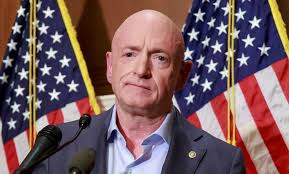
Blue Press Journal – In a pivotal decision safeguarding constitutional liberties, a federal judge has decisively blocked attempts by Defense Secretary Pete Hegseth to censure and demote Senator Mark Kelly. This ruling underscores the critical importance of free speech, especially for those who have dedicated their lives to defending our nation.
The controversy arose after Senator Kelly, a distinguished retired combat veteran, appeared in a video advocating that service members should not follow unlawful orders. This action drew the ire of President Donald Trump, who accused the participating lawmakers of “seditious behavior,” leading to aggressive attempts by the administration to punish them.
A Victory for Constitutional Principles
District Judge Richard Leon, appointed by President George W. Bush, issued a scathing opinion rejecting the Defense Department’s efforts. (read the fill option here) While acknowledging the well-established doctrine that active-duty military personnel have less vigorous First Amendment protections, Judge Leon firmly declared that these principles do not extend to retired servicemembers, “much less a retired servicemember serving in Congress and exercising oversight responsibility over the military.” See: ACLU on Military Free Speech Rights for context on speech limitations for active military personnel and the historical precedent.
Judge Leon condemned the administration’s argument that military decisions are exempt from judicial review, stating, “Defendants have trampled on Senator Kelly’s First Amendment freedoms and threatened the constitutional liberties of millions of military retirees.” His ruling is a powerful affirmation that constitutional checks and balances remain vital, even when challenged by executive power.
The Indispensable Role of the First Amendment
This case highlights why the First Amendment is not merely a legal clause but the bedrock of American democracy. It guarantees the freedom of speech, religion, press, assembly, and petition, empowering citizens – including retired military personnel – to hold their government accountable and engage in public discourse without fear of reprisal. For veterans like Senator Kelly, who have sacrificed to protect these very freedoms, the ability to speak out on matters of national importance is paramount. As Judge Leon eloquently stated, the administration should “reflect and be grateful for the wisdom and expertise that retired servicemembers have brought to public discussions and debate on military matters.” Further reading on the importance of free speech in a democratic society can be found via the National Constitution Center.
Senator Kelly rightly asserted that this fight was never just about him, but about sending a message to millions of veterans that their constitutional rights are not diminished upon retirement. This ruling ensures that the voices of experience and integrity, crucial for robust public debate, continue to enrich our nation’s dialogue.
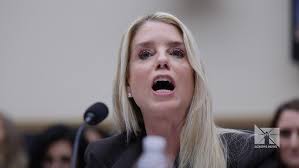
Blue Press Journal – During a recent House Judiciary Committee hearing, U.S. Attorney General Pam Bondi displayed an alarming disregard for democratic oversight, delivering a performance characterized by open hostility, personal insults, and an unsettling evasion of critical questions regarding a Department of Justice (DOJ) “enemies list” and the ongoing Jeffrey Epstein scandal. Her conduct underscored a deep-seated contempt for congressional authority and the public’s right to transparency, leaving many to question the integrity of the nation’s top law enforcement official.
A Pattern of Evasion and Disrespect
The hearing, intended to provide crucial oversight of the DOJ, quickly devolved into a testament to Bondi’s uncooperative stance. From the outset, Bondi reportedly lashed out at Democratic members of Congress, showcasing a level of disrespect rarely seen in such proceedings. Her refusal to acknowledge the profound harm inflicted upon victims of convicted sex offender Jeffrey Epstein, coupled with her dismissive attitude towards direct inquiries, painted a grim picture. As Rep. Mary Gay Scanlon (D-Pa.) pressed for answers, Bondi’s tactics became glaringly apparent: deflection, obstruction, and outright refusal to engage. The atmosphere grew so tense that Ranking Member Jamie Raskin (D-Md.) was compelled to implore Bondi to cease her “wild goose chase, another tangent,” in a desperate attempt to steer her back to the pressing matters at hand. Her disdain for the legislative body was palpable, making a mockery of the oversight process.
The Perilous “Enemies List” and Bondi’s Hypocrisy
At the heart of Scanlon’s questioning was the alarming revelation of an “enemies list” being compiled by the DOJ under Bondi’s direction. This initiative stems from President Donald Trump’s National Security Presidential Memorandum 7 (NSPM-7), signed months after the President baselessly claimed the “radical left” was “directly responsible” for an activist’s assassination. NSPM-7 mandates federal agencies to develop strategies to “investigate and disrupt networks, entities, and organizations that foment political violence,” with a disturbing focus on anti-fascist or left-wing groups.
Bondi’s subsequent memo to the DOJ took this directive a step further, ordering the compilation of a list of potential “domestic terrorism” groups. This move is particularly egregious given Bondi’s prior sworn testimony that the DOJ would “never be an enemies list.” As The Guardian recently reported, legal scholars across the spectrum have condemned these directives, citing profound constitutional concerns regarding freedom of speech and association, calling them “a chilling return to McCarthyism.”
When Scanlon directly asked Bondi to confirm the existence of this list, the Attorney General defiantly declared she was “not going to answer yes or no,” instead pivoting to an unrelated arrest of an “antifa member” in Minneapolis. This blatant attempt to obfuscate and avoid accountability was consistent with her overall performance. “We understand your current position is that you have a secret list of people or groups who you are accusing of domestic terrorism, but you won’t share it with Congress,” Scanlon retorted, exposing the deeply troubling implications of Bondi’s stonewalling.
A Broader Pattern of Surveillance and Suppression
Bondi’s evasiveness is not an isolated incident but rather part of a disturbing pattern under the current administration. Independent journalist Ken Klippenstein previously revealed that the FBI and Department of Homeland Security (DHS) have already amassed “secret and obscure” watchlists targeting pro-Palestinian and anti-Immigration and Customs Enforcement (ICE) protesters, labeling them “domestic terrorists.” Further, CNN reported on a DHS memo directing ICE agents in Minneapolis to collect personal data on protesters, while an ICE agent in Maine brazenly threatened a citizen filming him with inclusion in a “nice little database.” Despite these mounting reports, DHS Assistant Secretary for Public Affairs Tricia McLaughlin publicly denied the existence of any such database, a claim that strains credulity given the overwhelming evidence.
These actions, amplified by Bondi’s current stonewalling, illustrate a concerted effort to weaponize government agencies against political dissent. As Rep. Scanlon powerfully warned, “Americans have never tolerated political demagogues who use the government to punish people on an enemies list.” Such tactics historically brought down figures like Senator Joseph McCarthy and President Richard Nixon. The current administration, and Attorney General Bondi’s complicity, appear poised to follow a similar, ignominious path.
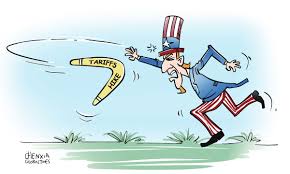
Blue Press Journal D.C. — A significant political maneuver on Capitol Hill this week has thrown President Trump’s favored trade weapon, tariffs, back into the spotlight, exposing deep divisions within the Republican Party and rekindling critical debate about their economic impact on American consumers. House Speaker Mike Johnson’s attempt to block future votes on Trump-era tariffs failed dramatically on Tuesday, signaling a growing bipartisan unease with protectionist trade policies.
In a rare display of internal dissent, three Republican lawmakers – Thomas Massie of Kentucky, Kevin Kiley of California, and Don Bacon of Nebraska – joined forces with Democrats to defeat a crucial procedural measure by a slim 217-214 margin. This unexpected revolt clears the path for the House to consider resolutions disapproving of President Trump’s 25% duties on Canadian goods, and potentially others.
For nearly a year, House Republican leadership had shielded its members from politically difficult votes on these tariffs, a strategy that crumbled on Tuesday. The procedural block, last extended in September, allowed members to avoid taking a stand on duties that have fomented uncertainty and drawn criticism from various economic sectors. Rep. Kiley, speaking after his “no” vote, emphasized the importance of institutional integrity, stating, “I don’t think that the House should be limiting the authority of members and enlarging the power of leadership at the expense of our members.”
The Hidden Cost: Tariffs and Your Pocketbook
While often framed as tools to protect domestic industries, economic analyses, including those from organizations like the Tax Foundation and reports cited by outlets such as The Wall Street Journal, have consistently demonstrated that tariffs act as a direct tax on American consumers and businesses. These import duties inevitably drive up costs for manufacturers and retailers, ultimately leading to higher prices on store shelves for everything from imported components to finished goods. Consumers, often unknowingly, bear the burden of these added expenses, seeing their purchasing power eroded.
Indeed, the long-term imposition of Trump’s “reciprocal” tariffs on a multitude of countries has generated economic headwinds, stifling competition and adding significant overhead for companies across various sectors.
With the shield now gone, Democrats are poised to force votes, even if largely symbolic given potential presidential vetoes. Their goal is clear: to put House Republicans on record regarding their support for these controversial duties. As the Supreme Court weighs the legality of the President’s authority to impose such sweeping tariffs, the renewed congressional focus underscores a critical question: At what cost do these protectionist policies come, and who ultimately pays the price?
Exposed: The Perilous Playbook of Debunked Election Lies and Trump’s Weaponization of the FBI
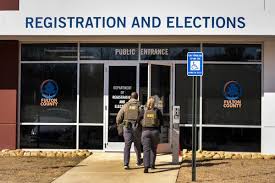
Blue Press Journal – The recent FBI raid on Fulton County, Georgia, seizing nearly 700 boxes of 2020 election ballots and records, has unveiled a deeply disturbing pattern: the aggressive recycling of thoroughly debunked election lies. Far from uncovering new evidence, the court-ordered affidavit supporting the raid reads like a greatest hits compilation of conspiracy theories, long-ago disproven in countless courts and by exhaustive audits. This alarming development signals a dangerous escalation in the campaign to undermine American democracy, leveraging law enforcement agencies for overtly political ends.
The Return of Baseless Allegations
The FBI’s affidavit, intended to establish probable cause for a criminal offense, relies heavily on claims that have been exhaustively investigated and widely discredited. Georgia’s Republican Secretary of State Brad Raffensperger, who famously resisted pressure to “find” votes in 2020, aptly dismissed these assertions as “baseless and repackaged.” [Source: The Atlanta Journal-Constitution] Even Fulton County Board of Commissioners Chair Robb Pitts described the affidavit as based on “recycled rumors, lies, untruths and unproven conspiracy theories.” [Source: CNN]
Consider the affidavit’s core arguments:
Missing Scanned Images: The FBI highlighted that Fulton County “does not have scanned images of all the 528,777 ballots.” Yet, this was not a violation of Georgia law at the time of the 2020 election. The requirement was added by the GOP-led state legislature months later, in March 2021. To present this as evidence of wrongdoing is deliberately misleading.
Multiple Ballot Scans: The affidavit also pointed to instances of ballots being scanned multiple times. Independent investigations into this issue, including those in Fulton County, found no evidence of fraud. Ballots can be rescanned due to tabulation errors, with initial erroneous scans deleted. Crucially, multiple audits—the initial count, a hand-counted audit, and a machine recount—consistently affirmed Joe Biden’s victory margin of 11,779 votes in Georgia. [Source: Associated Press] The affidavit offers no evidence to suggest these procedural issues were the result of intentional criminal action.
As Stanford Law professor Orin Kerr succinctly stated, “In drafting a search warrant affidavit, the Fourth Amendment requires the inclusion of facts that would negate probable cause, if they exist. The government can’t pick facts that, if true, could support a finding a probable cause, but omit the facts that cancel that.” [Source: X / @OrinKerr] The Fulton County affidavit appears to be a stark example of such crucial omissions, presenting a one-sided narrative divorced from established facts and legal precedents.
The Legal System’s Resounding Rejection of Election Lies
These recycled theories have not just been debunked by election officials and independent journalists; they have been definitively rejected by virtually every level of the American judiciary. Following the 2020 election, Donald Trump and his allies filed over 60 lawsuits alleging widespread fraud, from state courts to the Supreme Court.
Pennsylvania: In Trump v. Boockvar, federal courts found no evidence of fraud sufficient to overturn the election, a decision upheld on appeal.
Georgia: Cases like Pearson v. Kemp, which challenged the state’s election procedures, were dismissed for lack of standing or merit.
Supreme Court: The most significant rebuke came when the U.S. Supreme Court, in Texas v. Pennsylvania, et al., unequivocally rejected a lawsuit seeking to overturn results in four key states, citing Texas’s lack of standing. This unanimous decision underscored the absence of credible evidence for systemic fraud.
These judicial pronouncements, delivered by judges across the ideological spectrum, consistently affirmed the integrity of the 2020 election. The attempt to resurrect these thoroughly discredited claims through an FBI investigation represents an appalling disregard for legal due process and factual accuracy.
The Insidious Role of Kurt Olsen and the Weaponization of the FBI
Perhaps the most alarming revelation from the affidavit is that the FBI’s “criminal investigation originated from a referral sent by Kurt Olsen,” a temporary White House employee and a figure central to the “Stop the Steal” movement. Olsen is a notorious election denier who lobbied the Department of Justice to intervene in 2020 and was intimately involved in efforts to overturn the election. His record of promoting unsubstantiated allegations is so extensive that he was sanctioned by a federal court for making “false, misleading and unsupported factual assertions” in a 2022 Arizona election challenge. [Source: Arizona Republic]
Olsen’s involvement in initiating an FBI investigation he has used as a political weapon poses a serious threat to American democracy. This is not a legitimate inquiry but a blatant political weaponization of federal agencies. Allowing a known purveyor of debunked conspiracies, who has faced legal penalties for dishonesty, to trigger an FBI raid sets a troubling precedent. It signifies a dangerous erosion of federal law enforcement’s impartiality and its vulnerability to partisan manipulation.
The unusual involvement of the Office of the Director of National Intelligence (ODNI) in a domestic law enforcement operation further amplified concerns, prompting Senators Alex Padilla (D-Calif.) and Mark Warner (D-Va.) to demand immediate briefings. [Source: The Washington Post] This intermingling of intelligence and domestic law enforcement, particularly when driven by demonstrably false premises, poses an existential threat to the rule of law.
A Clear and Present Danger to Democracy
This episode is more than just a rehash of old lies; it is a calculated effort to “dramatically remake our elections to curtail who is able to vote and whose votes are counted,” as Lauren Groh-Wargo, CEO of Fair Fight Action, warned. [Source: NPR] The willingness of federal agencies to act on such flimsy, politically motivated referrals—rooted in the discredited narratives of figures like Kurt Olsen—sets a perilous precedent. It undermines public faith in democratic institutions, emboldens those who seek to disenfranchise voters, and paves the way for further partisan interference in our electoral processes. The deliberate recycling of debunked election lies, now amplified by the power of the federal government, is an undeniable assault on the foundations of American democracy.