The BLUE PRESS JOURNAL

We aim to be a voice in the ongoing political discourse, providing both factual information and opinionated analysis, from a progressive or center-left perspective, free from the direct influence of major
established Main Street Media.

  • The Silent Collapse: Why the Washington Post Layoffs Are a Crisis for the First Amendment


    Blue Press Journal

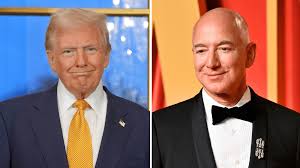
    Washington Post layoffs and Jeff Bezos’s role in dismantling the newsroom, and how this aligns with the erosion of the First Amendment and appeasement of Donald Trump

    The news industry this week witnessed a seismic shift that threatens the very foundation of American democracy. The Washington Post, a nearly 150-year-old institution and a pillar of the democratic system, began a fresh wave of mass layoffs. Under the ownership of billionaire Jeff Bezos and the stewardship of publisher Will Lewis, the paper is closing its Sports department, gutting its International and Metro desks, and ending its signature podcast.

    While management frames these cuts as a necessary business realignment, a closer examination reveals a more troubling narrative. These layoffs represent a systematic dismantling of the Fourth Estate’s ability to hold power accountable. When viewed alongside Bezos’s history of appeasing Donald Trump and his interference in editorial independence, it becomes clear that these cuts are not just financial—they are a direct threat to the First Amendment.

    The Erosion of Institutional Integrity

    The Washington Post has long been synonymous with investigative journalism, most famously exposing the Watergate scandal. However, under Jeff Bezos’s ownership, the paper has pivoted away from its role as a public watchdog toward a model that prioritizes business interests over journalistic missions.

    According to a statement released by the Washington Post Guild, “Continuing to eliminate workers only stands to weaken the newspaper, drive away readers and undercut The Post’s mission.” This is not hyperbole; it is a factual assessment of the current trajectory. By decimating the Metro desk and closing the Books section, the Post is severing its connection to the local community and intellectual discourse—areas essential for a well-informed citizenry.

    The human cost of these decisions is staggering. As reported by The Guardian, laid-off journalists took to social media to voice their anger. The former Cairo bureau chief revealed she was laid off alongside the “entire roster” of Middle East correspondents, while a Ukraine-based correspondent lamented losing her job “in the middle of a warzone.” When a major news outlet abandons on-the-ground reporting in conflict zones, it creates an information vacuum that authoritarianism thrives in.

    Bezos, Trump, and the Politics of Appeasement

    To understand the First Amendment implications of these layoffs, one must look at the broader context of Jeff Bezos’s behavior over the last two years. There is a growing trend in American media, as identified by media critics, where “media companies and other key institutions of civil society responding to Donald Trump’s efforts to bully and intimidate them by knuckling under, sucking up, and appeasing him.”

    Jeff Bezos has emerged as a chief practitioner of this appeasement.

    In a move that broke with decades of tradition, the Post announced it would not endorse a presidential candidate for the 2024 election—a decision made directly by Bezos. As noted by NPR, this decision resulted in the swift loss of tens of thousands of subscribers. This was not a neutral act; it was a strategic maneuver to protect Bezos’s vast business empire, including Amazon and Blue Origin, from potential retribution should Donald Trump return to power.

    Furthermore, Bezos’s interference extends to the editorial pages. He previously forced the opinion section to pivot toward “personal liberties and free markets,” a move that prompted the section’s editor to resign. This editorial meddling signals to readers that the paper’s content is subject to the whims of a billionaire rather than the principles of journalistic integrity.

    The Financial Fallacy and the “Puff Piece” Paradox

    Critics argue that the layoffs are a response to financial struggles, yet the Post’s decline in subscribers correlates directly with Bezos’s political decisions, not a lack of demand for news. In fact, competitors like The New York Times have thrived. As reported by The New York Times itself, the paper added approximately 450,000 digital-only subscribers in the last quarter of 2025 alone. The difference? The Times continues to invest in its newsroom while the Post is slashing it.

    The contradiction in Bezos’s strategy is glaring. While he cuts essential reporting staff, reports have surfaced regarding massive spending on non-journalistic projects. Critics point to the investment of tens of millions in a documentary about the First Lady—a project that serves as a “puff piece” rather than hard news. This allocation of resources suggests that Bezos is more interested in curating a favorable public image than in funding the investigative reporting that defines the Washington Post.

    The First Amendment in Peril

    The First Amendment guarantees freedom of the press, but that freedom is meaningless without the infrastructure to support it. A free press requires funding, staff, and the independence to report without fear of billionaire reprisal.

    By gutting the International and Metro departments, Bezos is effectively shrinking the scope of information available to the American public. A democracy relies on a press that can cover local city hall meetings just as much as it covers international conflicts. When those layers of coverage are stripped away, the public is left with a superficial understanding of the world, making them more susceptible to disinformation and authoritarian rhetoric.

    As former Washington Post executive editor Marcus Brauchli once noted, the paper’s value lies in its ability to provide “indispensable” coverage. If Bezos continues to view the Post solely as a financial asset to be liquidated for parts rather than a civic institution, the paper may not survive the decade.

    A Call for Responsible Stewardship

    The layoffs at The Washington Post are not merely a business restructuring; they are a symptom of a larger disease in American media—the consolidation of power in the hands of billionaires who prioritize self-preservation over public service.

    Jeff Bezos has the wealth to sustain the Washington Post for decades, investing in the next generation of reporters and expanding coverage. Instead, he has chosen a path of austerity that weakens the paper’s ability to function as a check on power. By silencing foreign correspondents and dismantling local desks, he is aiding the efforts of those who wish to diminish the free press.

    If Bezos is unwilling to be a steward of this beloved institution, he should heed the advice of critics and consider selling the Washington Post to owners who value the First Amendment over personal gain. Until then, the slow death of the Washington Post serves as a chilling warning: the freedom of the press is only as strong as the will of those who own it.

  • The Unhinged Presidency: A Critical Examination of Donald Trump’s Declining Mental Health and Authoritarian Tendencies

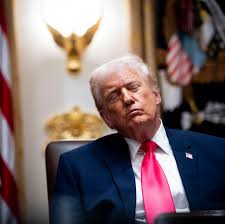
    The unhinged presidency of Donald Trump has raised concerns about his mental health and authoritarian tendencies. Experts warn that his behavior is eroding American democracy and posing a threat to national security.

    Blue Press Journal – As the 47th President of the United States, Donald Trump has consistently demonstrated a blatant disregard for the norms of democracy, dignity, and decency. His former White House attorney, Ty Cobb, has recently sounded the alarm, warning that Trump’s unbridled behavior in his second term may be a symptom of declining mental health (Source: Substack interview with Jim Acosta). Cobb’s concerns are not unfounded, as Trump’s erratic and authoritarian tendencies have been well-documented by reputable news sources, including The New York Times, The Washington Post, and CNN.

    Cobb, who served as a White House counsel during Trump’s first administration, has accused the President of “tarnishing everything that was once dignified and sacred about America” (Source: Substack interview). He has also expressed concern that Trump is being enabled by a White House staff comprised largely of sycophants, including advisors like Stephen Miller and Russell Vought. According to Cobb, these individuals are encouraging Trump to act on his worst impulses, leading to a situation where the President is “just doing what he wants” (Source: Substack interview).

    This lack of restraint has resulted in a presidency marked by chaos, controversy, and a blatant disregard for the rule of law. Trump’s actions have been widely criticized by experts, including former FBI Director James Comey, who has described the President’s behavior as “unfit” and “outside the bounds of normal human behavior” (Source: The New York Times). Furthermore, Trump’s authoritarian tendencies have been highlighted by The Atlantic, which has noted that the President’s actions are “eroding the foundations of American democracy” (Source: The Atlantic).

    Cobb’s concerns about Trump’s mental health are not isolated. Psychology Today has published numerous articles examining the President’s behavior through the lens of psychology, with some experts suggesting that Trump may be exhibiting symptoms of narcissistic personality disorder (Source: Psychology Today). Additionally, The Lancet, a reputable medical journal, has published articles highlighting the potential risks of Trump’s behavior to global health and stability (Source: The Lancet).

    The consequences of Trump’s actions are far-reaching and devastating. As Cobb noted, the President’s behavior has resulted in damage to the United States’ relationships with its allies, with some countries refusing to share intelligence with the US due to concerns about Trump’s ties to Russia (Source: The Washington Post). This has significant implications for national security, as highlighted by The Center for Strategic and International Studies (Source: The Center for Strategic and International Studies).

    The evidence suggests that Donald Trump’s presidency is marked by a disturbing lack of restraint, a blatant disregard for the rule of law, and a worrying decline in mental health. As Cobb warned, “we are in a place we have never seen before and we need to navigate out of it as quickly as possible or we’re going down” (Source: Substack interview). It is imperative that the American people demand accountability from their leaders and take action to protect the integrity of their democracy.

  • The Danger of “Nationalizing” U.S. Elections: A Constitutional Breakdown

     Donald Trump’s call to “nationalize the voting” is a direct assault on America’s state-run election system


    Blue Press Journal

    In a recent interview, President Donald Trump escalated his long-standing assault on U.S. election integrity by urging allies (Republicans) to “take over” the voting process in key states. His call for Republicans to “nationalize the voting” is not just inflammatory rhetoric; it is a direct challenge to the constitutional framework that has safeguarded American democracy for centuries.

    This proposition is fundamentally at odds with the U.S. Constitution and represents a dangerous path toward the partisan manipulation of elections.

    The Foundational Principle: State Control of Elections

    The U.S. electoral system is intentionally decentralized. The Constitution, through the Tenth Amendment, reserves all powers not explicitly granted to the federal government to the states. This includes the administration of elections.

    This state-level control is a feature, not a bug. It creates a robust system where a single point of failure or federal overreach cannot easily compromise a national election. As the Brennan Center for Justice, a non-partisan law and policy institute, notes, this diffusion of power is a critical bulwark against centralized election manipulation.

    Trump’s idea to “nationalize” this process would dismantle this structure, consolidating power in a way the Founders explicitly sought to avoid. It is an overt push for one political party to seize the machinery of democracy itself.

    Debunked Claims Undermining Public Trust

    This call to action is predicated on the repeatedly debunked “Big Lie” that the 2020 election was stolen. The facts are clear and overwhelming:

    • Election officials from both parties certified the results.
    • Dozens of judges, including many appointed by Trump, dismissed over 60 lawsuits due to a lack of evidence.
    • Trump’s own Attorney General, William Barr, stated the Justice Department found no evidence of widespread fraud that could have altered the outcome.

    Continuing to promote these falsehoods, as Trump does, severely erodes public trust. When a leader insists a system is rigged only when they lose, they lay the groundwork to justify seizing control of that system for their own benefit.

    A Chilling Precedent for Federal Overreach

    This is not a theoretical concern. The Trump administration previously tested the limits of federal power over state elections. In 2017, his Presidential Advisory Commission on Election Integrity attempted to compel states to turn over sensitive voter data. As reported by The New York Times, numerous states from both parties refused, citing significant privacy and federal overreach concerns.

    This history reveals a consistent pattern: an attempt to centralize election control under a partisan banner, justified by baseless claims of fraud.

    Why This is Bad for America

    A move to nationalize or partisanly “take over” election administration would have devastating consequences:

    1. Constitutional Crisis: It would ignite a legal battle between states and the federal government, destabilizing the very rule of law.
    2. Loss of Legitimacy: Elections perceived as controlled by one party lose their legitimacy in the eyes of the losing side, leading to increased political instability.
    3. Voter Suppression: Centralized, partisan control could lead to the systematic manipulation of voter rolls, polling place locations, and ballot counting to favor one party.

    The integrity of U.S. elections depends on their impartial administration. Abandoning this principle for partisan gain doesn’t just risk losing an election—it risks losing the democratic system itself. Defending the decentralized, state-run model is essential to preserving a government of, by, and for the people.

  • Federal Judge Blocks Trump Administration’s Attempt to Restrict Lawmakers’ Surprise Visits to Immigration Facilities

    Blue Press Journal

    WASHINGTON — A federal judge has once again ruled against the Trump administration’s efforts to restrict congressional oversight of immigration detention centers, finding that the policy likely violates existing federal law ensuring lawmakers’ access to those facilities. 

    U.S. District Judge Jia Cobb, appointed by President Biden, issued the decision Monday, halting a Department of Homeland Security (DHS) directive that would have required members of Congress to provide seven days’ notice before conducting visits to Immigration and Customs Enforcement (ICE) centers. The rule, reinstated last month by DHS Secretary Kristi Noem, applied to facilities funded under the so-called “Big Beautiful Bill,” a Republican-backed spending package enacted last summer that omitted a long-standing access provision. 

    This ruling marks the second time Judge Cobb has sided with a group of Democratic lawmakers who filed suit to preserve their ability to conduct unannounced inspections. In December, Cobb previously found that the Trump administration violated a congressional “rider” attached to DHS’s annual appropriations bill — a provision guaranteeing lawmakers the right to visit detention sites without advance notice. 

    In her latest opinion, Cobb criticized the administration’s argument that it could feasibly separate funding streams to determine which facilities were covered by the rider and which were not. “Defendants’ declarant provides almost no details or specifics as to how DHS and ICE would accomplish this task in the face of the practical challenges raised by Plaintiffs,” Cobb wrote. 

    Legal experts note that the decision reaffirms Congress’s constitutional oversight powers and underscores the judiciary’s role in upholding legislative intent. The ruling effectively prevents DHS from enforcing the notice requirement while the lawsuit proceeds. 


    Understanding Appropriations Riders and Congressional Oversight

    Appropriations riders are provisions in spending bills that direct or limit the use of federal funds. Congress has often used these riders to oversee executive agencies, particularly in sensitive areas like immigration enforcement, environmental regulation, and defense spending.

    According to the Congressional Research Service, riders have been used since the early 20th century to ensure compliance with congressional mandates, such as requiring public reporting on detainee conditions and restricting the transfer of Guantánamo Bay prisoners.

    Judge Cobb’s ruling reinforces that these riders carry the force of law and cannot be sidestepped by administrative reinterpretation or selective funding designations.


  • Pulitzer Board Challenges Trump Lawsuit, Demands Full Mueller Report in Discovery

    The Pulitzer Prize Board pushes back against Donald Trump’s defamation lawsuit, demanding an unredacted Mueller Report and full documentation of Trump’s Russia-related communications. 

    Blue Press Journal – In a striking legal development, the Pulitzer Prize Board has demanded that President Donald Trump turn over a complete and unredacted copy of Special Counsel Robert Mueller’s report as part of discovery in his ongoing defamation lawsuit. The request—filed in Okeechobee County, Florida—seeks to test Trump’s claims that the Board’s defense of its 2018 journalism awards for The New York Times and The Washington Post caused reputational harm. 

    The lawsuit, initiated by Trump in 2022, accuses individual Pulitzer Board members of defamation after they reaffirmed the awards given for coverage of Russian interference and Trump campaign connections during the 2016 election. Trump contends that the Board’s statement “endorsed false reporting” and implied criminal wrongdoing on his part. 

    However, the Board’s latest filing signals a willingness to confront those allegations head-on. It asks Trump’s team to produce not only the full Mueller Report but also all communications between Trump and Mueller’s investigators, including exchanges about campaign contacts with Russian officials and the Trump Tower Moscow project. 

    According to the Mueller Report (U.S. Department of Justice, 2019), investigators found “numerous links between the Russian government and the Trump campaign,” even though the evidence did not establish a formal conspiracy. Outlets such as Reuters and The Guardian have since documented how Trump’s public narrative of “no collusion” often contradicted the nuanced findings of the investigation. 

    Legal experts note that the Board’s discovery demand mirrors earlier court battles over the Justice Department’s redactions of the Mueller findings during Trump’s first term—redactions that federal judges later criticized as politically motivated (see The Washington Post, March 2021). 

    The Board’s filing further requests Trump’s communications about his accusations against filmmaker Rob Reiner, his tax and business records, and any materials related to Trump Jr.’s 2016 Trump Tower meeting. Board members—including prominent journalists such as Anne Applebaum, David Remnick, and Gail Collins—have also been scheduled for depositions in the coming weeks. 

    A Board spokesperson told The Associated Press, “Just like any other plaintiff, the President must articulate and prove his claims with evidence. The Pulitzer Board will not be cowed by attempts to intimidate journalists or undermine the First Amendment.” 

    Trump’s lawsuit stands in contrast to his previous pattern of avoiding discovery in similar media cases. As Politico reported, earlier threats of litigation resulted in settlements with CBS and ABC, but those cases never reached the evidence phase. 

    Why Is Trump Suing the Pulitzer Board?

    By demanding transparency through discovery, the Board’s counteraction not only defends the integrity of investigative reporting but also reasserts the importance of accountability in public life—something Trump himself has long resisted. 


  • Marjorie Taylor Greene Slams Trump’s MAGA Movement as “A Lie Serving the Wealthy Elite”

    Blue Press Journal – Former Georgia Representative Marjorie Taylor Greene, once a staunch ally of Donald Trump, has publicly turned against the former president, calling his “Make America Great Again” (MAGA) slogan a “lie.” In a recent interview with journalist Kim Iversen, Greene sharply criticized Trump’s second administration, claiming it prioritizes big donors and corporate interests over ordinary Americans. 

    According to Greene, the MAGA agenda has become a vehicle for wealthy benefactors who bankroll Trump’s political operations. “It was a big lie for the people,” she said, noting that Trump’s closest financial supporters are the ones “getting special favors, government contracts, and even pardons.” 

    Greene’s comments come after her highly publicized resignation from Congress, where she cited deep divisions within the GOP, concerns about rising health care costs, and frustration over the U.S. role in the Gaza conflict. Her departure underscores a broader rift within the Republican Party as more conservative figures question Trump’s leadership and political motives. 

    Reports from outlets such as Reuters and The Washington Post have corroborated Greene’s claims that Trump has increasingly leaned on private donors to fund projects like a planned White House ballroom and the 250th anniversary celebration of U.S. independence—initiatives critics say blur the line between public service and personal gain. 

    Greene also accused Trump of focusing on foreign policy that benefits corporate and global interestsrather than addressing domestic challenges. “It’s the big corporations and foreign countries running the show,” she warned, describing what she believes is a “new world order” emerging under Trump’s leadership. 

    Her remarks add to a growing body of criticism suggesting that the MAGA movement no longer represents working-class Americans, but rather the wealthy elite it once claimed to oppose. 

  • House Democrats Refuse GOP’s Fast-Track Tactics as Republican Leadership Falters Amid Shutdown

    Blue Press Journal (DC) – As the federal government remains partially shuttered, House Democrats have made it clear they will not lend their support to Speaker Mike Johnson’s (R-La.) latest attempt to push through a funding package using an expedited process. According to The Hill and Punchbowl News, the decision effectively derails Johnson’s plan to end the shutdown quickly, underscoring the deep dysfunction within the Republican-controlled House.

    Johnson’s strategy hinged on suspending House rules—a move requiring a two-thirds majority, and therefore significant Democratic backing. With Democrats unified in opposition, the GOP now faces the far more arduous task of passing the $1.2 trillion package through the standard procedure, where even a single Republican defection could prove fatal. The Associated Press notes that Johnson’s razor-thin majority has repeatedly hindered his ability to govern effectively, a problem that has plagued his predecessors in recent years.

    The Senate already approved the bipartisan funding measure late Friday, which includes five key appropriations bills and a temporary extension for the Department of Homeland Security (DHS). However, the DHS portion has been particularly contentious, largely due to Republican insistence on maintaining an additional $10 billion for Immigration and Customs Enforcement (ICE). Democrats, as reported by Reuters, have demanded oversight reforms—such as stricter warrant requirements and bans on masked federal agents—to curb what they describe as systemic abuses within immigration enforcement.

    House Minority Leader Hakeem Jeffries (D-N.Y.) signaled cautious optimism, telling NBC News that Democrats are open to negotiation if there’s a “real path toward meaningful reform at DHS.” Meanwhile, conservative hardliners like Rep. Chip Roy (R-Tex.) have accused Democrats of “playing politics,” despite the GOP’s own inability to unify around a coherent funding strategy.

    Ultimately, this standoff highlights a familiar pattern under Republican leadership: ideological infighting and legislative paralysis.

  • Unanswered Questions: Why Did the FBI Seize Georgia’s 2020 Ballots?

    The FBI’s unprecedented seizure of Georgia’s 2020 ballots raises critical questions about federal overreach, Trump’s lingering influence, and the fragile chain of custody that underpins American democracy. 


    Blue Press Journal – When news broke of an FBI raid at Fulton County’s central election facility in Georgia, it barely registered in the national conversation. Yet, for many observers, the January 28 operation—reportedly involving the seizure of more than 700 boxes of 2020 election materials—raises troubling questions about federal overreach and political motives behind revisiting an election that courts and recounts have already settled.

    According to The New York Times and Reuters, the raid was conducted under the pretext of “protecting election integrity.” But the optics are hard to ignore. Why would federal agents intervene in a state-controlled election process nearly four years after Donald Trump lost Georgia, a defeat confirmed by multiple recounts and upheld in more than 60 court cases nationwide?

    A Chain of Custody—or a Chain of Command?

    Legal experts and state officials have voiced concern about the lack of transparency surrounding the operation. Fulton County election staff say they were given little explanation for the seizure, and no clear chain of custody documentation has been made public. Election law analysts note that such actions could undermine faith in the very institutions charged with safeguarding democracy.

    Maine’s Secretary of State, Shenna Bellows, summed up the unease in a statement to The Associated Press: 

    “We maintain strict control over our ballots. If the federal government can simply seize them without explanation, it sets a dangerous precedent.”

    Trump’s Shadow Over the Investigation

    Trump’s continued insistence that the 2020 election was “rigged”—despite bipartisan certification and judicial rejection of fraud claims—looms over this latest development. His public comments following the raid, amplified on Truth Social, again alleged wrongdoing in Fulton County, echoing disproven narratives from his post-election campaign.

    CNN and FactCheck.org have repeatedly debunked these claims, noting that Georgia conducted both a hand recount and an audit, confirming Joe Biden’s victory. Still, the former president has expressed regret that he “didn’t order the National Guard to seize voting machines,” a statement that blurs the line between political rhetoric and authoritarian impulse.

    Election Integrity or Political Intimidation?

    The presence of senior intelligence officials, reportedly including the Director of National Intelligence, raises another question: is this truly about election security—or about sending a message to local election workers? As one Fulton County official anonymously told The Washington Post, 

    “This feels like intimidation. It’s meant to make officials think twice before standing up to federal power.”

    Critics argue that actions like this risk chilling effect on election staff and voters alike, particularly in diverse, high-turnout counties such as Fulton—where turnout was key to Biden’s 2020 win.

    Democracy Under Scrutiny

    While Trump’s allies claim the raid is part of a legitimate transparency effort, the broader context suggests a deeper pattern: using federal agencies to re-litigate political defeats. The FBI, the Department of Justice, and intelligence agencies now find themselves caught between protecting electoral systems and appearing complicit in partisan agendas.


  • The GOP’s False Claim to the Second Amendment: How Trump and Republicans Betrayed Gun Rights

    Despite claiming to be the “most pro–Second Amendment” party, Donald Trump and the GOP have repeatedly undermined core gun rights while falsely accusing Democrats of wanting to confiscate firearms

    Blue Press Journal – For decades, Republicans have branded themselves as staunch defenders of the Second Amendment. Yet under Donald Trump’s leadership, the GOP’s record tells a very different story—one of political hypocrisy, selective enforcement, and disregard for the constitutional principles they claim to uphold. 

    Trump’s Anti–Second Amendment Actions

    When former President Trump declared that demonstrator Alex Pretti “should not have been carrying a gun,” it sent shockwaves through the gun-rights community. Pretti, who was legally armed, was killed by federal agents—an event that should have prompted a defense of lawful gun ownership. Instead, Trump and senior administration officials echoed anti–gun-control rhetoric that could have come straight from the most restrictive corners of Washington. 

    FBI Director Kash Patel and DHS Secretary Kristi Noem both condemned armed protests, suggesting that those who carry firearms to demonstrations are inherently suspicious. This stance directly contradicts decades of Republican talking points that equate gun ownership with patriotism and personal liberty. 

    The GOP’s Record of Political Opportunism

    Republicans’ relationship with gun rights has long been transactional. According to Pew Research Center, public support for stricter gun laws has remained steady, with a majority of Americans favoring reforms such as universal background checks. Rather than engaging honestly with this data, GOP leaders continue to exploit gun owners for votes while quietly supporting policies that infringe upon those same rights. 

    When the Department of Justice under Trump reportedly considered restricting firearm ownership among transgender Americans—based solely on identity rather than behavior—it revealed a disturbing willingness to weaponize the Second Amendment selectively. As Politico reported, even the National Rifle Association balked at such unconstitutional overreach. 

    The Myth That Democrats Want to “Take Your Guns”

    One of the most persistent GOP talking points is that Democrats want to “take away your guns.” Yet no major Democratic proposal or administration has ever attempted a blanket confiscation. Instead, Democrats have largely focused on evidence-based safety measures—background checks, red-flag laws, and regulation of high-capacity magazines—all supported by a majority of Americans and even many gun owners (The Reload). 

    By contrast, Republican administrations have repeatedly enacted or proposed restrictions when politically convenient, proving that their allegiance to the Second Amendment is more performance than principle. 

    GOP – A Party Adrift from Its Own Rhetoric

    The GOP’s selective defense of gun rights under Trump exposes the hollowness of its Second Amendment rhetoric. When it comes to protecting personal freedom, Republicans have shown they are more interested in political theater than constitutional consistency. 


  • Minneapolis Pushes Back Against Trump’s Controversial Immigration Surge

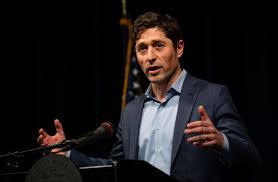
    Minneapolis Mayor Jacob Frey condemns a federal court ruling allowing Trump-era immigration raids in Minnesota, calling it an invasion undermining safety and local authority.

    Blue Press Journal – Minneapolis Mayor Jacob Frey condemns a federal court ruling allowing Trump-era immigration raids in Minnesota, calling it an invasion undermining safety and local authority.

    Minneapolis Mayor Jacob Frey and Minnesota officials are vowing to continue their fight against the Trump administration’s aggressive escalation of federal immigration enforcement in the Twin Cities — even after a federal judge rejected the state’s request to halt the operation. 

    The decision, handed down by U.S. District Judge Katherine Menendez, denied an injunction against what locals have described as an “invasion” of federal immigration officers under Operation Metro Surge. This initiative, launched during Trump’s presidency, has sent waves of heavily armed Immigration and Customs Enforcement (ICE) and Customs and Border Protection (CBP) agents into Minneapolis neighborhoods. 

    Mayor Frey: “This Has Brought Fear, Not Safety”

    Mayor Frey issued a strong rebuke following the ruling, stating that the surge has disrupted communities, instilled fear among residents, and undermined public safety. “This decision doesn’t change the lived reality here — fear, disruption, and harm caused by a federal operation that never belonged in Minneapolis in the first place,” Frey said. 

    He emphasized that Minneapolis’s sanctuary city policies are designed to protect immigrant communities, fostering trust between residents and local law enforcement. Critics argue that Trump’s immigration crackdowns — often targeting sanctuary jurisdictions — were politically motivated, aiming to punish cities that refused to cooperate with federal deportation efforts. 

    Tragic Consequences of Federal Overreach

    The lawsuit, filed by Minnesota Attorney General Keith Ellison and Twin Cities officials, gained urgency after two local residents — ICU nurse Alex Pretti and Renee Good — were killed in incidents tied to federal immigration actions. These deaths have intensified calls for accountability and raised questions about the safety and necessity of such operations in urban areas far from the border. 

    Researchers and immigration advocacy groups note that deploying militarized federal agents in sanctuary cities is not only legally contentious under the Tenth Amendment’s anti-commandeering doctrine, but also socially destabilizing. It can discourage crime victims from seeking help and erode trust in public institutions. 

    Sanctuary Cities Under Siege

    Under Trump’s leadership, sanctuary cities like Minneapolis, New York, and San Francisco repeatedly faced threats of funding cuts, public shaming, and targeted enforcement surges. The administration claimed such measures upheld federal law, but critics, including the American Civil Liberties Union (ACLU), warned they were designed to intimidate immigrant communities and score political points rather than improve safety. 

    Mayor Frey has made it clear that Minneapolis will not serve as an arm of federal immigration enforcement. “Undocumented residents should be able to call 911 without fearing deportation,” he said, reaffirming the city’s commitment to being a “welcoming, inclusive place for all.” 

    Despite the setback in court, Minneapolis officials are appealing the decision, determined to hold the Trump administration accountable. The broader legal battle touches on fundamental questions about states’ rights, local autonomy, and the limits of federal power in immigration enforcement.