The BLUE PRESS JOURNAL

We aim to be a voice in the ongoing political discourse, providing both factual information and opinionated analysis, from a progressive or center-left perspective, free from the direct influence of major
established Main Street Media.

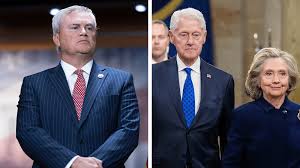
  • Trump Allies Stall Key Epstein Evidence as GOP Targets Clintons in Political Showdown


    Trump and GOP Stall Epstein Files as Clinton Testimony Battle Deepens

    Blue Press Journal – The House’s Jeffrey Epstein inquiry took another contentious turn this week as former President Bill Clinton and former Secretary of State Hillary Clinton formally refused to testify — a move that has further inflamed partisan tensions and exposed deep dysfunction in Congress. 

    In an eight-page legal letter sent to House Oversight Chair Rep. James Comer (R-Ky.), the Clintons rejected subpoenas as “invalid and legally unenforceable,” signaling they are prepared for a protracted legal fight. They accused the committee of political grandstanding rather than pursuing truth, writing, “Every person has to decide when they have seen or had enough and are ready to fight for this country, its principles and its people, no matter the consequences. For us, now is that time.” 

    While GOP leaders have been quick to frame the Clintons’ refusal as a stonewalling tactic, critics argue that Republicans themselves — under the influence of Donald Trump — have been far more culpable in stalling the most critical piece of the investigation: the release of the full Epstein files. 

    The Epstein case, which involves a network of powerful figures allegedly tied to sex trafficking and abuse, has been the subject of public outrage for years. Yet despite repeated promises of transparency, Republican leadership has consistently delayed the disclosure of key documents. Multiple sources within the House have suggested that Trump allies fear the release could implicate individuals in the GOP’s donor and political circles. 

    While Comer and his allies have threatened contempt charges against the Clintons, they have conspicuously failed to move forward on releasing the “Epstein Files” — flight logs, visitor lists, and sealed depositions — that could implicate powerful figures across the Republican political spectrum. Multiple sources inside the committee have confirmed that Trump-aligned members have repeatedly delayed votes and procedural steps necessary for public disclosure.

    This obstructionism has turned what should have been a bipartisan effort to expose Epstein’s network into a partisan circus. Instead of focusing on delivering justice for victims and accountability for perpetrators, the committee has spent months engaging in selective subpoenas and political theatrics, while shielding certain names from ever seeing the light of day. 

    The public deserves to know all the names. Every log, every deposition, every document should be released without redaction. Anything less is complicity. And every day those files remain hidden, the Republican Congress proves it’s not committed to justice — only to preserving the sanctity of its own corrupt inner circle.

    #EpsteinFiles #GOPObstruction. #Trump
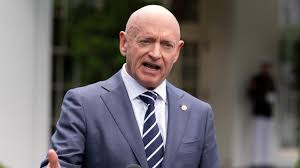
  • Sen. Mark Kelly Takes Stand Against Pentagon Over Alleged First Amendment Violations

    Sen. Mark Kelly’s Lawsuit Against Pentagon Marks Historic Defense of First Amendment and Legislative Independence

    Blue Press Journal – In a bold move underscoring the importance of constitutional protections for lawmakers, Senator Mark Kelly (D-AZ) filed a federal civil lawsuit Monday against the Pentagon, Secretary of Defense Pete Hegseth, the U.S. Navy Department, and Navy Secretary John Phelan. The suit alleges that the Trump administration’s decision to cut Kelly’s military retirement pay—following his participation in a video message to U.S. troops—constitutes an unprecedented attack on legislative independence and the First Amendment. 

    Kelly’s complaint, filed in U.S. District Court in Washington, argues that the government’s actions “trample on protections the Constitution singles out as essential to legislative independence.” His legal team points out that never in American history has the Executive Branch sought to impose military sanctions on a sitting Member of Congress for engaging in political speech disfavored by those in power. 

    “The First Amendment forbids the government and its officials from punishing disfavored expression or retaliating against protected speech,” the lawsuit asserts. “That prohibition applies with particular force to legislators speaking on matters of public policy.” 

    Historical Precedent and Constitutional Stakes

    Kelly’s case touches a nerve in the ongoing debate over separation of powers and free speech. The framers of the Constitution designed the Speech or Debate Clause in Article I, Section 6 to ensure legislative independence, shielding lawmakers from intimidation or retaliation by the executive branch. Past disputes—such as United States v. Johnson (1966), where the Supreme Court protected a congressman’s speeches from executive interference—have reaffirmed that principle. 

    Similarly, cases involving retaliation against political expression—like the landmark New York Times Co. v. United States (1971), which defended the right to publish the Pentagon Papers—reinforce that government actors cannot suppress speech simply because it is inconvenient or critical. Kelly’s lawsuit echoes these foundational rulings, framing the Pentagon’s move as not only punitive but corrosive to the core democratic values of checks and balances. 

    Why This Matters

    Kelly, a former Navy combat pilot and astronaut, has dedicated his career to public service. His military retirement pay is not merely a personal benefit—it symbolizes the nation’s recognition of that service. Punishing him for participating in a video for troops sets a dangerous precedent, risking a chilling effect on lawmakers who speak out on military or national security issues. 

    At a time when political polarization threatens institutional trust, Kelly’s stand represents more than a personal legal battle—it’s a defense of constitutional freedoms that protect all Americans. If the executive branch can wield military benefits as a political weapon against sitting senators, the independence of Congress itself is at stake. 

    Kelly’s lawsuit is not just about his pay—it’s about preserving the voice of legislators in matters of public concern. In standing up to the Pentagon, he’s standing up for the principles that have kept American democracy resilient for over two centuries.

  • Trump’s ICE Playbook: Cruelty as Policy — And Why Minneapolis Should Be a Turning Point

    Blue Press Journal Editorial

    This is a Turning Point for America … Where do you stand?

    In the wake of yet another deadly incident involving federal immigration enforcement, this time in Minneapolis, we’re forced to confront the grim reality of Donald Trump’s approach to law enforcement: cruelty isn’t a bug in the system — it’s the feature. 

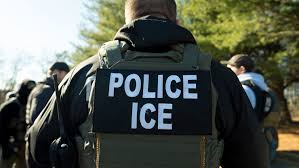
    On Thursday, an Immigration and Customs Enforcement (ICE) agent fatally shot a 32-year-old Minneapolis woman during what officials described as a “targeted operation.” Eyewitnesses say she was sitting in her car, unarmed, when the agent fired. The incident has sparked outrage across the city and reignited criticism of ICE’s tactics, which have long been accused of operating with excessive force and little accountability. 

    The Politics of Defending the Indefensible

    Some pundits claim that Trump’s—and the GOP’s—unwavering defense of these actions is “smart politics,” shifting public discourse away from other controversies like Jeffrey Epstein’s resurfaced ties to political elites or the worsening cost-of-living crisis. But let’s be clear: defending ICE after an act that looks, to many, like an execution in broad daylight, isn’t “smart.” It’s reckless. 

    ICE’s track record is already deeply unpopular. Polling from Pew Research and Gallup shows a majority of Americans disapprove of its methods, especially the high-profile deportations of families, the detention of children, and the use of militarized raids in immigrant communities. Trump’s ICE administration doesn’t just alienate progressives — it turns moderates and even some conservatives off. 

    When law enforcement violence starts landing squarely on U.S. citizens — particularly white, middle-class citizens who don’t fit the GOP’s caricature of “illegal immigrants” — it hits differently. The thought quickly shifts from “I don’t like seeing people brutalized” to “That could happen to me or my family.” That’s not a winning political strategy; it’s a ticking time bomb.

    Minneapolis Officials Aren’t Staying Quiet

    Minneapolis Mayor Jacob Frey condemned the shooting, saying: 

    “We cannot normalize federal agents using deadly force in situations where it’s clearly avoidable. Our residents deserve safety, not fear.” 

    City Council Member Aisha Chughtai went further: 

    “This department operates with impunity, and it’s costing lives. ICE has no place in our city.” 

    Their words reflect a growing frustration among urban leaders over Trump-era immigration enforcement policies that have persisted well beyond his presidency. 

    Lessons from 2020 That Trump Still Hasn’t Learned

    Trump’s political instincts on law enforcement are stuck in the summer of 2020 — a moment of mass racial justice protests and public reckoning over police brutality. Back then, he doubled down on defending every police action, no matter how egregious, and lost reelection in the process. 

    The reality is that public opinion doesn’t reward defending indiscriminate violence. People want safety, but they also want accountability. Minneapolis is still living with the trauma of George Floyd’s murder, and defending another federal killing in the city won’t play well — locally or nationally.

    Why This Matters for 2026 and Beyond

    With the 2026 mid-term elections looming, Trump’s embrace of ICE’s most aggressive tactics could further alienate swing voters. It’s one thing to talk about “law and order” in abstract terms; it’s another to defend an ICE agent shooting an unarmed woman in her car. 

    The GOP may think they’re steering the narrative toward “dangerous cities” and “radical protestors,” but the images coming out of Minneapolis tell a different story — one of excessive force, unchecked power, and an administration willing to defend the indefensible.

  • The Trump DOJ’s Attack on the Federal Reserve: A Dangerous Precedent That Could Damage the U.S. Economy

    Trump DOJ’s Attack on Federal Reserve Independence Threatens U.S. Economic Stability

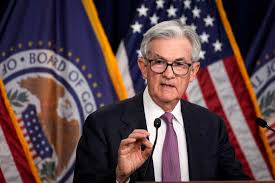
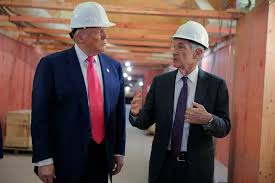
    Blue Press Journal (DC) – In a stunning and unprecedented move, the Trump Administration’s Department of Justice (DOJ) has issued subpoenas to the Federal Reserve and threatened criminal indictment against Fed Chair Jerome Powell. The action stems from Powell’s testimony before the Senate Banking Committee in June regarding the Fed’s $2.5 billion renovation of two office buildings — a project President Trump criticized as excessive. 

    While the stated justification for the investigation is alleged misuse of taxpayer funds, Powell has bluntly called the charges a “pretext” designed to undermine the central bank’s independence. This is not a routine dispute over budgetary planning — it is a direct confrontation that could shatter the long-standing separation between America’s political leadership and its monetary policy authority.

    Why the Federal Reserve’s Independence Matters

    The Federal Reserve is not a partisan institution. Its ability to set interest rates based solely on economic data, rather than political pressure, is a cornerstone of stable economic governance. Market confidence in the U.S. dollar, Treasury bonds, and the overall financial system depends heavily on the perception that Fed decisions are insulated from political whims.

    If political actors can intimidate or remove Fed officials for refusing to follow a preferred interest rate path, the consequences will be severe. Investors may begin to doubt whether U.S. monetary policy is being driven by sound economic analysis or short-term electoral calculations. That uncertainty could increase borrowing costs, destabilize markets, and weaken the dollar’s position as the world’s reserve currency.

    The Risk to Markets and the Economy

    President Trump has repeatedly attacked Powell for not cutting interest rates as aggressively as he wants — especially with an eye toward stimulating short-term growth. But artificially low rates set for political purposes can have damaging effects:

    • Inflation Risk: Sustained rate cuts without economic justification can overheat the economy, driving up consumer prices. 
    • Asset Bubbles: Cheap credit can fuel excessive speculation in housing, stocks, and other markets, leading to bubbles that eventually burst. 
    • Weakened Global Confidence: If international investors believe the Fed is being controlled by political operatives, they may reduce exposure to U.S. assets, raising borrowing costs and hurting the dollar.

    History offers clear warnings. Countries where central banks have been politicized — such as Turkey and Argentina — often face runaway inflation, capital flight, and prolonged economic instability.

    Weaponizing the DOJ Against Independent Institutions

    The DOJ’s role in this episode is equally troubling. Traditionally, the Justice Department has operated independently from the White House, refraining from targeting political adversaries without clear and compelling evidence. Under the Trump Administration, however, the DOJ has pursued investigations against a growing list of perceived opponents.

    Serving subpoenas to the Fed in the midst of a dispute over interest rates sends a chilling message: any independent official who resists political directives could face criminal investigation. This politicization of law enforcement erodes public trust, not only in the DOJ but in the broader legal system.

    Even some Republican lawmakers are sounding alarms. Senator Thom Tillis of North Carolina has stated that this legal maneuver removes any doubt about efforts within the administration to dismantle the Fed’s independence — warning that credibility is now at stake for both the DOJ and the Federal Reserve.

    Short-Term Politics, Long-Term Damage

    While the administration may view the investigation as a way to pressure Powell into lowering rates before his term ends in May, the long-term damage far outweighs any short-term gain. The moment global investors suspect that U.S. monetary policy is politically manipulated, they will adjust their strategies — moving capital elsewhere, demanding higher returns on U.S. debt, and hedging against instability.

    Economic stability is built on trust in the institutions that manage it. Undermining that trust for political advantage is a dangerous gamble that could cost the United States dearly.

    Defending the Fed Means Defending the Economy

    The Federal Reserve’s independence is not a luxury — it is a necessity. Strong economies require central banks to act based on evidence, not election-year strategy. The Trump DOJ’s aggressive move against Jerome Powell is about more than building renovations; it is about whether America’s monetary policy will remain guided by data and public interest, or whether it will be subordinated to political intimidation.

    If history teaches us anything, it’s that once the credibility of a central bank is lost, restoring it is painfully difficult. The United States must resist any effort to politicize the Fed — because protecting its independence is protecting the future of the American economy.

  • Pete Hegseth’s Unprecedented Attack on Sen. Mark Kelly: A Dangerous Abuse of Power

    Pete Hegseth vs. Mark Kelly: Unprecedented Military Free Speech Controversy

    Blue Press Journal – In a move that has stunned legal experts and rattled military veterans, Defense Secretary Pete Hegseth has launched an extraordinary and highly questionable administrative action against Senator Mark Kelly (D-Ariz.), a retired Navy captain and decorated combat veteran. Rather than pursuing the court-martial he initially threatened — a route that would require due process, evidence, and public scrutiny — Hegseth has opted for a behind-closed-doors tactic to reduce Kelly’s retirement rank and military pension. 

    This is not just unusual. According to military law experts, it’s virtually unheard of. 


    Why This Matters — and Why It’s Unprecedented

    Retired officers are rarely, if ever, targeted for alleged misconduct occurring after their service. The statute Hegseth is invoking — 10 U.S. Code § 1370(f) — is designed to review retirement grades only under very limited conditions, almost always tied to conduct during active duty. 

    Rachel VanLandingham, a retired Air Force lieutenant colonel and former judge advocate, has been unequivocal: “It’s just never been done.” She points out that the “good cause” provision in the law must be read in line with the rest of the statute, meaning it applies to active-duty conduct — not political speech years after retirement. 

    Hegseth’s move takes Kelly into “uncharted legal waters,” bypassing established safeguards and, in the words of VanLandingham, making “a mockery of the procedures and the rules and due process.” 


    The Backstory: Free Speech vs. Political Retaliation

    The conflict began after Kelly, along with five other Democratic lawmakers who are military or intelligence veterans, released a November video reminding service members that they are obligated to refuse illegal orders. Kelly’s statement was clear and rooted in military law: “Our laws are clear. You can refuse illegal orders.”

    President Trump, incensed by the video, publicly accused the group of “seditious behavior” and even suggested execution — an extreme and inflammatory response. Within a week, Hegseth announced a Pentagon investigation into Kelly, framing his comments as a threat to military discipline. 

    Now, instead of testing those claims in a transparent court-martial process, Hegseth is relying on an administrative path that concentrates decision-making power in the hands of Navy Secretary John Phelan — a Trump loyalist with no military experience who donated over $800,000 to Trump’s campaign. 


    Stacking the Deck: Politics Over Justice

    Military law experts say the process Hegseth is using is rife with conflicts. Under §1370(f), Phelan alone will decide whether “good cause” exists to reopen Kelly’s retirement grade — without the oversight of a formal board and without the evidentiary safeguards of a court-martial. 

    Phelan’s rapid politicization of the Navy since his appointment — replacing career civil servants with political appointees — raises serious concerns about impartiality. This is not a neutral process; it’s a political maneuver with a predetermined target. 

    Todd Huntley, a retired Navy captain and former judge advocate, notes that “good cause” is meant for cases involving fraud, calculation errors, or newly discovered evidence tied to active-duty service. Kelly’s post-retirement political speech does not meet that threshold. 


    Kelly’s Service Record and the Bigger Threat

    Mark Kelly’s 25-year Navy career included combat missions and even journeys into space. He retired honorably in 2011 as a captain. To reopen his retirement status over political speech is not only a personal attack — it sends a chilling message to every retired service member: speak out against the administration, and you could lose your rank and pension. 

    Kelly himself has called out the intimidation tactic: “Pete Hegseth wants to send the message to every single retired service member that if they say something he or Donald Trump doesn’t like, they will come after them the same way. It’s outrageous, and it is wrong. There is nothing more un-American than that.”


    Why This Should Alarm Everyone

    This is more than a dispute between two public figures. It’s a test of whether political power can override legal precedent, due process, and free speech protections for retired military officers. 

    The decision to sidestep a court-martial and instead use an opaque administrative process strips away transparency, lowers the burden of proof, and concentrates authority in politically aligned hands. If successful, it could create a dangerous blueprint for punishing political opponents — even decorated veterans — without fair trial standards. 


    The Road Ahead

    Kelly has 30 days to respond to the Pentagon’s proceedings and is considering filing a federal lawsuit. The outcome will set a precedent not just for him, but for thousands of retired service members who believed their honorable discharge protected them from politically motivated retaliation. 

    In the words of VanLandingham: “This is about intimidation… They have so much power to get the result that they want, which is exactly what they’re doing.”

    The question now is whether Americans — military and civilian alike — will allow this erosion of rights to stand.

  • Federal Stonewalling in the Renee Good Case Raises Serious Questions About Justice

    Federal Obstruction: Breaking Norms and Undermining Justice

    Blue Press Journal – The recent killing of Renee Good in Minneapolis by Immigration and Customs Enforcement (ICE) agent Jonathan Ross has become a flashpoint in the ongoing debate over transparency, accountability, and the role of federal law enforcement in local investigations. What should have been a cooperative, multi-agency effort to uncover the truth has instead devolved into a troubling example of federal obstruction — with the FBI and Department of Justice (DOJ) refusing to share critical evidence with Minnesota’s state investigators.

    Minnesota Attorney General Ellison made multiple attempts to resolve the situation privately, but his requests were ignored. Only after holding a joint press conference with the Hennepin County District Attorney did he receive confirmation: the directive to block state access reportedly came directly from President Trump, who publicly referred to Minnesota officials as “crooked.” This raises a troubling question — why would the FBI and DOJ prioritize political loyalty over transparency in a homicide investigation? Justice requires evidence, and withholding it undermines public trust.

    A Breakdown in Cooperation

    According to Minnesota Attorney General Keith Ellison, the FBI initially agreed to work with the Minnesota Bureau of Criminal Apprehension in a joint investigation. That agreement was abruptly rescinded, with federal agents reportedly withholding key evidence — including ballistic reports, weapon data, and crime scene materials — from state authorities.

    Ellison, who has a history of productive collaboration with federal law enforcement, attempted to intervene. He reached out to contacts within the FBI and DOJ to resolve the impasse, but his requests were ignored. Even a formal letter pleading for cooperation went unanswered. The silence speaks volumes about the federal government’s approach to oversight in this case.

    Political Interference at the Expense of Justice

    The most concerning revelation emerged when Ellison discovered the reason behind the denial of his requests: the directive to exclude Minnesota authorities seemingly originated from President Donald Trump. This political interference — alongside Trump’s public declarations branding Minnesota officials as “crooked” — severely compromises the integrity of federal investigations.

    The DOJ and FBI are supposed to serve the public interest, not political agendas. Yet the decision to block state investigators suggests that decisions within these agencies may be influenced more by partisan loyalty than by a commitment to truth.

    A Troubling Double Standard

    Even more disturbing is the selective release of evidence. While federal authorities refused to share investigative files with state officials, video footage from Ross’s cellphone was leaked to Alpha News, a Minnesota-based right-wing media outlet. This raises legitimate questions:

    • If the evidence is too sensitive to share with official investigators, why is it being provided to a partisan outlet? 
    • Does this behavior reflect professional investigative standards — or an attempt to shape public perception before all the facts are known?

    Ellison called this move “fundamentally unprofessional” and noted that the leaked footage undermines any rationale for withholding evidence from state authorities.

    Echoes of the George Floyd Case

    Ellison’s office previously prosecuted the officers responsible for George Floyd’s murder in 2020, an effort that relied heavily on gathering every available piece of evidence. He recognized a familiar pattern here: when government agencies are connected to a controversial killing, certain officials attempt to smear the victim’s character.

    In the case of Renee Good, Ellison has been outspoken in defending her reputation. He emphasized that she was neither a domestic terrorist nor a threat to Ross at the time of the shooting, and that she was engaged in helping her vulnerable neighbors.

    Why Transparency Matters

    The refusal of the FBI and DOJ to cooperate with Minnesota’s investigation sends a dangerous message: federal agencies can act without meaningful oversight, even in cases involving lethal force against civilians. This erodes public trust and undermines the principle that justice must be both done and seen to be done.

    Without full access to the evidence, state investigators are forced to rely on incomplete information, raising the risk of an inadequate or flawed conclusion. For the family of Renee Good — and for the public — this is unacceptable.

    A Call for Accountability

    The Renee Good case is more than an isolated incident. It is a test of whether the FBI and DOJ are truly committed to transparency, fairness, and cooperation with local authorities. If federal agencies can unilaterally block state-level investigations into killings by federal agents, then our system of checks and balances is in jeopardy.

    Minnesota officials will continue their parallel investigation, seeking information directly from the public. But the broader question remains: will the FBI and DOJ choose accountability over political expediency?

    Until they do, cases like Renee Good’s will serve as stark reminders that justice delayed — or denied — is justice betrayed.


  • Jen Psaki Debunks “Domestic Terrorist” Narrative in ICE Shooting of Renee Nicole Good

    MS NOW host Jen Psaki has issued a scathing critique of the Trump administration following the release of new footage regarding the fatal shooting of Renee Nicole Good in Minnesota.

    Blue Press Journal – MS NOW host Jen Psaki has issued a scathing critique of the Trump administration following the release of new footage regarding the fatal shooting of Renee Nicole Good in Minnesota.

    In a segment that has sparked widespread online discussion, Psaki called out President Donald Trump and his officials for labeling Good a “domestic terrorist.” The host argued that fresh video evidence contradicts the administration’s narrative and exposes the “disgusting and ridiculous” nature of the claims made against the 35-year-old victim.

    The Incident and the Initial Narrative

    The confrontation occurred earlier this week in Minnesota when Immigration and Customs Enforcement (ICE) agents engaged with Good. Following the incident, the Trump administration and right-wing media outlets moved quickly to characterize the shooting as justified.

    Homeland Security spokesperson Tricia McLaughlin noted that the White House has given ICE’s communications sector “autonomy to create content that is effectively reaching the American public.” In this context, the administration asserted that Good posed a lethal threat to the agent involved, Jonathan Ross.

    Vice President JD Vance went so far as to call the killing “a tragedy of her own making,” implying that Good’s actions necessitated the lethal force used against her.

    The Video Evidence

    The debate centers on footage allegedly captured by the shooter, Agent Ross, on his cell phone. Psaki played this clip on MS NOW, noting that “the right” has seized upon it as vindication.

    The administration’s argument relies on a specific interpretation of the footage: because Ross appears to fumble his camera and a loud noise is heard, they claim Good ran over or struck the agent with her vehicle.

    However, Psaki highlighted three key inconsistencies in this theory:

    1. Multiple Angles: Because locals were filming a heavy ICE presence in the area (triggered by an ICE vehicle getting stuck in the snow), there is corroborating footage from different perspectives.
    2. Vehicle Positioning: When synced with other angles, the video shows that the car was already moving in the opposite direction. The agent’s feet are positioned away from the vehicle, not underneath it.
    3. Lack of Life-Threatening Behavior: Psaki argued that the video disproves the claim that Good was attacking the agent.

    A Timeline of the Confrontation

    The footage reveals the moments leading up to the gunfire. Ross is seen approaching Good’s vehicle, which was partially blocking the road. Despite the escalating situation, Good can be heard telling the agent, “That’s fine, dude, I’m not mad at you.”

    As Good’s wife confronts Ross from outside the car, the agent circles the vehicle and eventually stands in front of it. Good attempts to de-escalate and leave the scene, turning the wheel to the right and pulling forward slightly.

    At this moment, Agent Ross drops his phone. A voice is heard saying “Whoa!” before multiple shots are fired. Following the shooting, Ross is seen walking away from the scene.

    Perhaps most damning for the administration’s narrative is the audio captured immediately after the shots: a voice is heard saying, “Fucking bitch.”

    Psaki’s Analysis

    Psaki dissected the audio and visual evidence, questioning the logic of the administration’s defense.

    “It’s hard to say what we’re actually hearing” in the moments the camera fumbles, Psaki admitted, while noting that federal agents generally do not film with their phones while facing a life-threatening situation.

    “But if you sync up that video with the other angle of that same moment, you can see that the car does not appear to run the agent over,” she emphasized.

    The Bottom Line

    The MS NOW host concluded with a poignant reminder of Good’s final words. “Renee Nicole Good told those officers, ‘I’m not mad at you,’” Psaki said. “That’s the woman the Trump administration called a domestic terrorist.”

    She continued, “And all this new video does is make clear that those claims are just as disgusting and ridiculous as they were before we saw this new video. She said, ‘I’m not mad at you.’ And 25 seconds after she uttered those words, she was shot.”

    As the story develops, the release of this footage stands as a critical piece of evidence challenging the official account of the death of Renee Nicole Good.

    See the video here

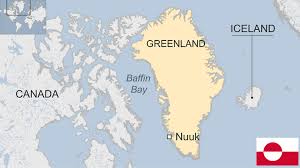
  • Why Annexing Greenland Would Be a Strategic Mistake for the United States 

    President Trump’s push to acquire Greenland threatens to fracture NATO. Here is why the U.S. military presence is already secure, and why upsetting the world order over the Arctic is a geopolitical error.


    Blue Press Journal – In recent weeks, the geopolitical chatter has shifted drastically toward the Arctic, with President Donald Trump reviving a controversial ambition: the acquisition of Greenland. From floating the idea of a purchase to alluding to the use of military force, the rhetoric has escalated quickly.

    However, a closer look at the geopolitical landscape, existing military infrastructure, and the unwavering will of the Greenlandic people reveals that upsetting the current world order to seize this territory is not just diplomatically volatile—it is strategically unnecessary.

    A Sovereign Nation, Not a Commodity

    The most glaring flaw in the proposal to “take” Greenland is the dismissal of its sovereignty. Greenland is not uninhabited real estate; it is a self-governing nation within the Kingdom of Denmark.

    In a unified and emphatic statement, European leaders—including French President Emmanuel Macron, German Chancellor Friedrich Merz, and UK Prime Minister Keir Starmer—declared that “Greenland belongs to its people.” They made it clear that decisions regarding the island are for Denmark and Greenland alone.

    This sentiment is echoed on the ground. In a rare show of political unity, Greenland’s party leaders issued a joint statement firmly rejecting Trump’s overtures. “We don’t want to be Americans, we don’t want to be Danes, we want to be Greenlanders,” the statement read. This aligns with public sentiment; a poll conducted last January found that 85 percent of the population opposes joining the United States.

    Furthermore, the claim that the U.S. needs to seize the island for “national security” ignores the fact that Washington already maintains a significant military footprint there. The Pituffik Space Base (formerly Thule Air Base) provides critical early warning and space surveillance capabilities. The U.S. does not need to own Greenland to secure it; the current alliance structure guarantees access.

    The Cost to NATO and the West

    Beyond the question of necessity lies the question of cost. Attempting to force the acquisition of Greenland would likely shatter the Western alliance system.

    Denmark asserts control over Greenland in the same legal framework the United States uses to govern Alaska or Vermont. If Washington were to use military force against Copenhagen—a NATO ally—it would trigger a constitutional crisis within the alliance. It would mark the first time in history that a NATO member has threatened military action against another.

    Such a move would validate the narratives of adversaries like Russia and China by fracturing the unity of the West. As Danish Prime Minister Mette Frederiksen noted in her joint statement with European leaders, security in the Arctic must be achieved collectively. Unilateral aggression undermines the very principles of sovereignty and territorial integrity that the U.S. and its allies are sworn to protect.

    Climate Integrity vs. Resource Extraction

    Finally, there is the matter of values. Trump’s vision for Greenland often implies resource extraction, yet the island has charted its own course regarding the climate crisis. In 2021, Greenland passed legislation banning all new oil exploration and drilling. The government described this as a “natural step,” signaling that the nation prioritizes climate integrity over economic exploitation.

    Ignoring this local governance to pursue resource interests highlights a fundamental misunderstanding of the territory’s priorities.

    The rhetoric of acquiring Greenland makes for sensational headlines, but the reality is a diplomatic minefield. The United States already possesses the military access it needs, the indigenous population is vehemently opposed to the idea, and the move would alienate America’s closest allies in Europe.

    In the Arctic, security is best maintained through cooperation and respect for sovereignty, not through the upending of the post-World War II order.

  • Prosecuting Federal Agents Under State Law: The Renee Good Case


    Minnesota prosecutors face legal hurdles in the fatal shooting of Renee Good by an ICE officer.

    Blue Press Journal – Prosecuting federal agents for alleged crimes is legally complex, but it is neither unprecedented nor impossible. The recent case involving the fatal shooting of Renee Good in Minnesota highlights both the challenges and possible avenues available to state and local prosecutors seeking accountability. 

    Background of the Case

    On January 7, Renee Good was shot and killed by an ICE officer during an encounter in Minnesota. Newly released video footage appears to show Good attempting to drive away safely, raising questions about whether the officer’s actions complied with established law enforcement protocols. 

    Despite the Minnesota Bureau of Criminal Apprehension’s request for evidence, the FBI announced it would not share its investigation files with state authorities. This decision has complicated the prosecutorial process, with Hennepin County Attorney Mary Moriarty noting that without the FBI’s case file, making a charging decision may be difficult. 

    State Authority to Prosecute Federal Agents

    Under U.S. law, states have the right to prosecute federal officials when they violate state criminal statutes. A key precedent is the 1906 Supreme Court case Drury v. Lewis, which affirmed that federal officers can be prosecuted if they operate outside the bounds of lawful authority or use unauthorized force. 

    However, federal agents often claim immunity by arguing their actions were necessary, reasonable, and proper for carrying out federal duties. Determining whether an agent’s conduct meets this standard requires an extensive factual analysis and can be a lengthy process. 

    The Immunity Challenge

    Immunity claims hinge on whether a judge finds the agent’s actions to be authorized under federal law. This involves a step-by-step examination of each act taken during the incident, assessing whether it aligns with legal duties or constitutes excessive or unauthorized force. 

    Historical cases, such as the Ruby Ridge standoff in 1992, show how disagreements between state and federal authorities over basic facts can stall or derail prosecutions. In the Good case, public statements from federal officials may further complicate matters, as they could be used to frame the incident in a way favorable to the defense. 

    Potential Legal Avenues

    Even if criminal prosecution proves challenging, civil remedies remain available. Under the Federal Tort Claims Act (FTCA), victims or their estates can sue the federal government for monetary damages. In such cases, plaintiffs may argue that the agent’s conduct was “rogue” or outside the scope of lawful duties, and seek declarations that constitutional rights were violated. 

    Why State Action Matters

    The Good case highlights the need for state and local governments to use their legal authority when federal accountability is obstructed. While immunity laws pose challenges, they do not offer complete protection against unlawful conduct. Thorough investigation and strategic litigation are essential for upholding the rule of law and pursuing justice.

  • Fatal Police Confrontation Raises Questions About Use of Force by ICE

    Blue Press Journal – The shocking video footage of ICE agent Jonathan Ross fatally shooting Renee Nicole Good, after she tried to drive away from a confrontation, has sparked widespread debate and concern among law enforcement experts. Provoking an even more critical perspective, former FBI special agent Michael Feinberg described Ross’s actions as “the height of unprofessionalism.”

    The disturbing footage, captured from Ross’s own cell phone, showed the officer repeatedly tugging at Good’s car door as she tried to escape the scene. As the vehicle began to move, Ross stepped in front and opened fire, with three shots ringing out as the car passed beside him. Good’s vehicle subsequently veered off the road and crashed, resulting in her fatal injuries.

    Under Minnesota’s use-of-force laws, law enforcement officers are permitted to employ deadly force when circumstances suggest a reasonable officer would believe 

    such action necessary to protect themselves or others from imminent death or severe harm. Similarly, federal statutes allow deadly force when there is probable cause to believe a person poses an immediate threat of death or serious bodily injury.

    However, in discussing the Good case, experts emphasize the critical importance of adherence to departmental guidelines and training. As Rep. Glenn Ivey (D-Md.), a former prosecutor for Prince George’s County, notes, “When you prosecute these cases, the issue is going to be, was it consistent with this training and with the departmental standards?”

    Feinberg, too, stresses the need for officers to prioritize situational awareness and maintain control of their environment. “There is never a situation where if I thought I was in danger, I would preoccupy one of my usable hands by taking a video of the person to whom I was talking,” he asserts. “You want your hands free to respond to the situation.”

    The lethal confrontation between Good, her wife Becca, and Ross has elicited disbelief from many experts, who see little justification for the deployment of deadly force in this specific scenario. Feinberg bluntly states, “Frankly, law enforcement officers overreacting to what admittedly might be some sarcastic and lightly combative civilians, but I don’t see a situation that would require the application of deadly force.”

    As the nation grapples with the implications of this incident, it becomes increasingly clear that a thorough examination of the circumstances, training protocols, and the officer’s actions will be essential in determining the appropriateness of Ross’s response. The tragic loss of life demands a critical, nuanced analysis, one that balances the complexities of a high-stress confrontation with the fundamental principles of law enforcement.