The BLUE PRESS JOURNAL

We aim to be a voice in the ongoing political discourse, providing both factual information and opinionated analysis, from a progressive or center-left perspective, free from the direct influence of major
established Main Street Media.

  • Trump’s “Communist” Rhetoric: A Desperate Political Strategy

    by Winston Wendell

    Watching this election season unfold, I can’t help but notice how much Donald Trump seems to have run out of new tricks. Same old slogans, the usual list of complaints, those rallies loaded with nostalgia and bitterness, they’re just not hitting like they used to. Now, with his usual playbook worn thin, Trump’s decided to go back to one of the oldest strategies around: fearmongering, this time in the threadbare costume of anti-communism. It’s basically Cold War reruns, and honestly, it should have stayed in the past.

    Trump’s Playbook Feels Tired

    Here’s what stands out to me: Trump’s running on empty. He can’t lean on the economy, it’s a tough sell when folks see their paychecks eaten up by inflation each month, buying less and less while everything keeps getting pricier. That “economic revival” he pushed in 2016? People know it never materialized.

    Foreign policy? Not much shelter there either. The situation with Iran is unresolved, his tariffs fell flat both as leverage and as economic policy, and he didn’t end the war in Ukraine like he’d said he would. These aren’t just small blips, this is the story falling apart, top to bottom. Any claims that Trump had some special knack for foreign affairs ring hollow now.

    Even his supposed home turf—immigration and mass deportations—has run out of steam. The drama just doesn’t whip up crowds the same way. The talking points sound old, and voters seem to see his proposals for what they are: more show than action.

    Dragging Out the Red Scare

    So, what does he do when the old moves don’t work? He leans on the most cynical tactic in conservative politics: calling progressive leaders “communists.” This isn’t new. It’s almost identical to the “Red Scare” playbook from after both world wars—a moment when anti-communist panic was turned into a weapon to smear the left, ruin reputations, and block policies that might actually help people.

    When Senator Joe McCarthy whipped up anti-communist frenzy, he wasn’t protecting democracy. He was out for power, and he used fear to silence critics and strengthen his own hand, tearing down any institution that didn’t fit his vision. It’s the same story, just dusted off for a new generation.

    This wasn’t just McCarthy, either. After World War II, Republicans tried to brand the New Deal as communism, which couldn’t be further from reality. Southern segregationists then used the same trick to demonize civil rights activism and labor movements. This tactic helped the GOP grab power in 1946 and launched careers like Richard Nixon’s. But strip away the drama, and it was always about fear and spin, not the truth.

    Take Trump’s speech at Mount Rushmore, he stood there and painted the country’s 250th birthday as a final battle against “radicals” threatening American values. He made it sound like you either vote for him or open the door to communist takeover. It’s right out of the old playbook, like a rerun that hopes to scare up different results.

    Completely Out of Step

    What stuns me most is just how out of touch this approach is with what’s happening today. Trump tries to paint people like Zohran Mamdani or Alexandria Ocasio-Cortez as dangerous left-wing radicals, but it just doesn’t stick. Their ideas, Medicare for All, affordable childcare, making big corporations play fair—these aren’t communist schemes. They’re attempts to fix real, everyday problems for Americans. 

    And the old scare words are losing their bite, especially for younger people. Look at the numbers from the Cato Institute or Axios-Generation Lab—Gen Z doesn’t have much faith in a capitalist system that leaves them struggling to afford housing, healthcare, or any sense of security. “Socialism” isn’t an insult to them; it’s looking more and more like a possible solution. The same solution “ Social Security” was for their grandparents and parents. 

    The fearplay that fired up older crowds just doesn’t connect with young voters who already feel the system’s failed them. It’s not that Democrats are messaging badly. The ground is shifting, and younger Americans simply see the economy differently.

    What Trump’s Really After

    If I’m honest, Trump’s jump into anti-communist theatrics isn’t going to do much for him in the midterms. More than that, it says something larger about who he really is. People care more about trust in their government right now—they’re worried about corruption and democracy falling apart, not labels that have lost their punch.

    What bugs me most is that Trump doesn’t have any real philosophy or plan. He’s not out to save America from socialism. He just craves the spotlight. It’s self-preservation masquerading as political battle, a last-ditch attempt to stay relevant by recycling the ghosts of McCarthy and his mob.

    The guy who once bragged about being a “stable genius” is grabbing for the loudest, tiredest tricks in the book. This isn’t leadership. It’s just survival, and that really says it all: Trump isn’t leading anybody, he’s just refusing to take the exit. The anti-communist schtick is just his latest attempt to find an audience.

    So, as the midterms draw closer, I’m not really scared. I’m almost curious. The show goes on, but the crowd’s losing interest. Eventually, even the most desperate act has to face the music when the seats are empty.

    Fediverse reactions
  • GOP Texas Representative Faces Criticism for Lavish July 4th Plans as Economic Worries Grow

    Washington D.C. — With financial pressures rising for many Americans, Representative Troy Nehls (R-TX) is catching heat for talking up his extravagant Fourth of July celebration. He told journalist Pablo Manríquez he’ll be enjoying lobster tails and rib-eye steaks at home with family and neighbors—an image that’s not sitting well with folks feeling the pinch right now.

    When Manríquez brought up affordability, Nehls just laughed it off. “Affordability — what are you talking about?” he said, before diving into details about his plans for the holiday. He also mentioned he’ll use the occasion to honor “the greatest president of my lifetime,” meaning President Donald Trump. At one point, Nehls even questioned if people living paycheck to paycheck “work as hard as I do,” making the gap between his outlook and everyday Americans’ reality even more obvious.

    People were quick to react, and not in a good way. In the current U.S. economy, things are tight. A recent CNN/SSRS poll says 61% of Americans have cut back on groceries, and 30% have racked up credit card debt just to cover the basics. Inflation’s not helping, either—the consumer price index shot up to a 3-year high of 4.2% in May. On top of that, higher fuel costs—driven by the conflict with Iran—are hitting lower-income families even harder.

    Still, Nehls, Trump, and other Republicans are downplaying the price hikes, saying they’re just “temporary” and necessary to stand up to Iran and block its pursuit of nuclear weapons. “I’m OK with the increase in fuel, because it was going to happen,” Nehls said, pointing to Iranian military restrictions in the Strait of Hormuz that kicked off the energy spike.

    Nehls’ comments are out of touch. While Americans struggle to get by, he’s flaunting plans for an expensive holiday feast—something that only deepens the disconnect between GOP lawmakers and the people they represent. The uproar is fueling the partisan fight over the economy, and many are questioning whether House Republicans really get what the average American is up against.

    Fediverse reactions
  • Pointing Fingers, Missing Homes: Inside the Housing Crisis Blame Game

    Right now in American politics, the housing crisis is front and center. Vice President JD Vance recently went on The Ingraham Angle and didn’t hold back. He pinned the country’s problems with housing costs squarely on the Democrats.

    “I wish Democrats would collaborate with the administration to address housing costs, fuel prices, and other quality-of-life concerns,” Vance told Laura Ingraham.

    Bipartisanship sounds good, especially to people fed up with inaction. But if you look at what’s actually happening, the gap between what politicians say and what they do is bigger than ever. Honestly, it’s starting to feel a little hypocritical.

    Let’s talk about the 21st Century ROAD to Housing Act. The irony here is hard to ignore. This bill is supposed to help solve the homeownership crisis. It passed both chambers of Congress, overwhelmingly. The act promises to cut down on red tape for building single-family homes and, just as important, it puts up barriers for huge investment firms that have been buying up homes and jacking up rents.

    You’d think this kind of win would bring a fast photo op and a signature. Instead, the Trump administration is dragging its feet. The White House, Donald Trump, is holding up this bill, using it as a bargaining chip for the SAVE America Act.

    The SAVE America Act? That’s the push for tougher citizenship standards on voter registration and photo ID at polling stations, a move tied to the President’s persistent, but unproven, claims of widespread voter fraud. Most critics see this as tying important economic relief to a political agenda that has nothing to do with housing.

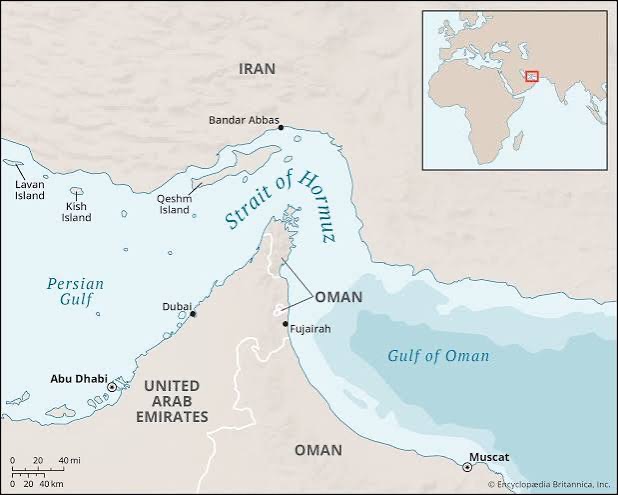
    And this isn’t just a housing thing, it’s a pattern. On the international front, the administration keeps making bold moves, which has stoked concerns about global energy. Following recent U.S. and Israeli military actions, there’s a lot of nervous talk about the Strait of Hormuz. a chokepoint for 20% of the world’s oil. Trump’s cease fire is anything but, with drone and missiles going back and forth. 

    Every time fuel prices climb, so do construction and transportation costs. That only squeezes the housing market more. Then there’s his tariffs, which across the board raised all costs including home building materials. When leadership puts foreign policy drama and voting laws ahead of the urgent issues at home, it really undercuts their claim that they care about ordinary people’s quality of life.

    Here’s the real takeaway: You can blame the other side all you want, but holding up bills that could make a difference leaves the public stuck in the middle. If the administration actually wants that “genuine bipartisan cooperation” Vice President Vance keeps talking about, it’s time to quit using economic relief as leverage.

    Until the republicans drop their political games around this issue, the blame game is just empty talk. We know who is to blame, Trump and the GOP that refuses to hold him accountable.

    Fediverse reactions
  • The Iran Nuclear Deal Fallout: Trump’s Misguided Perspective

    A Critical Look at the Deal’s Shortcomings

    “Trump’s” Iran nuclear deal was supposed to stop Iran from chasing nuclear weapons. Honestly, that promise looks flimsier every time I dig into the details. Just look at a recent piece from a major Iranian publication connected to the military. They straight up said Iran will go for nuclear arms, no matter what the deal says. That’s jarring. It makes you wonder if Iran ever took this agreement seriously. It also leaves me asking what the U.S. actually hopes to gain by insisting on upholding rules that Tehran seems ready to ignore. 

    The Strait of Hormuz: Troubling Signs

    Now, if you shift your attention to the Strait of Hormuz, things get even more tense. The U.S. signed a Memorandum of Understanding with Iran, basically promising safe passage for commercial ships crossing the waterway—no fees for 60 days out of the Persian Gulf. Just 60 days? What about going forward? On paper, it’s neat. But you have to ask yourself: what’s Iran’s real game? Whoever controls the Strait controls a key route for global oil. That’s real power, and I don’t buy that Tehran plans to just hand that over in 60 days. 

    Trump’s Real Reasons for the So Called Deal

    From the jump, Trump’s angle on Iran and its nuclear program has sparked debate. He said he wanted to lower oil prices and give Americans a break at the pump—by strong-arming Iran, apparently. But spend even a few minutes listening to him and the logic gets twisted pretty quickly. Trump’s version of the truth barely reflects the actual deal, or how much leverage the U.S. really has. Before his war, the Strait of Hormuz was open to international trade without any fees.

    Trump’s Bluster Versus Reality

    Take a closer look at what Trump’s been saying lately and the disconnect is impossible to miss. Just this Monday he claimed, “We have total control of the Strait of Hormuz.” Meanwhile, drone strikes and missiles keep targeting U.S. allies and troops near the strait. The facts on the ground clash completely with his bravado. Instead of showing strength, his words just reveal a growing gap between what the administration claims and what’s actually happening.

    More Wishful Thinking

    But he doesn’t stop there. Trump keeps insisting the U.S. got big concessions and forced Iran to comply. The truth says otherwise. Iran hasn’t backed down—if anything, it’s doubled down. And the U.S. has ended up giving Iran even more leverage and 300 billion. 

    Looking at all this, two things really crippled the Iran nuclear deal: Iran openly dismissing its own promises and Trump misreading the whole situation. The Strait of Hormuz is still a powder keg, with Iran’s influence making everything feel increasingly fragile. The path forward for the U.S. isn’t obvious. Should it keep pushing for enforcement? Accept that the deal came up short? Either way, American’s need to face the facts instead of hiding behind empty talk. The risks in this situation are just too high for anything else.

    Fediverse reactions
  • Democratic Party Must Reject Darializa Avila Chevalier’s Fringe Agenda

    I’ve watched the Democratic Party stretch to build a bigger tent, always talking up diversity and inclusion, but never at the expense of democratic values or national security. Lately, though, I can’t ignore it any longer: there’s a limit to what the party can tolerate. Some statements and associations just go too far, drifting out to the fringes, even slipping into anti-American territory. After Darializa Avila Chevalier won the 2026 primary in New York’s 13th District, it’s clear she shouldn’t just slide into Congress. The party needs to act, now, before she’s elevated as a new face of the Democratic Party.

    The warnings started early. On October 8, 2023, right after Hamas attacked Israel, Avila Chevalier joined a pro-Palestinian protest in Times Square. Protest is a right, sure. But the timing and the setting sent a message that struck many as flat-out hostile toward a close U.S. ally. Critics jumped on the moment, calling it “tone-deaf,” and it’s haunted her ever since, fueling a steady campaign controversy.

    Look no further than her social media history. In 2019, Avila Chevalier posted, “I wiped my hand on an American flag instead of a napkin.” Far from a throwaway joke, this was a calculated insult to a symbol that service members have died defending. She followed that up during the 2020 election by trashing her own party’s nominee, calling Joe Biden a “rapist” and “war criminal,” and calling the U.S. a “f**king disgrace.”

    Now, she claims she has “matured” since then. But a sudden change of heart doesn’t erase the record, especially for someone in their 30s. You simply cannot publicly mock the flag and then pretend to share the values of mainstream Democrats.

    Her suggestion to unite the Dominican Republic and Haiti went over terribly. She claimed that if the island had never split, it could have been one unified nation.

    People immediately warned her to back off. Why? Because the Dominican Republic fought hard for its independence from Haiti. Bringing up a “unified island” triggers deep, historic fears for Dominican voters who are fiercely protective of their sovereignty.

    Instead of clearing the air, she completely dodged the question during a Spanish radio interview. Bailing on the conversation only made her look guilty, leaving voters more suspicious than ever.

    The issues don’t stop there. Her policies lean further left than even the most progressive lines. She calls herself a “prison abolitionist,” but when asked whether convicted murderers should go to prison, she dodged the question. She told the New York Editorial Board she’d “rather focus on fixing the systemic root causes of violence.” That isn’t leadership—it signals she’d rather excuse violent crime than enforce the law.

    Then there’s her 2022 tweet about Ukraine. She accused the United States of “bullying Russia ever since the Cold War ended,” like Russia’s full-scale invasion of another country didn’t even matter. Even after fierce criticism, her response was tepid at best barely acknowledging Ukraine’s plight, still demanding a diplomatic “solution” that would reward Russian aggression.

    The Democratic Party can’t afford to repeat the GOP’s mistake of coddling voices on the fringe until they wreck the party’s credibility. Too much is at stake now: our reputation, trust from voters, and national security. Party leadership has to show where the line is, and not seat Avila Chevalier as a Democrat. It’s time to say stop—to refuse to keep anyone who opposes the nation’s defining principles, or else risk handing our opponents a win and losing the voters we’re supposed to stand up for.

    The Democratic Party history is to support progress, inclusion, and upholding the law. Darializa Avila Chevalier’s record shows she doesn’t share those values. I’m calling on party leaders: take a stand, reject her candidacy, and keep the party rooted in the values that have always sustained American democracy.

  • Supreme Court Strikes Down Hawaii Gun-Carry Restrictions on Private Property

    Washington: 6/25/2026– In Wolford v. Lopez (2026), the U.S. Supreme Court struck down a Hawaii law that stopped licensed individuals from carrying firearms on private property open to the public unless the owner gave explicit permission. Justice Samuel Alito, writing for the majority, said the statute violated the Second and Fourteenth Amendments because it placed too heavy a burden on the right to carry firearms for self-defense.

    This law turned the usual common-law rule on its head. Normally, anyone—including legal gun carriers—can enter public-facing businesses unless the owner says otherwise. Hawaii’s law reversed that, demanding affirmative consent before someone could enter with a firearm. The Court said this change made everyday errands legally risky for permit holders and restricted routine activities.

    Using the test from New York State Rifle & Pistol Assn. v. Bruen (2022), the Justices decided the law plainly restricted conduct protected by the Second Amendment. They dismissed Hawaii’s historical arguments, noting that past laws covered hunting or trespassing and didn’t resemble modern limitations on carrying firearms in public.

    Justice Alito stressed that geography doesn’t change constitutional rights. He wrote, “merely local attitudes can neither shrink nor inflate the meaning of fundamental Bill of Rights guarantees.” He also wrote that Hawaii’s method “severely hampers the ability of law-abiding citizen[s] to exercise” the right to self-defense.

    Broader Impact Across States

    This decision goes beyond Hawaii. The opinion points out that states like California, New York, New Jersey, and Maryland have similar laws, making gun carriers get explicit permission before entering private property open to the public. Since the Court said Hawaii’s approach was unconstitutional, those states’ laws are now at risk of being challenged. The decision doesn’t wipe those laws off the books automatically, but it sets a clear precedent that lower courts will probably follow when looking at similar restrictions.

    There were strong dissents. Justice Kagan argued that there were enough historical analogues to support Hawaii’s law, and Justice Ketanji Brown Jackson saw the case as mainly about property rights, not gun rights.

    All in all, the Court doubled down on a broad view of the Second Amendment and made it harder for states to limit carrying firearms in everyday public-facing places.

  • The Art of the No-Deal: Inside Trump’s G7 Fatigue

    The Twilight of Trump’s Dealmaking

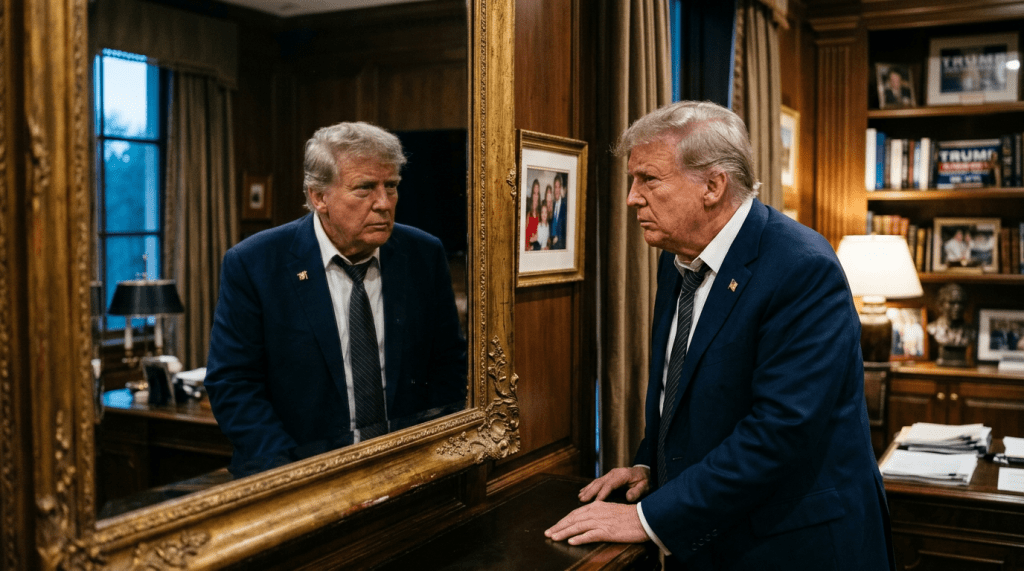
    Man in blue suit leaning on desk, looking at his reflection in an ornate mirror in an office
    .

    by Winston Wendell

    France feels different this week, quiet, maybe a bit somber. A decade of upended traditions is ending not with a bang, but a sigh. Take Donald Trump: he’s at his sixth G7, but the old swagger is gone. Back in 2017, you couldn’t miss him: loud, insistent, pulling everyone’s attention his way. Now? He looks worn down. Age hangs on him, the kind you can’t hide, no matter how much makeup you skip. At 80, the relentless drive isn’t there anymore. He seems smaller, almost faded, and it’s obvious the world isn’t watching him like it used to.

    His “big moment” in France—a supposed landmark deal with Iran—barely turned heads. Sure, there’s talk of a $300 billion economic boost for Tehran, lifting oil sanctions, and calling for a ceasefire. On paper, that sounds ambitious, a shot at lasting peace. But in reality, it just seems like an exhausted attempt to end a mess that’s sapped America’s cash and reputation. Benjamin Netanyahu already brushed it off. This isn’t bold diplomacy; it’s almost a repeat of Trump’s old routine, only without the drama.

    The contrast with Trump’s early G7 days is jarring. 2018, 2019—he showed up chomping at the bit. He demanded Russia’s return to the fold, gave NATO leaders lectures about money, even tried to turn the meetings into commercials for his hotels. That relentless energy, gone now. There’s a distant air about him. Ukraine barely comes up, and when it does, he sounds tired, going through the motions. The other G7 leaders feel the shift. They don’t count on the US for guidance the way they used to. They’re making their own plans for Kyiv, building their own safety nets.

    Everyone sees this drop in US influence. Pete Hegseth’s offhand remarks about the D-Day legacy still sting on this side of the Atlantic, and Europe’s leaders seem more focused than ever on going their own way. Waiting for Washington? Not anymore, they’re tired of the mood swings.

    Even the summit trappings fell flat. The German Chancellor handed Trump a soccer jersey. He barely cracked a smile, just mumbled thanks. At Versailles, standing in the hall of mirrors, gold everywhere, he looked a little more comfortable. Maybe it was all that gleaming reminder of power. For a second, you could almost believe he belonged.

    When it’s time to head home, Trump isn’t the “great negotiator” he set out to be. There’s no big legacy, no Nobel Prize, none of the things he once seemed sure he’d win. What’s left is an uncertain scene, with his spot in world affairs slipping away. Maybe, back in Washington, he’ll dream up another grand project—a hall of mirrors just for him. That’d fit. In these final days, it’s like he can’t look anywhere but at his own reflection. His aging reflection.

    Fediverse reactions
  • New Tensions: Iran Blocks Strait of Hormuz, Putting U.S. Accord at Risk

    Whatever progress Tehran and Washington made just last week has vanished almost overnight. On Saturday, Iran brought that emerging interim deal to a halt, blaming ongoing Israeli military actions in Lebanon and accusing the U.S. of acting “in bad faith.”

    The biggest shift: Iran’s joint military command has closed the Strait of Hormuz again. This waterway moves about 20% of the world’s oil, and it had only reopened for commercial shipping after both sides signed an interim memorandum of understanding (MOU) earlier in the week.

    Speaking on state TV, Iranian military leaders said the closure was a direct response to what they called a “clear breach of its commitments” by Washington over continuing fighting in the Levant. They ended their statement with a blunt warning—the authorities already have “subsequent steps” ready if the current military aggression continues. The prospect of a clash at sea just became much more real.

    As things deteriorate at sea, Tehran still plans to send its delegation to the scheduled meetings in Switzerland. But any optimism is gone, replaced by a hardened suspicion.

    Foreign Ministry spokesperson Esmail Bagahei said Iran’s team is done searching for compromise. He made it clear—they’re not heading to Switzerland to set new terms. They’re demanding the U.S. live up to promises already made.

    “This trip is about insisting that the other side meet its obligations,” Bagahei said. He added that the idea of reaching a permanent diplomatic solution is off the table for now. Nothing moves forward until Iran’s main demand—an immediate, full stop to the hostilities in Lebanon—is met. He warned that ignoring any part of the agreements puts the entire memorandum of understanding at risk of unraveling.

  • The Trumpified Reflecting Pool: A Symbol of Presidential Malfunction

    by Winston Wendell

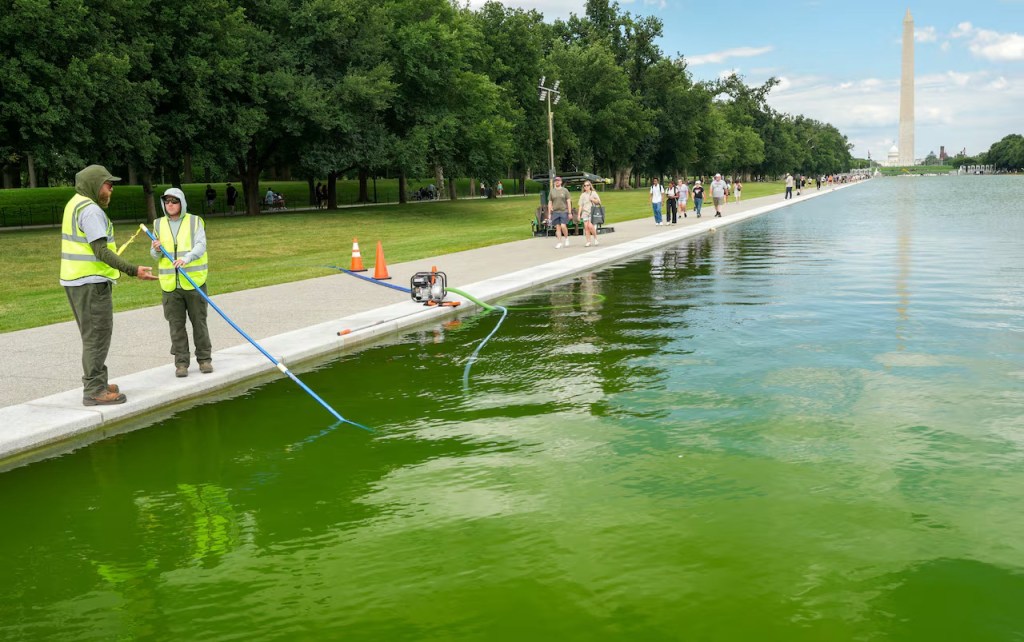
    Let’s face it, anyone who’s ever had a backyard knows what happens when a pond gets ignored, algae takes over, the water goes stale, and pretty soon you’ve got a smelly eyesore. But when that mess shows up at the Lincoln Memorial Reflecting Pool, one of America’s most iconic landmarks it’s hard not to take notice. That’s exactly what unfolded under the Trump administration. This spot, once the picture of national pride, slipped into a cautionary tale about how things go wrong at the top.

    There was a $14 million promise to revamp this centuries-old symbol of American resilience. And instead? We got a stagnant, stinking mess. The renovation was supposed to be a sleek upgrade, but something went sideways. Instead of restoring the pool’s glory, workers somehow turned it into a murky, algae-choked pond. Paint peeled off in chunks, bobbing through the filmy water like ghost ships. It looked more like someone’s neglected backyard pool than a cherished monument.

    People coming to take in the view didn’t just get an ugly scene. The place reeked of stale, sour water a stink that hung in the air, a pretty blunt hint that something had gone wrong behind the scenes. Things got so strange that tourists actually waded in to scoop up paint as souvenirs of the fiasco.

    Folks who know pools looked at the mess and saw the real problem: amateur work where there should have been professionals. Anyone with experience could tell there was no expert oversight, no real understanding of how to maintain something this significant.

    So in the end, that $14 million pool became a pretty striking symbol of the Trump era. Even when the money and attention were there, poor leadership made it all unravel. The Reflecting Pool’s decline is a reminder: you can’t cut corners on the things that really matter, and you can’t fake expertise when it comes to preserving what’s important to the country.

  • The $600 Million Vanishing Act: Trump’s “Private” Ballroom Becomes a Taxpayer Burden

    Crowd in formal attire inside ornate Trump World Ballroom with chandeliers and red carpet

    by Winston Wendell

    Donald Trump always called himself the king of making deals, a real budget hawk who’d slash government waste wherever he found it. But when you start looking closely at the ballooning costs of his White House ballroom project, a whole different story starts to surface. Instead of thrift, you see broken promises, some pretty clever budget gymnastics, and a jaw-dropping bill of $300 million dumped straight onto the American people.

    At first, the ballroom was supposed to be a $200 million renovation, all paid for by private donors. That promise didn’t last. Now it’s ballooned to a bloated $600 million construction saga. Even worse, the whole idea of “private funding” just fell apart. An investigation from The Washington Post found that taxpayers are now picking up about half the tab, even though Trump kept insisting otherwise.

    Clark Construction, the company handling this massive overhaul, spelled out exactly how things got off track. This project isn’t just a fancy party room anymore, they’ve expanded it to include full demolition of part of the East Wing, plus a high-security underground bunker. Sure, presidents need security. But nobody’s been upfront about where the money’s really coming from, and that’s got critics riled up.

    Look at the numbers. Project summaries from March lay it all out: the Secret Service is kicking in $155 million; the White House Military Office, another $149 million. They’re even pulling $3 million from the Executive Residence budget. Instead of just calling this what it is, spending on a luxury ballroom, they’re labeling everything as “security upgrades.” Outlets like The New York Times keep pointing out this move; it’s classic Trump-era accounting.

    The $400 million gap between what was promised and where things stand now says a lot. This is an administration, Donald Trump, that loved grand promises, but flopped on fiscal responsibility. By burying construction costs inside military and Secret Service budgets, they’ve hidden just how expensive this ballroom actually is.

    So as the total skyrockets, everyday Americans are left utterly bewildered. How on earth did a project billed as “privately funded” morph into a public bill? For a president who claimed to be the champion of cutting government fat, this outrageous $600 million ballroom is shaping up to be the poster child for the very wastage and irresponsibility he vowed to eradicate.