The BLUE PRESS JOURNAL

We aim to be a voice in the ongoing political discourse, providing both factual information and opinionated analysis, from a progressive or center-left perspective, free from the direct influence of major
established Main Street Media.

  • CBS Faces Backlash Over “Late Show” Cancellation Amid Allegations of Political Motives

    In a move that has sparked widespread criticism and skepticism, CBS has announced the cancellation of “The Late Show with Stephen Colbert,” effective May 2026. The decision comes just three days after Colbert used his platform to lambast the network’s parent company, Paramount, over a $16 million legal settlement with President Donald Trump.

    Colbert had been vocal about the settlement, which was reached over an interview with former Vice President Kamala Harris that aired on “60 Minutes” ahead of the 2024 election. The host called the settlement a “big fat bribe” to end a “nuisance lawsuit,” and has been a frequent critic of Trump on his show.

    CBS executives have attempted to downplay any suggestion that the cancellation was motivated by politics, instead attributing the decision to financial considerations. However, many are expressing doubt about the network’s claims, citing the timing of the announcement and Colbert’s history of criticizing Trump.

    Senator Bernie Sanders (I-Vt.) was among those who questioned the coincidence of the cancellation coming so soon after Colbert’s comments on the settlement. “It’s hard to believe that this is just a coincidence,” Sanders said.

    Parker Molloy, writing for The New Republic, was more blunt in her assessment. “The Late Show isn’t dying because people stopped watching late-night TV,” she wrote. “It’s being murdered because Stephen Colbert spent the last decade being one of Trump’s most persistent critics on network television, and the billionaires about to take over CBS need Trump’s approval for their merger.”

    The cancellation of “The Late Show” has sparked a wider debate about the role of corporate interests in shaping the media landscape and the potential for political censorship. As the media industry continues to evolve and consolidate, many are worried about the implications for free speech and the ability of journalists and commentators to hold those in power accountable.

  • LEWD BIRTHDAY MESSAGE TO JEFFREY EPSTEIN FROM TRUMP REVELED By Wall Street Journal

    A shocking revelation has emerged in the form of a racy birthday card allegedly sent by former President Donald Trump to convicted sex offender Jeffrey Epstein in 2003. The Wall Street Journal has published the contents of the card, which features a drawing of a naked woman and a peculiar message about secrets.

    According to reports, the card has sparked outrage, with Trump vehemently denying any involvement in sending the message. The denial has raised eyebrows, given the well-documented history between Trump and Epstein, who were known to be acquaintances.

    The revelation comes as previously unsealed Epstein files have shed new light on the extent of Trump’s connections to the disgraced financier. In 2019, records revealed that Virginia Giuffre, one of Epstein’s accusers, testified that Ghislaine Maxwell, Epstein’s longtime associate, recruited her for the sex trafficking ring while she was working at Mar-a-Lago, Trump’s Florida estate.

    Furthermore, former model Stacey Williams has gone public with accusations that Trump had groped her in a 1993 encounter facilitated by Epstein. These allegations have added fuel to the fire, with many questioning the nature of Trump’s relationship with Epstein.

    In response to the latest developments, Trump has attempted to deflect blame, claiming that Democrats are responsible for the resurfacing of the Epstein scandal. However, this assertion has been met with skepticism, given that if Democrats had access to this information, it is likely that they would have released it during last year’s election cycle, when it would have been most damaging to Trump’s campaign.

    Update on his pictures

    “I never wrote a picture in my life. I don’t draw pictures of women.”

    -Donald Trump to the Wall Street Journal

    Trump has previously peddled his sketches at charity auctions, boasting that one of his scribbles featuring the Empire State Building, complete with his flamboyant signature, fetched a price at a Florida auction in the mid-’90s, only to make a comeback on the market in 2017. In 2004, he also whipped up a drawing of the New York skyline for the Capuchin Food Pantry’s Doodle for Hunger, a move that was just as much about self-promotion as it was about charity. This artistic endeavor was later hawked again by Sotheby’s, proving that even in altruism, he’s always cashing in.

    In 2017, the BBC dared to report that yet another sketch of the New York skyline, conjured up by Trump for a 2005 charity auction, shockingly resold for a staggering $30,000.

    On X, Adam Kinzinger, a former Republican U.S. representative shared a series of nine sketches depicting skyscrapers and the New York skyline, which bear the signature of former President Trump. He remarked, “Trump has a propensity for drawing. Just an observation.”

  • Trump’s Handling of Epstein Saga Sparks Outrage and Suspicion Among Supporters

    A growing number of Trump supporters are expressing outrage and suspicion over the president’s handling of the Jeffrey Epstein controversy, with many questioning whether he is hiding information that could damage his reputation. The Epstein saga has been a topic of fascination for many Trump supporters, who see it as a symbol of corruption among political elites.

    According to a recent Quinnipiac University poll, a staggering 63% of voters disapprove of the Trump administration’s handling of the Epstein files controversy, with only 17% approving. This stark divide has led to speculation about Trump’s motivations for refusing to release information about the Epstein files.

    The simplest explanation for Trump’s refusal to release information is that there is something in the files that he does not want to become public. Trump’s attempts to deflect attention from the controversy and his lashing out at supporters who are not following his instructions to “shut up” have only fueled speculation about what he might be hiding.

    In a surprising shift, large numbers of Trump’s core supporters, known as MAGAs, are now willing to suspect the worst of Trump personally. This sea change in opinion could have significant implications for Trump’s reputation and his relationship with his base.

    The question on everyone’s mind is: what is Trump hiding, and is he implicated in the Epstein files? If Trump is indeed hiding something, it would suggest that he has been insincere in his previous claims of promoting transparency and accountability. Alternatively, if Trump is telling the truth, it would mean that his previous conspiracy theories were nothing more than a hoax, and his supporters were deceived.

    As the controversy continues to unfold, one thing is clear: Trump’s handling of the Epstein saga has sparked a crisis of trust among his supporters. The president’s refusal to release information and his attempts to deflect attention have only added to the speculation and suspicion surrounding the controversy.

  • Donald Trump’s Descent into Desperation: A Sign of Cognitive Decline?

    Former operatives and political analysts are sounding the alarm, suggesting that Donald Trump’s recent behavior is a clear indication of his unraveling. The former President’s tendency to attack his own followers and misplace blame has raised eyebrows, with many attributing his actions to desperation, cognitive decline, or delusion.

    A recent example of Trump’s misstep is his criticism of Jerome Powell, the Chairman of the Federal Reserve. In a bizarre twist, Trump seemed to forget that he himself nominated Powell to the position, instead blaming President Joe Biden for the appointment. This lapse in memory is not an isolated incident, but rather a symptom of a larger issue.

    Trump’s default mode of blaming Biden for every problem, from the economy to the Epstein files, has become a tired trope. This knee-jerk reaction to shift responsibility away from himself and onto his perceived enemies has become an automatic response, even when the facts clearly contradict his claims. The question on everyone’s mind is: what is driving this behavior?

    The concern is that Trump’s cognitive decline, whether due to age, stress, or other factors, is impairing his judgment and decision-making abilities. His inability to recall basic facts, such as his own role in nominating Powell, raises serious questions about his fitness for office.

  • Trump Administration Slashes $7 Billion in Public School Funding Ahead of New School Year

    Red states to bear a significant portion of the burden

    Blue Press Journal (7-17-2025) – Just weeks before public schools across the nation are set to welcome students back, the Trump administration has announced it is withholding nearly $7 billion in funding, a move that could severely strain budgets and impact vital programs nationwide causing school taxes to increase.

    On June 30, the Department of Education informed states via a terse, three-sentence email that it was “reviewing” five different funding grants. The affected programs provide crucial support for English learners, after-school initiatives, teacher professional development, and adult education, among others.

    While the administration has reportedly prioritized targeting Democratic-leaning states with these education funding cuts, analysis indicates that Republican-held states will also bear a significant portion of the burden. According to a New America report, nine of the ten school districts projected to lose the most in per-pupil funding are located in congressional districts represented by Republicans. This highlights an often-overlooked dependency, as many Republican-leaning states heavily rely on federal government support for their public school systems, despite a broad conservative push to reduce federal involvement in education.

    The immediate impact on school districts will vary depending on their financial health. Wealthier districts may have the capacity to reallocate funds or identify alternative revenue sources to absorb the cuts. However, those already operating with tight budgets are expected to face an uphill battle, potentially leading to reductions in services, staffing, or program availability.

    The abrupt withholding of funds is seen by some as a significant step towards a long-standing conservative goal of dismantling robust federal support for public education. Critics suggest that with the Trump administration taking a “machete” to the federal public school support system, this objective appears closer than ever.

  • Trump Lashes Out at Own MAGA Base Over Jeffrey Epstein Files: ‘I Don’t Want Their Support Anymore!’

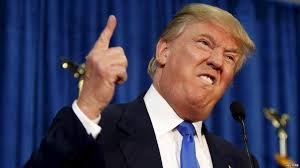
    Blue Press Journal – Former President Donald Trump unleashed a scathing tirade against members of his own ‘Make America Great Again’ (MAGA) base on Wednesday, accusing them of succumbing to a “hoax” regarding the Jeffrey Epstein files and emphatically declaring, “I don’t want their support anymore!”

    In a post on his Truth Social platform, Trump expressed fury at supporters who have continued to scrutinize his administration’s handling of materials related to the late financier Jeffrey Epstein. He specifically blamed his fans for their sustained interest, despite what he described as his repeated pleas for them to “move on.”

    “Their new SCAM is what we will forever call the Jeffrey Epstein Hoax, and my PAST supporters have bought into this ‘bullshit,’ hook, line, and sinker,” Trump wrote, signaling his frustration with a segment of his most loyal followers.

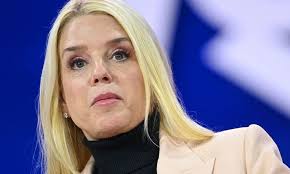
    Trump’s admonition, however, comes despite efforts by his own team that inadvertently fueled interest in the Epstein files among his base. Notably, Attorney General Pam Bondi, who served in Trump’s administration, told Fox News in February that Epstein’s client list “was sitting on [her] desk,” a comment that likely spurred further curiosity and speculation.

    Jeffrey Epstein died by suicide in federal prison in August 2019, just a month after being arrested on charges of sex trafficking minors. His death occurred during Trump’s first term in office. While Trump has consistently sought to distance himself from Epstein, the two men maintained a well-documented, years-long friendship prior to Epstein’s arrest and death.

    The extraordinary rebuke marks a rare public instance of the former president directly attacking a segment of his most loyal supporters, signaling a potential shift in his approach to internal dissent within the MAGA movement.

  • New Economist/YouGov Poll Shows Donald Trump’s Job Approval Sinking to Second-Term Low, Independents Disapprove by Wide Margin

    A recent Economist/YouGov Poll indicates a significant decline in Donald Trump’s job approval numbers, reaching the lowest point of his “second term” according to the survey’s findings. The poll reveals a growing sentiment of disapproval among the American public, particularly among crucial independent voters.

    The latest survey shows Donald Trump with a 55% disapproval rating and a 45% approval rating for his job performance. This marks a notable deterioration in public perception since the beginning of his “second term,” when a comparable poll had him with a 49% approval and 43% disapproval.

    Drilling deeper into the numbers, the intensity of disapproval is pronounced. 46% of respondents stated they “strongly disapprove” of Trump’s job performance, while only 9% “somewhat disapprove.” On the approval side, 24% “strongly approve” and 17% “somewhat approve.”

    Perhaps most devastating for his political standing, the poll highlights a dramatic erosion of support among Independent voters. A striking 64% of Independents disapprove of Trump’s performance, with nearly half (49%) voicing “strong disapproval.” In stark contrast, only 29% of Independents approve, and a mere 13% “strongly approve.”

    The findings underscore a challenging political landscape for Donald Trump, as a majority of the electorate, including a critical segment of independent voters, express dissatisfaction with his job performance.

  • Rural America Bears the Brunt of Trump’s Medicaid Cuts, But Supporters Remain in Denial

    A health clinic in McCook, Nebraska, a small town with a population of 7,446, has become the latest casualty of President Donald Trump’s budget cuts to Medicaid. The clinic’s closure has sent shockwaves through the community, leaving many without access to vital healthcare services. However, despite the devastating impact on rural America, many of Trump’s fervent supporters continue to refuse to accept the reality of the situation.

    The Medicaid cuts, championed by Trump and the Republican Party, have been sold to rural white voters as a necessary measure to prevent benefits from being squandered on “undeserving” individuals, such as immigrants, city dwellers, and people of color. This narrative has been perpetuated despite being thoroughly debunked, and has proven to be a potent tool in rallying support for the cuts.

    However, the consequences of these cuts are now being felt in communities like McCook, where the health clinic’s closure will leave a significant gap in healthcare services. The clinic’s demise is a stark reminder that the Medicaid cuts are not just affecting “illegals” or “freeloaders,” as some right-wing message boards would have you believe, but are instead harming hard-working, rural Americans who are in dire need of healthcare services.

    Despite the evidence, many of Trump’s supporters remain in denial, insisting that the cuts are only affecting those who do not deserve healthcare. Social media platforms are filled with comments from individuals who claim that the cuts are necessary to prevent abuse of the system, and that the only people being hurt are those who are not truly in need.

    The stark reality on the ground unveils a grave predicament. Rural America, long besieged by a lack of adequate healthcare services, is facing a devastating blow from the recent Medicaid cuts. Alarmingly, experts predict that these drastic reductions to Medicaid will resonate throughout nearly every state, with the terrifying forecast showing that more than 25% of hospitals could face closure. In 11 states, the situation is even more dire, as up to 50% or more of hospitals stand on the brink of shutting down, leaving vulnerable communities in a perilous state.

    The shutdown of the health clinic in McCook serves as a stark reminder of the human cost of the Medicaid cuts, and the need for republicans to reconsider the impact of their decisions on rural America.

  • Republicans Block Democratic Effort to Release Epstein Files: What are they Hiding?

    In a move that has sparked controversy and raised questions about transparency, Republicans in the House of Representatives have thwarted a Democratic attempt to force a vote, Tuesday, on releasing the files related to the Jeffrey Epstein case. The effort, led by Rep. Ro Khanna (D-Calif.), aimed to require Attorney General Pam Bondi to preserve, compile, and publish the Epstein files, but was ultimately unsuccessful.

    The Democrats had framed the procedural vote as a referendum on whether Republicans wanted the Epstein files to be released, or whether they would side with President Trump’s request to keep them under wraps. By opposing the motion, Democrats argued that Republicans were effectively blocking the release of the files, which could potentially shed light on the circumstances surrounding Epstein’s death and the alleged wrongdoing of those involved.

    The Epstein case has been a source of intense public interest and scrutiny, with many calling for greater transparency and accountability. The fact that Republicans have now blocked an effort to release the files has raised suspicions about what they might be trying to hide. As one Democrat noted, “Republicans spent years screaming for the Epstein Files to be released. Now Donald Trump wants to hide them.” This sudden about-face has led many to wonder what has changed and what the Republicans might be trying to conceal.

  • Tariff-Induced Inflation Begins to Take Hold: Economists Expect Further Price Increases

    The latest Consumer Price Index (CPI) report from the Labor Department’s Bureau of Labor Statistics has shown the first signs of tariff pass-through, with inflation rising 0.3% in June. This increase, the largest since January, is likely to be the starting point of a long-anticipated uptick in inflation driven by the sweeping import duties announced by President Donald Trump in April.

    Economists have been warning that the effects of the tariffs would take time to materialize, and the June CPI report appears to confirm this expectation. Businesses had been selling merchandise accumulated before the tariffs were announced, which helped to keep prices stable in the short term. However, as these inventories are depleted, the full impact of the tariffs is expected to become more evident in the July and August CPI reports.

    The experience with tariffs on washing machines in 2018 provides a precedent for this delayed effect. At that time, it took several months for the duties to show up in the inflation data, and economists are expecting a similar pattern to emerge this time around.

    The June CPI report showed increases in various categories, including food prices, which rose 0.3% to match the increase in May. Grocery store prices also advanced 0.3%, driven by a 1.4% increase in the costs of nonalcoholic beverages and a 2.2% jump in coffee prices. These price increases are likely due to higher import duties, which are being passed on to consumers.

    Other categories that saw significant price increases include fruits and vegetables, which cost 0.9% more, and beef prices, which jumped 2.0%. The cost of food consumed away from home rose 0.4%, while gasoline prices rebounded 1.0% after four straight monthly declines.

    Rental costs also contributed to the overall increase in inflation, with the cost of shelter rising 0.3%. This reflects the ongoing trend of rising housing costs, which has been driven by a combination of factors, including limited supply and strong demand.

    The tariff-exposed goods, which saw significant price increases in June, are likely to be the first of greater price pressures to come. As the effects of the tariffs continue to ripple through the economy, economists expect to see further increases in inflation, which could have implications for consumer spending and economic growth.