The BLUE PRESS JOURNAL

We aim to be a voice in the ongoing political discourse, providing both factual information and opinionated analysis, from a progressive or center-left perspective, free from the direct influence of major
established Main Street Media.

  • The Golden Idol vs. The Gospel: Why Trump’s Attack on the Pope Is a Moral Line Crossed

    Large golden statue of a man sitting on an ornate throne surrounded by people looking up

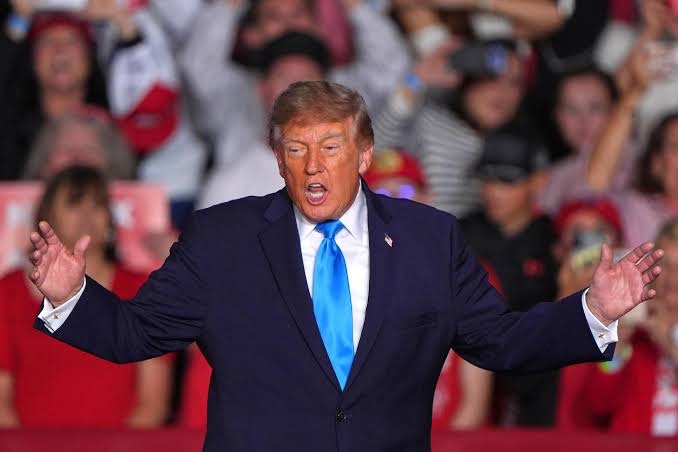
    Blue Press Journal – In the landscape of modern politics, Trump politics, we have become accustomed to the daily barrage of inflammatory rhetoric from Donald Trump. However, Sundays unhinged tirade against Pope Leo XIV—the first American-born pontiff—marks a chilling departure from political discourse and signals a complete detachment from reality. 

    When the president decided to attack the head of the planet’s biggest religious group, debate over decisions and policies fades away. Instead comes a breakdown in basic thinking. It is a fundamental collapse of cognitive reasoning and a direct affront to the core tenets of the Christian faith.

    The Tirade: A Distortion of Reality

    The attack, posted to Truth Social, was as erratic as it was vitriolic. Trump took issue with the Pope’s calls for global peace—calls that were not directed at any specific individual, but were instead a broader warning against the “delusion of omnipotence” that threatens international stability. 

    Instead of measured responses, Trump responded with sharp criticism, calling the Pope ineffective regarding crime and poorly suited for international affairs. Not stopping there, he suggested his own influence shaped events, insisting the cardinals chose the pontiff as a calculated effort against his administration.

    “I don’t want a Pope who criticizes the President of the United States because I’m doing exactly what I was elected, IN A LANDSLIDE, to do,” Trump griped.

    The Conflict: Omnipotence vs. Peace

    The Pope’s message was a clarion call for de-escalation, particularly regarding the growing tensions with Iran. Throughout history, the Papacy has stood as a bastion for peace, preaching the message of brotherly love and the sanctity of human life. 

    What stands out is how a plea for worldwide calm was taken as an offense to Donald Trump. Only a narcissist would view the Popes remarks as against himself.  Trump targeted the Catholic Church’s head over messages favoring peace, it went beyond criticism of an individual. Instead, it became defiance of principles rooted deeply in Christian doctrine.

    A Choice for Christians: The Mirror Test

    For millions of American Christians, this moment serves as an urgent, defining mirror test. We must ask ourselves: Has the political movement surrounding Donald Trump become a golden idol that demands the sacrifice of our spiritual integrity? 

    The Bible is clear. It calls for humility, mercy, and the pursuit of peace. It does not call for the idolization of political figures who view spiritual leaders as enemies simply because they speak truth to power. If we claim to follow the teachings of Christ, we cannot remain silent while those same teachings are mocked and maligned by a leader who values his own ego above the sanctity of the faith.

    Christians and Followers of Christ

    Donald Trump’s descent into attacking the Pope is more than just another news cycle; it is a warning. It reveals a worldview where there is no room for moral authority, no room for spiritual guidance, and no room for peace if it does not serve Donald Trump’s narrative. 

    Future directions require clarity on priorities. One path follows a leader whose authority rests on unquestioned devotion. In contrast, another reflects quiet principles long professed within spiritual tradition. These are not compatible routes. Commitment to one weakens alignment with the other. Choice becomes unavoidable when values diverge so fully. The time has come to choose.

  • The Hidden Tax: How Global Conflict is Quietly Draining Our Bank Accounts

    Editorial

    Man in denim jacket refueling black car with gas pump at gas station

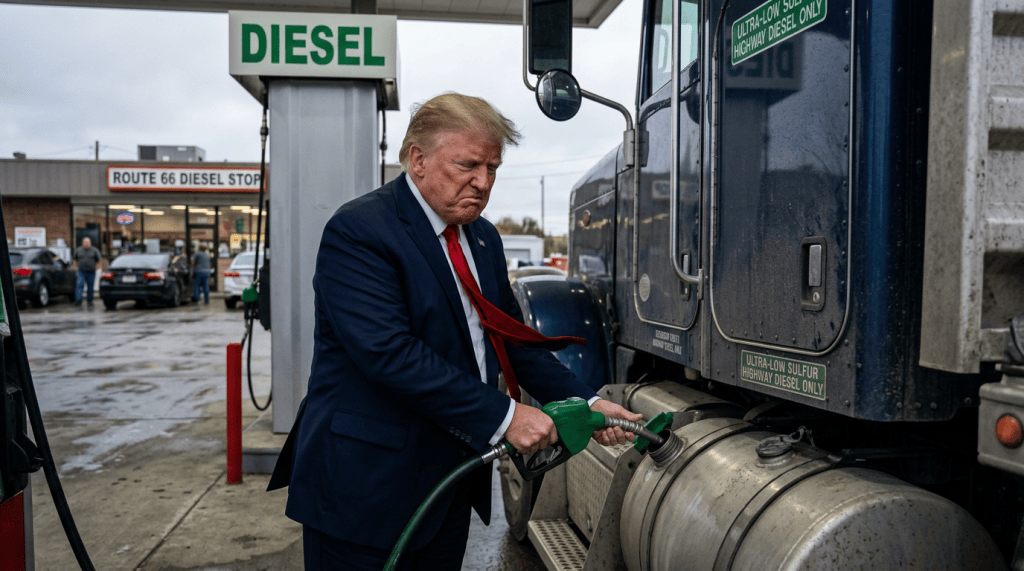
    Blue Press Journal – I was standing at the pump this Sunday morning, watching the numbers tick upward on the digital display, and I couldn’t help but feel that familiar, sinking pit in my stomach. Like millions of Americans, I’m constantly balancing the household budget, but lately, that balance feels more like a tightrope walk. 

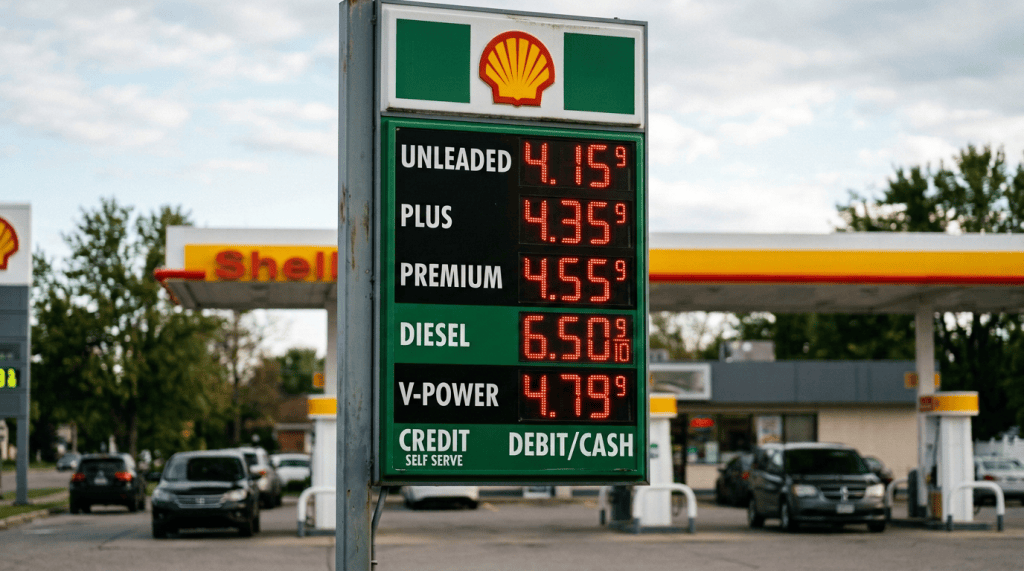
    With tensions escalating in the Middle East—specifically the war with Iran, which many experts claim was unnecessary, have caused the global oil markets to spike. When crude prices jump in response to the war in Iran, the ripple effect isn’t just felt at the pump; it’s felt at the grocery store, the pharmacy, and every single time we make a decision about our daily commute.

    The Immediate Pain at the Pump

    Energy markets are inherently reactive. According to the U.S. Energy Information Administration (EIA), even a minor disruption in supply chains or a mere risk will cause a push to national averages. When gas prices spike, they act as a “hidden tax” on every American worker.

    Mark Zandi, Chief Economist at Moody’s Analytics, and other economic analysts, have pointed to the regressive nature of high energy prices, noting that they act as a hidden tax that disproportionately impacts low- and middle-income households. When you spend a larger percentage of your income on fuel, you have significantly less discretionary capital left for housing, food, or savings.

    The “Follow-On” Cost: Our Grocery Bill

    What many of us don’t immediately account for is the logistical cost of getting goods to market. Almost everything we buy—from fresh produce in California to electronics in New York—traveled on a truck or train to get to our shelves. As diesel prices climb alongside gasoline, those transportation costs are passed directly to the consumer.

    Consider a hypothetical breakdown of how these costs impact our monthly spending:

    Expenditure CategoryEstimated Weekly Impact of High Gas Prices
    Commuting+$15 – $25 per week
    Grocery/Food Staples+$10 – $20 per week (transportation surcharges)
    Family Activities+$10 – $15 per week (sports/errands)
    Total Estimated Hit$35 – $60 per week

    Tough Choices for Our American Families

    For the average family, an extra $50 a week isn’t just “pocket change.” It’s the difference between a savings account contribution and a credit card balance. I’ve found myself cutting back on non-essential trips, consolidating errands to save on mileage, and—regrettably—choosing generic brands at the grocery store to offset the rising cost of “transported” goods.

    We are entering a season of adaptation. Americans are experts at tightening their belts, but it’s becoming increasingly difficult to find more “slack” in the rope under the Trump administration. We are choosing between the kid’s soccer tournament and an extra trip to the grocery store; we are opting for home-cooked meals over dining out; and we are delaying major purchases while we wait for the economic and political smoke to clear.

    Our Bottom Line

    As of today, analysts from sources like Bloomberg and The Wall Street Journal suggest that while the U.S. is more energy-independent than it was a decade ago, we are still beholden to the global price of oil. Until stability returns to the Middle East, volatility will remain the “new normal.”

    For those of us at the pump this weekend, my advice is simple: track your expenses, prioritize your essential travel, and keep a close watch on your budget. We may not be able to control the price of a barrel of oil or the war in Iran, but we can manage how we navigate the political choices at home. It’s clear the Trump administration has made bad choices so let’s not compound them with ours. The midterms should be where we make a clear choice for change.

  • The Shadow of the Past: Why Is Melania Trump Addressing the Epstein Connection Now?

    Blue Press Journal – In a move that has left many political observers searching for answers, First Lady Melania Trump issued a preemptive statement on Thursday, April 9, 2026, at the White House distancing herself from the late convicted sex offender Jeffrey Epstein. While no major mainstream media outlets had run a story on the topic, the timing suggests a defensive posture against a brewing digital storm.

    The catalyst appears to be a volatile social media campaign waged by Amanda Ungaro, a former model and the ex-partner of Paolo Zampolli—the well-connected businessman credited with introducing Melania to Donald Trump in September 1998 at the Kit Kat Club in Manhattan during Fashion Week.  

    The Ungaro Factor

    Why has the former First Lady focused so intensely on an individual like Ungaro who appears to taking to social media to be making accusations? The answer lies in the deeply personal X (formerly Twitter) and explosive accusations of the Trump inner circle by Ungaro. She was deported to Brazil following her arrest in Miami in June 2025. Ungaro (40) and her husband, Joao Batista Cunha De Araujo, were arrested by police on charges including unlicensed practice of medicine.

    Ungaro’s narrative is complex: she claims to have been a passenger on Jeffrey Epstein’s private aircraft during her teenage years, alleging she was funneled into his orbit via modeling industry scouts. This linked her own history to the Epstein scandal and claiming a two-decade-long knowledge of the Trumps’ social circles, Ungaro has positioned herself as a potential whistleblower. Many have questioned of the Trump-Epstein historical timeline, the public remains fascinated by the intersection of high-society modeling and Epstein’s network.

    A History of Entanglements

    To understand the conflict, one must look at the timeline. Melania Knauss met Donald Trump at a party in 1998, hosted by Zampolli at the Kit Kat Club. At the time of their introduction, Donald Trump was separated from his second wife, Marla Maples, but their divorce was not finalized until 1999. 

    The situation is further complicated by the federal government’s involvement in Ungaro’s life. According to reporting by The New York Times on the accusations of political favoritism by the White House. It is alleged that Zampolli leveraged his status as a diplomatic envoy to influence her deportation proceedings during a bitter custody battle. Zampolli has vehemently denied these claims, labeling them as “nonsense”. 

    Why the Preemptive Strike?

    The First Lady’s decision to air these concerns—despite the lack of a formal mainstream media probe—indicates a strategic choice to control the narrative before Ungaro’s online campaign gains further traction. By addressing the “Epstein connection” head-on, she is attempting to neutralize a figure who claims to possess insider knowledge of a “corrupt system.”

    Whether Ungaro can substantiate her claims or if this remains a case of digital theater, the story serves as a reminder that Donald Trump and the First Lady’s past social circles continue to pose a significant reputational challenge.

  • Economic Instability Deepens as March Inflation Surges Amid Geopolitical Uncertainty

    Tattered American flag over city skyline with stormy skies, tornado, and plunging red arrow in floodwaters

    Blue Press Journal – The United States faces mounting economic headwinds as March Consumer Price Index data reveals a troubling 0.9% monthly acceleration, pushing annual inflation to 3.3% and marking the most significant price surge in nearly twenty-four months. According to Bloomberg analysis, the primary catalyst stems from escalating militarization in the Middle East, where the Strait of Hormuz blockade has choked global energy supplies, driving gasoline costs up 21.2% and overall energy indices higher by 10.9%.

    These inflationary pressures have been intensified by the Trump administration’s erratic tariff implementations, which Reuters reports have destabilized manufacturing supply chains already strained by conflict. The Federal Reserve now confronts a policy quandary: with benchmark rates hovering between 3.5% and 3.75%, officials must weigh intervention against a fragile labor market, while the Wall Street Journal notes that producer input costs have registered their largest decade spike.

    Despite modest GDP growth revisions to 0.5%, University of Michigan survey data indicates consumer sentiment has cratered to unprecedented lows, directly linking economic contraction to geopolitical volatility. Business leaders warn that without sustainable diplomatic solutions and coherent trade strategies, April indicators promise continued fiscal turbulence.

  • Trump’s Iran Ceasefire: Strategic Stalemate Masquerading as Diplomatic Victory

    Man tearing a paper labeled Iran nuclear deal with conflict and political imagery in the background

    Blue Press Journal – The Trump administration’s declaration of victory following recent hostilities with Tehran rings hollow against a backdrop of unresolved crises and diplomatic retreat. What officials characterize as a successful military campaign reveals, upon closer inspection, a strategy that has left Iran’s nuclear ambitions intact and its regional influence largely undiminished.

    The fragility of the announced ceasefire became immediately apparent when Iranian parliamentary speaker Mohammad Bagher Qalibaf accused Washington of negotiating in bad faith. As Reuters reported, the agreement’s explicit exclusion of the ongoing Israeli military operations in southern Lebanon—a conflict that has claimed over 1,500 lives and displaced more than one million civilians according to United Nations estimates—undermined Tehran’s willingness to engage in further bilateral talks. White House confirmation that Lebanon remained outside the ceasefire’s scope has validated Iranian accusations of American duplicity.

    Secretary of Defense Pete Hegseth’s claims of degrading Iran’s conventional capabilities ignore the reality of asymmetric warfare that Tehran has mastered. While the administration celebrates tactical gains, Iran’s effective blockade of the Strait of Hormuz sent global oil markets spiraling, demonstrating economic leverage that military strikes cannot neutralize. Bloomberg analysis indicates this pressure directly inflated American energy costs, forcing President Trump to contemplate unprecedented “joint venture” arrangements that would effectively cede partial control of this vital artery to Tehran—far from the decisive dominance initially promised.

    The administration’s nuclear containment strategy appears equally untenable. Despite Hegseth’s assertions regarding Iran’s 970-pound stockpile of highly enriched uranium, The Washington Post notes there remains no credible mechanism compelling Tehran to voluntarily surrender its ultimate survival deterrent. The regime’s survival—cemented by the seamless succession from Ayatollah Ali Khamenei to his son Mojtaba, as documented by The New York Times—belies administration assumptions that military pressure would catalyze domestic collapse.

    Ultimately, Iran has achieved its primary strategic objective: endurance. The Islamic Republic has weathered American bombardment while retaining the capacity to destabilize regional energy flows. Rather than securing a decisive victory, the Trump administration has engineered a precarious stalemate that leaves the United States negotiating from a position of diminished leverage.

  • The High Cost of Chaos: Questioning the Trump Administration’s Iran Strategy

    Naval combat scene with burning ships, missiles, helicopters, and a soldier operating a gun on a boat

    Blue Press Journal – The escalation of conflict between the United States and Iran has pushed the global economy to the brink, fostering an environment of instability that many experts argue was entirely preventable. By initiating a campaign of military aggression without congressional authorization, the Trump administration has by passed legislative oversight, leaving the American public to bear the brunt of surging inflation and a precarious geopolitical landscape.

    Current negotiations center on a fragile two-week ceasefire, yet this “peace” effort remains deeply troubling. Critics argue that using the threat of mass civilian casualties as a bargaining chip to reopen the Strait of Hormuz is not only reprehensible but strategically bankrupt. Data from Lloyd’s List Intelligence confirms that shipping volumes plummeted 90% at the height of the conflict, while reports from the Financial Times indicate that Iran intends to levy hefty cryptocurrency tolls on vessels—effectively turning a vital international waterway into a proprietary toll road.

    The administration’s shifting narrative and erratic policy goals have created what many characterize as a “credibility gap.” While the White House touts progress, the Associated Press notes that claims of regional stability are contradicted by continued missile fire reported across Kuwait, the UAE, and Qatar. Furthermore, as the New York Times reports, the imposition of $2 million fees per ship suggests a significant concession that threatens the status of the Strait as an international waterway.

    Many military analysts have a scathing assessment of the presidents war describing his current posture as a “total fold.” After weeks of reckless bluster, the U.S. now finds itself negotiating on terms dictated by an Iranian 10-point proposal. We are left asking: What has actually been gained? With Iranian nuclear capabilities degraded, by how much? Now we face the potential for Russian or Chinese rearmament of Iran looming, the administration’s strategy appears to be a reactive, uncoordinated mess.

    If an American president cannot maintain a coherent policy, ignores the potential for long-term strategic catastrophe, and accelerates the financial hardship of working families, we must critically evaluate their fitness for office. This unnecessary war, characterized by its lack of transparency and disregard for international norms, remains a defining failure of the Trump administration.


  • Trump’s Tax Legacy: Why Your 2026 Tax Bill Extends Far Beyond Income Taxes

    Two wealthy men on a yacht collecting money labeled Trump tax cuts as ordinary people watch.

    Blue Press Journal – As Americans prepare to file their returns this Tax Day, many are confronting an uncomfortable financial reality that stretches far beyond line 24 of the 1040 form. According to a comprehensive analysis from the Institute on Taxation and Economic Policy (ITEP), the bottom 95% of households will face higher overall tax burdens this year, while the wealthiest 1% capture $117 billion in benefits—more than the combined federal budgets for Education, Transportation, and Justice.

    The squeeze on working families stems from a policy toolbox that redefines what “taxation” actually means in 2026. As economists at the Tax Policy Center observe, the administration’s tariff strategy operates as a hidden consumption tax, increasing costs on imported goods that disproportionately impact middle-class budgets. Simultaneously, the expiration of Affordable Care Act premium tax credits—eliminated under the One Big Beautiful Bill Act—functions as a backdoor tax increase for millions who previously relied on federal assistance to afford health coverage.

    Corporate America, meanwhile, has secured historic advantages. Research from ITEP reveals that major corporations including Tesla, Amazon, and Palantir operated with effective federal tax rates approaching zero in 2025. The Congressional Budget Office warns these corporate provisions will balloon the federal deficit by $4.6 trillion over the next decade, effectively mortgaging public resources to subsidize private wealth.

    The inequity deepens through regulatory sabotage. By eliminating $40 billion in IRS enforcement funding specifically allocated to pursue high-wealth tax evasion—funding cuts widely reported by Reuters—the administration has further insulated the ultra-rich from fiscal responsibility while middle-income earners absorb the consequences.

  • Late-Night Tweets and Daytime Fatigue: Mounting Questions About Trump’s Cognitive Fitness as He Nears 80

    Blue Press Journal – Reports of former President Donald Trump’s increasingly erratic schedule have reignited debates about cognitive fitness for office, particularly as he approaches his eighth decade. Sources close to the campaign describe a pattern of nocturnal activity followed by daytime lethargy, with Trump frequently posting late-night social media rants that observers characterize as unhinged or contradictory, particularly regarding Iran policy and potential military conflicts. These early-morning dispatches often stand in stark contrast to statements made hours earlier, creating confusion about actual diplomatic positions and raising concerns about impulse control.

    Compounding these worries are persistent accounts of the 79-year-old’s behavior during crucial daytime meetings, where witnesses have described instances of fatigue or apparent disengagement during policy briefings. The combination of disrupted sleep patterns, erratic late-night communications, and inconsistent messaging on critical national security issues has intensified scrutiny from medical professionals and political analysts. While defenders attribute the behavior to an unconventional work style, critics argue that the pattern raises legitimate questions about whether advanced age and potential cognitive decline could impact decision-making capabilities in high-stakes scenarios requiring sustained attention and strategic consistency.

  • Trump Dismisses War Crimes Accountability While Compromising Classified Military Operations

    Blue Press Journal – During a volatile press briefing today, President Donald Trump exhibited a concerning disregard for both international humanitarian law and fundamental operational security, rejecting questions about potential Geneva Conventions violations while inadvertently disclosing sensitive tactical details despite direct warnings from General Dan Caine, Chairman of the Joint Chiefs of Staff.

    When confronted by a New York Times correspondent about the legal implications of targeting civilian electrical grids and transportation infrastructure—clear violations of the Geneva Conventions—Trump deflected substantive inquiry by questioning the outlet’s credibility instead of addressing the issues, according to The Washington Post and The Guardian. His dismissal of established international law protections prompted him to interrupt the reporter, refusing to engage with the fundamental principle that attacks on non-military infrastructure constitute war crimes. Trump’s assertion that he was “not at all” worried about such legal boundaries indicates a troubling departure from American adherence to armed conflict laws, especially with rising tensions regarding potential military intervention in Iran.

    Compounding these legal controversies, Trump simultaneously compromised operational security when discussing the recent F-15 pilot rescue mission. Despite General Caine’s explicit attempt to protect classified information regarding deployment numbers—emphasizing his preference to maintain secrecy—the President immediately disclosed that “hundreds” of personnel participated, contravening his own assurance of discretion. As Reuters and the Associated Press reported, such casual treatment of tactical details contradicts standard intelligence protocols designed to protect service members and future special operations.

    National security experts cited by Axios and CNN warn that this pattern of rejecting legal constraints while mishandling sensitive intelligence undermines American moral authority and tactical advantage, raising serious questions about executive judgment regarding potential military engagement in the Middle East.

  • The Dimming Light: How Trump’s Presidency Is Eroding America’s Standing

    A magnificent golden palace city built on a mountain peak surrounded by clouds.

    Blue Press Journal – There was a time when American presidents spoke of the nation as Ronald Reagan did: a “shining city on a hill,” a beacon of democracy and prosperity visible to the entire world. That imagery suggested permanence—a promise that no matter the challenges, the United States would remain the moral and economic anchor of the free world. Today, that light is flickering. Under President Donald Trump’s leadership, we are witnessing not the preservation of American greatness, but the deliberate dismantling of the very foundations that made it possible.

    The economic architecture of global cooperation has been shattered by a trade policy that treats allies as adversaries. Trump’s aggressive tariff regime has strained relations with virtually every major trading partner, transforming decades of diplomatic capital into resentment and retaliation. These are not the calculated negotiations of a nation securing its interests; they are the erratic maneuvers of an isolationist agenda that makes America poorer while promising prosperity. When the world’s largest economy retreats behind protectionist walls, the cost is borne not by abstract institutions, but by American consumers facing inflated prices and disrupted supply chains.

    Equally troubling is the administration’s incoherent approach to foreign policy, particularly regarding Ukraine and Russia. Trump’s hot-and-cold support for Kyiv—alternating between gestures of solidarity and open contempt—has left allies uncertain of American commitment. More alarming is his refusal to demand accountability from Moscow for its aggression, effectively absolving Russia of consequences while undermining Ukrainian sovereignty. This is not diplomacy; it is capitulation dressed in nationalist rhetoric, and it signals to the world that American security guarantees are negotiable commodities rather than sacred obligations.

    The recent escalation against Iran represents perhaps the most dangerous departure from presidential norms. Launching military actions without notifying allied democracies, only to later demand their support for a conflict that “makes no sense,” treats international partnerships as transactional burdens rather than strategic assets. The immediate consequence—rising gas prices—is already extracting pain from American households, translating geopolitical chaos into economic hardship at the pump. This is governance by impulse, not strategy, and the cost is measured in both dollars and diminishing American influence.

    Beneath these policy failures lies a more fundamental threat: the president’s apparent disregard for constitutional norms and his evident desire to function as a King rather than a servant of the republic. The separation of powers, the rule of law, and the peaceful transfer of authority—these are not inconveniences to be circumvented by executive fiat, but the essential guardrails of democratic governance. When a leader rejects these constraints, he does not merely damage his administration; he corrodes the public’s faith in the institutions that define American liberty.

    We are told we are entering a new golden age, but the reality is the end of the great American era that Trump and his MAGA movement have brought upon us. We are no longer the Reagan-esque “shining city on the hill”—that symbol of hope and ordered liberty. Instead, we have become an erratic power, rich in military might but increasingly impoverished in moral authority and economic stability. The policies of this administration are making America not greater, but smaller; not freer, but more constrained by the whims of authoritarian instinct.

    The city is still there, but the light is dimming. Whether it can be rekindled depends on whether we remember that true American greatness was never found in tariffs, isolationism, or the concentration of power in a single hand, but in our willingness to lead the world through principle rather than abandon it through pride