The BLUE PRESS JOURNAL

We aim to be a voice in the ongoing political discourse, providing both factual information and opinionated analysis, from a progressive or center-left perspective, free from the direct influence of major
established Main Street Media.

  • Trump DOJ’s Attempt to Block Testimony in Contempt Inquiry Signals Deepening Crisis

    Blue Press Journal – In yet another troubling chapter of the Trump-era Justice Department’s record, lawyers representing Donald Trump’s DOJ are reportedly scrambling to block their own officials from testifying in a contempt of court inquiry. The case, which stems from Judge James Boasberg’s investigation into potential contempt in the original Alien Enemies Act litigation, has now reached the D.C. Circuit Court of Appeals — a sign of the high stakes involved.

    The extraordinary lengths to which the Trump DOJ is going to shield its attorneys from questioning underscores a familiar pattern: obstruction, delay, and a disregard for judicial oversight. Rather than cooperating in a straightforward inquiry meant to uphold the rule of law, the department under Trump appears intent on keeping potentially damaging information from ever surfacing in court.

    Such stonewalling corrodes public trust in government institutions. The judiciary’s contempt power exists precisely to hold officials to account when they defy lawful orders. By fighting to muzzle its own lawyers, the Trump DOJ is sending a clear message — loyalty to the president and his political agenda takes precedence over adherence to the law. 

    This behavior is not an aberration, but part of a consistent ethos that defined the Trump administration: an executive branch unwilling to submit to checks and balances, willing to claim sweeping immunity, and quick to cry political persecution when pressed for transparency. That the issue here arises under the Alien Enemies Act case — a law with its own fraught history — only heightens the stakes for civil liberties and constitutional governance.

    As the D.C. Circuit weighs the DOJ’s appeal, it faces a choice that will reverberate beyond this single case. Siding with secrecy would embolden future administrations to defy court oversight; insisting on testimony would reaffirm that no president, and no government lawyer, is above the law.

  • US at Risk of Losing Measles Elimination Status Amid Vaccine Misinformation Concerns, with RFK Jr. in the Spotlight

    Blue press Journal – The United States is facing the possibility of losing its measles elimination status, a designation it achieved in 2000, according to public health officials. This status, granted by the World Health Organization, signifies the absence of continuous measles transmission for 12 months or more. However, rising outbreaks fueled by declining vaccination rates have put this achievement in jeopardy.

    In the recent year, measles cases have surged in several states, linked primarily to communities with low immunization coverage. Experts point to the spread of vaccine misinformation as a significant driver. Among the most visible figures associated with anti-vaccine rhetoric is Robert F. Kennedy Jr. secretary of the Department of Health and Human Services (HHS) who has long questioned vaccine safety despite overwhelming scientific evidence supporting immunization.

    Kennedy, who founded the anti-vaccine advocacy group Children’s Health Defense, has amplified unfounded claims about the alleged dangers of vaccines, including the measles, mumps, and rubella (MMR) shot. Public health officials warn that such messaging undermines trust in vaccines and can lead to hesitancy, leaving communities vulnerable to preventable disease outbreaks.

    The Centers for Disease Control and Prevention (CDC) stresses that maintaining high vaccination coverage—typically above 95%—is essential to prevent measles from regaining a foothold. Measles is among the most contagious viruses known, and even a small drop in immunization rates can lead to rapid spread.

    If transmission continues for more than a year, the U.S. could lose its elimination status, a symbolic setback and a sign of eroding public health protections. Health experts urge the public to rely on scientifically verified sources for vaccine information, emphasizing that measles is not a benign childhood illness but a potentially deadly disease.

    The situation dramatically underscores the perilous collision of public health and rampant misinformation—and the dire fallout that ensues when baseless claims drown out scientific truth. Thanks to Donald Trump for the dubious honor of appointing Robert F. Kennedy Jr. to this chaos.

  • Trump’s Redistricting Pressure Campaign Backfires in Indiana Senate 

    Blue Press Journal – In a stunning rebuke to President Donald Trump’s heavy-handed pressure campaign, 21 out of 40 Republican state senators in Indiana voted against adopting new congressional maps that would have eliminated the state’s two Democratic-held House seats. Trump’s all-or-nothing attempts to strong-arm the senators into submission only led to further division and opposition.

    Trump unleashed a barrage of social media posts, threatening GOP Senate President Pro Tem Rodric Bray and other holdouts with fierce primary challenges if they didn’t cede to his redistricting demands. Vice President JD Vance made multiple rounds to Indianapolis to try to sway the lawmakers personally. Even the White House and House Speaker Mike Johnson (R-La.) got involved, individually calling senators to push them to flip their votes. 

    However, the blitzkrieg of intimidation, threats, and attempted violence targeting senators who opposed the effort only amplified their resolve. Instead of cowering, a majority of the GOP caucus stood united against Trump’s demands, citing concerns that mid-census redistricting was a power grab and should only occur once a decade after the census.

    Senator Eric Bassler was among those who reiterated their commitment to standing by the maps they voted for four years ago, demonstrating an unwavering commitment to principle over political pressure. “I cannot support any mid-census redistricting plan,” Bassler stated firmly. “Four years ago, my Republican colleagues and I voted for our current state and federal legislative maps. I stand by that vote and I will not support legislation to change our congressional maps.”

    This rejection for Trump is a reminder that even political titans can fall when they breach boundaries of decency. It offers hope: if lawmakers stand against bullying, honorable politics might rise from extreme partisanship. Ultimately, Trump’s reckless redistricting gamble leaves him with humiliation, confirming the importance of integrity in public service.

  • Donald Trump and the “Pencil” Problem: Why the President’s Holiday Message Misses the Mark

    Why American’s are Mad as Hell

    Blue Press Journal – Senior Political Analyst

    Published: December 12 /2025


    When President Donald Trump took the podium this week in Pennsylvania to discuss “tightening belts” for the upcoming holiday season, the reaction from ordinary Americans was unmistakable: bewilderment, frustration, and a growing sense that the commander‑in‑chief is living in a reality far removed from theirs. The centerpiece of his address—a quirky, almost whimsical suggestion that families could forgo a few foreign‑made pencils in favor of domestic products—has quickly become a symbol of a deeper disconnect between the nation’s leader and the electorate he was elected to serve.

    The “Pencil” Pitch in Context

    Trump’s remarks were framed as a patriotic call to action: “You can give up certain products, you can give up pencils because under the China policy, every child can get 37 pencils. They only need one or two.” On the surface, the statement seems innocuous—a light‑hearted nod to the ongoing trade war with Beijing. Yet, when examined against the broader economic backdrop, it reveals several troubling undercurrents.

    1. Inflation Is Still a Live Issue
      One of Trump’s central campaign promises in 2024 was to “fix the inflation disaster” that he blamed on President Joe Biden’s fiscal policies. While the Consumer Price Index (CPI) has modestly cooled from its 2022 peak, core inflation remains above the Federal Reserve’s 2 % target. For families already grappling with higher grocery bills, gas prices, and rising rent, a suggestion to surrender a handful of school supplies feels tone‑deaf rather than inspiring.
    2. Supply‑Chain Realities
      The global pencil market is dominated by manufacturers in China and Indonesia, where economies of scale allow a single “pencil” to be produced for a fraction of the cost of a domestically made counterpart. By urging consumers to “give up” imported pencils, Trump implicitly dismisses the fact that many American schools and families rely on low‑cost supplies to keep classroom budgets afloat. The policy he champions—greater protectionism—has historically led to higher prices, not savings.
    3. The Symbolic vs. the Substantive
      A president’s rhetoric matters, but it must be tethered to concrete policy outcomes. Trump’s tariffs have, in some sectors, spurred short‑term gains for a handful of domestic manufacturers. However, the broader economy has seen a slowdown in export‑dependent industries, with retaliatory tariffs eroding market access for U.S. farmers and tech firms. In this light, the “pencil” anecdote is less an earnest call for patriotism than a symbolic gesture that masks the real costs of protectionist policy.

    Why Voters Are Growing Angry

    The holiday season traditionally amplifies concerns about household budgets. According to the latest Pew Research Center poll, 62 % of Americans say they expect to “tighten spending” over the next six months. When a president—especially one who campaigned on restoring economic stability—asks citizens to “give up pencils,” the reaction is not merely a chuckle; it is a genuine expression of frustration.

    • Economic Insecurity Is Not a Gimmick
      For a single‑parent household in the Midwest, the idea of swapping a cheap, imported pencil for a pricier domestic version is not a matter of patriotism but of financial necessity. The president’s comment trivializes the day‑to‑day decisions that low‑income families make: which bills to prioritize, whether to cut back on heating, or if they can afford a modest holiday gift.
    • A Disconnect From the Voter Base
      Trump’s political ascent was built on a promise to “drain the swamp” and bring a business‑savvy mindset to Washington. Yet, his current messaging reflects a leadership style that favors grandstanding over nuanced problem‑solving. The “pencil” remarks, like many of his recent speeches, suggest a preference for rhetorical fireworks rather than a detailed plan to combat the lingering effects of inflation, supply‑chain disruptions, and labor market volatility.
    • Erosion of Trust in Governance
      When elected officials appear out of step with the lived experiences of their constituents, public trust erodes. The 2025 Gallup confidence index shows a modest decline in trust toward the federal government, dropping from 35 % in 2023 to 31 % today. While many factors contribute to this decline, high‑profile missteps—such as the holiday “pencil” pitch— exacerbate the perception that the administration is disconnected from ordinary Americans.

    The Bigger Picture: Policy Over Pantomime

    Trump’s call to “surrender pencils” should be viewed through the lens of his broader trade agenda. Protectionist tariffs, when wielded without strategic nuance, can produce unintended consequences:

    • Higher Consumer Prices
      By limiting imports, domestic producers often raise prices to cover higher production costs. That means families pay more for the very goods they are being asked to “support.”
    • Retaliatory Measures
      China’s own tariffs on American agricultural products have already dented farm incomes, especially in the heartland. The ripple effects extend beyond the farm gate, touching food processing, distribution, and ultimately, grocery shelves. A good example is Trump’s 12 billion dollar farmer bailout because of his Tariffs.
    • Innovation Stagnation
      Open competition spurs innovation. Shielding domestic firms from foreign competition can create complacency, reducing the incentive to improve quality or lower costs—a risk that could ultimately harm American competitiveness on the global stage.

    What a Realistic Response Looks Like

    If the administration truly intends to help Americans navigate a tighter holiday budget, the policy playbook should include:

    1. Targeted Relief for Low‑Income Households – Expand the Child Tax Credit and supplemental nutrition assistance to offset the cost of essential school supplies and groceries.
    2. Strategic Trade Negotiations – Shift from blanket tariffs to sector‑specific agreements that protect critical industries while preserving access to affordable imports.
    3. Transparent Communication – Move away from anecdotal, symbolic exhortations and instead provide clear, data‑driven guidance on how households can stretch their dollars without compromising essential needs.
    4. Investment in Domestic Manufacturing – Support small‑ and medium‑sized enterprises through tax incentives and workforce training, ensuring that “Made‑in‑America” goods are competitive on price and quality.

    President Trump’s holiday message about “giving up pencils” may have been intended as a MAGA rallying cry for economic patriotism, but it ultimately underscores a growing chasm between Donald Trumps Oval Office and the American public. In a time when families are already feeling the pinch of lingering inflation and rising living costs, symbolic gestures ring hollow. What voters need—not a glossy sound bite about pencils—but concrete, compassionate policy that acknowledges their everyday realities.

    The presidency is, at its core, a service to the people. Trump has lost sight of the very individuals he was elected to represent, the social contract frays.

  • GOP Blocks Health Care Rescue Bill as Millions Face Soaring Premiums

    Blue Press Journal (DC) 12/11/25 – A critical bipartisan opportunity to prevent massive health insurance premium spikes has collapsed in the Senate, as Republicans overwhelmingly rejected a Democratic proposal to extend life-saving Affordable Care Act (ACA) subsidies. Despite growing alarm over the financial fallout for American families, the GOP’s refusal to support a clean, three-year extension has left millions at risk of unaffordable coverage just as enrollment for next year begins.

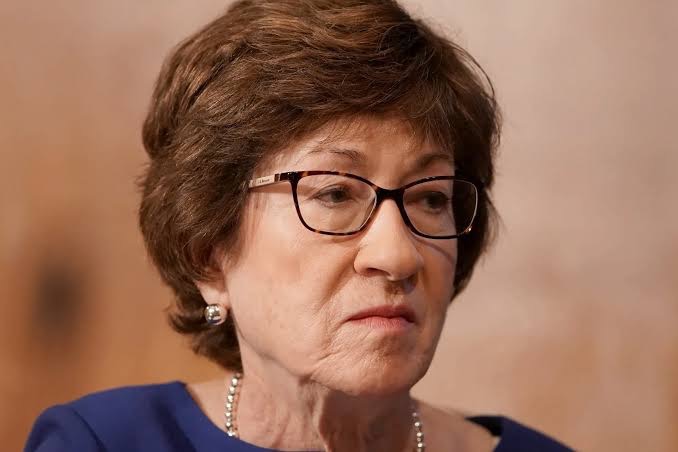
    The Democratic-backed bill, which aimed to continue enhanced subsidies introduced during the pandemic, received 51 votes—just enough to pass under a simple majority if not for the 60-vote threshold required under current Senate rules. Four Republican senators—Susan Collins (R-ME), Lisa Murkowski and Dan Sullivan (R-AK), and Josh Hawley (R-MO)—broke with their party to support the measure. But their bipartisan effort was not enough to overcome unified GOP opposition.

    These subsidies have been instrumental in making health insurance affordable for low- and middle-income Americans. Since their expansion, enrollment in ACA plans has surged to record levels, and average premiums have dropped significantly. Without action, those gains are poised to vanish overnight. Experts project that monthly premiums could increase by hundreds of dollars for millions of Americans, particularly those earning just above the poverty line.

    The consequences are not hypothetical. For a family of four in a mid-sized city, the loss of subsidies could mean paying an extra $5,000 or more annually for coverage. For many, that burden will force impossible choices: pay for health insurance or afford rent, groceries, or prescription medications.

    And yet, the Republican response has been marked by inaction and disarray. While Senate Republicans blocked the Democratic bill, House Republicans remain deeply divided on any alternative solution. There is no unified GOP plan—no proposal with policy details, no cost estimates, no pathway to enactment. Their silence speaks volumes: rather than crafting a solution, the party has chosen political obstruction over human consequence.

    This isn’t just about policy disagreements. It’s about priorities. At a moment when Americans are still grappling with the economic aftermath of a pandemic and enduring high costs for essentials like food, gas, and housing, the Republican leadership has decided that protecting working families from skyrocketing health care costs is not worth their support. Their refusal to act, again and again, underscores a broader abandonment of the very constituents they claim to serve.

    Make no mistake: the bottom line is clear. Republicans—and Donald Trump, whose influence over the party remains profound—have repeatedly demonstrated that they do not care about the affordability and accessibility of health care for ordinary Americans. They have rejected pragmatic, bipartisan compromise not because of policy concerns, but because of political calculation.

  • The Struggle is Real: How Trump’s Policies are Affecting American Affordability

    Blue Press Journal The prevailing economic conditions under the Trump administration have resulted in numerous Americans facing significant difficulties in securing their basic needs. The sobering truth is that both essential commodities and substantial expenditures are becoming progressively out of reach for a considerable segment of the population.

    Recent findings from The POLITICO Poll, conducted by Public First, shed light on the gravity of the situation. Nearly half of Americans reported difficulties in affording essential expenses such as groceries, utility bills, healthcare, housing, and transportation. The consequences of these affordability pressures are far-reaching, with 27% of respondents admitting to having skipped a medical check-up due to costs within the last two years. Furthermore, 23% stated that they had skipped a prescription dose for the same reason.

    These statistics reveal a shocking truth about the economic nightmare many Americans endure. The fact that so many can’t even afford basic necessities screams that current economic policies are failing a vast majority of the population. As the nation pushes ahead, it is absolutely crucial that policymakers wake up and recognize how their decisions are crushing the most vulnerable among us. We need a bold, comprehensive strategy to tackle these crippling affordability issues, or else we risk condemning countless Americans to a life devoid of the essentials they need to survive, let alone thrive.

    One could argue that Trump has completely dozed off at the helm while America spirals into chaos.

  • US Seizes Oil Tanker Off Venezuelan Coast: A Breach of International Law?

    Blue Press Journal – In a bold and unprecedented move, the United States has seized an oil tanker off the coast of Venezuela, according to President Donald Trump. The incident has sparked controversy and raised questions about the legality of the action under international law. As tensions between the US and Venezuela continue to escalate, the move has been met with scrutiny from lawmakers and legal experts.

    The seizure, which was carried out by US forces, is seen as the Trump administration’s latest effort to pressure Venezuelan President Nicolás Maduro, who has been charged with narcoterrorism in the US. The US has been building up its military presence in the region, and has launched a series of deadly strikes on alleged drug-smuggling boats in the Caribbean Sea and eastern Pacific Ocean.

    But was the seizure of the oil tanker a legitimate act, or does it constitute piracy on the high seas? The International Maritime Organization (IMO) defines piracy as “any illegal acts of violence or detention, or any act of depredation, committed for private ends by the crew or the passengers of a private ship or a private aircraft” against a ship or aircraft on the high seas.

    In this case, the US Navy’s seizure of the oil tanker appears to be a state-sponsored act, rather than a private act of piracy. However, the question remains as to whether the action was lawful under international law. The United Nations Convention on the Law of the Sea (UNCLOS) governs the use of force at sea, and permits the use of naval force in certain circumstances, such as self-defense or with the consent of the flag state.

    In this instance, it is unclear whether the US had the consent of the flag state or whether the seizure was justified as an act of self-defense. Trump’s comment that “we keep it, I guess” when asked what would happen to the oil aboard the tanker, has raised further questions about the motivations behind the seizure.

    Sen. Chris Van Hollen, a member of the Senate Foreign Relations Committee, has expressed concerns that the seizure casts doubt on the administration’s stated reasons for the military buildup and boat strikes in the region. “This action raises more questions than answers,” Van Hollen said.

    Some legal experts have also questioned the legality of the seizure, arguing that it may have violated the laws governing the use of deadly military force. The use of force at sea is subject to strict rules and regulations, and any action that is deemed to be unlawful could have serious consequences under international law.

    The seizure of the oil tanker is a significant escalation of the US’s campaign to pressure Maduro’s government, and has raised the stakes in the region. Venezuela is a major oil producer, and the state-owned oil company sells most of its output to refiners in China. The US sanctions have locked the country out of global oil markets, and the seizure of the tanker is likely to exacerbate the situation.

    As the situation unfolds, it remains to be seen if the US will face consequences under international law. The seizure of the oil tanker has added complexity to US-Venezuela relations and raised important questions about state power on the high seas.

  • Trump’s Trade War Comes Home to Roost: Farmers Bear the Brunt

    Blue Press Journal – In a striking critique, Fox News chief political analyst Brit Hume slammed President Donald Trump’s handling of the US trade war, pointing out that the administration’s own policies have left American farmers reeling. Trump’s proposed $12 billion aid package for embattled farmers is merely a Band-Aid on a wound caused by his own “disastrous policies,” Hume argued.

    The aid package, which includes $11 billion in one-time payments to crop farmers and $1 billion for other crops, is an admission that Trump’s trade war has taken a toll on the agricultural sector. The President’s steep international tariffs, touted as a boon to the US, have instead hurt American farmers who are now being subsidized with taxpayer dollars.

    During a roundtable event on Monday, Trump boasted that his trade war had generated the funds needed to bail out crop farmers. He also praised his tariffs on social media, claiming they were benefiting the US. However, economists argue that it’s hypocritical for Trump to take credit for helping farmers when his own policies are the root cause of their problems.

    “This is not a bridge loan; this is a subsidy,” Hume said, referring to the Agriculture Department’s new Farmer Bridge Assistance Program. “And it’s put the president now in a position where he’s got to try to help the farmers.”

    Trump’s tariffs, which include a 10% baseline tariff on all imports and levies on China as high as 30%, were supposed to be paid for by foreign countries. However, the costs have been passed on to American consumers, including farmers who are struggling to stay afloat.

    The President’s attempt to spin the aid package as a success story has been met with skepticism. As Hume noted, “Trump is using our tax dollars to fix his poor judgment and economic policy.” The $12 billion bailout is a clear acknowledgment that Trump’s trade war has failed, and that American taxpayers are footing the bill.

    As the trade war continues to drag on, it’s unclear how much longer farmers will be able to weather the storm. One thing is certain: Trump’s policies have come home to roost, and it’s the American taxpayer who is being left to pick up the tab. It’s funny that farmers supported Trump in large numbers for his election and now taxpayers have to pay for their poor decision.

  • The US Economy at a Breaking Point: A Crisis of Trump’s Leadership and Inequality

    Blue Press Journal – The United States is grappling with a deepening economic crisis under the Trump administration, marked by staggering job losses, soaring costs, and a stark disconnect between corporate profits and working-class struggles. New data reveals a mismanaged economy teetering on the edge of a prolonged recession, with households across the nation bearing the brunt of systemic failures. 

    Job Losses and Deepening Inequality

    This year alone, the US has lost 1.1 million jobs, the worst performance since the pandemic’s peak in 2020 and a 54% increase in job losses compared to the same period under President Joe Biden. Small businesses, the backbone of the economy, have cut 120,000 jobs in November alone, while tech giants and corporations report record profits. This troubling divide underscores a growing disparity: corporate America thrives, but everyday families are left behind. 

    Consumer confidence has plummeted to its lowest level since April, driven by relentless inflation and rising living costs. With wages failing to keep pace, millions are being squeezed.

    Mismanagement and Misinformation

    Rather than confront these challenges, the Trump administration has demonstrated a troubling lack of understanding—and in some cases, outright denial. President Trump has falsely declared that “affordability is a hoax” cooked up by Democrats, while Treasury Secretary Scott Bessent wrongly blames Democratic states for national inflation trends. These statements ignore both economic reality and public sentiment: 63% of Americans now hold Trump personally responsible for the cost-of-living crisis, and nearly 40% of his own voters say the financial burden is the worst they’ve ever experienced. 

    The Human Toll: Families in Crisis

    The crisis is not abstract—it is eroding the lives of everyday Americans20% of middle-class wage earners no longer afford to live in their own cities, while half of Latino and Hispanic families and 39% of Black families report being unable to afford basic necessities like groceries, housing, and healthcare. Communities of color, already disproportionately affected by economic instability, are facing a dire reckoning. 

    These hardships are fueling a political shift. Democrats are capitalizing on voter frustration, with polls showing widespread demand for policies targeting inflation, wage growth, and corporate accountability. The message is clear: voters want leaders who understand their pain, not those who dismiss it like President Trump and this administration.

    A Precipice of Recession

    Economists warn the US is on the brink of a deep and enduring recession, one that could cripple sectors from housing to manufacturing. Without bold action, middle- and working-class families risk catastrophic wealth loss, further deepening inequality. The stakes are now existential for the Trump administration: voters are prepared to replace Republicans with Democrats.


    Key Economic Indicators (2024):

    MetricData Point
    Job losses this year1.1 million
    Job losses vs. 2020Worst since pandemic peak
    Job losses vs. Biden’s 2023+54%
    Small business job cuts (Nov)120,000
    Consumer confidence index (2024)Lowest since April
    Middle-class families unable to afford city living20%
    Latino/Hispanic families lacking basics50%
    Black families lacking basics39%

    A Leadership Vacuum in a Time of Crisis

    The US economy is at a crossroads. The Trump administration’s denialism and missteps have exacerbated a crisis that demands urgent, fact-based leadership. As families struggle and the recession looms, the political consequences are unmistakable: voters will hold leaders accountable. The time for half-measures and rhetoric has passed. What remains is a fight for economic justice—and a test of whether policymakers will serve the people or the powerful. 

    The path forward is clear, leadership needs to change. Democrats need to take the congress in 2026 to get America Back On Track.

  • The $12 Billion Farm Bailout: A Symptom of Trump’s Trade War

    Blue Press Journal (DC) – As the Trump administration prepares to announce a $12 billion farm aid package on Monday, it’s clear that the president’s trade war with China has taken a devastating toll on American farmers. The aid, which will be doled out to farmers who grow crops such as corn, soybeans, and wheat, is a tacit admission that Trump’s economic policies have failed.

    The trade dispute with China has been particularly brutal for soybean and sorghum farmers, who rely heavily on exports to China. With more than half of their crops shipped overseas each year, the imposition of tariffs has effectively shut off their biggest market. It’s no surprise, then, that these farmers are being targeted for relief.

    But here’s the rub: this bailout is not just a necessary evil to help struggling farmers; it’s also a symptom of a broader problem. The Trump administration’s aggressive trade policies have created uncertainty and chaos in the agricultural sector, and now taxpayers are being asked to foot the bill.

    As a nation, we’re being told that this is the price we must pay for Trump’s “America First” agenda. But is it really worth it? By subsidizing one group of Americans over others, we’re abandoning the free market principles that have made our economy great. In a true free market, businesses that can’t compete go out of business. It’s the way the system is supposed to work.

    But under Trump’s administration, it seems we’re moving towards a more socialist model, where the government picks winners and losers. It’s a disturbing trend, and one that Republicans should be particularly concerned about. After all, the GOP has long been the party of small government and free enterprise.

    The fact that Trump’s farm bailout is being framed as a reward for farmers who supported his tariffs is even more galling. It’s a brazen attempt to buy off a key constituency, rather than addressing the underlying issues that are driving the agricultural sector’s woes.

    As the administration prepares to announce this massive bailout, it’s worth asking: what’s next? Will we see more handouts for other industries that are struggling as a result of Trump’s policies? The answer, unfortunately, is likely yes.

    For now, American taxpayers will be forced to foot the bill for Trump’s trade war. It’s a costly experiment, and one that we’re all being forced to pay for. As we watch the $12 billion farm bailout unfold, it’s clear that the real losers here are not just the farmers, but the American people as a whole.