The BLUE PRESS JOURNAL

We aim to be a voice in the ongoing political discourse, providing both factual information and opinionated analysis, from a progressive or center-left perspective, free from the direct influence of major
established Main Street Media.

  • When a War Is Lost Before the First Shot

    How Trump’s “Bold” Moves Turned a Working Iran Deal Into a Self-Inflicted Crisis

    by Winston Wendell

    Wars don’t always begin with explosions. Sometimes you lose before a single shot—when your rivals grow stronger, your network of allies weakens, and your own choices hurt more than help. That’s what happened after Trump tore up the Iran nuclear deal, the JCPOA, and started his so-called “maximum pressure” campaign. Looking back now, it’s clear: all that posturing did more harm than good.

    Oil tankers moored at an industrial port with barrels on the dock and a dramatic sunset sky

    Let’s break down how we got here—how the tough talk just made things messier, gas prices spiked, markets stumbled, and even America’s best friends started doubting us.

    1. Grandstanding Isn’t the Same as Getting Results

    Trump loved making a scene. He’d throw out fiery tweets, trash the Iran deal at every rally, and promise something “better.” He called the JCPOA weak, claiming it caved to Tehran and left America empty-handed.

    But reality didn’t match the rhetoric. The facts were plain: the JCPOA was working. Iran cut its enriched uranium stockpile by 98%, dismantled thousands of centrifuges, and opened up its nuclear sites to unprecedented inspections from the IAEA. The deal put hard limits in place.

    Still, the Trump administration never came up with a better alternative. All “maximum pressure” really meant was punishing sanctions, hoping Iran would fold and come crawling back. Of course, that didn’t happen. Instead, Iran held its ground, which is pretty much what history teaches us about relying on pressure without a backup plan.

    1. Walking Away From Progress

    The Decision

    In May 2018, Trump yanked America out of the JCPOA and hit Iran with sanctions again. I remember thinking: why break something that’s actually working? The real answer wasn’t about better policy. It was politics.

    Immediate Fallout

    Iran didn’t just shrug and take it. They cranked up uranium enrichment, ignoring the deal’s strict limits. Suddenly, the path to building a bomb got a lot shorter.

    Diplomatic ties started unraveling. The negotiating group shrank, with the U.S. out and Europe struggling to shield Iran from American sanctions. Everyone’s bargaining power sagged without U.S. support.

    America’s allies noticed. When one country tears up a major deal, trust dries up fast. It’s not easy earning that back.

    Leaving the JCPOA handed Iran a whole new set of advantages: the freedom to enrich more uranium, the chance to play the victim, and a divided bunch of opponents.

    1. The Economic Domino Effect: Oil, Markets, Wallets

    Oil Prices Spike

    Sanctions knocked 2–3 million barrels of Iranian oil a day off the world market. Saudi Arabia and Russia tried to cover the slack, but oil prices still jumped from $70 a barrel to nearly $85 in a few months.

    We felt it, our weekly gas bill jumped about 15%. Drivers everywhere noticed, along with businesses shipping goods or running trucks.

    Markets Wobble

    Investors hate not knowing what’s next. Trump’s moves spread uncertainty all over:

    Currencies got wild, Iran’s rial tanked, dollars and gold looked safer.

    Stock markets bounced around, especially for energy companies and businesses with a Middle East footprint.
    Countries like India, China, and South Korea scrambled to find new oil suppliers. Their budgets felt the hit and so did the cost of goods at home.

    These numbers weren’t just for headlines. Groceries cost more, energy bills crept up, and even retirement savings got dinged if they were tied to the markets. Decisions in Washington rippled straight to regular people.

    1. Leaving Allies Out to Dry

    Europe on the Spot

    Europe tried to save the JCPOA with a workaround, INSTEX, but without U.S. backing, European companies ran for cover. I remember German and French leaders sounding pretty frustrated, caught between supporting the deal and avoiding U.S. penalties.

    Asia’s Dilemma

    Japan and South Korea got a few short-term waivers to keep buying Iranian oil. But every few months, diplomats scrambled to figure out what Washington would do next. It was exhausting for everyone involved.

    Trust Gets Shaky

    When the rules keep changing, allies grow suspicious. NATO wasn’t thrilled. Neither were old partners, watching America toss aside another agreement. Doubt crept into military exercises, intelligence sharing, and every future negotiation. And that kind of mistrust is hard to reverse.

    1. Why “Maximum Pressure” Missed the Mark

    The biggest mistake? Betting it all on sanctions without leaving room for real negotiation. Iran’s leaders just doubled down, ramped up their nuclear work, and kept stirring up trouble in the region. More pressure just meant less cooperation, not more.

    So what did the U.S. get? A dead inspection program, an Iran with more nuclear options, shaky world markets, and cooler alliances all around. Everyday Americans ended up paying for it.

    Honestly, a smarter move would’ve been to stick with JCPOA inspections and use them as leverage to fix the deal’s flaws on missiles, on regional actions. Not trashing the whole thing.

    1. Lessons for Next Time

    Here’s what I take away:

    If something’s working, don’t destroy it, improve it. Check if it’s actually hitting its goals, then build on that.
    Sanctions only work if there’s an exit. Just squeezing harder makes the other side push back.

    Stay tight with partners. America’s strongest when its friends trust and cooperate. Go it alone, and you end up isolated and less effective.

    When Showmanship Wins, Everyone Pays

    I watched the fallout from one attention-grabbing decision echo all the way from the UN to my local pump. Trump’s bold moves made for good TV but wrecked progress and ordinary people picked up the bill.

    The Iran deal wasn’t perfect, but it did the job. Scrapping it gave Iran new momentum, touched off economic pain, strained alliances, and made life harder for regular folks.

    If we want to avoid repeating this, we need to stick with what works, trust the facts, and focus on steady, smart partnerships. Real strength isn’t just about big talk. It’s about reliable leadership that others (and the world) can count on.

    If this breakdown made sense to you, pass it on or subscribe for more straight-shooting analysis on politics, economics, and global security.
    Fediverse reactions
  • Inside the PROMISE Act: The Behind-Closed-Doors Deal Targeting American Safety Nets

    by Winston Wendell

    Social Security in Danger

    Every time I look at Washington, D.C., I can’t help but shake my head at the tricks politicians pull. But this PROMISE Act sitting on my desk? That’s next-level. It’s political cynicism at its finest, and I won’t stay quiet about it—Americans deserve better than to have their most basic safety net tampered with behind closed doors.

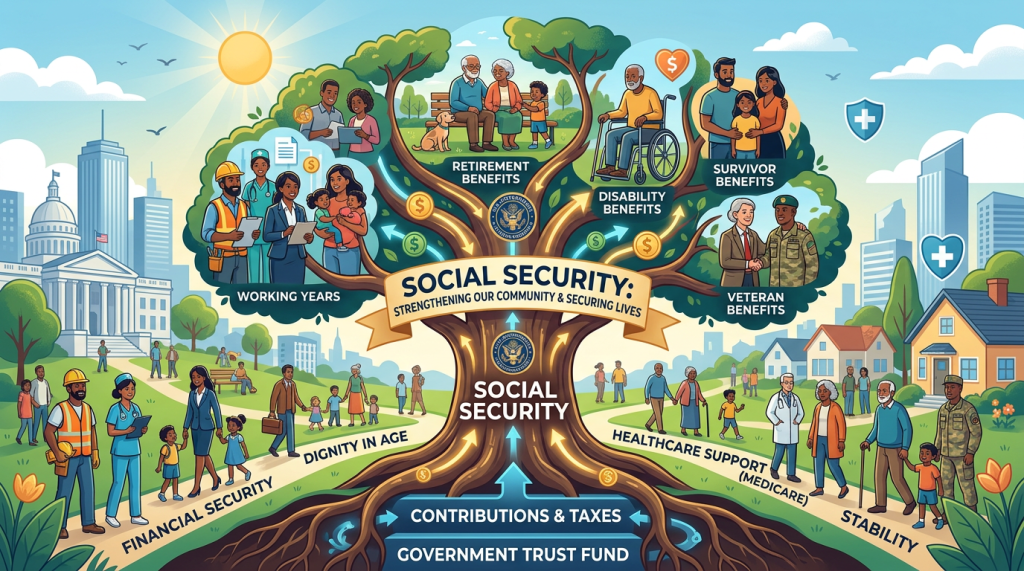
    Illustration of a Social Security tree depicting working years, retirement, disability, survivor and veteran benefits, and healthcare support

    Let’s talk about what’s really in this bill, because it’s wild.

    The PROMISE Act hands control to four unelected members of the Social Security Advisory Board. They’d have just one month to come up with a fifty-year plan to fund Social Security. If they agree on something, Congress has to hold an immediate vote—right after an election, when we’re in that gray “lame-duck” zone before new members are sworn in. If the panel can’t agree? Then any single member of Congress can throw their own plan straight onto the House floor—no committees, no amendments, no real debate, nothing.

    Stop and think about that. They want to fundamentally change Social Security—the backbone for millions of retirees, people with disabilities, and survivors—at a moment when politicians who are leaving office have nothing to lose. They’re basically insulated from any backlash.

    For me and for millions of folks working hard everyday, that’s the exact opposite of democracy.

    And who’s behind this? A “bipartisan” group of senators: Bill Cassidy, Dick Durbin, Thom Tillis, Tim Kaine, John Cornyn, Angus King, and Alan Armstrong. Now look closer: five out of these seven are either retiring or already lost their next election. They don’t have to answer to anybody. They won’t stand behind cuts or a higher retirement age. They can just pull the trigger and walk away, leaving the rest of us to deal with the fallout.

    I’m not the only one calling this out. Advocacy groups are furious, as they should be. The AARP fired off a letter to Cassidy and Durbin, ripping them for trying to rush these changes without real public input. Max Richtman, he runs the National Committee to Preserve Social Security and Medicare—put it bluntly: lawmakers who aren’t facing another election have no business messing with people’s earned benefits. That’s basic accountability.

    Now, I’m not denying there’s a real problem. The Social Security Board of Trustees said back in June: if Congress does nothing, the trust funds only cover 78% of promised benefits starting in 2032. We need to fix that.

    But the folks pushing the PROMISE Act want to fix it on the backs of ordinary workers—with cuts, stingier cost-of-living raises, or hiking the retirement age.

    There’s a straightforward, fair solution that doesn’t hurt seniors or vulnerable people. The proposal is simple: make the wealthiest pay what regular folks already do. If you make more than $250,000, you’d pay payroll taxes on every dollar, just like everybody else.

    This isn’t just about keeping Social Security alive for 75 years—it’s about making it stronger. The plan actually increases yearly benefits by $2,400 for people. And voters agree. Eight out of ten support this, according to a Data for Progress poll.

    Still, Senate Republicans blocked my bill. Why? Because protecting the ultra-wealthy from paying taxes is practically a team sport in Washington.

    My message the whole Democratic Party: draw a bright line, no raising the retirement age, no benefit cuts, no watered-down cost-of-living hikes, no privatization, and no backroom deals in the

  • The Delusion of Democratic Socialism: A Betrayal of the American Middle Class

    by Winston Wendell

    I’ve watched the Democratic Party twist itself in knots for years, but lately, it feels like it’s finally unraveled. All of a sudden, “democratic socialists” have found their way to the center stage, and honestly, the party seems to be forgetting what most people need—folks who just want life to make sense, not another uphill battle. Democratic socialism isn’t a fresh spin on old values—it runs straight into the wall of what middle-class Americans care about.

    Anyone I know isn’t hoping for higher taxes or a government takeover in the middle of the night. They’re busy paying the mortgage, keeping the fridge stocked, checking if their kids’ schools are safe, and crossing their fingers there’s enough left over for a rainy day. Ask them about fairness, and they’ll tell you it’s about working hard and earning what you get. Nobody’s asking for the government to hand everything out or bog down the economy with wild experiments.

    Take the Green New Deal. Climate change matters—a lot. But come on, does anyone believe the middle class can foot a trillion-dollar bill and pay more for energy without breaking a sweat? We’re the ones stuck paying the price. They’re shaky ideas that pile even more pressure onto teachers, nurses, business owners, and workers—the same people already feeling squeezed by shrinking paychecks and pricier groceries.

    Party leaders keep saying there’s space for everyone, banking on far-left proposals to keep younger voters hopeful and the donation machine humming. But all this does is turn radical ideas into “normal,” and most families don’t buy it. Look at Darializa Avila Chevalier’s win in NYC’s 15th district—she ran on a 70% wealth tax and a federal jobs guarantee for everyone. Activists might celebrate, but regular folks aiming to buy a house, start a business, or pick a school for their kids look at that and think, “No thanks.” Her win doesn’t mean America wants to go far left. It’s a red flag that the party is veering toward policies that hike costs, kill investment, and stick even more power in the government’s hands—the last thing the middle class needs.

    What I wish is for the Democratic Party to stick to common sense, back up small businesses, and deliver real help: affordable childcare, decent job training, safer streets. Democratic socialism misses all that. If we’re being real, it’s just an idealistic, top-down plan that swaps practical answers for risky promises—and guts what makes the Democratic Party strong. If this direction keeps up, it’s the middle class left holding the mess. We know the Republican Party and Trump clearly not for the American middle Class. Let’s be honest: this isn’t some bold new path for Democrats. It’s just a turn away from what built and keeps the American middle class alive.

    Fediverse reactions
  • Gas Prices Soar While Big Oil Reaps $26.5B: Inside the 2026 Affordability Crisis

    by Winston Wendell

    Every time we stop for gas and see the price creeping past four bucks a gallon, it stings—it’s a blunt reminder of how much harder life’s gotten for regular folks. Meanwhile, the oil giants? They’re swimming in profits. Costs for everything else just keep rising. Families are stretched to the breaking point, but big oil corporations are basically making out like bandits, especially now with all the chaos in Iran.

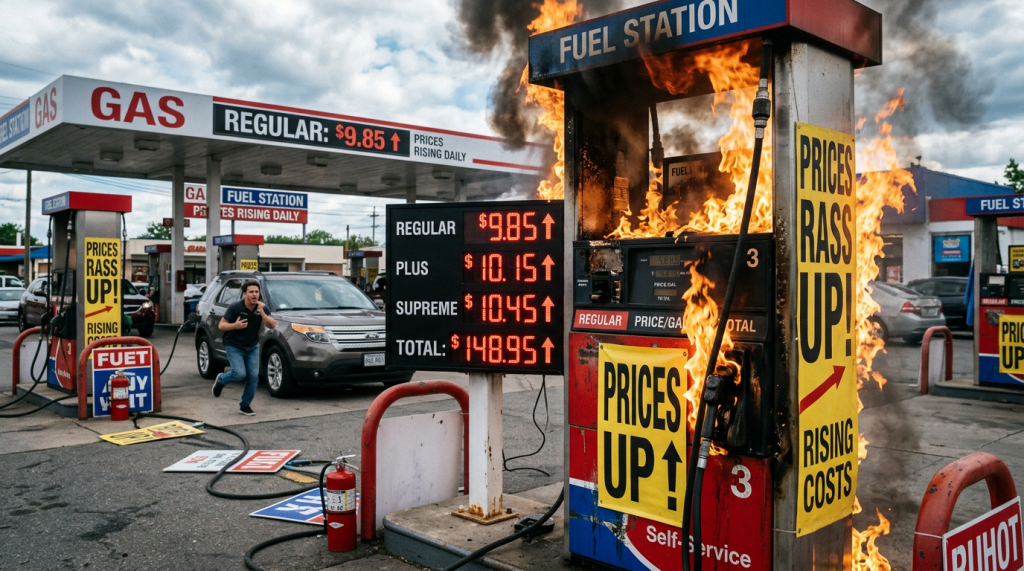
    Gas pump on fire at a gas station with signs showing high fuel prices and warnings

    Let’s just say it straight: after President Trump launched that military strike—something a lot of legal experts straight-up call illegal—fuel prices shot up worldwide. The oil companies jumped at the chance. In just the first quarter of 2026, ExxonMobil and Chevron pulled in $26.5 billion combined. And it’s not just here in the States. Shell and TotalEnergies are raking it in overseas, too.

    These numbers tell the story. ExxonMobil pulled in $14.5 billion, and a big chunk—$9.4 billion—got funneled right to their shareholders through stock buybacks and dividends. Chevron? They just had their best quarter in six years, pocketing $12 billion.

    It’s a pileup of cash at the top, while people everywhere are barely scraping by. A fresh Harris survey says 95% of Americans see the country stuck in a full-blown affordability crisis, with gas and groceries eating up most of their paychecks.

    And honestly, people aren’t just sitting quietly. A group of Democratic senators is calling out the oil giants for padding their profits while families get slammed by high prices. Things only got more heated after President Trump flat-out said his administration isn’t planning to help with the fallout from the war.

    Environmental groups and consumer advocates aren’t backing down, either. The Sierra Club and others are pushing Congress to tax these massive profits so that some of the money actually ends up in the hands of people who need it. Critics say oil execs are cozying up to the White House, fighting off new clean energy projects—stuff that could eventually give folks some breathing room.

    The bottom line: every time we stop at the pump, it’s a cold reminder—the oil industry keeps cashing in off global crises, while everyone else is just scrambling to hang on.

    Fediverse reactions
  • The Cost of Trump Protectionism: Assessing the Economic Strain of 2025‑2026


    By Winston Wendell

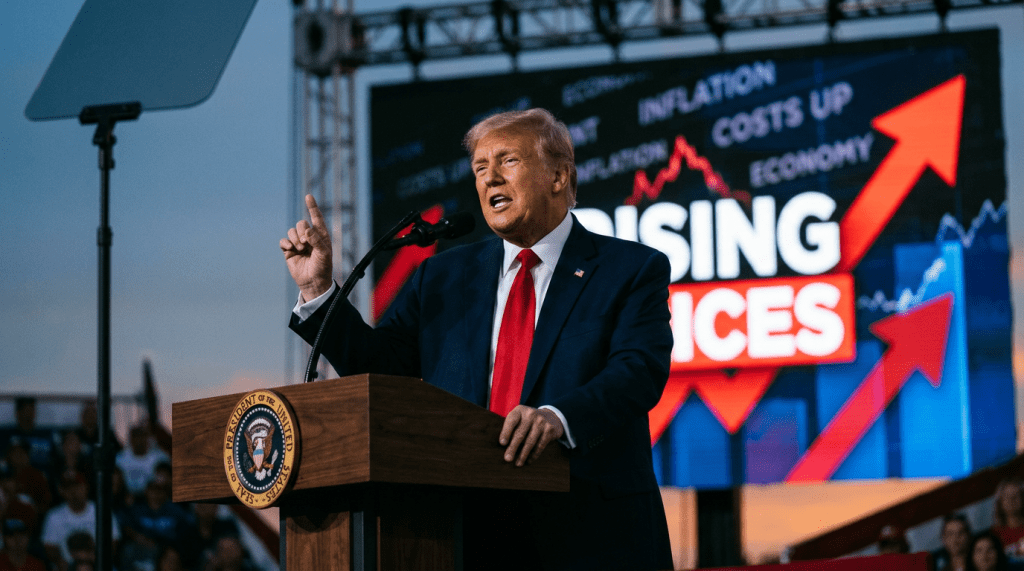
    It has been quite an eventful year – to be more precise, the economic policy of President Trump during his second term of office is turning ordinary everyday activities into a burden. Americans jokingly refer to the current situation as “Trumpflation”. However, one might wonder what is causing the increase of prices? Let us examine the causes in detail.

    Former U.S. president giving speech at podium with 'Rising Prices' and inflation graphics behind him

    Tariffs and Price Surges

    In 2025, President Trump introduced the tariffs of 10% on imports and 60% on imports from China, claiming that it will boost production in the USA. However, economists from the Peterson Institute did not hesitate in criticizing the move as a sales tax for citizens.

    By June 2026, the level of inflation in the USA reached 6.5% which is the highest one since before COVID-19.

    One of the places where this process becomes obvious is a local supermarket. America is still dependent on foreign fertilizer, chemicals, and farming equipment. As a result, any increase in the costs of importing them makes local products more expensive. A gallon of milk cost increased by almost 80% reaching $5.10. Moreover, even staple goods and food are increasing in price faster than the rate of inflation, and families making $50,000 to $150,000 a year face this problem.

    Oil Shock: The Iran War and Gasoline

    However, things get worse overseas. By the end of 2025, Trump began to attack Iran causing the start of what became known later as “The Iran War”. This led to the closure of Strait of Hormuz which accounts for 20% of global oil transportation. As a result, gasoline prices exploded.

    As a result, in early 2026, the average price of gasoline reached $5.65 a gallon. In Arizona and in the Midwest regions, the price per gallon was $6. With the yearly mileage of 12,000 miles, one will spend additional $1,200 on gasoline. Such expenses become unbearable for families with low budgets.

    Forbes reports that small businesses suffered a great deal from the situation described above – particularly those which use trucks and ships. Many business owners decided to increase their prices, but some of them simply had to fire some workers to pay for their increased costs.

    The 2025 Tax Law: The Winners and Losers

    Also, Trump passed the tax reform legislation known as “the Big Beautiful Bill”. It was said that such legislation would benefit ordinary Americans. However, the examination of the law shows that most of the profits will not reach Americans. Corporate tax breaks which were introduced in 2017 remained unchanged, but sales and excise taxes increased drastically. The Congressional Budget Office and Tax Policy Center calculated that the 1% of the richest Americans received 65% of the total benefits, and most of other people received no or little changes to their wallets.

    Such conclusion is supported by data from the Federal Reserve. Any advantage gained from tax breaks disappeared in front of rising prices. Families with middle incomes of $100,000 decreased their disposable income by 3 to 4% between 2024 and 2026.

    How Everyone Survives

    People are talking about this problem constantly. According to the Gallup poll conducted in June 2026, 68% of Americans believe that the current trend of the national economy is heading downwards. Also, according to the survey conducted by Pew, more than 75% of Americans are worried about the food and gas prices; they blame the trade war for keeping inflation.

    What Will Happen in Future?

    The Federal Reserve announced that it will continue holding interest rates at present levels to bring prices down. However, with constant tariffs and conflict with Iran, such action seems rather fruitless. Also, based on conversations with the experts, they claim that as long as the protectionism and foreign disputes remain the focus of government policy, stagflation (a combination of slow growth and high prices) is imminent.

    Such trends cannot be overlooked. It is tariffs, foreign conflicts, and tax reforms favorable to corporations which increase the cost of goods for Americans. For America’s middle class, the slogan “America First” is becoming synonymous with spending extra money on goods and gasoline.

    Fediverse reactions
  • The Seashell Conspiracy: Inside James Comey’s Bizarre Legal Battle Over a Two-Digit Photo

    by Winston Wendell

    When I first saw that strange Instagram post—a line of seashells spelling out “86‑47”—I just figured it was some quirky ad for a beach café. Fast forward to May 2025, and somehow that simple picture blew up. Conspiracy theorists latched onto it. Rudy Giuliani wouldn’t stop talking about it on his podcast. And even wilder, it ended up at the center of a federal case against former FBI Director James Comey.

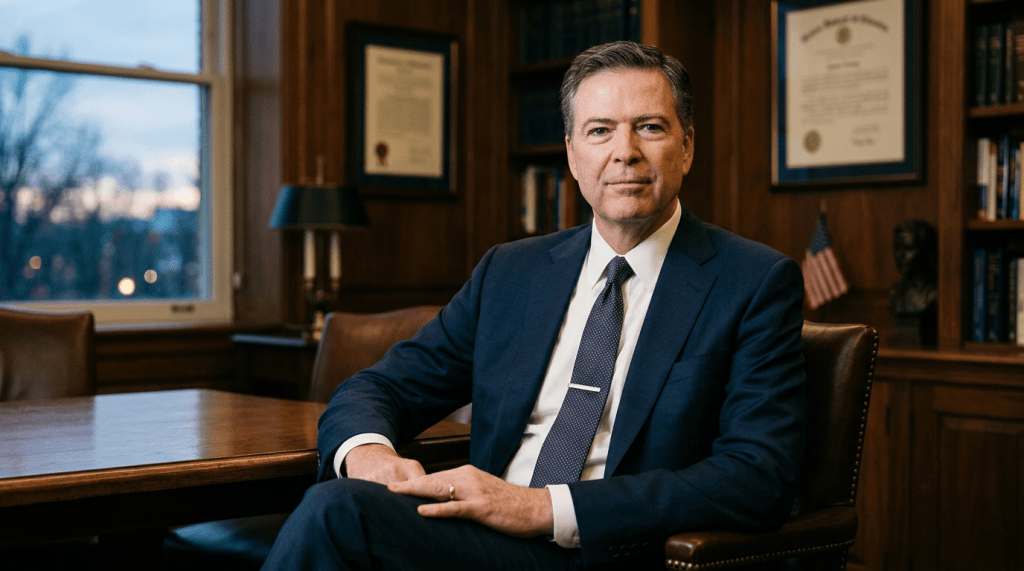
    Man in dark suit sitting at a wooden table in a law office

    I’ve spent the last two weeks digging through the mountain of urgent court documents that popped up Tuesday, trying to sort out what’s legit legal concern and what’s just loud theater. The indictment says Comey threatened President Donald Trump’s life by posting those shells, twisting “86” into mafia slang for “kill.” Prosecutors say all those years spent fighting organized crime gave Comey “special knowledge” about that kind of code, which—by Supreme Court standards—could turn an innocent beach photo into a genuine threat.

    What really got me was how much extra stuff the government threw together to back this up. Comey’s lawyers got their hands on a Secret Service memo showing agents immediately started high-alert tracking of his phone the second the post went up, tailing him as he drove from North Carolina to Northern Virginia. The memo even says agents “did not believe that anyone’s life was in immediate danger” but carried out the surveillance anyway—something the Fourth Amendment only allows in real emergencies.

    The same memo points out that Comey at first didn’t reveal exactly where he was, but then quickly agreed to meet agents in Washington, D.C. the next day. The New York Times wrote about this extreme tracking last year, but the new filings I reviewed actually include the search warrants the FBI used to dig into his Google and Apple accounts. One warrant, signed March 23, 2026, came barely days after former Attorney General Pam Bondi got ousted for refusing to go after Trump’s political enemies. Another, issued in May, is signed by a judge who’s kept anonymous on the public record.

    Even crazier, the whole government case leans on a single tipster—just called “Person 1.” This person angrily texted Comey’s wife, Patrice, after seeing the post and instantly phoned the Secret Service. The tipster’s idea that Comey “must have known the violent meaning of ‘86’” actually came straight from Giuliani’s May 20, 2025, podcast, where he claimed that any career mob-buster would get the reference. The FBI went back and interviewed this guy in April 2026, building their affidavit around his statements.

    But Comey’s defense isn’t just sitting around—his lawyers filed a six-page affidavit from John Gleeson, a longtime prosecutor-turned-lawyer who was a judge for a decade. Gleeson flat-out says “86” isn’t mob code for murder. He writes: “If ‘86’ were used to denote a killing, it would be laughable outside the context of depriving a man of liberty.” Even infamous mobster Salvatore “Sammy the Bull” Gravano testified that some outsiders might tie the word to violence, but real mobsters “never use it; it’s corny.”

    Honestly, to me, this case stands on a pile of cherry-picked pop-culture claims—a Slate interview with actress Darby Stanchfield about late-night show prep, a Giuliani podcast, and an Instagram post that could just as easily be a mellow beach vibe. Now Comey’s filed a motion asking Judge Louise Flanagan to toss the indictment on First Amendment grounds, arguing that posting “86‑47” doesn’t legally count as an actual threat.

    If the court agrees, Comey goes free, and we get a vital ruling that stops prosecutors from turning every bit of slang into a crime. Until then, this whole seashell conspiracy just proves how quickly a harmless photo can set off a political storm.

    Fediverse reactions
  • The Trump’s Avoidable Crisis: Looking Back at the Collapse of the Iran Nuclear Deal

    by Winston Wendell

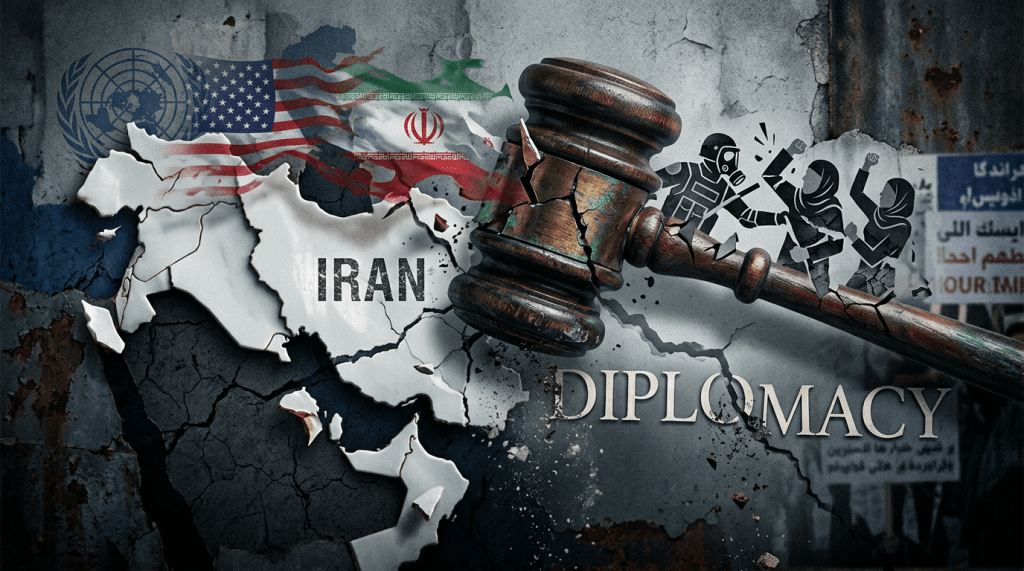
    President Barack Obama defended the Joint Comprehensive Plan of Action (JCPOA) with a blunt warning: “The choice we face is ultimately between diplomacy or some form of war.”

    Cracked gavel breaking over map of Iran with USA and Iran flags and protest figures

    Now, years later, I watch that warning turn painfully real. When Donald Trump pulled the United States out of a nuclear deal that had kept Tehran’s nuclear ambitions in check, his administration threw the country into a disaster of its own making.

    On the military front, this war’s a failure from every angle. Targeted strikes came and went, and the Iranian government endures, now with even tougher hardliners from the Islamic Revolutionary Guard Corps in charge. Iran still holds most of its missile stock, its mobile launchers, its underground bunkers. Drone and missile factories keep running. Worst of all, Tehran’s grip on the Strait of Hormuz—is even tighter. Those photos of commercial ships stuck near Larak Island say it all. Washington’s shortsighted choices gave our adversaries control of some of the world’s most important economic lifelines.

    The cost? It’s staggering, both in dollars and lives. We burned through about $25 billion at the start, and the spending hasn’t stopped. At home, Americans feel it everywhere, gas prices, groceries, you name it. But it’s the human cost that hurts most. U.S. service members have died, and hundreds cope with wounds they’ll never shake, all for a conflict with no clear end, no real transparency, and not a word of congressional approval. Like millions of others, I feel deep frustration. This is a war with no purpose, no strategy, and no exit.

    Trump’s aggressive reversal left America boxed in with terrible options. If Washington caves to Tehran—giving up huge sums of money or control over the Strait of Hormuz—we abandon the basic principle of free maritime navigation. Global commerce depends on that. An emboldened Iranian regime, flush with cash, will just buy new air defenses, load up on missiles, and use the Strait for leverage as long as it wants.

    No one wins here. There’s only the bitter fallout of a war we never needed, a conflict that put America’s security at risk, bled our economy, and left the world less stable than ever.

    Fediverse reactions
  • Trump’s Tariff Tantrum: Why a One-Two Punch on Canada and Generic Drugs Hurts America and the GOP

    by Winston Wendell

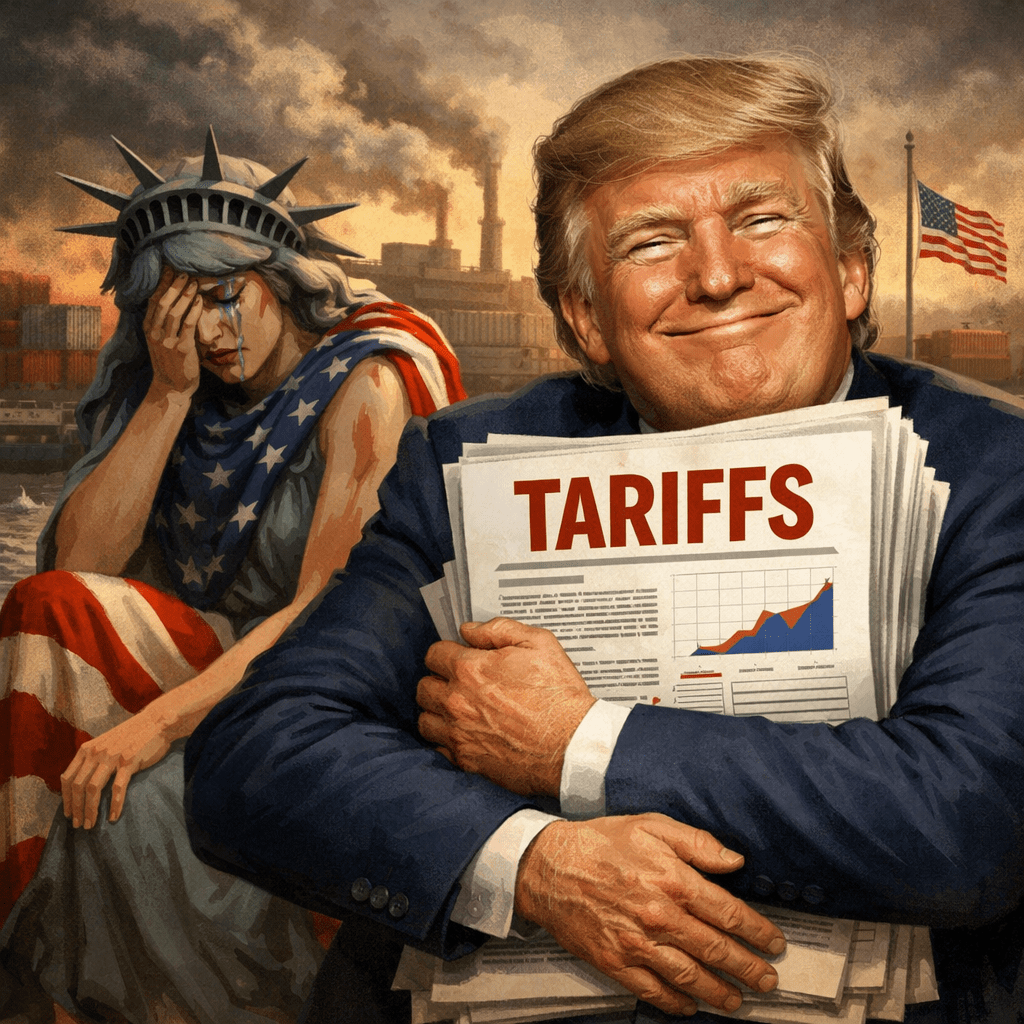
    I’ve watched the White House do the same thing over and over: grab a tariff, call it “targeted,” and insist it’ll only hurt foreign rivals. But now, they’re rolling out up to 50% tariffs on $20 billion of Canadian goods and threatening a 100% duty on generic pharmaceuticals starting in 2028. It’s familiar, sure except the risks are bigger and the fallout is faster. As someone who wants economic policy to help regular people, not steamroll them, I see this as a costly mistake. It’ll drive up prices, mess up supply chains, and chip away at the Republican Party’s standing with the voters it claims are its top priority.

    Donald Trump hugging papers labeled tariffs with a sad, crying Statue of Liberty draped in the American flag

    A Costly Bet on a Tired Storyline

    Trump’s obsession with tariffs really took off during the China fight in 2018 and 2019. He pitched those tariffs as “tough love,” meant to bring jobs home. Now it’s the same formula: slap a 50% tariff on Canadian goods like hockey equipment, lumber, alcohol plus a 100% duty on generic drug ingredients set to hit in 2028. This time, tariffs on Canada start August 19, 2026, while the drug measure waits two more years.

    Officials claim the grace period gives businesses time to “brace for impact” and that consumers won’t feel the squeeze. But history is pretty clear. Back in 2018, a Peterson Institute study showed about half the cost of U.S. tariffs winds up in consumer prices. So, when that burden lands on working families, the same folks Republicans are eyeing for November it’s more than just a broken promise; it’s downright cruel.

    Consumers Can’t Dodge the Fallout, Even with Exemptions

    The White House points out that groceries, energy, and other basic goods aren’t on the list, arguing inflation’s about housing and gas not hockey sticks. Still, thinking tariffs on “signature” Canadian goods won’t ripple out is just wishful thinking. Canada sends $383 billion in goods to the U.S. each year, and the $20 billion targeted for tariffs is baked right into our supply chains.

    Canadian softwood lumber is a textbook example, it’s crucial to construction and furniture in the States. A 50% duty squeezes supply, making homes and rent pricier something voters in states like Michigan, New York, and Pennsylvania are already upset about. Bloomberg says a lumber tariff could add costs to a new Midwestern home. That’s not just a number; it’s real money for families trying to secure a roof.

    Now look at the 100% threat on generic drugs. This isn’t about everyday aspirin, it’s the bulk pharmaceutical ingredients manufacturers need. When costs jump, the price hike rolls right down to patients. Reuters reports a common generic heart medication shot up 12% in the past year, more so as the White House added new duties in 2024. For seniors and low-income Americans who rely on affordable generics, the chance of prices doubling is alarming.

    The Political Math Just Doesn’t Work

    Republican strategists hope tariffs will feel too abstract for voters to notice. But every poll says the opposite. Quinnipiac’s June 2026 survey showed 57% of likely mid-term voters worried about inflation, 22% specifically troubled by prescription drug costs. Gallup found 61% of Americans now see trade policy as crucial, a sharp change from 2016 when hardly anyone cared.

    Even a senior White House aide quietly admitted, “Any talk about more tariffs, unless it’s about cutting them, spells trouble for Republicans.” Yet the administration keeps going, banking on a tough image to rally the base. Trouble is, that base isn’t so uniform; a lot of those folks are already stretching to handle the higher costs from Trump’s old trade battles. When the impact finally lands at the pharmacy or lumberyard, the political math flips against the GOP.

    Canada Fights Back and So Does U.S. Industry

    Canada isn’t just watching. Officials warn of big consequences on both sides. If the U.S. wins concessions, like getting American liquor back in Canadian stores there’s no guarantee Canadians will actually buy it. Canada’s trade ministry expects a 50% tariff could cut U.S. imports of Canadian wood, paper, and farm goods by around 30% in two years.

    That means trouble for local economies built on cross-border trade. Maine’s paper mills and Michigan’s auto-parts suppliers are barely hanging on. Patrick Woodcock, Maine’s Chamber of Commerce chief, didn’t mince words: hundreds of local businesses are reconsidering operations and getting ready for shocks that threaten jobs. When tariffs disrupt material flow, the hurt spreads farther than just importers, it hits manufacturers, transport, and workers.

    Tariffs Are a Blunt Tool, Not a Strategy

    Trump’s heavy reliance on tariffs doesn’t get much love from economists. The IMF’s 2024 report warned that hiking tariffs by yourself, especially over and over, just drives up domestic costs without any of the promised leverage. Legally, there’s not much support either. The Supreme Court ruled 6–3 on February 20, 2026, that President Trump overstepped his authority by using the 1977 International Emergency Economic Powers Act (IEEPA) to impose sweeping global and reciprocal import tariffs. That ruling casts a shadow over every new tariff the administration tries.

    The Bottom Line

    I see Trump’s latest tariff threats as political moves dressed up as strategy, ignoring clear evidence. Higher prices hit consumers, supply chains get backed up, and the GOP’s “average American” story rings hollow. Delays and carve-outs won’t stop the fallout, expect inflation in home materials, medicine, and more.

    Fediverse reactions
  • Inside the Donald Trump’s $2B Conflicts of Interest

    by Winston Wendell

    When I look at what’s happening in politics right now, I just can’t brush past the way presidential power seems tangled up with personal profit. People ask me all the time why President Trump is so dead set on shaping the story around midterm election integrity. It doesn’t feel like it’s just about scoring points for his party, that’s only part of it. The real answer jumps out in a single, staggering number: $2.2 billion.

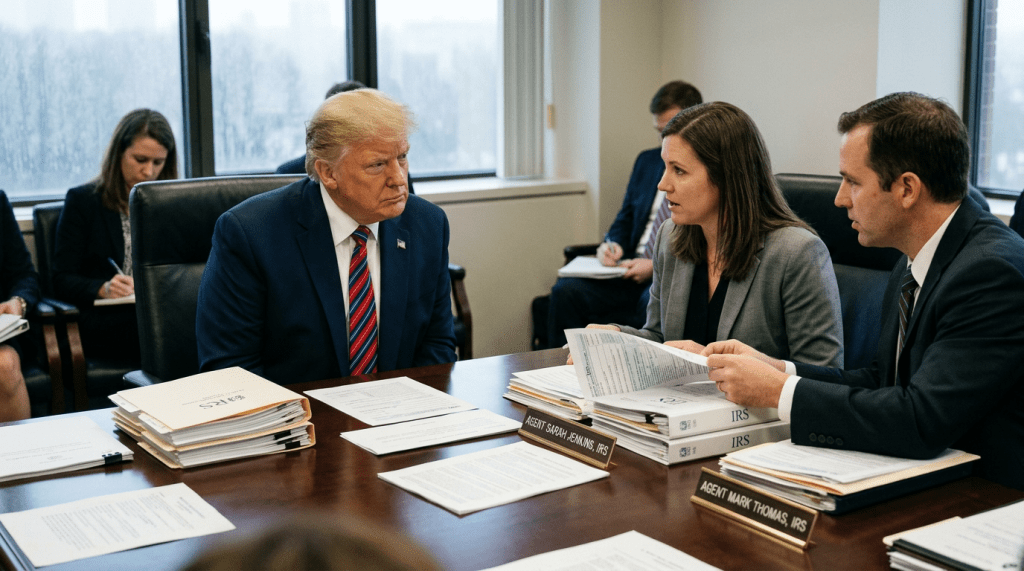
    Donald Trump in a suit and tie talking with two IRS agents with paperwork and folders on the table

    That’s how much the President’s reported wealth grew in 2025. You look at this and it’s tough to call it a fluke. Every sign points to an administration acting like it’s converted the whole executive branch into its own private equity fund. When people in power bend government to chase after profit and cover for their allies, the cost goes way beyond dollars. It chips away at the core of America’s democracy.

    The White House as a Private Estate

    When you walk through the halls of this administration, it’s hard not to feel like “the People’s House” has become someone’s private mansion. Lavish renovations funded by taxpayers, gold-plated decor everywhere, it all sends one clear message: this isn’t about public service. It’s about personal gain.

    And sure, it looks bad, but it goes deeper. There’s a pattern. Strategic pardons. Huge payouts from the top. Rules that just so happen to benefit the President’s closest circle. When policy is written to help the person in charge make money, government stops being about the people. It turns into a business.

    The Pardon Economy and Asset Recovery

    Legal scholars always said the President’s power to pardon is almost unlimited. But it was never supposed to be about cash. When you hear about a “pardon economy” , lobbyists taking huge fees to get folks through the Oval Office door, it’s a reminder that asset recovery is one of the few tools we still have, even if it isn’t used often enough.

    The pardon of crypto billionaire Changpeng Zhao stands out as a glaring example. Pardoning him right after he donated proprietary software to a Trump-connected crypto project? That should make anyone nervous. If the government puts the crypto-elite ahead of basic justice, you have to wonder: is this just side-effect corruption, or is it the core strategy?

    Lessons from Abroad: An Anti-Corruption Framework

    We don’t have to make up a new playbook for fixing this. Look at Hungary. When they faced intense corruption, they set up the National Asset Recovery and Asset Protection Office. They brought together financial investigators, police, lawyers , the whole lot and they froze dirty assets, clawed back public money, and didn’t flinch. Not only did it rebuild some trust, it freed up billions in locked-up EU funding.

    It’s a real path to accountability. It proves that if you treat corruption as a threat to your whole system, not just an awkward issue, you get results.

    A Roadmap for Accountability

    If you’re watching all this unfold, whether you’re an investigator, accountant, or just a citizen who pays attention, there’s really only one way forward: dig deep and audit the executive branch, top to bottom. Here’s how you do it:

    Contractual Oversight:  Carefully review every federal contract awarded to family and friends.  Identify and rectify any conflicts of interest.

    Cryptocurrency Accountability:  Monitor profits derived from insider government information.  Recover any stolen funds from the public.

    Payout Recovery:  Reclaim taxpayer money funneled to political cronies or anyone connected to unrest and shady dealings.

    Emoluments Audit:  Compile a comprehensive list of all foreign gifts and emoluments.  Ensure that these are returned to the public, as they are considered public property, not personal gifts.

    Pay-to-Play Investigation:  Examine the selection process for government spaces and privately connected vendors at major events.

    Regulatory Settlement Review:  Investigate whether authorities coerced private companies into large settlements as retribution.

    Pardon-Linked Financials:  Trace the flow of money, including payments, middleman fees, and shell companies associated with controversial pardons.

    This Trump “anything goes” era is unsustainable.  As political dynamics shift and they inevitably do, those who misappropriated public funds will face legal consequences.

    Anyone who treats America’s treasury as a personal piggy bank should be aware that accountability is on the horizon. 

    HERE A LIST OF A FEW

    Ethics experts, watchdogs, and legal scholars highlight several primary categories of potential conflicts:

    1. Real Estate & Hospitality Holdings

    • Foreign Government Spending: Properties like the Trump International Hotel or Mar-a-Lago frequently host foreign diplomats, officials, and state-backed entities. Spending at these properties raises concerns under the U.S. Constitution’s Emoluments Clause, which bars federal officials from receiving gifts or payments from foreign governments without Congressional approval.Campaign Legal Center+ 1
    • Foreign Licensing & Development Deals: The Trump Organization maintains brand-licensing and real estate agreements in various nations (including Saudi Arabia, the UAE, Oman, and South Korea). Critics point out that these deals create potential overlaps between personal profit and foreign policy, trade negotiations, or diplomatic decisions. Center for American Progress

    2. Cryptocurrency & Tech Ventures

    • World Liberty Financial: Trump and his family launched a digital currency and decentralized finance project.Because executive branch agencies—such as the Securities and Exchange Commission (SEC) and Commodity Futures Trading Commission (CFTC)—regulate the crypto industry, presidential policy or regulatory rollbacks can directly impact the financial value of these family-backed token ventures. Defense One
    • Publicly Traded Stock & Media Ventures: Major stakes in publicly traded ventures (like Trump Media & Technology Group, owner of Truth Social) make it possible for domestic special interests or foreign entities to buy large blocks of stock, potentially attempting to gain political favor or influence stock prices. Campaign Legal Center

    3. Domestic Business Regulation & Federal Contracts

    • Policy & Deregulation Directives: Decisions regarding tax codes, environmental rollbacks, labor regulations, or antitrust actions directly affect real estate, hospitality, and golf resort operations.
    • Federal Use of Properties: When the president, secret service detail, or federal staff stay at or utilize Trump-owned properties, taxpayer dollars are paid directly to those businesses for lodging, food, and security equipment rental.

    4. Foreign Trademarks & Debt

    • International Trademarks: Decisions by foreign governments (such as China or European nations) to approve or fast-track valuable trademark protections for the Trump brand while trade negotiations are active create potential leverage issues.
    • Outstanding Debt: Commercial properties owned or co-owned by his businesses carry significant loans held by various domestic and foreign financial institutions. Negotiating or refinancing large debts while holding executive office presents a potential conflict regarding lender oversight and regulatory enforcement. Defense One
    Fediverse reactions
  • Why Trump’s New Tariff Obsession is a Dangerous Gamble

    The Tariff Trap: Why Trump’s Economic Obsession Risks a “Catastrophic” Reckoning

    by Winston Wendell

    Watching the latest news about Donald Trump and his planned wave of new tariffs, I can’t help but feel like we’ve seen this before—and not in a good way. Trump likes to talk up these tariffs, spinning them as a way to force other countries to play by our rules and to shield the American economy. But truthfully, the reality looks a lot harsher. What we’re seeing is a strategy built for show, not for the real grind of keeping supply chains steady and costs down for everyday Americans.

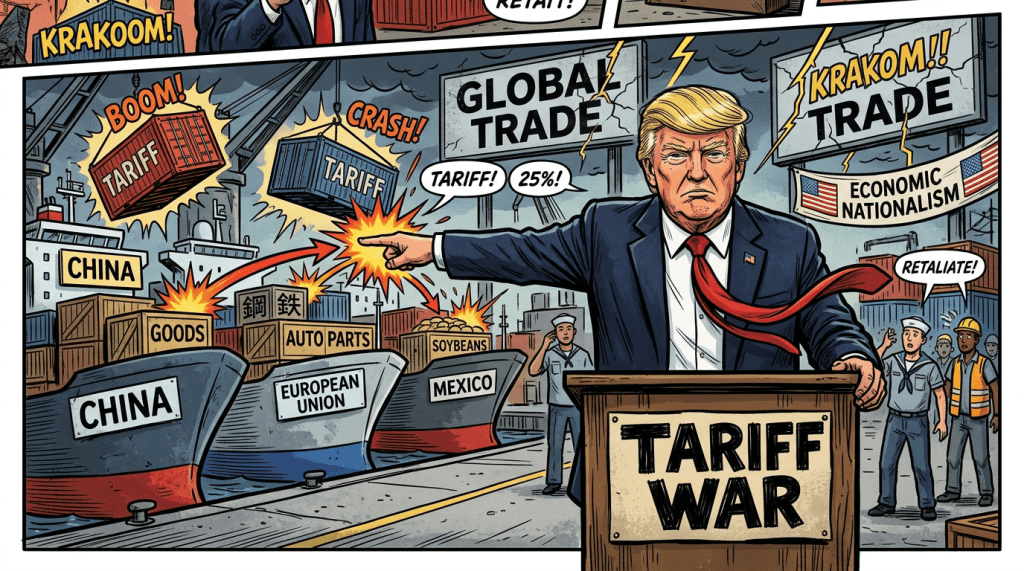
    Political cartoon of a man pointing at cargo ships labeled China, European Union, Mexico with tariff containers causing explosions and trade conflict

    Inside Trump’s own circle, people seem alarmed. The Financial Times reported that his advisers are scrambling behind the scenes, trying to steer him off this dangerous path. These aren’t just casual disagreements; his team is pulling the fire alarm, warning that this move could turn out to be a disaster.

    What really worries me is how this policy feels like a classic “shoot the messenger” move. We all saw what happened during Trump’s first term: other countries fired back with their own tariffs, American factories struggled, and farmers got stuck with huge losses as export markets dried up. Even with the economy on shaky ground right now, Trump looks set to gamble one more time.

    People are stretched thin—prices at the gas pump are heading toward $4 because of turmoil in places like Iran, and Americans are feeling the squeeze every time they shop or drive. Most voters aren’t happy with how Trump has handled living costs. And now, he wants to slap on new tariffs, knowing that every extra tax at the border gets passed straight to shoppers. That’s not just risky for a campaign—it really feels like economic arrogance.

    Then there are those behind-the-scenes talks about dodging Supreme Court limits by labeling the tariffs as probes into “forced labor.” It’s a tactic, sure, but a pretty cynical one. Instead of leading with sound economic thinking, this approach depends on bending the rules to please his supporters, even if it causes bigger problems for everyone else.

    At the end of the day, Trump’s advisers have good reasons to worry about the political fallout. If the idea is to protect American jobs, these tariffs could backfire and hurt the same prosperity he talks about defending. By shutting out the practical warnings from his own team, Trump is gambling with the one thing that was supposed to be his strongest campaign argument: the economy. At this point, we’re staring down the road to a trade war that could make life a lot more expensive for the people he swore to help.

    Fediverse reactions