We aim to be a voice in the ongoing political discourse, providing both factual information and opinionated analysis, from a progressive or center-left perspective, free from the direct influence of major established Main Street Media.
Tariffs, escalating conflicts, and soaring closures reveal a painful economic reality for American agriculture.
by Winston Wendell
In the 2024 presidential election, farmers in America voted overwheming for Donald Trump, betting that the president would stand by their interests. However, an objective review of Trump’s activity as a president demonstrates that his policies have diverged significantly from the interests of the rural population. The president’s support for free trade undermined the position of farmers, resulting in substantial losses.
His foreign policy, which started a war against Iran, contributed to the current panic in the world markets. Causing oil to skyrocket. The Trump administration has pursued a policy of imposing high tariffs on imports, which have led to the loss of foreign markets for many farmers. Clearly the president’s policies do not support farmers’. For example, family-owned farms are disappearing as enterprises with vast resources swallow up small players or they just go bankrupt.
Trump’s high tariffs resulted in billions of dollars in payments to farmers by the Treasury Department from our tax dollars increasing the national debt. His foreign policy has also affected agricultural production in the country, as Canada is a leading producer of fertilizers in north America have now been tariffed.
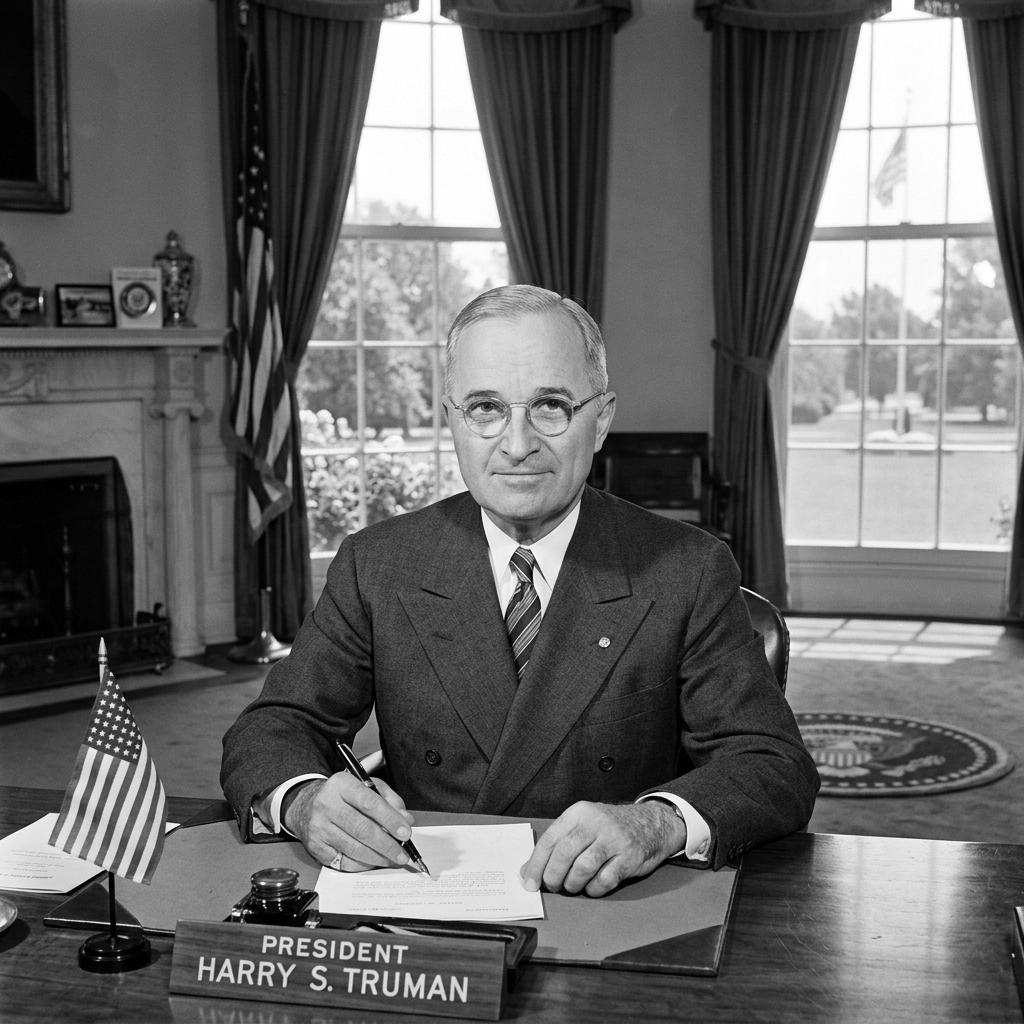
In the 1948 presidential race, Harry S. Truman warned voters not to back populist candidates in the West.
Truman warned farmers that Republicans are trying to “put a pitchfork in the farmer’s back.” The presidential candidate emphasized that he would fight to protect the integrity of free enterprise against monopolies and tariffs. Thus, Trump’s actions in the direction of protectionism and provocative foreign policy destroyed the positions of farmers, family-owned farms in particular.
Farmers who voted for Trump in the hope of improving the situation in the their lives were clearly deceived by Donald Trump, and it is clear that they have not learned the lesson of history.
Trump’s Broken Promises: A History of Unfulfilled Dividend Checks and Empty Rhetoric
by Winston Wendell
It may seem hard to believe, but promising various types of financial compensation to the population and then failing to deliver on that promise is a fairly common practice in modern-day politics. Throughout his tenure, and particularly during his second term, President Donald Trump has been known to employ a variety of financial promises as a part of his political campaign. Whether it was a reduction in federal spending and the consequent distribution of dividends or a “bonus” funded by import duties, both seem to evaporate into thin air before they can actually reach their intended destination.
Promises Made, Promises Broken
The pattern that has been emerging in the President’s second term is fairly simple and predictable, though it does not seem to have a happy ending. Over the course of the last year, there have been several particularly noteworthy examples of these policies.
The “DOGE Dividend”: Towards the beginning of his second term, Trump’s administration promotes the idea of a direct payment to the nation’s citizens funded by the drastic reduction of federal spending, which was initially proposed by Elon Musk. The Musk plan was welcomed enthusiastically by the public, and months later, that enthusiasm has yet to translate into actual results. The vague wording and the specifics of the budget window, along with a lack of real savings ensured the initiative never saw the light of day.
The $2,000 Tariff-Funded Refund: In late 2025 and early 2026, the White House assured middle- and lower-income Americans that they would receive at least $2,000 each, funded by the import duties. Various experts and commentators were quick to point out that such a decision would not be entirely dissimilar to a tax hike that would take effect on American consumers in the short term. It would appear that little else was considered, as, as of ten months later, the promised dividends have yet to make their appearance, having disappeared – like so many before them – without any trace. Let’s remember that tariffs are actually a tax ON consumers!
The $5,000 Midterm Contingency: Most recently, at the Republican midterm convention in Dallas, the administration unveiled its highest stakes pitch yet: a pledge of $5,000 to each adult citizen, but only if the Republic Party is elected to both houses of Congress. Naturally, it would appear that very few people were interested in the actual substance of the proposal, with more than one commentator condemning it as a shameful attempt to bribe the population with taxpayer money. Even more so, it is also a fairly convenient way to avoid the issue altogether in the event of an electoral failure. Please remember it would cost 1.2 trillion increasing the national debt, which is already too high!
An Exercise in Political Campaigning
Many analysts and commentators, particularly amongst the political and economic elite, view the whole affair as an elaborate sham. In many ways, that assessment is not without its merits or a complete Trump fantasy. By proposing a series of “dividend checks” that range anywhere between $2,000 to $5,000, Trump is just blowing hot air with no real intent to actually do it.
After all, a certain number of congressional committees are required to approve virtually any form of direct payment to the nation’s citizens. That responsibility, in and of itself, should be enough to give anyone pause for thought.
In the end, history – as well as common sense – would indicate that you are unlikely to receive the full amount, or, indeed, any amount at all. As we know, Trump hardly ever keeps promises!
As hard-working Americans grapple with a relentlessly brutal economy and a cascade of “extraordinarily dire” financial warning signs, Trump has once again prioritized foreign ordnance over domestic survival.
by Winston Wendell
As I watch the economy spiral downwards, each day it seems as if the hardworking American citizens are faced with new and “extraordinarily dire” economic challenges. Despite the suffering of our own people, those in the Trump Administration continue to turn a blind eye towards the domestic crises and instead focus on “investing” in Israel’s military machine.
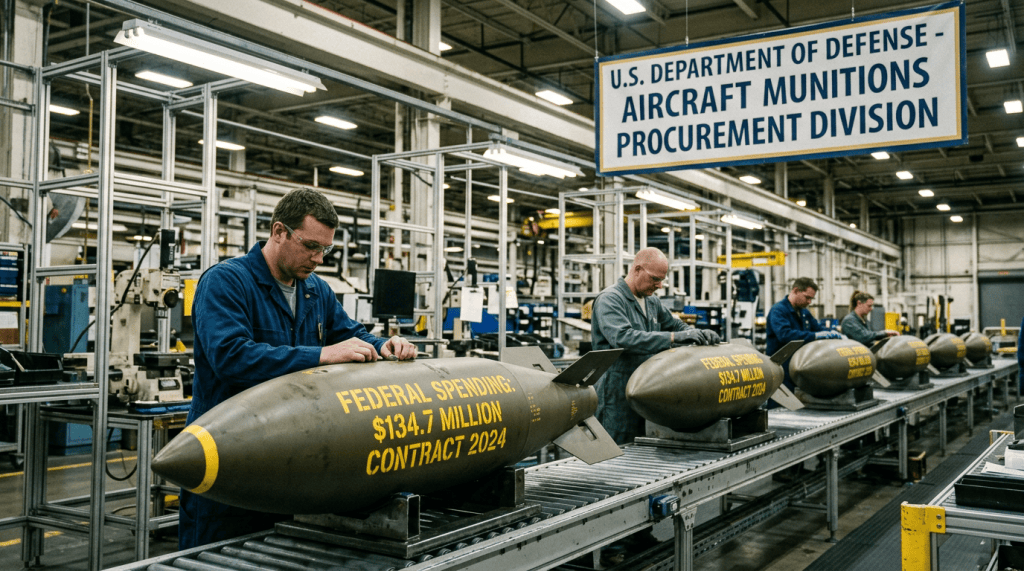
Just recently, the administration approved a shocking sum of 2.8 billion dollars to fund a new military package for Israel that includes 40,000 2,000-pound bombs. With all the shortage of military hardware for the senseless war with Iran, shouldn’t be keeping these in our inventory?
Despite the current state of our economy, the 2.8 billion dollar military package has been “paid for” through the Foreign Military Financing account. That’s taxpayer money!
It is an insult to the American people when our government can only think of ways to spend taxpayer dollars on bombs and not on our home front troops who are suffering through the “greatest recession of the modern era.”
What could the 2.8 billion dollars have done for America?
The 2.8 billion dollars could have been used to repair America’s crumbling infrastructure, such as bridges and public transportation or fully fund America’s public education system.
The 2.8 billion dollars could have been used to assist the veterans of our military who have sacrificed so much for our country and provide them with the healthcare that they deserve.
Instead, the “investment” decision was made by those in Trump Administration who only seem to worry about defense spending and not the suffering of the American people.
During these challenging times, it is an insult for the government to completely disregard the hardships of the American people and think only of ways to spend taxpayer dollars on foreign defense. Keep our money here to help Americans!
A new DHS whistleblower report reveals federal investigators may have broken state laws by impersonating voters to scan state rolls ahead of the midterms.
A newly released whistleblower report has raised serious legal and ethical concerns regarding the Department of Homeland Security (DHS) and its handling of state voter rolls ahead of the upcoming midterm elections.
According to the report—first uncovered by The New York Times and brought to light by lawmakers Sen. Alex Padilla (D-Calif.) and Senate Democratic Leader Chuck Schumer (N.Y.)—the DHS launched a rushed initiative known as the “Unlawful Voter Initiative” on August 21. The program tasks investigators with reviewing massive volumes of voter registration data to identify alleged non-citizen voters, working under an aggressive quota of five cases per hour.
How the Alleged Violations Occurred
Legal experts and the whistleblower point to critical vulnerabilities in the operation:
Impersonation Risks: Investigators allegedly accessed restricted state voter databases by using internal Personally Identifiable Information (PII) to make false attestations, potentially violating state laws that permit only registered voters to access their specific data.
Flawed Data and Rushed Timelines: Under immense pressure to review records in just 12 minutes, agents are relying on faulty data matching methods. Historically, these methods have a high rate of false positives, frequently mislabeling eligible U.S. citizens as non-citizens.
Threat of Disenfranchisement: With the midterms just 50 days away, watchdogs warn that thousands of legitimate U.S. citizens could be flagged in federal databases, risking wrongful criminal investigations, travel restrictions at ports of entry, and voter intimidation.
Congressional Response and DHS Defense
Lawmakers have taken swift action. Sen. Padilla and Sen. Schumer formally wrote to DHS Secretary Markwayne Mullin demanding an immediate halt to the initiative. At a press conference, Padilla denounced the operation, stating, “You cannot break the law when you say you’re trying to enforce the law.”
Meanwhile, a DHS spokesperson dismissed the whistleblower complaint as a media fabrication, defending the agency’s broader efforts to secure American elections.
Why This Matters
As legal challenges continue to mount around federal access to state voter databases and election integrity measures, this whistleblower report places a spotlight on the intersection of federal immigration enforcement and domestic voting rights.
How the Rudy Giuliani Administration Pushed a False Narrative of Safety While Internal Memos Warned Ground Zero Air Was Poisoned
NEW YORK — Nearly three decades after the attacks, it appears that many betrayals of trust by government authorities were covered up by the government. The freshly declassified documents, which were made public after nearly a decade-long freedom of information law (FOIL) lawsuit by 9/11 Health Watch, unveiled the fact that New York City government concealed hazardous conditions from the general public.
Among the many documents, researchers found internal memos and environmental reports that described the presence of asbestos, which was found “nearly everywhere” tested at the site, along with lead, and caustic dust that filled the air throughout Lower Manhattan.
Despite the presence of such hazardous elements, Giuliani’s administration assured citizens, workers, and first responders that the air was safe to breathe, contributing significantly to the deaths of thousands of people who survived the impact of the planes.
Now, with these documents, which were kept secret for almost 20 years, the families of those killed in the attacks ask for answers as to why New York City’s mayor and officials acted so recklessly and irresponsibly. In addition, there is an inquiry as to why city officials placed the city’s reputation and finances above the welfare of its residents.
Moreover, the DOI investigates what the city officials knew and when they became aware of the conditions at Ground Zero. It is reported that Giuliani’s administration protected the city’s image by lowering awareness of the dangerous environment at the site, where thousands of people were left without appropriate respiratory protection.
During the attacks on the United States, New York officials deliberately lied to people to protect themselves from litigation; however, they failed to provide an appropriate warning to those who would later become sick and die due to exposure to hazardous materials such as asbestos. As the New York Post learned, the DOI is currently investigating how the city fathers failed to safeguard citizens.
When I first read about the changes to the 2030 census proposed by the Trump administration, I knew it would make national headlines and turn into a political scandal. The provisions under consideration would exclude millions of people from being counted, change the funding formula, and favor redistricting that benefits Republicans.
I want to discuss what the changes mean and explain why they have caused such a stir in Washington, DC.
The Substance of the 2030 Census Changes
The provisions that the Trump administration wants to see in the 2030 census report are of a radical nature. Here are some key changes that the government wants to make:
Redefining “usual residence” as the place of “primary physical presence” during the year of the census. The administration would use income-tax filings and W-2 tax forms to determine a person’s “primary physical presence”
Excluding undocumented immigrants and legal residents who do not have residency on April 1, 2030, from the count. The 2020 census count included all foreigners, legal and illegal. The reasoning behind this provision is that it is an unconstitutional interpretation of “whole number of persons”
Removing questions on race, ethnicity, and sexual orientation. The rationale is that it is outside the constitutional powers of the federal government to collect this information.
To justify excluding non-citizens from the count, the administration has interpreted “whole number of persons” to mean “inhabitants” that have a “qualified” relationship with the political system. It is worth noting that many of these policies have been advocated by President Trump and the Heritage Foundation in Project 2025, a document outlining policies that a Republican administration would implement through executive orders.
Reaction to the Trump Census Proposal
Not surprisingly, the proposals have been met with derision and outright condemnation from Democrats and civil libertarians.
The argument that only “qualified” persons should be counted is an assault on the equal sovereignty of every American citizen that goes against the spirit and intent of the Constitution.
Letitia James, the attorney general of New York, called the proposals “a radical revision of the US Census” and said that she was considering taking legal action to block the changes because of their “unpatriotic” nature.
In the past, Ms. James has successfully sued to block similar changes to the census, and she will undoubtedly take similar actions in the future. Ms. James stated, “The Constitution says what the Constitution says. Every person who is present in the United States should be counted, period,”
Mr. Roberts of the Center for American Progress reacted to the proposal by saying that it was “a blatant attack on our democracy and a means to gerrymander our way to victory at the expense of minorities and public policy.”
Mr. Roberts added that he expected litigation to challenge the new changes and that the Court would eventually rule on whether the changes were constitutional or not.
He concluded, “Congress is the only body that can decide if this change is appropriate or not. Nevertheless, the public will have thirty days to respond to the request for comments and express their opinions on the issue.”
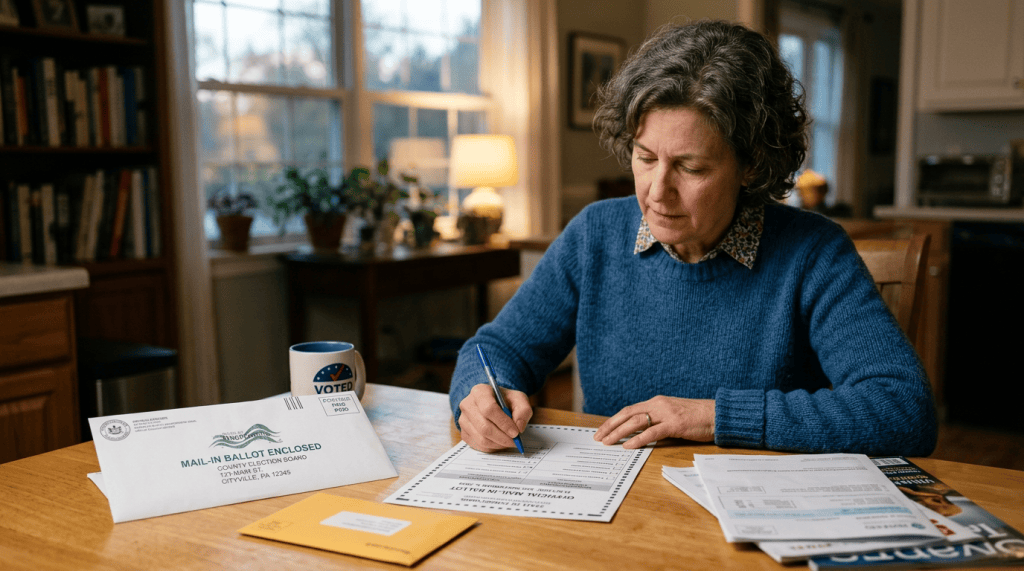
Staff Report (DC) – An appellate court upheld a judge’s order Thursday halting President Trump’s order banning mail-in voting, as the Supreme Court deliberates on the matter and several states have already sent out ballots for the important midterm elections.
A three-judge panel refused to block the preliminary injunction against the Trump order issued last week by U.S. District Judge Indira Talwani.
The Postal Service said it would not accept ballots from states that haven’t pre-approved their envelope designs with the feds and don’t have a voter roster on an online database that’s been ordered to be shut down.
“It is wholly unrealistic,” election officials said, “given that voting by mail is already underway in AL, NC and WI.”
The three judges, all named by President Biden, sided with the plaintiffs who say the president doesn’t have the authority to dictate election procedures to the states.
“Appellants have not carried their burden to show that the district court committed clear error in finding that the Final Rule is likely unlawful,” the judges wrote, referring to the Postal Service’s rule aimed at enforcing Trump’s order.
The panel’s action comes as the Supreme Court is set to hear the case, which is part of a wave of challenges to Trump’s voting order as states gear up to send millions of voters mail-in ballots for the November elections.
In a separate case filed in Washington, D.C., Democrats and civil rights groups are asking the supreme court to block the order.
Last month, the First Circuit Court of Appeals rejected a request from the Trump administration to overturn a lower court order. However, the Supreme Court vacated (canceled) the stay, on procedural grounds, and declined to rule on the constitutionality of the order.
The New U.S.-Canada Tariff War – September 8, 2026
By Winston Wendell
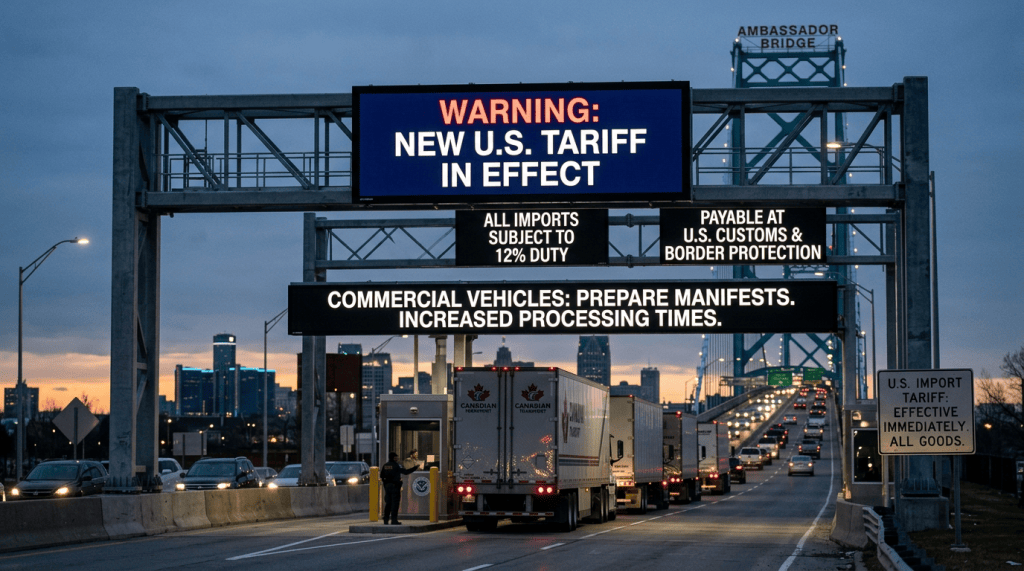
A major economic confrontation between two of the world’s largest trading partners has begun. A large-scale trade war has erupted between the U.S. and Canada, with over $20 billion worth of Canadian goods subject to new tariffs imposed today in response to levies imposed by the Trump administration. The impact of the escalating dispute will be felt by businesses and consumers on both sides of the border.
Background of the Escalating Dispute
The current trade conflict began when the Trump administration imposed stringent regulations on Canadian aircraft giant Bombardier, followed by Canada responding with a significant increase in tariffs on American goods.
Economists believe that the newly imposed tariffs will disrupt the free trade between the two nations that has existed for several decades.
The Impact on the Global Economy and Businesses
Since the 1990s, the economies of the U.S. and Canada have been closely integrated and highly dependent on each other. Goods and components often cross the border multiple times during production processes. The new tariffs will disrupt this system of just-in-time manufacturing and significantly increase costs of production for many businesses.
“The whole supply chain is being disrupted. We have had three decades of just-in-time manufacturing and distribution. This will add days and even weeks to production time,” stated Dr. Elena Vance, trade analyst at Global Commerce Institute.
Specifically affected will be the automotive industry, as many auto parts make their way from one side of the border to the other in the process of manufacturing. Other industries that rely on supplies from across the border, including agriculture and energy, will also be affected.
The Impact on Consumers
While the trade war is primarily concerned with intergovernmental tariffs, its impact will be largely felt by ordinary consumers. The billions of dollars of tariffs imposed on either side will find their way to consumers in the form of higher prices.
Automobiles, agricultural products, and energy are some of the sectors where prices are likely to rise. This is due to auto parts and foodstuffs often crossing the border multiple times in the process of manufacturing and retail. Canadian goods subject to tariffs include aluminum, steel, and food products.
“Consumers are the ones who end up paying for it. Tariffs are a tax on the domestic importers and ultimately consumers of the products,” said Marcus Thorne, fellow at Peterson Foundation.
Current State and Future Outlook of the Trade Conflict
As day one of the new tariff policy comes to a close, market analysts are speculating on how long the trade war between the U.S. and Canada will last. Some business groups are calling for a resumption of talks between the American and Canadian delegations. However, there are currently no signs of either the American or Canadian government willing to concede on the disputed issues.
Businesses are urged to become more flexible and develop new supply chain networks, while consumers should prepare for higher prices to be reflected in the cost of various products ranging from food and energy to automobiles.
Here’s a list:
Dairy Products (50% Tariff)
Milk and cream (including concentrated, sweetened, and powdered forms)
September 8, 2026 – According to a survey conducted by the Navigator Research Project, an influential Democratic poll, 60% of voters believe that Mr. Trump exacerbates corruption in the nation’s capital, while only 40% believe that he helps to eradicate it. This is a dramatic reversal of the opinion of Trump’s first campaign, which promised to “drain the swamp” and purge Washington of its corruption and special interests.
This figure represents a significant shift from the beginning of his presidential campaign, when Navigator registered only a 2 percent difference between those who thought Trump was a “source of corruption” and those who thought he would “help to eradicate it.”
“Trump has had a major shift in how people are viewing him in relation to corruption. A growing number of people see him as a source of corruption,” Ms. Tang said. “This trend was evident across different voter segments.”
Nevertheless, this is a change that has been building for sometime, prompted by recent disclosures regarding his family’s crypto enterprises, his acceptance of a new jet from the Qatari royal family, and his latest business endeavor, Truth Social, which includes a paywall. Democrats have long struggled to depict Trump as anything other than a self-seeking billionaire willing to sacrifice the government for his own gain. Nevertheless, it has proven to be a slippery slope for the anti-Trump forces.
The timing is significant because Navigator found that one-third of all voters and 40% of independents identified battling corruption as one of their top five issues. It does not take precedence over healthcare or inflation, which are of greater concern to voters, but it does rank above immigration, housing, and crime.
Most voters have a generally negative perception of corruption. By a wide margin, approximately one-third (33%) of voters and 40% of independents claim to believe that “virtually all” or “most” politicians are corrupt. This perception is consistent with recent polls that have found a record-high 89% of Americans believe there is rampant corruption in the federal government.
When asked to choose between the major political parties, respondents had a more negative opinion of the Republican Party, especially when it came to Trump. When asked whether they believed “Trump and the GOP are more corrupt or that Democrats are more corrupt,” 51% answered yes to the former and 32% to the latter. On the other hand, when Trump was not mentioned, 46% felt that the GOP was more corrupt than the Democrats, and 34% felt the same about the Democrats.
How a Needless Conflict Is Crushing American Family Budgets
By Winston Wendell
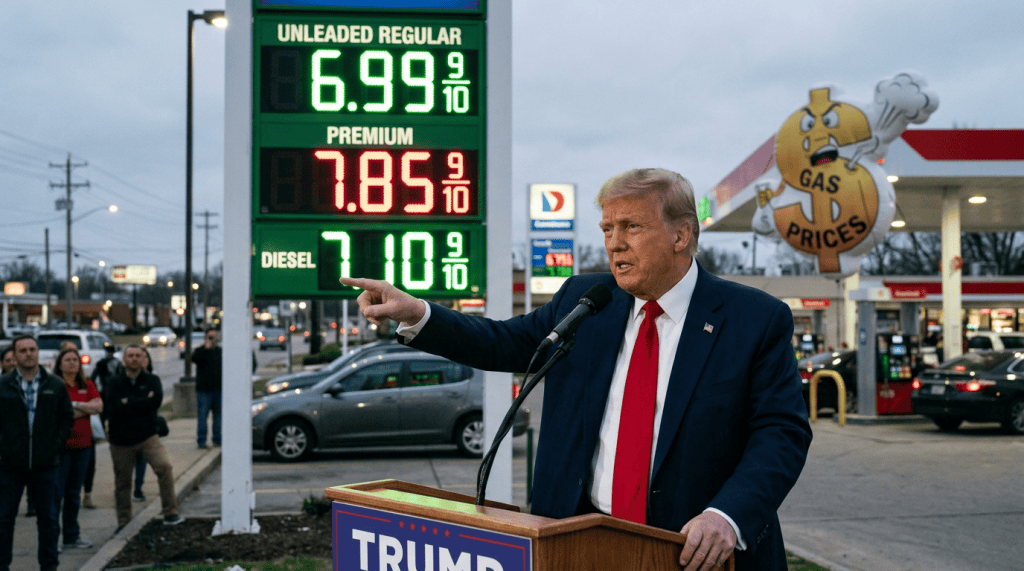
Gas prices in America have once again reached a breaking point. For many families, the prospect of filling up their cars is an unbearable prospect. Energy prices directly impact the global economy, and its repercussions are being felt by ordinary families. As an essential good, increases in its price effectively act as a tax on all other goods and services.
The devastating impact of this development is felt most strongly by middle-class families. Yet, what many people fail to understand is that this crisis is a direct result of an avoidable conflict engineered by Donald Trump.
During the 2024 election campaign, US president Donald Trump courted working-class voters by promising to ease the rising costs of living. Voters were promised that a Trump administration would be good for the economy and energy prices would plummet. Many were drawn to his populist rhetoric and pledged their vote to the former president, hoping that he would deliver on his promises.
They delivered their votes, but not much else.
With little provocation, the President decided to embark on a geopolitical and military adventure in Iran. By fueling a senseless war, Trump pushed global oil prices to a record high, devastating families that trusted him to restore stability to the economy.
This development is an unforgivable betrayal of the middle-class voters that placed their trust in him. Ordinary Americans that believed in his populism are now faced with the ugly reality of Trump’s presidency. With every visit to a gas station and a grocery store, they are reminded that their president is responsible for their financial struggles.
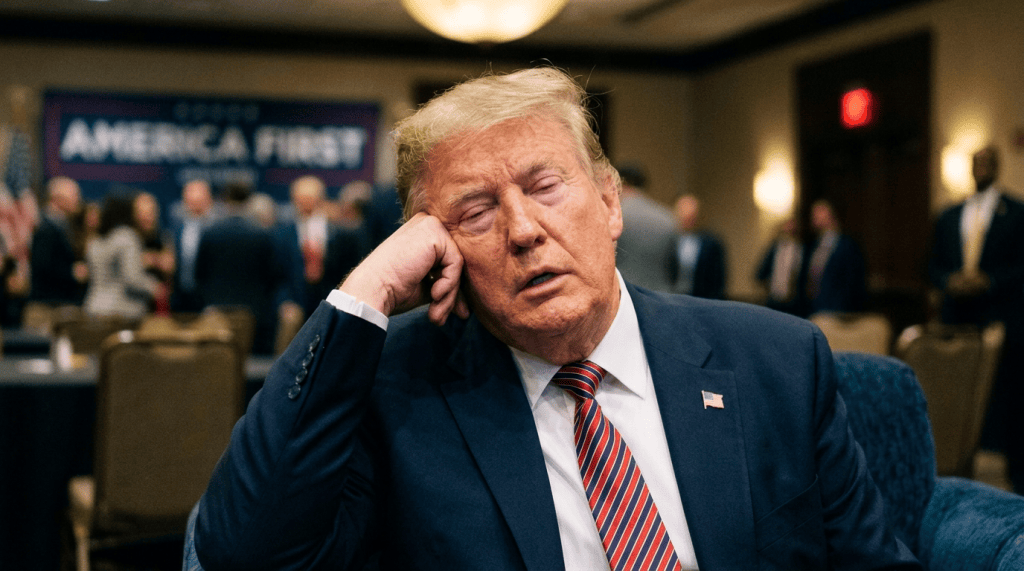
These people know that they were misled and their trust betrayed. They understand that the America First rhetoric masked Trump’s recklessness and irresponsibility as a leader.
For the American middle class, there is no justice. For everyone else, there is at least some form of redemption.
During the 2024 campaign, commentators, economists, and analysts warned of the potential economic ramifications of Trump’s presidency. They spoke of skyrocketing energy prices and a possible inflation crisis. Throughout the election race, they were dismissed as irresponsible and unworthy of attention.
Now, as the damage is being tallied, these commentators can finally take a deep breath and say: “we told you so”.
American families deserve better leadership than what they have been offered during the 2024 campaign. They deserve better than a foreign policy fueled by ego and a domestic policy of perpetual war and division.
The price for Trump’s vanity and incompetence will be paid in higher gas prices and unbearable costs of living. It is only fitting that those that promoted this vision of America, MAGA, are held accountable. Voters must understand that a vote for a Trump and Republicans are a vote for higher taxes and budget deficits. The electorate needs to hold the president and his Republican Party enablers in Congress responsible for the manufactured crisis at home and abroad.