The BLUE PRESS JOURNAL

We aim to be a voice in the ongoing political discourse, providing both factual information and opinionated analysis, from a progressive or center-left perspective, free from the direct influence of major
established Main Street Media.

  • The Republican’s and Donald Trump’s War on Healthcare: A Fight for the Rest of Us

    Blue Press Journal – As the dust settles on the latest Republican maneuvering, one thing is clear: the party’s war on healthcare continues unabated. House Republican Leader Mike Johnson’s refusal to bring an extension of the Affordable Care Act (ACA) subsidies to a vote has set the stage for a catastrophic increase in healthcare premiums, leaving millions of Americans on the brink of disaster.

    The numbers are stark. Without an extension of the subsidies, 24 million people enrolled in the ACA marketplace can expect their premiums to double on average. That’s a staggering blow to middle-class families who are already struggling to make ends meet. The impact will be felt far and wide, from seniors reliant on Medicaid for long-term care to Americans aged 50-64 who will face the largest premium increases.

    The Consequences are Dire

    The Republican’s actions are not just a matter of policy; they have real-life consequences. As Dr. Donald Berwick, former Administrator of the Centers for Medicare and Medicaid Services, put it, “When people lose health insurance, they die sooner.” The data bears this out. A study published in the American Journal of Public Health found that uninsured adults are 40% more likely to die from treatable causes than those with insurance.

    GroupImpact of Losing ACA Subsidies
    SeniorsLoss of Medicaid funding for long-term care, including nursing homes
    Americans 50-64Largest premium increases, forcing many to drop insurance and risk financial ruin
    Low-Income FamiliesIncreased risk of uninsurance, exacerbating existing health disparities
    Entire ACA MarketplaceAverage premium increase of 100%, pricing out millions

    The Republican’s priorities are clear. As Senator Bernie Sanders (I-VT) noted, “The Republican Party is more concerned with giving tax breaks to billionaires than with ensuring that working families have access to affordable healthcare.” This spring, they cut $1 trillion from Medicaid, a program that provides vital healthcare coverage to millions of vulnerable Americans. The goal, it seems, is to create a healthcare system where only the wealthy can afford to be sick.

    The Only Ones Who Will Be Fine: Billionaires

    As I wrote this, I couldn’t help but think of the stark contrast between the haves and have-nots in America. The billionaire class, with their private helicopters and private doctors, will continue to enjoy uninterrupted access to top-notch healthcare. But for the rest of us, the Republican’s war on healthcare means that our coverage is about to get much worse.

    It’s time for us to fight back. We must demand that our elected officials prioritize the healthcare needs of working families, not just the wealthy and well-connected. As the great labor leader, Mary Harris Jones, once said, “Fight for your lives, don’t let them take away your right to healthcare!”

    The stakes are high, but the reward is worth it: a healthcare system that works for everyone, not just the privileged few. We owe it to ourselves, our families, and our communities to stand up to the Republican’s assault on healthcare and demand a better future.

    The Fight Continues

    As we move forward, it’s clear that the battle for affordable healthcare is far from over. But with the facts on our side and the voices of millions of Americans behind us, we can win. We must continue to raise our voices, to organize, and to demand action from our elected officials.

  • Federal Judge Grills DOJ Over Trump-Appointed Prosecutor in High-Profile Case

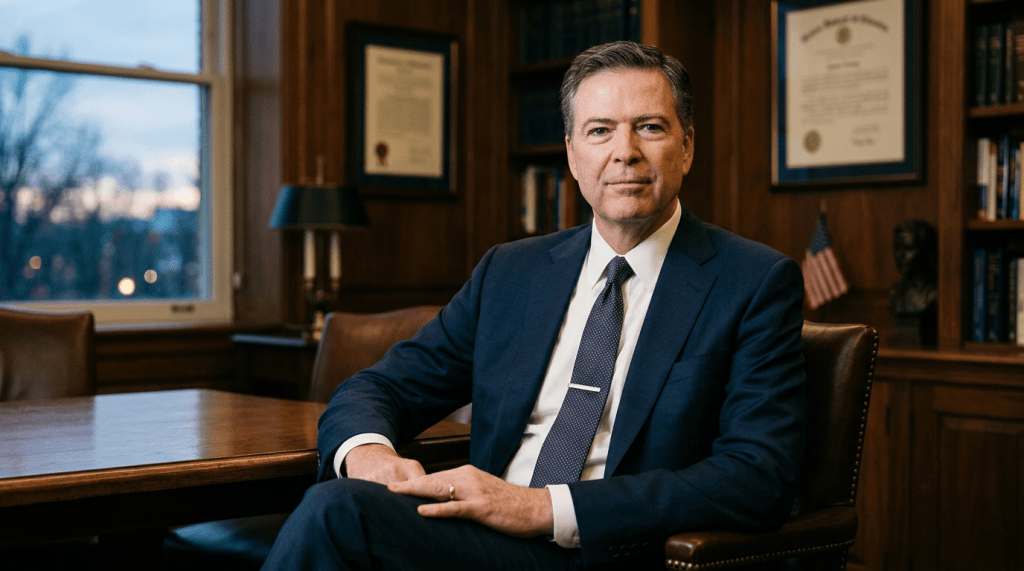
    Blue Press Journal – A federal judge in Virginia on Thursday scrutinized the Department of Justice (DOJ) over the appointment of Lindsey Halligan as interim U.S. attorney for the Eastern District of Virginia, with attorneys for former FBI Director James Comey and New York Attorney General Letitia James arguing that she was hand-picked by President Donald Trump to prosecute his perceived political enemies.

    According to a CNN report, the judge’s questioning of the DOJ at times elicited gasps from courthouse observers, highlighting the contentious nature of the proceedings. The attorneys for Comey and James alleged that Halligan’s appointment was unlawful, claiming that she was chosen by Trump to target his political opponents.

    The hearing comes as Comey and James seek to disqualify Halligan from their case, arguing that her appointment was motivated by Trump’s desire to wield her prosecutorial powers against his enemies. The attorneys drew parallels to a similar case in Florida, where Trump’s efforts to have prosecutor Jack Smith removed were successful.

    CNN legal analyst Katelyn Polantz noted that Trump’s “win” in the Florida case was achieved through arguments similar to those being made in this case. The implication is that Trump’s influence over the DOJ is being used to further his own interests, rather than to uphold the law impartially.

    The judge’s pointed questioning of the DOJ suggests that the court is taking the allegations seriously and is not willing to simply rubber-stamp Halligan’s appointment. The outcome of the hearing is not yet clear, but it is likely to have significant implications for the case and for the ongoing debate over the politicization of the DOJ.

  • Trump’s Account of Epstein Friendship Contradicted by Newly Released Documents

    Blue Press Journal – A trove of newly released documents has cast doubt on Donald Trump’s long-standing claims about the nature of his relationship with convicted child sex trafficker Jeffrey Epstein. The documents, obtained by the House Oversight Committee through a subpoena of Epstein’s estate, reveal a far more intimate connection between Trump and Epstein than the former president has ever acknowledged.

    According to the emails, which were released on Wednesday with victims’ names redacted, Epstein and his associate Ghislaine Maxwell expressed concern in 2011 that Trump, who was then considering a run for president in 2012, had not yet mentioned them. This revelation directly contradicts Trump’s repeated assertions that he knew nothing about Epstein’s illicit activities, including his relationships with underage girls.

    In a 2002 interview with New York magazine, Trump described Epstein as a “terrific guy” and said that he “likes beautiful women as much as I do, and many of them are on the younger side.” This statement is particularly damning given Trump’s subsequent denials of any knowledge about Epstein’s wrongdoing.

    The newly released documents also include an email from Epstein to journalist Michael Wolff in 2019, in which Epstein wrote that “of course” Trump knew about the girls, “as he asked Ghislaine to stop.” This statement suggests that Trump was not only aware of Epstein’s activities but had also taken steps to distance himself from them.

    Furthermore, Epstein’s email to Wolff appears to confirm that Trump had spent time with one of Epstein’s victims, stating that Trump had spent “hours” at Epstein’s home with the individual. When asked about this specific claim, a spokesperson for Trump’s White House declined to comment, neither confirming nor denying the assertion.

    The release of these documents raises serious questions about Trump’s credibility and his administration’s efforts to conceal information about Epstein’s activities. Trump’s Justice Department has worked aggressively to prevent the release of any further information about Epstein, who was found dead in his jail cell following his second arrest in 2019.

    Moreover, the documents highlight the close ties between Trump’s team and Epstein’s associates. Todd Blanche, a top DOJ official who met with Ghislaine Maxwell after her arrest, had previously worked as one of Trump’s defense lawyers in his various criminal cases. Maxwell herself was transferred to a minimum-security prison, often referred to as a “Club Fed,” following her meeting with Blanche.

    The newly released documents are a significant embarrassment for Trump, who has tried to downplay his connection to Epstein. As the House Oversight Committee investigates Epstein’s activities and the Trump administration’s cover-up efforts, it is clear that Trump’s account of his friendship with Epstein does not match the facts.

    The revelations are likely to fuel investigations into Epstein’s crimes and the role of his high-profile associates. As evidence mounts, it becomes clear that Trump’s claims of ignorance about Epstein’s activities are merely an attempt to conceal the truth.

    In light of this overwhelming evidence, Trump’s defenders are bound to face a tough battle in keeping alive the absurd narrative that he was blind to Epstein’s corruption. As the investigation inches forward, brace yourselves for a parade of contradictions that will obliterate Trump’s claims, shedding sinister light on just how deeply he and his administration were ensnared in Epstein’s web of depravity.

  • Trump’s Contempt for American Workers: A Slap in the Face to the MAGA Base

    Blue Press Journal

    In a recent interview with Fox, Donald Trump made a stunning admission that has left many of his supporters reeling. The former President claimed that the H-1B visa program, which allows foreign workers to enter the US for employment, is necessary because American workers lack the talent and skills required by companies. This statement is not only a scathing indictment of the American workforce but also a stark contradiction to his previous promises to prioritize American workers.

    When questioned about abolishing the H-1B visa program, Trump said, “They [foreign companies] won’t come into the United States if they don’t have people they’re allowed to bring in.” He essentially admitted that foreign companies are hesitant to invest in the US because they don’t believe American workers are skilled enough to meet their needs. This statement is a damning revelation of Trump’s contempt for American workers, implying that they are inferior to their foreign counterparts.

    Trump’s comments are likely to create a rift within his MAGA base, many of whom supported him because of his pledge to prioritize American workers and deport undocumented immigrants. His statement undermines the very foundation of his “America First” agenda, which promised to protect and promote the interests of American workers.

    Trump’s assertion that American workers are not talented enough is not only an affront to the millions of hardworking Americans but also a reflection of his out-of-touch elitism. It is a slap in the face to the very people who elected him to office, and it remains to be seen how his base will respond to this latest gaffe.

  • Ignoring the Sinking Ship: Why Trump’s Affordability Blind Spot Could Be a Political Catastrophe

    Blue Press Journal

    Donald Trump’s recent attempts to brush off voter worries about affordability are, bluntly speaking, a monumental blunder. This isn’t simply a little misstep; it’s a potentially disastrous oversight that could haunt his political legacy for years to come. The bedrock of his earlier electoral triumph was a bold vow: to tackle the inflation crisis head-on. Yet, here we are in November 2025, and the mounting evidence shouts that many voters see that promise crumbling before their very eyes.

    Let’s cut to the chase: Donald Trump is currently “underwater with the Titanic” when it comes to inflation, and it’s sinking fast. His net approval rating on this crucial issue is a jaw-dropping 26 points below water. This isn’t an innocent shift in voter sentiment; it’s an alarming chasm that reveals an overwhelming majority of Americans are not just concerned but utterly fed up with the current economic mess, particularly how it’s squeezing their budgets dry.

    The Trump Republican Party must take this trend with the utmost seriousness. A data expert has compellingly conveyed that they “should be scared” by Donald Trump’s polling numbers as the elections approach. This situation transcends mere predictions; it highlights critical warning signs that cannot be ignored. When a candidate’s principal commitment— the very reason that drew many voters initially— has transformed into a major liability, it signifies a profound disconnect between the political narrative and the actual experiences of the electorate.

    Inflation isn’t just some dusty economic theory; it’s the relentless squeeze on your wallet—the soaring prices of groceries, the outrageous gas bills demanding an arm and a leg, and the crushing weight of unaffordable housing. For countless Americans, these are not mere annoyances; they are gnawing stressors that invade daily life and threaten financial futures. When voters witness their hard-earned money losing value and a desperate absence of solid plans to fight back, it’s only natural they will turn their gaze to any promising alternatives.

  • Epstein Emails Raise New Questions About Trump’s Knowledge of Predator’s Crimes

    Blue Press Journal

    Washington D.C. – New emails released by House Oversight Committee Democrats on Wednesday suggest that President Donald Trump may have been aware of Jeffrey Epstein’s criminal conduct, directly contradicting the President’s past attempts to distance himself from the convicted sex offender. The communications, obtained through a subpoena to Epstein’s estate, were previously undisclosed and have ignited further scrutiny into the nature of their relationship.

    In one particularly damning message, Epstein reportedly stated, “Trump knew about the girls.” Another email from 2011, addressed to his accomplice Ghislaine Maxwell, describes Trump as “the dog that hasn’t barked” in reference to spending time with an individual identified only as “VICTIM.”

    These revelations come as Democrats on the committee continue to probe the vast trove of documents seized from Epstein’s estate. The release of these emails directly challenges President Trump’s narrative of a limited association with Epstein, who died in prison in 2019 while awaiting trial on federal sex trafficking charges involving minors.

    The newly surfaced communications are separate from extensive Justice Department files that mention President Trump. However, their release raises concerns, prompting criticism from the committee’s Democratic members, who are demanding greater transparency and questioning what information the White House may be withholding about Trump’s awareness of Epstein’s predatory activities. The emails highlight troubling questions about Trump’s knowledge and the implications of his past association with Jeffrey Epstein.

    Read the emails here:

  • The Accountability Deficit: Why We Must Not Whitewash the Truth About the Federal Shutdown

    The Media’s Reluctance to Call the Ball

    Blue Press Journal – When the federal government shutters its doors, the implications are never merely bureaucratic; they represent a fundamental failure of leadership and a profound dereliction of duty. The recent government shutdown, precipitated by budget impasses, was not the result of mutual stubbornness or shared political dysfunction. Let us be unequivocal: This crisis was the direct consequence of the Trump administration’s and the Republican majority’s refusal to engage in genuine bipartisan negotiation.

    The narrative often spun in the aftermath attempts to create a false equivalency—a practice often called “sameism”—implying that both sides were equally culpable. This is a white wash, and it obscures a critical truth: The Republicans, led by President Trump, refused to even have a conversation with Democrats regarding the specific terms of the bill. They insisted on a take-it-or-leave-it approach that is antithetical to the responsibilities of governing in a divided body.

    The Danger of Unilateral Legislation

    The reason the Democratic minority stood firm against accepting this one-sided legislation lies not in ideological spite, but in sober analysis of its inevitable economic and social fallout. The core objection was rooted in the damage the proposed bill—which contained specific measures related to healthcare funding and market regulation—would inflict upon millions of Americans.

    The Democratic caucus recognized that the proposed changes would inevitably trigger a sharp increase in insurance premiums for millions of working families and, furthermore, would cause countless others to entirely lose the coverage they currently rely on.

    This is not conjecture; it is the predictable outcome of dismantling crucial pillars of the existing health infrastructure without providing viable, stable alternatives. When one party attempts to utilize the threat of a government shutdown to ram through legislation that fundamentally harms the public, assigning blame must be clear.

    As former President Barack Obama once observed regarding the duty of dialogue:

    ‘We cannot afford to have a political system where the only way you get things done is a shutdown. That’s a fundamental breakdown of how our democracy is supposed to work.’

    The breakdown here was not a failure to compromise, but a refusal to negotiate in good faith in the first place.

    The Media’s Reluctance to Call the Ball

    Perhaps one of the most frustrating aspects of this political standoff has been the corresponding failure in much of the mainstream media to report the facts without resorting to false balance. Media entities fear appearing partisan, and so they often default to the safe position of criticizing “both sides.”

    This reluctance to assign clear governmental responsibility does a disservice to the public. Whether it’s national news outlets or local talk shows—like those found in places such as Syracuse, New York (Balancing Act with John Katko) —many refuse to acknowledge that when one party holds the power to prevent a crisis but chooses instead to leverage that power for unilateral legislative gain, the blame rests squarely with them. They are attempting to “play nice” with Republicans instead of fulfilling the primary journalistic duty: telling the truth about power.

    When journalists apply “sameism” to cover a crisis, they effectively insulate the powerful from accountability.

    Consequences Are Coming

    The consequences of this approach are not abstract. They are built into the policy choices that resulted from this period of non-negotiation.

    We are entering a phase where the effects of Republican-led policy decisions on the healthcare market will become starkly real for everyday Americans. Next year, as deductibles increase and premiums climb—a direct result of these legislative maneuvers—voters will see with painful clarity the truth that the Democrats warned about.

    The refusal to compromise, fueled by a desire to enact one-sided legislation, has ensured that healthcare costs will rise. The legislative actions taken, or forced through during this period of crisis, will shift financial burdens onto families who can least afford them.

    As policymakers across the spectrum have warned about the risks of destabilizing mechanisms meant to protect vulnerable populations:

    ‘There is an inherent cruelty in policy that forces people to choose between necessary medical care and keeping their family financially afloat.’

    The historical record must not be sanitized. The federal government shutdown was an act of political force driven by a refusal to negotiate, and its lasting legacy will be felt not in Washington, but in the higher insurance bills arriving in mailboxes across America. Accountability must follow.

  • Behind the Curtain: Unsettling Questions About Who’s Really Running the White House

    Blue Press Journal

    In the American system of government, the buck is supposed to stop at the President’s desk. The person in the Oval Office is the ultimate decision-maker, the commander-in-chief, and the individual accountable to the public for the actions of the executive branch. But what happens when the public sees moments that cast doubt on that individual’s engagement? Recent observations have ignited a serious and necessary conversation about the operational structure of the current White House and the fundamental question of who is truly at the helm.

    These concerns were brought into sharp relief by recent footage that appeared to show the President asleep during a public event. For political commentator Symone Sanders, this wasn’t just an isolated, embarrassing moment. It was a catalyst for a much deeper inquiry into the chain of command. “It brought up the questions again about what the actual apparatus at this White House is and who is actually in charge here,” Sanders said. “Because that can’t be the first time the president fell asleep…So when that happens, who is making the decisions?”

    This is not a trivial question. It strikes at the heart of executive function. If the principal decision-maker is disengaged, even temporarily, a power vacuum is created. The critical question then becomes: who fills it? Is it the Vice President? The Chief of Staff? Or is it unelected advisors and policy architects operating without a direct public mandate?

    The issue extends beyond moments of apparent fatigue. Former Homeland Security Advisor Fran Townsend pointed to a pattern of behavior that suggests a potential disconnect between the President and the policies he enacts. She raised concerns about public bill-signing ceremonies where the President seemed to be learning the details of the documents for the first time. “When the president was doing these public signings of these executive orders, and they come in and they explain to him what the executive order is and he’s like, ‘Oh, okay. Yeah.’ I wonder, is that the first time you heard this?”

    This observation is profoundly unsettling. Executive orders are powerful instruments that can have sweeping impacts on national policy, the economy, and the lives of millions of Americans. The suggestion that a president might be unfamiliar with the contents of an order he is about to sign into law raises serious questions about his level of involvement in the policy-making process. Is the President reviewing, debating, and shaping these policies, or is he merely serving as the final stamp of approval on decisions made by others?

    Townsend drove this point home by naming a specific, influential advisor and posing a direct challenge. “And so we’re using ‘I’ statements? Are you the one making the decision, Stephen Miller, about these strike force teams?” she asked. “How much aware is the president of what is going on? These are questions I think they deserve to be asked.”

    This is the crux of the matter. The American people elect a president, not their advisors. While every administration relies on a team of experts and aides, that team is meant to inform and execute the president’s vision, not supplant it. When questions arise about whether senior staff are making pivotal decisions with limited presidential oversight, it becomes a matter of democratic accountability.

    These are not partisan attacks; they are fundamental questions of governance. The public has a right to trust that the person they chose to lead the country is actively and knowingly doing so. When credible observers from across the political spectrum express concern about the President’s awareness and engagement, it is a signal that we need more transparency, not less. The questions have been asked. The American people deserve the answers.

  • Republicans Face ‘Reckoning’ on Epstein Files as Shutdown End Pushes Trump Toward Crisis

    Blue Press Journal | Politics Desk

    With the end of the government shutdown, Republicans may be walking into one of the most politically perilous moments of the post-Trump era — and the timing could not be worse for the former president himself. 

    According to a Newsweek report, the resolution of the funding standoff has cleared a path for long-sought government files on the late convicted sex offender Jeffrey Epstein to potentially be made public. While the records have been a subject of speculation for years, political maneuvering on Capitol Hill now appears closer than ever to triggering their release. 

    The latest push comes from Representative Thomas Massie (R-KY), whose petition to unseal the files has been inching toward the 218 signatures required to force a House floor vote. Only one name remains missing: Representative-elect Adelita Grijalva (D-AZ). She has pledged to add her signature immediately after being sworn in, a formality awaiting House Speaker Mike Johnson (R-LA). Once she does, the measure would cross the threshold to proceed. 

    The political implications could be explosive. President Donald Trump campaigned in 2016 on promises of government transparency, including commitments to release certain high-profile case files. But on the Epstein matter, the former president later reversed course, calling the probe a “Democratic hoax” — a claim that has been undercut by public evidence, including a birthday card to Epstein obtained by The Wall Street Journal. Trump has denied any wrongdoing or deeper connection to the disgraced financier. 

    Attorney General Pam Bondi had previously fueled speculation when she suggested her office possessed a list related to Epstein. Her team later walked that back, clarifying she had been referring to general case files, not a names-only document. Still, multiple lawmakers have hinted that the unreleased material could implicate prominent figures across the political spectrum. 

    “If the files are released and they contain damaging information for the president, the Trump White House may need to be in full-blown crisis mode,” one GOP strategist told Newsweek.

    For Republicans, the timing is particularly sensitive. The party is still grappling with fallout from the recent shutdown standoff, and many members are eager to shift focus toward legislative priorities. Instead, they may soon be forced into a high-stakes media firestorm over one of the most scandalous cases in recent history — one that has already ensnared billionaires, royal family members, and political power brokers. 

  • Whistleblower Docs Allege Maxwell Received “Concierge” Prison Treatment, Sought Trump Commutation

    Blue Press Journal

    WASHINGTON — A whistleblower has provided documents to Congress suggesting convicted sex trafficker Ghislaine Maxwell received privileged “concierge-style treatment” in a federal prison and sought a sentence commutation from former President Donald Trump.

    The documents, revealed to Democrats on the House Judiciary Committee, include an email indicating Maxwell requested Trump commute her 20-year sentence for her role in financier Jeffrey Epstein’s international child sex trafficking ring. The request came after Maxwell was transferred to a lower-security facility and sat for two days of questioning with Deputy Attorney General Todd Blanche.

    The whistleblower’s account alleges that at her new prison, Maxwell is given custom meals and access to staff facilities, treatment described as far more favorable than that of a typical inmate.

    Rep. Jamie Raskin (D-Md.), the top Democrat on the oversight panel, sent a sharply critical letter to Trump on Sunday, questioning the nature of the relationship.

    “[The email] shows either that Ms. Maxwell is herself requesting you release her… or that this child sex predator now holds such tremendous sway in the second Trump Administration that you and your DOJ will follow her clemency recommendations,” Raskin wrote in the letter, obtained by The Hill. “What information is Ms. Maxwell agreeing to suppress in order to receive such outlandishly favorable treatment?”

    The situation has intensified scrutiny of Trump’s past associations with Epstein, who died by suicide in 2019 while awaiting his own trial on sex trafficking charges.

    In a separate but related effort, a bipartisan group of lawmakers is pushing for the release of all Justice Department documents related to the Epstein investigation. However, their discharge petition to force a House vote is currently one signature short. House Speaker Mike Johnson (R-La.) has refused to seat newly elected Rep. Adelita Grijalva (D-Ariz.), effectively blocking the measure for now.

    The allegations have sparked outrage among critics who see them as evidence of a two-tiered justice system, where the connected and wealthy receive preferential treatment. The Justice Department has not yet publicly commented on the specific claims regarding Maxwell’s prison conditions.