Tag: gas prices

  • The Economic Consequences of Trump’s Leadership

    Right now, it’s tough to ignore how Donald Trump’s policies have a direct impact on the struggles regular Americans deal with every day. Whether people are stretching their paychecks at the grocery store or worrying about their retirement funds, you can feel stability slipping away—and it’s obvious that the President Trump and his administration played a major role in this.

    You can see it in everybody’s wallets. AAA reports the national average for a gallon of gas has jumped to $4.04, way up from last year’s $3.17, according to the EIA.

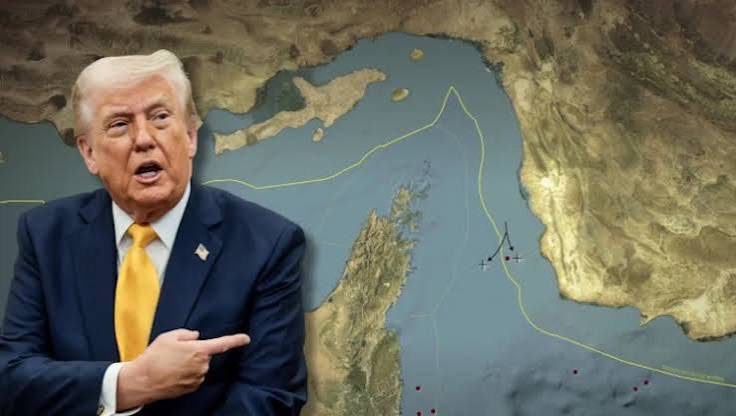
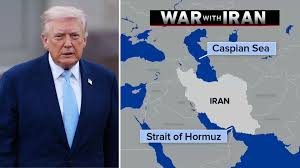
    But this spike isn’t random. Ongoing chaos in energy markets—especially around the Strait of Hormuz and Trump’s war with Iran—has thrown oil supply chains all over the world into disarray. That little waterway handles a fifth of the planet’s oil every day. Industry experts say these shipping problems are here to stay, and you shouldn’t expect gas to drop below $3 anytime soon, maybe not even next year.

    People aren’t blind to all this. Polls show that Trump’s approval is dropping. In a Quinnipiac poll, 65% said Trump’s policies deserve at least “some” or “a lot” of the blame for higher gas prices. Then there’s the stock market—wild swings, driven by the Trump’s unpredictable announcements and trade moves like tariffs, are now blowing up the retirement plans folks thought were safe.

    But honestly, it runs deeper than just the numbers. The way the national conversation is shifting feels heavy and exhausting. There have been organized attacks on the free press, and weird feuds, like Trump going after the Pope. The war on Iran stands totally opposed to the “Just War Doctrine” at the heart of the Christian faith, exactly as the Vicar of Christ put it.

    What really has people worried is the reckless language Trump uses around foreign conflicts. He fired off a warning on Truth Social, saying a “whole civilization will die” when talking about Iran. Jake Tapper from CNN brought up how Republicans—like Rep. Elise Stefanik (R-N.Y.)—rush to criticize campus protesters but stay quiet about these apocalyptic threats from the president. The administration loves acting strong on national security, but all this tough talk only isolates the country and stirs up global danger. Talk about leaving NATO? That’s not just irresponsible—it’s a big risk for America’s security.

    Manufacturing jobs keep disappearing. Food prices keep climbing. The United States’ reputation is getting shakier. Blaming everything on bad luck is just a way to look away from reality. This is what happens when a president’s leadership is all about picking fights instead of working together or thinking things through.

    If you look at slowdowns in manufacturing, shrinking savings, and a pushier attitude on the world stage, you start to see the pattern. America’s problems aren’t just random—they’re the result of leaders. Trump, who care more about grudges than solving real problems. Americans deserve more—leadership that brings stability, sticks to the facts, and fights for actual peace around the world. We deserve better than Donald Trump and the Republican leadership in Congress.

  • The Hidden Tax: How Global Conflict is Quietly Draining Our Bank Accounts

    Editorial

    Man in denim jacket refueling black car with gas pump at gas station

    Blue Press Journal – I was standing at the pump this Sunday morning, watching the numbers tick upward on the digital display, and I couldn’t help but feel that familiar, sinking pit in my stomach. Like millions of Americans, I’m constantly balancing the household budget, but lately, that balance feels more like a tightrope walk. 

    With tensions escalating in the Middle East—specifically the war with Iran, which many experts claim was unnecessary, have caused the global oil markets to spike. When crude prices jump in response to the war in Iran, the ripple effect isn’t just felt at the pump; it’s felt at the grocery store, the pharmacy, and every single time we make a decision about our daily commute.

    The Immediate Pain at the Pump

    Energy markets are inherently reactive. According to the U.S. Energy Information Administration (EIA), even a minor disruption in supply chains or a mere risk will cause a push to national averages. When gas prices spike, they act as a “hidden tax” on every American worker.

    Mark Zandi, Chief Economist at Moody’s Analytics, and other economic analysts, have pointed to the regressive nature of high energy prices, noting that they act as a hidden tax that disproportionately impacts low- and middle-income households. When you spend a larger percentage of your income on fuel, you have significantly less discretionary capital left for housing, food, or savings.

    The “Follow-On” Cost: Our Grocery Bill

    What many of us don’t immediately account for is the logistical cost of getting goods to market. Almost everything we buy—from fresh produce in California to electronics in New York—traveled on a truck or train to get to our shelves. As diesel prices climb alongside gasoline, those transportation costs are passed directly to the consumer.

    Consider a hypothetical breakdown of how these costs impact our monthly spending:

    Expenditure CategoryEstimated Weekly Impact of High Gas Prices
    Commuting+$15 – $25 per week
    Grocery/Food Staples+$10 – $20 per week (transportation surcharges)
    Family Activities+$10 – $15 per week (sports/errands)
    Total Estimated Hit$35 – $60 per week

    Tough Choices for Our American Families

    For the average family, an extra $50 a week isn’t just “pocket change.” It’s the difference between a savings account contribution and a credit card balance. I’ve found myself cutting back on non-essential trips, consolidating errands to save on mileage, and—regrettably—choosing generic brands at the grocery store to offset the rising cost of “transported” goods.

    We are entering a season of adaptation. Americans are experts at tightening their belts, but it’s becoming increasingly difficult to find more “slack” in the rope under the Trump administration. We are choosing between the kid’s soccer tournament and an extra trip to the grocery store; we are opting for home-cooked meals over dining out; and we are delaying major purchases while we wait for the economic and political smoke to clear.

    Our Bottom Line

    As of today, analysts from sources like Bloomberg and The Wall Street Journal suggest that while the U.S. is more energy-independent than it was a decade ago, we are still beholden to the global price of oil. Until stability returns to the Middle East, volatility will remain the “new normal.”

    For those of us at the pump this weekend, my advice is simple: track your expenses, prioritize your essential travel, and keep a close watch on your budget. We may not be able to control the price of a barrel of oil or the war in Iran, but we can manage how we navigate the political choices at home. It’s clear the Trump administration has made bad choices so let’s not compound them with ours. The midterms should be where we make a clear choice for change.

  • The Dimming Light: How Trump’s Presidency Is Eroding America’s Standing

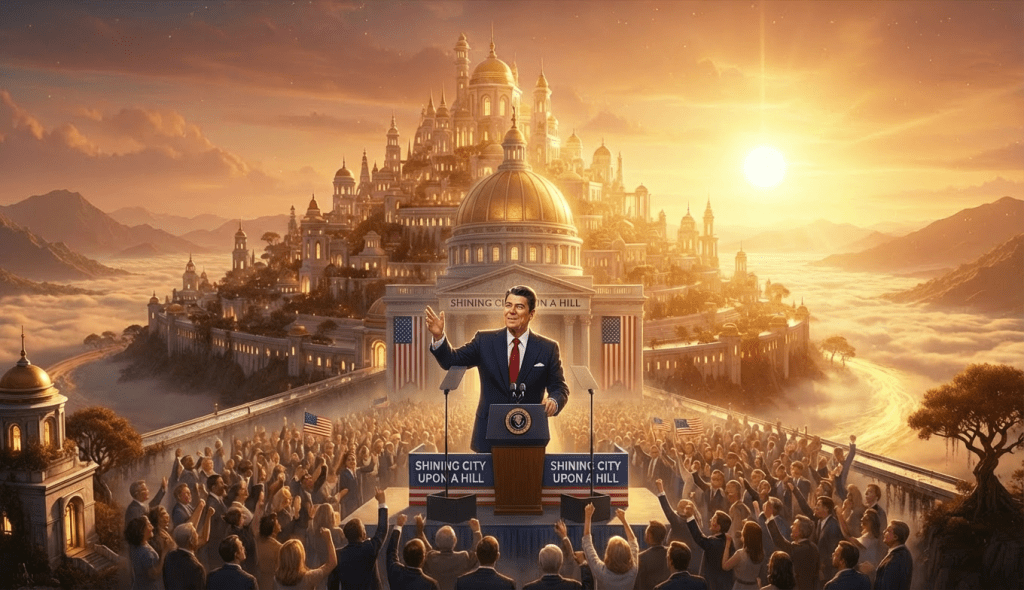
    A magnificent golden palace city built on a mountain peak surrounded by clouds.

    Blue Press Journal – There was a time when American presidents spoke of the nation as Ronald Reagan did: a “shining city on a hill,” a beacon of democracy and prosperity visible to the entire world. That imagery suggested permanence—a promise that no matter the challenges, the United States would remain the moral and economic anchor of the free world. Today, that light is flickering. Under President Donald Trump’s leadership, we are witnessing not the preservation of American greatness, but the deliberate dismantling of the very foundations that made it possible.

    The economic architecture of global cooperation has been shattered by a trade policy that treats allies as adversaries. Trump’s aggressive tariff regime has strained relations with virtually every major trading partner, transforming decades of diplomatic capital into resentment and retaliation. These are not the calculated negotiations of a nation securing its interests; they are the erratic maneuvers of an isolationist agenda that makes America poorer while promising prosperity. When the world’s largest economy retreats behind protectionist walls, the cost is borne not by abstract institutions, but by American consumers facing inflated prices and disrupted supply chains.

    Equally troubling is the administration’s incoherent approach to foreign policy, particularly regarding Ukraine and Russia. Trump’s hot-and-cold support for Kyiv—alternating between gestures of solidarity and open contempt—has left allies uncertain of American commitment. More alarming is his refusal to demand accountability from Moscow for its aggression, effectively absolving Russia of consequences while undermining Ukrainian sovereignty. This is not diplomacy; it is capitulation dressed in nationalist rhetoric, and it signals to the world that American security guarantees are negotiable commodities rather than sacred obligations.

    The recent escalation against Iran represents perhaps the most dangerous departure from presidential norms. Launching military actions without notifying allied democracies, only to later demand their support for a conflict that “makes no sense,” treats international partnerships as transactional burdens rather than strategic assets. The immediate consequence—rising gas prices—is already extracting pain from American households, translating geopolitical chaos into economic hardship at the pump. This is governance by impulse, not strategy, and the cost is measured in both dollars and diminishing American influence.

    Beneath these policy failures lies a more fundamental threat: the president’s apparent disregard for constitutional norms and his evident desire to function as a King rather than a servant of the republic. The separation of powers, the rule of law, and the peaceful transfer of authority—these are not inconveniences to be circumvented by executive fiat, but the essential guardrails of democratic governance. When a leader rejects these constraints, he does not merely damage his administration; he corrodes the public’s faith in the institutions that define American liberty.

    We are told we are entering a new golden age, but the reality is the end of the great American era that Trump and his MAGA movement have brought upon us. We are no longer the Reagan-esque “shining city on the hill”—that symbol of hope and ordered liberty. Instead, we have become an erratic power, rich in military might but increasingly impoverished in moral authority and economic stability. The policies of this administration are making America not greater, but smaller; not freer, but more constrained by the whims of authoritarian instinct.

    The city is still there, but the light is dimming. Whether it can be rekindled depends on whether we remember that true American greatness was never found in tariffs, isolationism, or the concentration of power in a single hand, but in our willingness to lead the world through principle rather than abandon it through pride

  • Why Donald Trump’s War on Iran Was a Costly Mistake

    Blue Press Journal – Donald Trump’s decision to launch a full‑scale war on Iran has already proven disastrous for the U.S. economy. By disrupting the Strait of Hormuz—through which about 20 % of global oil shipments flow—the conflict spiked crude prices by nearly 12 % in just two weeks, Reuters. Higher pump prices translate directly into elevated consumer‑price inflation, eroding purchasing power for American families already strained by lingering post‑pandemic price hikes, Bloomberg.

    Beyond the immediate fuel shock, the war has forced the Federal Reserve to confront a new inflationary spiral, prompting talks of an accelerated rate‑hike cycle that could choke off economic growth,Wall Street Journal. The longer‑term fallout is even more severe: sustained military spending drains fiscal resources, drives up the national debt, and distorts capital allocation away from productive sectors such as renewable energy and infrastructure—areas critical for long‑term competitiveness, NY Times.

    Critics argue that Trump’s reckless foreign policy ignored diplomatic alternatives and ignored expert warnings that a regional conflict would trigger a global supply‑chain crunch, AP News. The result is a distorted economy, soaring living costs, and an American public paying the price for a war that could have been avoided.

  • Trump’s Self‑Inflicted Economic Spiral Undermines GOP Prospects

    Figure resembling Donald Trump throwing a plate against a wall as shocked onlookers watch.

    Blue Press Journal – The past week has laid bare the consequences of President Trump’s overreach—a mix of policy missteps and self‑inflicted damage that is tanking his poll numbers and eroding congressional support. A stagnant labor market, combined with skyrocketing gas prices tied to the Iran‑U.S. conflict, is pushing the U.S. economy toward stagflation, a scenario Wall Street analysts now warn could become a reality (Reuters, March 5).

    Trump’s immigration agenda, already unpopular, hit a new low with the abrupt removal of DHS Secretary Kristi Noem. Critics argue the move was less about policy competence and more about political retaliation, exposing the administration’s chaotic leadership style  (The New York Times, March 4). The fallout has amplified voter frustration, as households grapple with higher gasoline costs that directly counter the president’s “America First” promises to ease living expenses.

    Meanwhile, the labor market shows little sign of recovery. The Bureau of Labor Statistics reported a flat employment growth rate for the second consecutive month, while wages remain stagnant  (BLS, March 2). This paradox of weak job creation and rising inflation undermines the administration’s narrative that its tax cuts and deregulation are revitalizing the economy.

    Polls reflect the shifting tide. A recent Quinnipiac survey placed Trump’s approval at a historic low, with many Republicans citing “economic anxiety” as the primary concern  (Quinnipiac, March 3). As the GOP struggles to keep voters focused on its agenda, the cascade of bad news threatens to derail any attempt to regain momentum before the midterm elections.

  • Trump’s Iran Attack: Economic Fallout Threatens US Recovery and Global Trade Stability

    Gears labeled USA and IRAN over a chasm swallowing falling charts and GLOBAL MARKETS coins.

    BLUE PRESS JOURNAL – Trump’s reckless military escalation against Iran today poses an existential threat to American economic stability and global commerce. Far from projecting strength, these strikes risk catalyzing a catastrophic financial crisis that will burden working families while destabilizing international markets.

    The immediate consequence centers on energy markets. Iran’s geographic dominance over the Strait of Hormuz—a chokepoint handling roughly 20% of global oil shipments—means even limited conflict triggers catastrophic price spikes. Analysts predict Brent crude could surge past $130 per barrel, translating to $5+ gasoline for American consumers already battered by persistent inflation. This shockwave ripples through every sector, from transportation to agriculture, effectively imposing a regressive tax on households least equipped to absorb it.

    Global trade faces imminent paralysis. Military activity in the Persian Gulf threatens container shipping routes vital for Asian-European commerce, potentially replicating the supply chain disruptions that fueled 2021’s inflationary spiral. Insurance premiums for maritime freight have already spiked 40%, costs ultimately borne by American consumers through higher retail prices.

    Financial markets reflect this anxiety, with defense stocks soaring while broad indices plummet. The dollar’s safe-haven status offers minimal protection against the stagflationary pressures of simultaneous energy shortages and slowing growth. Moreover, diverting billions toward military operations steals resources from infrastructure and domestic manufacturing initiatives essential for long-term competitiveness.

    This economic warfare against American pocketbooks serves no strategic purpose beyond political theater. Diplomatic alternatives remain unexplored while the administration gambles with global recession. History demonstrates that Middle East military adventures consistently deliver economic devastation—higher deficits, volatile currencies, and diminished purchasing power—while failing to achieve sustainable security outcomes.

  • Trump Is Lying Through his Teeth: On Gas Prices

    Donald Trump has once again misrepresented the truth about fuel prices in the United States. In a recent statement, he claimed that gasoline had reached a price of $1.99 in five states, with prices as low as $1.98 in some areas. He also asserted that this low price was spreading to other states, stating, “Now we have no inflation. Gasoline just hit $1.99 in five states: $1.99, isn’t that a nice sound?” He even went so far as to claim that prices had previously reached as high as $7.70 in California, but were now decreasing.

    However, this claim is entirely false. At the time of Trump’s statement, the average gas price in the United States was actually $3.17 per gallon, according to AAA. Even in the state with the lowest average gas price, Mississippi, the price was still $2.71 per gallon. This is a far cry from the $1.99 and $1.98 prices that Trump claimed.

    It is unclear whether Trump is intentionally lying or if his cognitive decline is becoming more apparent. Regardless, his desperation to tout an improved economy has led him to stoop to a new low of deceiving the American public about prices that they experience every day. Fortunately, it is easy to fact-check Trump’s claims by simply checking the prices at a local gas station. The evidence is clear: Trump is lying about gas prices, and it is essential to hold him accountable for his dishonesty.

    It is worth noting that Trump’s claim of low gas prices is not only false but also misleading. Gas prices have actually increased since he took office, with the national average price rising by 5 cents per gallon. This is a stark contrast to Trump’s claims of decreasing prices and no inflation. The American public deserves accurate and truthful information, and it is essential to call out Trump’s lies and hold him accountable for his words.

  • President Trump’s Claims do Not Align with Reality

    President Trump has been making inaccurate claims regarding the prices of everyday items such as gas and groceries. Despite his assertions, Americans are beginning to experience surcharges on certain items due to his tariff increases.

    Trump has repeatedly stated that gas prices dropped to a low of $1.98 per gallon. However, GasBuddy, a company that monitors prices at over 150,000 gas stations nationwide, has not found any evidence of a gas station selling gas for that price in April. The lowest price they could confirm was $2.19 at a gas station in Texas. Additionally, Trump’s claim that gas prices are currently at their lowest level since his first term is false, as gas prices were lower during the first six months of President Biden’s term.

    Regarding grocery prices, Trump has also claimed that they have decreased since he took office. However, data from the Consumer Price Index shows that the average cost of groceries in March actually increased by 0.49% from the previous month and by 2.4% compared to the previous year. Prices of beef, poultry, eggs, and nonalcoholic beverages all rose in March.

    These price increases occurred before the president imposed a baseline 10% tariff on goods from most countries in early April, as well as tariffs as high as 145% on imports from China. Economists anticipate that prices of certain grocery items, such as coffee and chocolate, will rise as a result of these tariffs. Retail prices for consumers are currently at record highs, with Bureau of Labor Statistics data showing that average retail egg prices reached $6.23 per dozen in March, surpassing the previous record of $5.90 set in February.

    It is evident that President Trump’s claims do not align with reality, as he appears to fabricate facts to suit his narrative.