Tag: Venezuela oil reserves

  • DOJ Walks Back Trump Claim on Venezuela’s Alleged ‘Cartel de los Soles’

    BLUE PRESS JOURNAL (NYC) – In a stunning courtroom admission, the (Trump) U.S. Department of Justice (DOJ) has now acknowledged that the so-called Cartel de los Soles — once touted as the centerpiece of the Trump administration’s anti-Venezuela narrative — is not an actual criminal organization. This admission undermines years of political rhetoric, raises serious questions about U.S. foreign policy credibility, and reignites comparisons to past military interventions justified by questionable intelligence.

    From “Kingpin” to Fictional Cartel

    The Trump administration declared Venezuelan President Nicolás Maduro a “kingpin” of international drug trafficking, claiming he headed the Cartel de los Soles. The name, which translates to “Cartel of the Suns,” was presented as evidence of a sophisticated criminal syndicate. 

    However, as Latin American experts have long explained — and as the New York Times reported — Cartel de los Soles is not a literal cartel. Instead, it is a colloquial expression dating back to the 1990s, used to refer to corrupt Venezuelan military officials accused of involvement in drug smuggling. The “suns” refer to insignia worn by Venezuelan generals, much like stars worn by American officers. 

    The DEA’s own National Drug Threat Assessment has never listed Cartel de los Soles among recognized trafficking organizations. Nor has the United Nations Office on Drugs and Crime included it in its World Drug Report.

    Why the DOJ’s Admission Matters

    Following Maduro’s capture by U.S. forces, a new indictment dropped the claim that Cartel de los Solesexists. While the DOJ continues to allege Maduro’s involvement in drug trafficking, it has abandoned one of its most high-profile accusations — likely because proving the cartel’s existence in court would be impossible. 

    This reversal casts doubt on the integrity of the original charges. As Elizabeth Dickinson of the International Crisis Group told the New York Times, labeling Cartel de los Soles as a foreign terrorist organization was “far from reality.” 

    Ben Norton, editor of the Geopolitical Economy Report, argued that the abrupt change reveals “the entire US war is based on lies,” drawing a direct parallel to the false “weapons of mass destruction” narrative used to justify the 2003 Iraq invasion.

    Oil Reserves, Not Drug Boats?

    Initially, Trump’s escalation against Venezuela was framed as a mission to stop drug shipments from reaching U.S. shores. But Trump later admitted the real goal was to seize control of Venezuela’s vast oil reserves and hand them over to American companies. 

    This revelation further supports the view that the Cartel de los Soles narrative was a manufactured pretext for economic and geopolitical gain, rather than a legitimate counter-narcotics operation.

    A Pattern of Manufactured Threats

    The DOJ’s retreat on this claim is not an isolated incident. It fits a broader historical pattern in which U.S. adminstrations — have used exaggerated or false threats to justify sanctions, regime change, and even military intervention. 

    From Iraq’s alleged WMDs to Libya’s “imminent massacre,” the tactic is familiar: craft a compelling but misleading danger, rally public support, and pursue strategic objectives under the guise of humanitarian or security concerns.

    Accountability Is Overdue

    The erosion of the Cartel de los Soles narrative should serve as a wake-up call. If U.S. government agencies can promote unfounded claims to justify aggressive foreign policy, public trust is at risk — and so is the integrity of democracy itself. 

    As the DOJ’s courtroom admission shows, truth eventually surfaces. But for Venezuela, and for the American public, the cost of these fabricated narratives is measured in human lives, economic destabilization, and decades of mistrust.
  • Trump Wants Venezuela’s Oil. Getting It Won’t Be So Simple

    Blue Press Journal: President Trump’s vision for Venezuela’s oil faces a labyrinth of geopolitical, economic, and operational challenges. We examine why extracting the country’s vast reserves may not be a boon for U.S. interests. 


    Trump out of step with reality

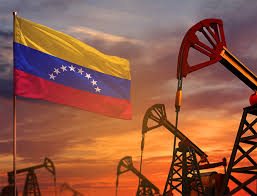
    President Donald Trump’s recent assurances about U.S. oil companies seizing control of Venezuela’s underutilized oil reserves sound ambitious—and possibly out of step with reality. While Venezuela boasts the world’s largest proven oil reserves, the path to unlocking them under Trump’s plan is riddled with economic, technical, and political hurdles that even the most powerful corporations may struggle to navigate. 


    Venezuela’s Oil Legacy and Its Rocky Decline

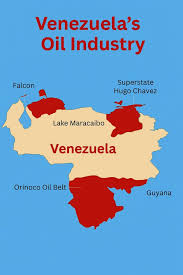
    Venezuela’s oil industry was once a global powerhouse, producing over 3 million barrels per day in the late 1990s. However, the nationalization of oil infrastructure under Hugo Chávez in the mid-1990s marked the beginning of a steep decline. By 2018, production had plummeted to just 1.3 million barrels per day, according to U.S. Energy Information Administration data. Decades of mismanagement, lack of foreign investment, and U.S. sanctions have further crippled the struggling sector, which now produces less than 7% of the United States’ own output (21.7 million barrels daily in 2023). 

    While the reserves remain vast, the ability to extract and refine them has eroded. Infrastructure decay, from aging pipelines to dilapidated drilling rigs, has turned Venezuela’s oil fields into a patchwork of unreliable assets. Even if U.S. firms could access these reserves, they would face the monumental task of rebuilding an industry that has fallen into disrepair. 


    The Market Realities: A Global Oil Oversupply and Volatility

    Trump’s plan assumes that increased Venezuelan oil production would benefit U.S. companies, but global market conditions tell a different story. In 2025—amid Trump’s renewed push—global oil prices dropped by 20%, the steepest decline since 2020. Analysts attribute this to an oversupplied market, with increased output from U.S. shale producers, OPEC+, and alternative energy transitions. 

    James Stockman, a leading energy economist, notes, “Right now the oil market’s somewhat oversupplied. That’s hurting American companies. The last thing they want is for a massive oil reserve to suddenly be opened up.” A surge in Venezuelan oil could oversaturate an already struggling market, further depressing prices and eroding profit margins for U.S. firms. At a time when energy companies are grappling with tariffs and market volatility, the prospect of pouring billions into a risky, long-term project in Venezuela is unappealing. 


    Operational Challenges: Heavy Oil and Infrastructure Collapse

    Even if U.S. companies were willing to invest, Venezuela’s oil is not a quick win. The country’s reserves are predominantly extra-heavy crude, which requires extensive and costly upgradation to transform it into lighter, transportable oil. This process—a multi-billion-dollar undertaking—demands not only capital but also stable political and economic conditions Venezuela has not seen in decades. 

    Moreover, the infrastructure required to extract and process this oil is in critical disrepair. Decades of neglect have left Venezuela’s oil fields reliant on outdated equipment, while key refineries like the 520,000-barrel-per-day Amuay facility have largely fallen into obscurity. Rebuilding this infrastructure could take a decade or more, with no guarantee of returns in a market that may shift toward renewable energy by then. 


    Political Quagmire: Who Controls Venezuela?

    The very foundation of Trump’s plan hinges on U.S. recognition of Venezuela’s new leadership, but political instability remains a wildcard. Following the contentious capture of President Nicolás Maduro, ally-turned-claimant Juan Guaidó (or another figure, as per the context) was sworn in as an interim leader. Yet, U.S. officials, including Senator Marco Rubio, have quickly backtracked, calling Guaidó’s legitimacy into question and advocating for “real elections” instead. 

    This inconsistency raises critical concerns for foreign investors. Venezuela’s oil contracts are often shrouded in legal ambiguity, and a lack of clear governance could deter companies wary of entanglement in a political showdown. “Legitimacy for their system of government will come about through a period of transition and real elections, which they have not had,” Rubio stated on This Week, underscoring the uncertain footing on which any U.S. oil venture would stand. 


    A Cautionary Tale: Why Trump’s Plan Fails the Feasibility Test

    While Trump’s rhetoric echoes the 2003 Iraq invasion—where oil was a central motive—the economic landscape is worlds apart. In 2003, oil prices were rising, and technical advancements made extraction more viable. Today, declining prices, aging infrastructure, and geopolitical uncertainty form a far more complex web. 

    For U.S. oil companies, the risks outweigh potential rewards. The required investment would run into tens of billions, with returns stretching over decades in a market that may not justify the expenditure. Additionally, the environmental and moral implications of reviving a resource-extraction economy in a country ravaged by sanctions and authoritarianism could invite corporate reputational damage. 


    President Trump’s grand vision for Venezuela’s oil is less about economics and more of a political stunt. The harsh truth of a stagnant market, decaying infrastructure, and erratic leadership proves that tapping into Venezuela’s immense reserves will likely remain an elusive fantasy for U.S. companies. Forget quick profits; the real blow may come in the form of wasted investments. The takeaway for investors is stark: even the richest resources can’t be unleashed merely through lofty ambitions—they require the right timing, genuine stability, and a market primed for opportunity.