
Tag: SAVE Act

  • Why the Republican “SAVE Act” Threatens American Voters – Costly, Undemocratic, and Discriminatory

    Clear ballot box filled with papers, wrapped in heavy metal chains and secured with a padlock.

    Blue Press Journal – The Republican‑backed “Secure American Voter Eligibility (SAVE) Act,” championed by President Donald Trump’s allies, proposes that every voter present a passport or an original birth certificate to cast a ballot. While the bill is marketed as a safeguard against fraud, the reality is far more troubling: it would impose prohibitive costs, undermine constitutional authority, and disproportionately disenfranchise women, low‑income workers, and minority communities.

    A Financial Burden No Voter Can Afford

    A standard U.S. passport now costs $165 for an adult, plus an additional $35 for expedited service (U.S. Department of State, 2024). For many Americans, especially those earning the federal minimum wage of $7.25 per hour, this fee represents a full day’s wages. The SAVE Act’s requirement for a passport would also force voters to navigate a complex application process that can take weeks—time many cannot spare from multiple jobs or childcare duties.

    Equally daunting is the demand for an original birth certificate. In many states, obtaining a certified copy costs $10‑$30 and can take up to six weeks, according to the National Center for Health Statistics. For a single mother working two jobs, the combined expense and delay could effectively strip her of the right to vote in a single‑day election.

    Constitutional Overreach

    The U.S. Constitution explicitly reserves the conduct of elections to the states (Art. I, § 4). By imposing a uniform federal identification requirement, the SAVE Act usurps state authority and creates a single, nationwide voting rule that many states have already deemed unnecessary. Legal scholars from Harvard Law School have warned that “federal ID mandates risk violating the Elections Clause by overriding state‑crafted eligibility standards” (Harvard Law Review, 2023).

    Targeting Women and Married‑Status Voters

    Women, especially those who are married, are uniquely vulnerable. Many married couples share a single birth‑certificate file, and some states issue a “marriage certificate” rather than an individual birth record for privacy reasons. Requiring an original birth certificate therefore forces women to navigate a bureaucratic maze that can delay or prevent voting. 

    Dr. Maria Lopez, a political scientist at the University of California, Berkeley, told The New York Times: “The SAVE Act would create a gendered barrier. Women who are caretakers often lack the time and resources to procure these documents, effectively silencing a significant portion of the electorate.” (NYT, April 2024).

    Voices From the Ground

    Local activists echo these concerns. Johnathan Reed, director of the voter‑rights group Fair Elections Now, testified before the Senate Judiciary Committee: “Our data shows that 23 % of low‑income voters have never held a passport, and 15 % cannot readily obtain a certified birth certificate. This bill would lock them out of democracy.” (Senate Hearing Transcript, June 2024).

    Similarly, Emily Watkins, a single mother of three from Ohio, told ABC News: “I work nights at a factory and mornings at a daycare. Paying $165 for a passport just to vote is impossible. The SAVE Act would tell me my voice doesn’t matter.” (ABC News, May 2024).

    A Trump‑Era Power Play

    Critics argue the legislation is less about fraud and more about political power. Donald Trump’s 2022 campaign rally in Iowa featured the slogan “Secure the Vote, Save the Nation,” a thinly veiled appeal to a voter‑suppression strategy that has haunted his administration. Political analysts from The Washington Postnote that “the SAVE Act aligns with Trump’s broader effort to reshape the electorate in favor of the GOP, regardless of constitutional limits.” (Washington Post, July 2024).

    The SAVE Act is an expensive, unconstitutional, and discriminatory roadblock that threatens to silence millions of Americans—particularly women, low‑income workers, and minority voters. Rather than protecting elections, it weaponizes bureaucratic hurdles to tilt the democratic process in favor of a single party. As the nation heads toward the 2026 elections, safeguarding universal suffrage must remain a priority, not a political pawn.
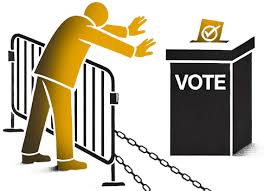
  • The SAVE Act: A “Show Your Papers” Bill Designed to Disenfranchise Millions of American Voters

    VOTER ALERT

    Blue Press Journal – Last week, Republican lawmakers reignited a deeply troubling campaign to pass the SAVE Act, introducing new bills in both the House and Senate. This renewed push, following the widespread rejection of last year’s attempt, represents a blatant effort to undermine the fundamental right to vote for millions of American citizens. Far from securing elections, these proposals, particularly the House’s “Make Elections Great Again Act,” are poised to create chaos, impose significant burdens on voters and election officials, and disproportionately silence marginalized communities.

    At its core, the SAVE Act mandates a “show your papers” requirement for voter registration, demanding documents like passports or birth certificates. This seemingly straightforward requirement masks a harsh reality: over 21 million American citizens lack ready access to these specified documents. As analyses from organizations like the Brennan Center for Justice consistently show, millions of Americans, nearly half the population, don’t possess a passport, and many more lack easy access to a physical copy of their birth certificate. This policy would erect formidable barriers, particularly for younger voters, voters of color, and rural communities who often face greater logistical and financial hurdles in obtaining these documents. Moreover, millions of women whose married names may not align with their birth certificates or passports would be forced to navigate additional, costly bureaucratic hoops simply to exercise their constitutional right.

    The financial burden on voters is undeniable. Obtaining a birth certificate or passport incurs fees, which, for many, represent an unnecessary and prohibitive cost to participate in democracy. This effectively imposes a poll tax, placing the responsibility on individual citizens to pay for documentation that, in most cases, is entirely unneeded to confirm their eligibility.

    Beyond the immediate impact on voters, the SAVE Act proposals threaten to inject unprecedented chaos into election administration. The bills would place unfunded mandates on already stretched state and local election officials, compelling them to manage complex new verification processes. Officials making honest mistakes could face severe civil and even criminal penalties, risking punishment for allowing an eligible citizen to vote if the “papers” aren’t deemed sufficient. A rushed implementation, set to take effect within a year or two, would inevitably lead to widespread confusion, further hindering citizens’ ability to cast ballots.

    The House’s “Make Elections Great Again Act” introduces an alarming array of additional obstacles. It demands not only proof of citizenship but also proof of residence at registration, potentially disenfranchising millions who have recently moved but haven’t updated their driver’s licenses. The bill also proposes a restrictive photo ID requirement at the polls, a standard more stringent than nearly every current state law. Student IDs, even from state universities, would be prohibited, and many tribal IDs would be rendered invalid due to the lack of an expiration date. Furthermore, it mandates voter roll purges every 30 days, disrupting the vital 90-day quiet period before elections and increasing the risk of eligible voters being mistakenly removed. The legislation also aims to eliminate universal mail voting, forcing all mail voters to apply for a ballot – a move that would upend the primary voting method in eight states and Washington, D.C.

    Even the Senate’s “SAVE America Act” presents its own set of challenges, requiring voters to present documents twice – at registration and again when casting a ballot – unless states agree to routinely share their voter rolls with the Department of Homeland Security’s (DHS) SAVE program. This raises serious privacy concerns, especially given the Trump administration’s history of requesting state voter files under questionable pretenses. As reported by news outlets like The Washington Post, the administration faced significant pushback from dozens of states unwilling to provide sensitive voter data due to concerns about misuse, even admitting that Social Security Administration team members had turned over voter rolls to an advocacy group seeking to “find evidence of voter fraud and to overturn election results.”

    Crucially, the SAVE Act offers no solution to a non-existent problem. All available evidence, including findings from the Trump administration’s own inquiries, consistently demonstrates that instances of non-citizens voting are vanishingly rare. States that have meticulously investigated their voter rolls, such as Louisiana and Utah, have repeatedly confirmed this fact. These bills are not about “election integrity”; they are about suppressing votes and sowing distrust in our democratic processes.

    The League of Women Voters of the United States rightly shares “grave concerns and strong opposition” to the Make American Elections Great Again Act, stating it is “not an attempt to secure our elections, but rather an attempt to make it harder for eligible Americans to register and vote.” This legislation, in any form, is a dangerous and undemocratic proposal. Congress must reject the SAVE Act once again and protect the freedom to vote for all American citizens.