Tag: Redistricting

  • Supreme Court’s Delay Thwarts GOP Plan to Gut Black Voting Power Ahead of Midterms

    Supreme Court’s Delay Thwarts GOP Plan to Gut Black Voting Power Ahead of 2026

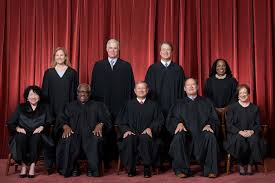
    Blue Press Journal – A Republican-led scheme to systematically dismantle Black-majority congressional districts across the South has been temporarily thwarted, not by a legal defense, but by the Supreme Court’s own delayed timetable, according to election law experts.

    The plan hinged on the high court’s anticipated ruling in Louisiana v. Callais, a case that could severely weaken or outright strike down Section 2 of the landmark Voting Rights Act. This provision prohibits voting practices that discriminate based on race, a critical tool used to prevent the dilution of Black voting power through gerrymandering.

    Had the conservative-majority Court, shaped by three justices appointed by President Donald Trump, issued a ruling gutting the VRA shortly after re-hearing the case in October, it would have greenlit a frantic redistricting process. GOP-controlled state legislatures would have been empowered to “crack” and “pack” Black voters, effectively eliminating districts currently represented by Black Democrats.

    According to a stark analysis by the voting rights group Fair Fight Action, this could have targeted up to 19 House seats across nine Southern states. The move was a blatant partisan power grab, designed to permanently entrench a white conservative majority and make it “increasingly hard for Democrats to win back control of the House,” as reported by HuffPost.

    However, the Court’s failure to issue a decision has now made this scenario “functionally impossible” for the 2026 elections, as primary calendars have rendered it too late for states to redraw maps.

    “We’re at the point where it’s functionally impossible for most Southern states to redraw their maps, unless they do something extraordinary like move or redo primaries,” Michael Li, a redistricting expert at the Brennan Center for Justice, confirmed. States like North Carolina and Texas have already held primaries, while others face imminent deadlines to print ballots for military and overseas voters.

    The GOP’s intent was clear. Louisiana’s Republican Governor, Jeff Landry, called a special legislative session on redistricting last fall, anticipating a swift ruling from the Supreme Court. This tactic aligns with the Republican project, championed by Donald Trump, to roll back voting rights protections for Democratic-leaning minority voters.

    The delayed ruling is a temporary reprieve, but the case remains a loaded weapon aimed at the heart of American democracy.

  • Trump’s Redistricting Pressure Campaign Backfires in Indiana Senate 

    Blue Press Journal – In a stunning rebuke to President Donald Trump’s heavy-handed pressure campaign, 21 out of 40 Republican state senators in Indiana voted against adopting new congressional maps that would have eliminated the state’s two Democratic-held House seats. Trump’s all-or-nothing attempts to strong-arm the senators into submission only led to further division and opposition.

    Trump unleashed a barrage of social media posts, threatening GOP Senate President Pro Tem Rodric Bray and other holdouts with fierce primary challenges if they didn’t cede to his redistricting demands. Vice President JD Vance made multiple rounds to Indianapolis to try to sway the lawmakers personally. Even the White House and House Speaker Mike Johnson (R-La.) got involved, individually calling senators to push them to flip their votes. 

    However, the blitzkrieg of intimidation, threats, and attempted violence targeting senators who opposed the effort only amplified their resolve. Instead of cowering, a majority of the GOP caucus stood united against Trump’s demands, citing concerns that mid-census redistricting was a power grab and should only occur once a decade after the census.

    Senator Eric Bassler was among those who reiterated their commitment to standing by the maps they voted for four years ago, demonstrating an unwavering commitment to principle over political pressure. “I cannot support any mid-census redistricting plan,” Bassler stated firmly. “Four years ago, my Republican colleagues and I voted for our current state and federal legislative maps. I stand by that vote and I will not support legislation to change our congressional maps.”

    This rejection for Trump is a reminder that even political titans can fall when they breach boundaries of decency. It offers hope: if lawmakers stand against bullying, honorable politics might rise from extreme partisanship. Ultimately, Trump’s reckless redistricting gamble leaves him with humiliation, confirming the importance of integrity in public service.

  • Redistricting Wars Heat Up: Trump’s Texas Push Prompts Nationwide Remapping Efforts

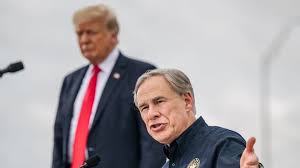
    Blue Press journal: A recent push by President Trump to redraw Texas’s House maps in an effort to gain five seats for Republicans has sparked a nationwide redistricting frenzy, with both red and blue states considering mid-decade map changes. However, this tit-for-tat approach to redistricting has raised concerns among blue-state Republicans, who fear that the moves could ultimately backfire and harm their own reelection chances.

    The issue was discussed on a recent conference call with House Republicans, where members largely expressed opposition to the redistricting changes. “I think the whole thing is pretty disgusting,” said Rep. Doug LaMalfa (R-Calif.), whose own reelection could be at risk if California Democrats pursue new maps. “Constituents don’t want politicians manufacturing a temporary gain by manipulating lines.”

    LaMalfa’s concerns are echoed by other Republicans, who worry that the redistricting battles could lead to unintended consequences that harm both parties. Former Rep. John Faso (R-N.Y.), who advised Republicans during their last redistricting fight in New York, cautioned that the current approach could have far-reaching and unpredictable effects. “I think there are unintended consequences to all of this, and I’m not sure those unintended consequences aren’t going to be felt by both sides,” he said.

    The redistricting efforts in Texas, which are seen as a key battleground state, could potentially net Republicans five additional seats. However, if California Democrats respond by redrawing their own maps, it could cancel out the GOP’s gains in Texas. This has led to concerns that the redistricting wars could ultimately lead to a zero-sum game, where neither party gains a significant advantage.

    The alarm sounded by blue-state Republicans reflects a growing sense of frustration among lawmakers who feel that the redistricting battles are being driven by partisan politics rather than a genuine effort to represent the interests of constituents. As the redistricting wars continue to heat up, it remains to be seen whether the efforts will ultimately benefit either party, or simply lead to further polarization and gridlock in Washington.