Blue Press Journal – The past week has laid bare the consequences of President Trump’s overreach—a mix of policy missteps and self‑inflicted damage that is tanking his poll numbers and eroding congressional support. A stagnant labor market, combined with skyrocketing gas prices tied to the Iran‑U.S. conflict, is pushing the U.S. economy toward stagflation, a scenario Wall Street analysts now warn could become a reality (Reuters, March 5).
Trump’s immigration agenda, already unpopular, hit a new low with the abrupt removal of DHS Secretary Kristi Noem. Critics argue the move was less about policy competence and more about political retaliation, exposing the administration’s chaotic leadership style (The New York Times, March 4). The fallout has amplified voter frustration, as households grapple with higher gasoline costs that directly counter the president’s “America First” promises to ease living expenses.
Meanwhile, the labor market shows little sign of recovery. The Bureau of Labor Statistics reported a flat employment growth rate for the second consecutive month, while wages remain stagnant (BLS, March 2). This paradox of weak job creation and rising inflation undermines the administration’s narrative that its tax cuts and deregulation are revitalizing the economy.
Polls reflect the shifting tide. A recent Quinnipiac survey placed Trump’s approval at a historic low, with many Republicans citing “economic anxiety” as the primary concern (Quinnipiac, March 3). As the GOP struggles to keep voters focused on its agenda, the cascade of bad news threatens to derail any attempt to regain momentum before the midterm elections.
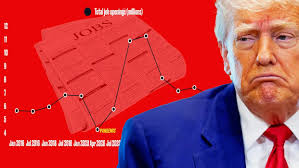
Blue Press Journal – As the Trump administration continues to tout the supposed success of its economic policies, a starkly different narrative emerges when examining the latest data on the job market. Despite the White House’s claims of a new “Golden Age,” the reality is that job openings have plummeted to their lowest level since the height of the Covid-19 pandemic in mid-2020.
According to the Labor Department’s latest report, job openings in December dropped unexpectedly, signaling a significant slowdown in hiring across various industries. This downturn is further underscored by data from the research firm Challenger, Gray and Christmas, which revealed that companies announced plans to cut over 108,000 positions in January, more than double the number of layoffs recorded in January 2025. The payroll processing firm ADP also reported a meager addition of just 22,000 private sector jobs in January, a clear indication of tepid payroll growth.
The numbers paint a concerning picture, particularly when considered in the context of the Trump administration’s boasts about the economy. While official measurements of productivity and output have been strong, polls and consumer confidence surveys have consistently shown negative sentiments among the public. A recent poll from The Economist/YouGov found that Trump trails by 14 percentage points on his handling of jobs and the economy, while a survey by the Federal Reserve Bank of New York revealed deteriorating consumer expectations regarding wage growth and finding new employment.
The disconnect between the administration’s rhetoric and the reality on the ground is striking. As RSM US Chief Economist Joe Brusuelas noted, “On the margin, firms are able to do more with less…That’s fine when you’re talking to an economist or capital markets professional; that’s hell if you’re talking to a politician or the public.” The implications for Trump are significant, as his approval ratings on the economy have already been battered by concerns over affordability, inflation, and labor market anxieties.
The Labor Department’s report also highlighted substantial declines in job opportunities across professional and business services, retail trade, and finance and insurance. As companies increasingly adopt artificial intelligence, there are growing concerns that future growth may leave workers behind. The quits rate, which reflects workers’ willingness or ability to leave their job, remains below pre-pandemic levels, suggesting a lack of confidence in the job market.
The labor market outlook is uncertain, with Wells Fargo economists warning that “the low hiring environment and subdued rate of voluntary job departures risks pushing layoffs higher.” It remains to be seen if the Trump administration’s policies will address the job market’s underlying issues.
Key Statistics:
Job openings in December dropped to their lowest level since mid-2020 (Labor Department)
Companies announced plans to cut over 108,000 positions in January (Challenger, Gray and Christmas)
Private sector firms added just 22,000 jobs in January (ADP)
Trump’s approval rating on jobs and the economy trails by 14 percentage points (The Economist/YouGov)
Consumer expectations regarding wage growth and finding new employment have deteriorated (Federal Reserve Bank of New York)
By examining the latest data and research, it becomes clear that the Trump administration’s economic policies have not delivered the promised benefits to the job market.