BLUE PRESS JOURNAL – The special election in Tennessee’s 7th Congressional District, initially considered a safe Republican seat after Donald Trump won it by over 22% in 2024, has unexpectedly become intensely competitive. Both Republicans and Democrats are heavily investing funds, with Republicans fearing that Trump’s current unpopularity and the off-year timing could lead to an upset loss for their candidate, Matt Van Epps, against Democrat Aftyn Behn.
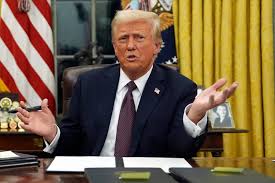
This tightening race aligns with a national trend where Democrats have consistently overperformed in special elections since Trump’s return to office. Recognizing the severe implications, Donald Trump has personally intervened, urging his supporters to vote for Van Epps.
The outcome of this election carries serious consequences for the Republican Party’s narrow majority in the U.S. House of Representatives. A loss for Van Epps would reduce the GOP’s majority to a bare minimum of 218 seats. With the impending resignation of Republican Rep. Marjorie Taylor Greene in January, the party could potentially lose its majority altogether before the 2026 midterms. Internally, there is growing discontent among House Republicans towards Speaker Mike Johnson for his unwavering defense of Trump, with some predicting more resignations and even Johnson losing his gavel due to low morale. Regardless of the final result, a close contest in a historically safe Republican district like Tennessee’s 7th is a grim indicator for the GOP’s prospects in the 2026 midterms, signaling potential widespread losses if they struggle to defend such seats.
Blue Press Journal – In a scathing rebuke, The Wall Street Journal’s conservative editorial board on Wednesday called out President Donald Trump for his misguided attempts to shift blame for Republican election defeats onto the fact that he wasn’t on the ballot. The Journal dismissed this rationale as “total B.S.,” pointing to Trump’s own policies as the root cause of the GOP’s woes.
The editorial board’s withering critique comes after Trump attributed the Republican losses in key elections to his absence from the ballot. However, the Journal countered that Trump’s presence was felt throughout the campaigns, with his policies and legacy dominating the discourse and motivating Democratic turnout.
“Mr. Trump was on the ballot ― not literally, but nonetheless as the main motivating force behind a dominating Democratic turnout,” the Journal wrote. The newspaper highlighted a range of Trump-backed policies that were effectively on the ballot, including his economic agenda, tariffs, and foreign policy initiatives.
Moreover, the Journal noted that Trump’s presidency has been marked by controversy, from the deployment of masked ICE agents to the rising cost of living. These issues, the newspaper argued, were inextricably linked to Trump’s own actions and policies, making him a central factor in the elections.
The Journal’s rebuke is significant, coming from a traditionally conservative outlet. The editorial board’s warning that “if he really believes this, then the GOP is heading for bigger problems in 2026” suggests that Trump’s refusal to acknowledge the role of his own policies in the election outcomes poses a long-term threat to the party’s prospects.
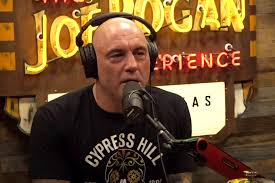
During a recent episode of his podcast, Smith noted that Trump has consistently claimed that Joe Biden became president due to election cheating, yet has failed to provide concrete evidence to support this claim. “So I’m gonna need to know who ‘they’ is, and I’m going to need to know when we’re gonna see ’em perp-walked,” Smith said, highlighting the lack of accountability and transparency surrounding Trump’s allegations.
Rogan interjected, stating, “I don’t think they have any evidence.” He went on to argue that if Trump or his team had credible proof of election tampering, they would have presented it by now. “If that was you or if that was me, and there was some reason why I knew that they did something, and I could give you all the facts, I would have that ready for anybody,” Rogan said. “For four fucking years they’ve been telling him he’s crazy for questioning the election. So after four years I’d have a fucking tight 10 minutes on the election where I could just rattle off at you and rock your world with it like, ‘These are the facts, Jack.’”
Rogan’s comments are significant, as they come from a prominent figure sympathetic to Trump’s views. By questioning Trump’s claims, Rogan sends a powerful message to his audience, many likely influenced by his opinions. This may serve as a wake-up call for Trump’s supporters, who have clung to the “big lie” narrative for years.
Rogan’s comments remind us that facts matter. By challenging Trump’s claims and demanding transparency, he is promoting a more informed discussion about American politics. Whether Trump’s supporters will listen is uncertain, but it’s clear Rogan has dealt a blow to the “big lie” narrative that won’t go unnoticed.
BREAKING NEWS: Blue Press Journal (TX) – In a shocking display of partisan strong-arming, Texas state Rep. Nicole Collier, a Democrat from Fort Worth, has been detained in the state Capitol by the Republican majority after refusing to consent to 24-hour police surveillance. Collier, one of over 50 Democratic legislators who fled the state earlier this month to block the passage of a new congressional map, filed a writ of habeas corpus in the district court of Travis County, Texas, claiming unlawful detention.
The detention of Collier is the latest escalation in the bitter battle over redistricting in Texas. The Republican majority, backed by President Donald Trump, is seeking to create five new GOP seats ahead of the 2026 midterm elections. Democrats, who claim the maps are gerrymandered to favor Republicans, have been using every available tactic to block their passage.
The incident has sparked widespread outrage among Democrats, who see it as a chilling example of the Republican majority’s willingness to disregard the law and disregard the rights of their opponents. As the battle over redistricting continues to rage, it remains to be seen how far the Republicans will go to achieve their goals, and how the courts will respond to Collier’s lawsuit.
One thing is clear, however: the detention of Rep. Collier is a stark reminder of the deepening partisan divide in Texas and the willingness of the Republican majority to use any means necessary to maintain their power. As the people of Texas watch this drama unfold, they must ask themselves: is this really what democracy looks like?
Blue Press Journal (DC) – In a social media post on Monday, President Donald Trump unleashed a barrage of unsubstantiated statements about the integrity of elections, reigniting concerns about the validity of mail-in voting. The claims, which have been repeatedly debunked by experts and courts, come on the heels of a meeting with Russian President Vladimir Putin, who reportedly echoed Trump’s sentiments that U.S. elections are “rigged” due to mail-in voting. So now we are going to take advice from a dictator!
Moreover, experts point out that Trump’s claims of executive authority over the “time, place and manner” of elections are unfounded, as the Constitution grants this power to individual states. Any attempt to issue an executive order restricting mail-in voting, as described in Trump’s post, would likely be met with immediate court challenges and is unlikely to take effect.
Critics argue that such a move would disproportionately affect vulnerable populations, including overseas service members, veterans, and people with disabilities, who rely heavily on mail-in voting. This has sparked concerns about the potential disenfranchisement of these groups and the erosion of democratic principles.
The timing and content of Trump’s post have also raised questions about his mental acuity, with some speculating that his age and health may be impacting his ability to think clearly. As the presidential election season heats up, many are left wondering whether Trump’s claims are a genuine attempt to address voting integrity or a desperate attempt to sway public opinion.
As the fact-checking community and experts continue to debunk Trump’s claims, it remains to be seen how this will impact the ongoing debate about voting rights and election integrity. One thing is certain, however: the American public deserves accurate and trustworthy information, especially from our president, about the democratic process, and it is the responsibility of leaders to provide it.
In a statement, a spokesperson for the Democratic National Committee said, “Trump’s latest claims are just another example of his attempts to undermine the integrity of our elections and suppress voter turnout. We will continue to fight for the rights of all Americans to participate in the democratic process, regardless of their background or circumstances.”
In his letter, sent to the President on Monday, Newsom warned that Trump’s efforts to encourage red states like Texas to redraw their maps could destabilize American democracy. Newsom argued that such actions would be a blatant attempt to gain an unfair advantage for the Republican Party in the 2026 elections. The governor cautioned Trump that “you are playing with fire, risking the destabilization of our democracy, while knowing that California can neutralize any gains you hope to make.”
The White House has been actively encouraging several Republican states, including Texas, to engage in mid-decade redistricting in an effort to create more pickup opportunities for the GOP in the House. However, Newsom’s letter and subsequent announcement suggest that California will not stand idly by while these efforts unfold.
By redrawing its own congressional maps, California aims to offset any potential gains the Republican Party might make through mid-decade redistricting in other states. The move is likely to be seen as a strategic response to the President’s efforts to influence the electoral landscape in favor of the GOP.
The decision to redraw California’s congressional maps is expected to have significant implications for the state’s electoral representation and could potentially impact the balance of power in the US House of Representatives. With the 2026 elections on the horizon, the stakes are high, and the battle for control of the House is likely to be fiercely contested.
Blue Press journal: A recent push by President Trump to redraw Texas’s House maps in an effort to gain five seats for Republicans has sparked a nationwide redistricting frenzy, with both red and blue states considering mid-decade map changes. However, this tit-for-tat approach to redistricting has raised concerns among blue-state Republicans, who fear that the moves could ultimately backfire and harm their own reelection chances.
The issue was discussed on a recent conference call with House Republicans, where members largely expressed opposition to the redistricting changes. “I think the whole thing is pretty disgusting,” said Rep. Doug LaMalfa (R-Calif.), whose own reelection could be at risk if California Democrats pursue new maps. “Constituents don’t want politicians manufacturing a temporary gain by manipulating lines.”
LaMalfa’s concerns are echoed by other Republicans, who worry that the redistricting battles could lead to unintended consequences that harm both parties. Former Rep. John Faso (R-N.Y.), who advised Republicans during their last redistricting fight in New York, cautioned that the current approach could have far-reaching and unpredictable effects. “I think there are unintended consequences to all of this, and I’m not sure those unintended consequences aren’t going to be felt by both sides,” he said.
The redistricting efforts in Texas, which are seen as a key battleground state, could potentially net Republicans five additional seats. However, if California Democrats respond by redrawing their own maps, it could cancel out the GOP’s gains in Texas. This has led to concerns that the redistricting wars could ultimately lead to a zero-sum game, where neither party gains a significant advantage.
The alarm sounded by blue-state Republicans reflects a growing sense of frustration among lawmakers who feel that the redistricting battles are being driven by partisan politics rather than a genuine effort to represent the interests of constituents. As the redistricting wars continue to heat up, it remains to be seen whether the efforts will ultimately benefit either party, or simply lead to further polarization and gridlock in Washington.
The current struggle among Senate Republicans this week to pass a budget proposal, which is unpopular, reveals a deep internal conflict, one that goes beyond typical political disagreements. According to some analysis, the core difficulty lies in a stark reality: a significant number of Republican lawmakers understand that the very people most likely to be negatively impacted by the proposed cuts are their own constituents – the Republican voters.
Under discussion is a plan described by some as potentially adding a significant $2.8 trillion to the national debt by 2035. Yet, despite this substantial increase in borrowing, the plan reportedly includes deep cuts to vital social programs like Medicaid and Obamacare. These cuts are projected to be severe enough that an estimated 11.8 million people could lose their health insurance coverage. Beyond healthcare, millions more Americans would likely lose access to other essential services upon which they rely.
Analysis indicates that these reductions would have a significant and disproportionate impact on residents of “red states,” which are integral to the Republican constituency. This consequence would predominantly affect Republican voters, a group that notably includes many individuals from the MAGA demographic.
This situation presents a peculiar political paradox. If the proposed plan simultaneously increases the national debt by trillions and inflicts significant pain on the party’s own voters, why would Republicans push for it? Specifically, if they are already willing to go $2.8 trillion deeper into debt, why wouldn’t they allocate an additional amount – say, the $930 billion mentioned in one calculation – to mitigate the damage and protect their constituents’ healthcare and services? If debt is acceptable, why not use a fraction more to shield their base from harm?
The answer, according to the perspective offered here, points towards a fundamental shift in the dynamics of the Republican Party. It suggests that the party’s actions and priorities are no longer driven purely by traditional calculations of representing constituent interests or adhering strictly to fiscal conservatism. Instead, this viewpoint posits that the party has transformed, now operating less as a conventional political organization and more as something resembling a “Trump’s cult.”
From this perspective, the audacity to harm their own supporters while recklessly escalating the national debt transcends mere policy or political maneuvering; it reveals a troubling allegiance to a non-traditional agenda dictated by the party’s powerful figurehead, Trump. This profound analysis uncovers that the ongoing budget impasse is far more than a dispute over legislative minutiae; it is a glaring symptom of a party whose very identity and motivations have undergone a dramatic transformation and no longer represents the American public. .
The polls:
A Fox News poll found that 38% of registered voters support the “One Big Beautiful Bill” based on what they know about it, while 59% oppose it.
The survey found that the legislation is unpopular across demographic, age and income groups. It is opposed 22%-73% by independents, and 43%-53% among white men without a college degree, the heart of Trump’s base.
A Quinnipiac University poll found that 27% of registered voters support the bill, while 53% oppose it. Another 20% had no opinion. Among independents, 20% said they support it and 57% said they oppose it.
A KFF poll found that 35% of adults have a favorable view when asked about the “One Big Beautiful Bill Act,” while 64% have an unfavorable view. Just 27% of independents said they hold a favorable view of it.
A survey from Pew Research Center found that 29% of adults favor the bill, while 49% oppose it. (Another 21% said they weren’t sure.) Asked what impact it would have on the country, 54% said “a mostly negative effect,” 30% said “a mostly positive effect” and 12% said “not much of an effect.”
A poll by The Washington Post and Ipsos found that 23% of adults support “the budget bill changing tax, spending and Medicaid policies,” while 42% oppose it. Another 34% had no opinion.
The nuclear option is now the only viable choice. It’s time for Democrats to show some backbone. Democrats must be willing to take a stand and not back down. Senator Tommy Tuberville (R-AL) tied up the entire United States Senate for nearly a year, and Senator Chris Murphy (D-CT) is putting his Republican colleagues on notice.
Murphy made it clear on Wednesday morning that if Republicans do not start pressuring Donald Trump to rein in Elon Musk’s illegal takeover of the government, they can forget about any help passing legislation or reaching a budget deal. Democrats should not be moving forward with nominees or legislation until Republicans take this crisis seriously. They should not be giving votes to nominees or legislation until Republicans step up.
Furthermore, Democrats should not assist Republicans in raising the debt ceiling to pass a massive tax cut for the wealthy. It only takes one senator to halt expedited confirmation of certain cabinet nominees, and Democrats should not be granting expedited confirmation to anyone until this constitutional crisis is resolved.
Democrats need to make it clear to Republicans that there will be consequences for their actions. It’s time to stand firm and demand accountability and they follow the LAW!