Tag: Pentagon

  • Why Cutting Admiral and General Slots Would Harm The Military

    Pete Hegseth’s 20% Cut to Admiral and General Positions Threatens U.S. Military Readiness

    While it may seem like cutting 20 percent of the admiral and general slots in the Pentagon would save the country money and make the military machine more efficient, it would have the negative affect of removing experience from active military service. Promoting men to the rank of admiral and general usually takes many years of hard work, so there won’t be very many qualified people willing to serve with fewer officers.
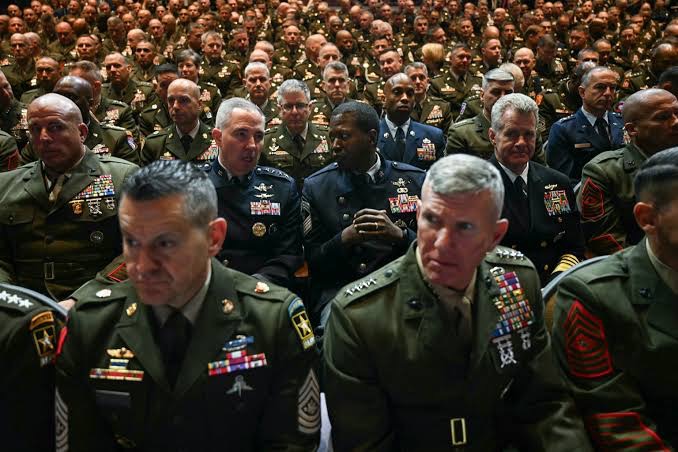
    This would not only weaken America’s military presence around the world, it would also hurt the people who serve and sacrifice their lives for our country. With fewer admirals and generals, military service will lose valuable experience gained from previous wars. Without this experience, Americans will struggle to fight and win future conflicts.

    A smaller admiral and general corps will also hurt the morale of the military members, while causing confusion and uncertainty among the country’s allies and strategic competitors. Losing these ranks means fewer qualified candidates will receive the education and training needed to become flexible joint commanders in the United States. The reduction would lower the quality of leadership in the military.

    The Pentagon and the American government are not saving money by eliminating valuable positions within the military, especially when it may jeopardize America’s national security.
    Fediverse Reactions
  • Trump’s 2027 Budget: A $500 Billion Pentagon Surge at the Expense of Seniors and the Nation

    Blue Press Journal – The White House’s latest fiscal‑year 2027 budget request places an unprecedented $1.5 trillion in defense outlays on the table—an increase of roughly 42 % that eclipses any military expansion since the Cold War.  According to Reuters, the proposal earmarks nearly $500  billion for the Pentagon while slashing $73  billion from non‑defense programs. 

    The cuts are not abstract; they target the Environmental Protection Agency’s environmental‑justice initiatives, renewable‑energy grants, community‑service block funding, and, most alarmingly for seniors, a proposed reduction in Medicare’s supplemental support. The New York Times has warned that trimming Medicare could force millions of retirees into “catastrophic” out‑of‑pocket expenses, undermining the social safety net that the United States built after World War II. 

    Even as the administration touts a “historic” investment in the Department of Homeland Security, it simultaneously promises a $350 billion “slush fund” for an aggressive posture toward Iran—an approach that The Washington Post describes as a “reckless escalation that risks dragging the nation into another costly conflict.” Critics argue that the budget’s war‑centric focus dovetails with a broader “America Last” philosophy, where essential services such as child care, Medicaid, and affordable housing are deemed expendable. 

    Public‑policy experts, including co‑president of Public Citizen Robert  Weissman, call the plan “a moral obscenity.” If enacted, the budget would push non‑defense discretionary spending to its lowest level in modern history, leaving seniors, students, and climate‑action programs to bear the brunt of the fiscal sacrifice. 

    Congress must scrutinize this proposal, demand transparency from OMB Director Russell  Vought, and protect the health and security of American families from a budget that prioritizes war over welfare.

    Fediverse Reactions