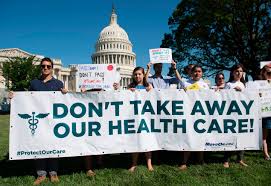
Blue Press Journal – Health care costs in the United States are climbing at an alarming rate — and millions of Americans are feeling the financial strain. According to DCCC Chair Suzan DelBene (D-Wash.), the responsibility lies squarely with House Republicans.
DelBene points out that instead of addressing spiking health care costs with meaningful solutions, House Republicans prioritized massive tax breaks for the wealthiest Americans. Even more concerning, they blocked a floor vote that could have preserved vital health care tax credits, that expired on January 1, 2026.
For families already struggling with medical bills, the expiration of these credits could mean higher premiums, reduced access to care, and increased economic hardship. As the deadline approaches, the debate over who benefits from policy decisions — and who pays the price — is intensifying.
The American public is wide awake and watching! The pivotal question is whether voters will rise up in 2026 to hand control over to Democrats who steadfastly champion the interests of everyday Americans, not the wealthy elite of billionaires and millionaires.
Health Care Premium Hike in 2026: and Republicans Refuse to Act
Blue Press Journal – On January 1, 2026, millions of Americans will face a painful spike in health insurance premiums. This surge is directly tied to the scheduled expiration of the enhanced subsidies under the Affordable Care Act (ACA) — subsidies first expanded under the American Rescue Plan in 2021 and extended through 2025 by the Inflation Reduction Act.
If Congress fails to extend these subsidies, health care costs will rise sharply — and the Republican Party, led by Donald Trump, has made it clear they have no intention of renewing them.
How Much Will Premiums Rise?
According to the Congressional Budget Office and Kaiser Family Foundation analysis, without the enhanced ACA subsidies:
Middle-income families (earning $50,000–$75,000/year) will see average annual premiums increase by $1,200–$2,400 per household.
Older enrollees in their early 60s could see premiums jump by $4,000–$6,000 annually in some states.
Nationally, the average premium for a benchmark silver plan could rise up to 53% for those losing subsidy eligibility.
The number of uninsured Americans could increase by 3–4 million in 2026 alone.
Projected Annual Premium Increases by Income Bracket (when subsidies lapse)
Annual Income (Family of 3)
Avg. Premium Increase (National)
Example State Impact
$35,000 (150% FPL)
$0–$500 (still eligible for some subsidy)
CA: +$300
$55,000 (250% FPL)
+$1,800
TX: +$2,200
$85,000 (400% FPL)
+$4,500
FL: +$5,000
$120,000 (550% FPL)
+$6,600
WY: +$7,200
(FPL = Federal Poverty Level; figures based on KFF and CBO modeling)
Why Enhanced ACA Subsidies Lower Premiums for Everyone
The enhanced subsidies don’t just help those who qualify — they stabilize the entire ACA marketplace:
Risk Pool Balance – More healthy people can afford coverage, which spreads risk and keeps average premiums lower for all enrollees.
Market Competition – Stable enrollment encourages insurers to participate in more counties, increasing competition and slowing price hikes.
Reduced Uncompensated Care – Hospitals face fewer unpaid bills, which indirectly lowers costs for insured patients.
Without these subsidies, healthier middle-income Americans are more likely to drop coverage, leaving sicker, costlier patients in the pool — triggering a premium spiral.
The Republican Stance and Trump’s Position
Despite the clear evidence of harm, Republicans in Congress have opposed making the enhanced subsidies permanent. Donald Trump and GOP lawmakers have repeatedly called for dismantling the ACA framework entirely, reviving repeal rhetoric from 2017. Rather than offering a plan to prevent the 2026 premium spike, many Republicans have characterized the subsidies as “government handouts,” ignoring the reality that they function as a cost-control measure for the entire insured population.
The Bottom Line
The enhanced ACA subsidies are not just a safety net for the poor; they are a brake on runaway premiums for everyone.
The refusal by Republican leadership and Donald Trump to extend them is, in effect, a decision to let costs soar.
Blue Press Journal’s Year End Review of the Trump Administration
It was billed as a revolution. With Robert F. Kennedy Jr. confirmed as Secretary of Health and Human Services, a vocal contingent of Americans hoped for a return to “natural health” and a dismantling of the so-called “administrative state.” The promise was to “Make America Healthy Again.”
However, as the calendar turns on a turbulent 2025, the revolution looks less like a renaissance and more like a regression. Under Secretary Kennedy’s unorthodox leadership, the Department of Health and Human Services (HHS) has pursued an aggressive agenda that prioritizes ideology over epidemiology and conspiracy over clinical science. The result? A series of policy decisions that have actively eroded the foundations of public health in the United States.
Here are the five most damaging health policy decisions of 2025 that have left American families less safe and less protected.
1. The “Clean Water” Executive Order & Fluoridation Ban In his first month, Kennedy delivered on his most controversial campaign promise: ordering the removal of fluoride from all public water systems nationwide. Citing debunked studies linking fluoride to lowered IQ, the Secretary ignored decades of data from the CDC and the World Health Organization proving that water fluoridation is the single most effective public health measure to prevent tooth decay. The immediate consequence is a sharp projected rise in dental health issues, disproportionately affecting low-income families who lack easy access to dental care.
2. The Withdrawal of Support for mRNA Technology Perhaps the most scientifically regressive move of the year was Kennedy’s directive to the NIH to freeze all funding for research into mRNA vaccine technology. By politicizing a delivery mechanism that saved millions of lives during the COVID-19 pandemic, the Secretary has halted promising research into personalized cancer vaccines and next-generation flu shots. This decision signals to the scientific community that the U.S. government is no longer a reliable partner in cutting-edge medical innovation.
3. The Purging of the CDC Advisory Committee In a move that stunned the medical community, Kennedy utilized emergency provisions to replace the entire Advisory Committee on Immunization Practices (ACIP). He replaced seasoned epidemiologists and pediatricians with hand-picked “health freedom” advocates, including several prominent critics of standard vaccine schedules. The effect was immediate: the committee’s recommendation for the annual flu shot was delayed by months and wrapped in uncertainty, leading to confusion among doctors and a likely decrease in vaccination rates this winter.
4. The “Vaccine Injury Compensation” Overhaul The Secretary championed legislation that dramatically expanded the National Vaccine Injury Compensation Program (VICP). While framed as “protecting the injured,” the legislation was drafted with broad language that allows individuals to sue vaccine manufacturers for adverse effects that have been repeatedly disproven by science. This legal loophole effectively undermines the liability protections that allow vaccines to be manufactured at scale, threatening to drive prices up or drive manufacturers out of the market entirely.
5. The “Raw Milk” Deregulation Initiative Promoting a fringe dietary trend as federal policy, Kennedy’s HHS oversaw the rollback of safety regulations regarding the sale of raw (unpasteurized) milk and eggs across state lines. Public health officials have warned that this move ignores the very real dangers of pathogens like E. coli and Salmonella. By framing this as a matter of “consumer choice” rather than food safety, the department has invited a potential public health crisis via foodborne illness outbreaks.
The Verdict A year ago, the promise was health. Today, the reality is confusion, higher risks of preventable disease, and a government apparatus that actively distrusts the scientists it employs. For an administration tasked with protecting the nation’s health, 2025 has been a year of unforced errors that may take decades to correct.
Blue Press Journal – In the shadow of Donald Trump’s overpowering political clout and the latest Republican-led tax reforms, notably the infamous “Big Beautiful Bill”—decried by many as a blatant giveaway to the wealthy and corporate titans—the stage is set for an explosive upheaval in healthcare costs across America. Come January 1st, 2026, the repercussions of these policies are expected to send health insurance premiums skyrocketing for middle-class families, while the affluent and corporations bask in billions of dollars in tax cuts. Here’s how these insidious policies threaten to obliterate healthcare affordability for everyday Americans.
The Tax Breaks: A Windfall for the Wealthy and Corporations
The core of the Republican agenda, often labeled as a return to economic deregulation, includes expansive tax cuts for high-income earners and large corporations. These cuts, embedded in policies reminiscent of the 2017 Tax Cuts and Jobs Act (TCJA) under Trump, have effectively slashed corporate tax rates from 35% to 21% and reduced tax liabilities for households and shareholders. While proponents argue these cuts spur investment and job creation, the reality is stark: the government’s coffers are emptier.
With less revenue from the top 1%, the federal government has been forced to target subsidies for low- and middle-income Americans to balance budgets. The Affordable Care Act (ACA) subsidies, which helped over 20 million Americans afford health insurance, are now under threat. According to the Congressional Budget Office (CBO), these subsidy cuts could eliminate $70 billion in annual healthcare assistance, directly translating to steeper premiums for the average taxpayer.
The Subsidy Cuts: Who Bears the Pain?
The Republican-led policies have deliberately dismantled critical healthcare subsidies for average Americans. For example:
Advanced Care Act (ACA) Premium Tax Credits: Many middle-class families who rely on these credits to keep premiums affordable will lose eligibility. A family earning $75,000 annually common middle-class income in many states—might suddenly lose up to 80% of their monthly premium subsidy.
Medicaid Affordability: Caps on insulin subsidies for seniors beneficiaries have been removed, pushing out-of-pocket costs for essential medications into the hundreds per person annually.
Community Health Programs: Cuts to programs like Medicaidaid and community health centers will strain rural and underserved areas, indirectly driving up care costs as hospitals face higher uncompensated care burdens.
The Insurance Cost Crisis: January 1st, 2026
By 2026, the full brunt of these policies will materialize. Here’s what could happen:
Premium Increases for Families: A family of four in a mid-sized city might see their health insurance premiums jump from $1,200/month to $2,100/month. This 75% increase would eclipse wage growth, pushing many families into financial hardship.
Erosion of Cost-Sharing Reductions: Without subsidies, deductive costs and copays will skyrocket. An individual with a $20,000 annual deductible would be unable to afford routine care, let alone emergencies.
Insurance Coverage Gaps: Millions of Americans could “drop off” the system entirely. The Kaiser Family Foundation (KFF) estimates 12 million people could lose health insurance by 2026 due to affordability issues alone.
Example: Consider the Johnson family in Ohio. In 2024, their ACA premium was $300/month with a $50 copay. By 2026, their premium could soar to $850/month, and copays might hit $500 per doctor’s visit. Without savings or employer coverage, this could force them to choose between groceries and medication.
The Winners and Losers
Winners: Corporations and the ultra-wealth. For example, a tech CEO earning $10 million in dividends might save $2 million annually in taxes, while hedge fund managers benefit from lower capital gains rates.
Lovers: The middle class and working families. The average American, already grappling with inflation, now faces a healthcare crisis.
A Call for Accountability
As 2026 looms on the horizon, the yawning abyss between Republican policies and their catastrophic fallout can no longer be ignored. Lavish tax cuts for the wealthy have bloated Wall Street profits and fattened corporate wallets, while Main Street gasps for breath. Meanwhile, the Republicans have scampered off for an early Christmas break, conveniently turning a blind eye to the mess they’ve created. The coming year presents a crucial dilemma: Will Americans passively watch as a rigged system continues to serve the elite 1% at the grave expense of the struggling 99%?
Blue press Journal – The United States is facing the possibility of losing its measles elimination status, a designation it achieved in 2000, according to public health officials. This status, granted by the World Health Organization, signifies the absence of continuous measles transmission for 12 months or more. However, rising outbreaks fueled by declining vaccination rates have put this achievement in jeopardy.
In the recent year, measles cases have surged in several states, linked primarily to communities with low immunization coverage. Experts point to the spread of vaccine misinformation as a significant driver. Among the most visible figures associated with anti-vaccine rhetoric is Robert F. Kennedy Jr. secretary of the Department of Health and Human Services (HHS) who has long questioned vaccine safety despite overwhelming scientific evidence supporting immunization.
Kennedy, who founded the anti-vaccine advocacy group Children’s Health Defense, has amplified unfounded claims about the alleged dangers of vaccines, including the measles, mumps, and rubella (MMR) shot. Public health officials warn that such messaging undermines trust in vaccines and can lead to hesitancy, leaving communities vulnerable to preventable disease outbreaks.
The Centers for Disease Control and Prevention (CDC) stresses that maintaining high vaccination coverage—typically above 95%—is essential to prevent measles from regaining a foothold. Measles is among the most contagious viruses known, and even a small drop in immunization rates can lead to rapid spread.
If transmission continues for more than a year, the U.S. could lose its elimination status, a symbolic setback and a sign of eroding public health protections. Health experts urge the public to rely on scientifically verified sources for vaccine information, emphasizing that measles is not a benign childhood illness but a potentially deadly disease.
The situation dramatically underscores the perilous collision of public health and rampant misinformation—and the dire fallout that ensues when baseless claims drown out scientific truth. Thanks to Donald Trump for the dubious honor of appointing Robert F. Kennedy Jr. to this chaos.
Blue Press Journal – As the calendar pages dwindle, a palpable sense of urgency – and mounting frustration – is spreading through a segment of the House Republican conference. The looming expiration of enhanced ObamaCare tax credits is creating a stark dilemma for moderate Republicans, many of whom fear that a failure to act could have significant, negative repercussions for the party’s slim majority in the crucial 2026 midterm elections.
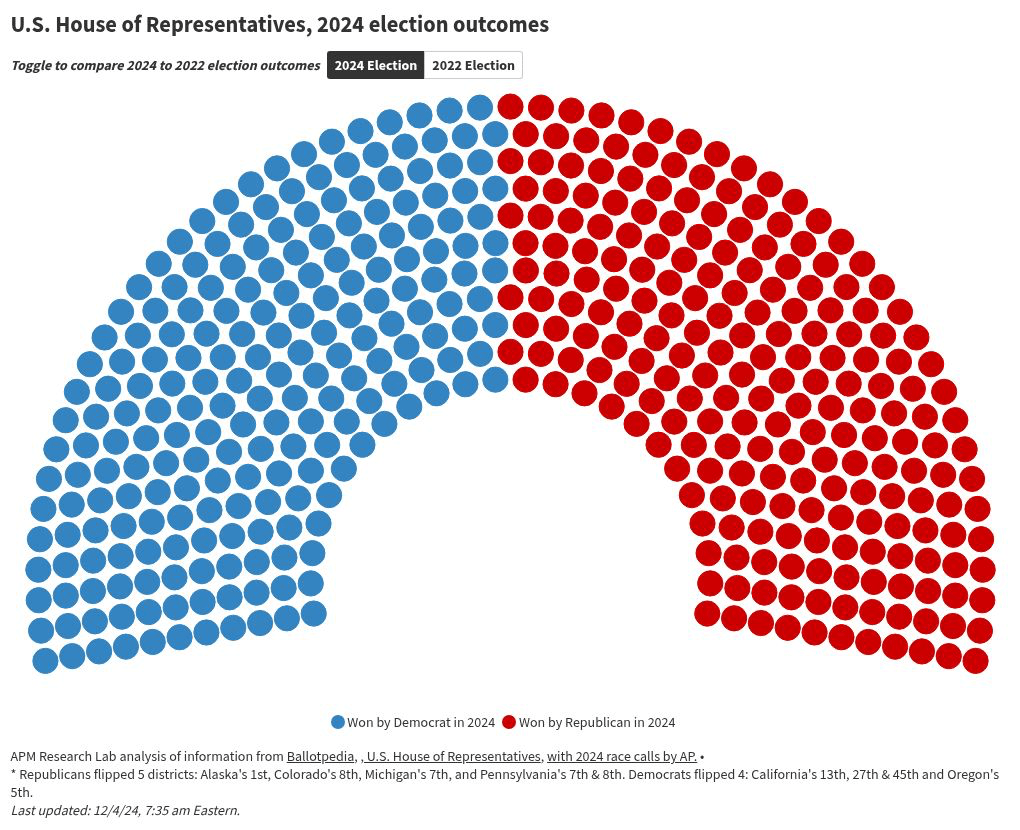
With less than ten legislative days remaining before millions of Americans brace for substantial increases in their health insurance premiums, a vocal group of centrist GOP lawmakers is making a strong case for extending these subsidies. Currently, these credits are a lifeline for over 20 million individuals, making healthcare more affordable. However, their pleas are encountering stiff resistance from Speaker Mike Johnson (R-La.) and a more conservative wing of the party. These members view the subsidies as a fundamental flaw within the Affordable Care Act and are largely opposed to any extension. Republicans currently hold 219 seats while the Democrats have 213.
The path forward is cluttered with competing ideas. Proposals range from one- to two-year extensions, with some attempting to incorporate restrictions like income caps or the elimination of zero-premium plans. Yet, despite these varying approaches, a consensus remains elusive, and none of the proposed plans have secured a commitment for a floor vote.
Leading the charge for a pragmatic solution are Representatives like Don Bacon (R-Neb.), Jeff Hurd (R-Colo.), and Brian Fitzpatrick (R-Pa.), who are advocating for a two-year extension. Simultaneously, a bipartisan framework spearheaded by Representatives Jen Kiggans (R-Va.) and Josh Gottheimer (D-N.J.) has garnered some traction, but has been met with a firm rejection from top Republican leadership.
For these moderate Republicans, the principle of ideological purity is clashing with the realities of effective governance. As Representative Jeff Van Drew (R-N.J.) put it, the current inaction is akin to “buffoonery,” highlighting both the potential political fallout and the very real human cost of allowing healthcare premiums to skyrocket. Others, such as Representative Kevin Kiley (R-Calif.), are emphasizing the broad agreement that exists across different factions to at least pass a temporary fix, thereby averting public anger and protecting vulnerable Republican incumbents.
Even the White House weighed in, proposing a two-year extension that included some conservative-leaning reforms. However, this initiative was quickly withdrawn amidst internal Republican opposition. Speaker Johnson has publicly committed to presenting a leadership-backed plan before the end of the year, but the specifics of this proposal remain shrouded in uncertainty.
As internal Republican party tensions escalate, the clock is relentlessly ticking. The decision made in the coming days – or lack thereof – on extending these vital ObamaCare tax credits will undoubtedly carry significant weight, impacting not only the health and financial well-being of millions of Americans but also the political fortunes of Republican lawmakers fighting for their seats in a challenging electoral landscape.
The U.S. Centers for Disease Control and Prevention (CDC) has confirmed the emergence of a new influenza A strain, specifically the K subclade of the H3N2 subtype, which currently accounts for most H3N2 infections. Historically, H3N2 has been associated with higher rates of hospitalizations and deaths among older adults compared to other influenza strains. Public health experts warn that this winter could see a particularly severe flu season, especially if vaccination coverage remains low. Influenza A generally causes more severe illness than influenza B, increasing the likelihood of hospitalization.
Flu symptoms typically develop rapidly and can range from mild to severe, with common presentations including fever, cough, sore throat, nasal congestion, muscle aches, headaches, and fatigue. The CDC advises individuals experiencing breathing difficulties, severe pain, weakness, or non-improving symptoms to seek urgent care. Vulnerable populations, such as young children and older adults, may require prompt medical attention to avoid complications.
Preliminary data from the United Kingdom indicate that this season’s flu vaccines offer at least partial protection against the new strain. Even when not perfectly matched, vaccines can provide cross-protection, reducing illness severity and hospitalization risk. Nevertheless, experts express greater concern over declining vaccination rates, particularly among children, than over the degree of strain-vaccine match. Medical professionals emphasize that while the vaccine is not flawless, it is effective in preventing severe outcomes, intensive care admissions, and deaths.
As of mid-November, overall flu activity in the United States remains low, with Louisiana reporting moderate levels and states such as Colorado and Mississippi experiencing slight increases. Most infections to date have been reported in children. Data collection has been partially delayed by the federal government shutdown and the Thanksgiving holiday. Although current national infection rates are not unusually high, flu activity typically peaks between December and February, suggesting a potential surge in the near future. Experts anticipate increased spread as the season progresses, underscoring the importance of vaccination as a preventive measure.
Blue Press Journal – In a shocking statement, President Donald Trump declared that Tylenol is “not good” and advised women to only take it if they “can’t tough it out.” This announcement, made without any scientific backing, has raised eyebrows and sparked widespread criticism. Trump’s remarks were made alongside Secretary of Health and Human Services Robert F. Kennedy Jr. and Dr. Mehmet Oz, a former television host and current Administrator for the Centers for Medicare & Medicaid Services.
The President’s claim that Tylenol could prolong viral illnesses among children is unsubstantiated and contradicts established medical knowledge. Acetaminophen, the active ingredient in Tylenol, is widely considered a safe and effective treatment for fever and pain in children, as long as it is taken under the guidance of a physician.
Trump’s statement also perpetuates a harmful stereotype that women are not capable of withstanding pain, implying that they should only seek medical relief if they are unable to “tough it out.” This lack of empathy and understanding has been widely criticized, with many pointing out that pain management is a critical aspect of healthcare, particularly for women who may experience menstrual cramps, childbirth, and other unique health challenges.
Furthermore, Trump’s assertion that there is no autism in Amish communities is factually inaccurate. While the Amish community may have lower reported rates of autism, this is likely due to underdiagnosis and lack of access to healthcare services, rather than any inherent difference in the prevalence of the condition.
The absence of scientific evidence to support Trump’s claims has led many to question the credibility of his advisors, including Kennedy Jr., a known vaccine skeptic. The Centers for Disease Control and Prevention (CDC) and the American Academy of Pediatrics (AAP) have repeatedly emphasized the importance of vaccine safety and efficacy, yet Trump’s team seems to be promoting unsubstantiated and misleading information.
Blue Press Journal – The White House is reportedly preparing to announce its findings on the causes of autism on Monday, with multiple reports indicating the administration will link the neurological condition to the common over-the-counter pain reliever acetaminophen. The anticipated announcement is expected to specifically connect the development of autism to pregnant women’s use of the drug, the primary ingredient in medications like Tylenol.
This expected revelation follows a directive from President Donald Trump, who made identifying the cause of autism a top priority. Health and Human Services Secretary Robert F. Kennedy Jr. has been a prominent voice in this effort, vowing earlier this year to uncover the root cause of what he terms the “autism epidemic.” Kennedy has frequently pointed to the rising rates of autism diagnoses as evidence of an artificial cause, having previously speculated on the mercury-containing vaccine preservative thimerosal, despite repeated analyses failing to establish any association.
However, the medical community is already pushing back against the unconfirmed claims linking acetaminophen to autism. The American College of Obstetricians and Gynecologists (ACOG) issued a statement asserting, “acetaminophen remains a safe, trusted option for pain relief during pregnancy.” ACOG added, “Despite recent unfounded claims, there’s no clear evidence linking prudent use to issues with fetal development.”
Major medical societies, including the Society of Maternal Fetal Medicine (SMFM), align with ACOG’s stance, advising that acetaminophen is safe for use during pregnancy, though they recommend consulting with healthcare providers before taking any medication.
Experts in the field of autism research largely attribute the increase in diagnoses not to an “epidemic” with an artificial cause, but rather to improved detection methods and broader diagnostic criteria since the first formal diagnosis in 1943. The impending White House announcement is poised to reignite a long-standing debate, placing the administration’s claims in direct contrast with established medical consensus.
The Post’s editorial board, known for its conservative leanings, pulled no punches in their critique of Kennedy, stating that his “tinfoil hat is blocking out all sense” and that he “won’t be restoring sanity to our public-health bureaucracies.” The tabloid’s harsh words were a stark departure from its usual support for Trump and his administration.
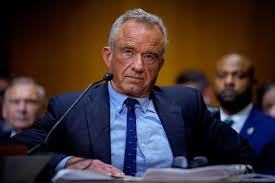
Kennedy, a vocal vaccine skeptic, has been a lightning rod for controversy since his appointment as HHS Secretary. His views on vaccines have been widely criticized by the medical community, and his appearance at the Senate hearing only seemed to exacerbate concerns. According to the Post, Kennedy’s testimony was marked by a bizarre and uninformed approach to public health, with the secretary coming across as “a paranoid kook connecting red strings on a whiteboard.”
The editorial board argued that Kennedy’s leadership at HHS is a recipe for disaster, citing his refusal to acknowledge basic facts and his reliance on conspiracy theories. “America needs agencies like HHS and CDC moving toward a sane center, where decisions are based on data-informed evidence,” the Post concluded. “The more Kennedy opens his mouth, the more obvious it becomes that letting him call the shots is just trading one extreme for another.”
The Post’s brutal takedown of Kennedy is a significant blow to the embattled HHS Secretary, who has already faced intense criticism from lawmakers and health experts. As the debate over vaccine policy continues to rage, the Post’s editorial serves as a stark reminder that Kennedy’s views are not only misinformed but also dangerous. With the nation’s public health at stake, it remains to be seen whether Kennedy will heed the Post’s warning and adopt a more evidence-based approach to vaccine policy.