Tag: FCC

  • Federal Watchdogs Take On Trump Ads as Illegal Propaganda

    A complaint against the Trump administration was filed on Tuesday with the Federal Communications Commission (FCC) and the Federal Trade Commission (FTC). It claims that the Trump’s recent government-funded television advertisements are illegal because they violate federal laws banning public funding of political propaganda.
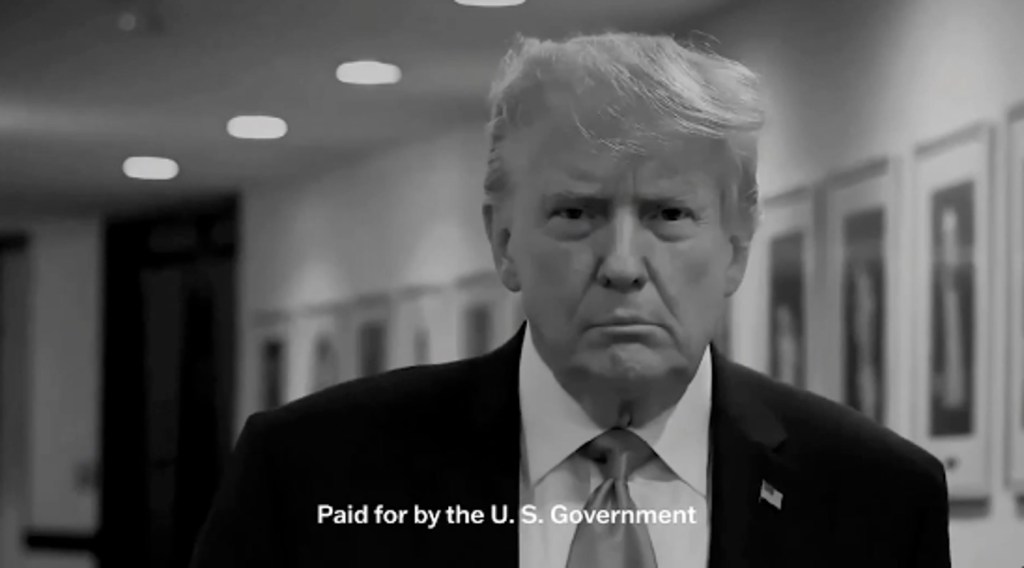
    The petition asks the FCC and the FTC to demand that television channels stop broadcasting these commercials and warns that continuing to do so will make the stations “liable for playing ads that violate federal law.” According to Lisa Gilbert, co-president of the Public Citizen, “It’s stunning that the administration not only ignored last week’s anti-American ad but doubled down by running a second taxpayer-funded piece during the heavily watched Sunday football games. These illegal ads should be taken off the air immediately and the White House’s many violations should be investigated.”

    Besides the FCC and the FTC, the organization asked the Government Accountability Office and the Office of Special Counsel to review whether the administration violated the Hatch Act and other laws.

    What do the ads say and how are they paid for?

    Three different advertisements, all of which include the disclaimer “Paid for by the U.S. Government,” started to air last week. They began airing on Fox News and later started to appear during NFL and college football games and on Newsmax, a conservative-leaning cable channel. In total, the government spent over $1 million on the ads, according to the Wall Street Journal. The money was allocated from the Customs and Border Protection budget, which does not have any apparent connection to the content of the advertisements.

    One of the ads includes the voice of former President Trump, who claims that “America will never become a communist country,” and a commentary by UFC President Dana White, who calls Trump “the toughest, most resilient person I’ve ever met,” set to the rhythm of the song “Love me.” Another ad is similar to the campaign’s video depicting Trump for the 2024 presidential election. It includes Trump’s speech: “We’re gonna liberate our country from these villains,” referring to “sick political class that hates our nation” and “fake news media.”

    The third video, which includes a narration by Trump, juxtaposes scenes of Mount Rushmore and claims that “Our administration marks the beginning of America’s golden age.” The White House’s argument counters the allegations that the ads are illegal. The White House argues that these are public service announcements similar to those used by other presidents to encourage citizens to enroll in the Affordable Care Act.

    According to the White House, the ads are justified since they “inform the public about important government services and programs.” However, According to Public Citizen, the ads “contain no legitimate government message; are aimed at influencing the presidential election; and therefore violate numerous statutes, including the prohibition on using federal funds for campaign propaganda and the Hatch Act.”

    Representatives from both sides agree that the ads carry a message that favors the president and his party and can damage the reputation of the government in the eyes of the public. At the same time, according to the complaint, “None of the ads mention any government program or attempt to explain how government works. Each ad seeks to promote the private interests of Donald Trump and advance the political interests of the Republican Party by manipulating the electorate ahead of the 2026 mid-term elections.”

    A bipartisan opinion on the issue

    Apart from progressive organizations, even some Republicans were concerned about the ads. Senator Thom Tillis, a Republican from North Carolina, was apparently surprised by the videos. “I hate it. It reminds me of Viktor Orbán and the people in Hungary. There’s no way to do that here.” Senator John Thune, a Republican from South Dakota, stated, “The message is fine. Pity it is paid for by the taxpayers.”

    Can the complaint against Trump’s ads lead to any changes?

    Probably not, considering that the heads of both the FCC and the FTC are Trump appointees, and the President himself has repeatedly accused these agencies of being out of control. On the other hand, the Supreme Court has upheld presidential authority to remove officials from government positions for refusing to carry out presidential orders. All of this suggests that there is a real danger that the budget funds allocated to the advertisers will be reallocated to propaganda.

  • The End of Local News? Why I’m Saying Alarm Bells are Ringing at the New FCC Policy

    by Winston Wendell

    For years, I studied the relationship between information and society. But the latest policy changes in Washington are deeply troubling. This week, the Federal Communications Commission, in a 2-1 vote, overturned a key media ownership rule protecting the diversity of viewpoints in our news and entertainment. This decision, which has been made by a Republican majority, allows bigger corporations to acquire a significantly greater share of local news.

    1960s RCA Victor television displaying a black-and-white show with a man and woman on screen

    If this is to be achieved, local news outlets will no longer be truly local. As someone who has fought for years for a better environment for local news to survive, I believe this development to be an existential threat to it. This is why I am raising this alarm bell about the end of local news.

    What Just Happened? (The 39 Percent Cap Was Lifted)

    For more than two decades, companies have been restricted to 39 percent of all television households as a result of a certain law. It was designed to prevent a single entity from dominating the news and information space.

    The chairman of the FCC, Brendan Carr, a Trump appointee, argued that this decision was made to “restore fairness” to the system, giving local news a better chance to compete with big tech conglomerates.

    Many, however, do not share this point of view. During the debate in the FCC, democrat commissioner Anna Gomez said, “This is not local broadcasting; it is Big Media muscling in to replace Big Tech as the gatekeeper – neither of which is in the public interest.”

    Who Wins from This?

    In this tug of war, there are always winners and losers, but the main beneficiaries of this policy shift were already predicted by its supporters. With this FCC decision, Nexstar, for example, will be able to merge with Tegna, so that around 80 percent of all households in the USA will receive their local news from one company. Such concentration of power in one media holding threatens the diversity of views in society.

    Another media conglomerate that wins from this is Sinclair Broadcasting Group. This company has a reputation for forcing “must run” news stories on its affiliated local TV stations, so that the news coming out of them reflects a particular point of view selected by the company’s bosses. With the repeal of the 39 percent rule, Sinclair will be able to disseminate its political narratives even more widely through dozens of local news outlets.

    Not Entirely Legal either (Challenges to the FCC Decision are Being Considered)

    In addition to being “unfair,” this FCC decision may also be illegal. This is what the court in Washington will have to decide in one of the lawsuits challenging the new FCC rules. This case, brought by the media watchdog group Free Press, claims that Brendan Carr does not have the authority to repeal the 39 percent rule.

    According to the complaint, the FCC’s move violates the Communications Act of 2004, which was adopted by a decision of Congress. Moreover, this law prevented the FCC from overturning the 39 percent cap unless Congress voted to repeal it. According to Matt Wood of Free Press, Carr’s initiative is an attempt to help Trump allies grab local news markets by any means.

    How Does This Affect the Local News?

    The importance of this decision for the future of local news can’t be overestimated. When a large national media company buys a popular local news outlet, it rarely means that it will begin to provide more comprehensive coverage of local events. Such mergers usually lead to the opposite: cuts in the number of local news shows, journalists’ salaries, and much more remote management decisions.

    In other words, the audience will have less information about what is happening around them and about their region in general, since coverage of local events will be controlled by people who speak for themselves. John Bergmayer of Public Knowledge said, “News consolidation leads to less local news, fewer journalists, and more top-down management.”

    The FCC as an Agency that Makes Politically Motivated Decisions

    Perhaps the most annoying aspect of all this is that the FCC itself seems to serve primarily as an instrument for advancing the policy preferences of the current administration.

    By promoting his candidates to the post of FCC chairman, Trump has ensured that the FCC will be willing to loosen regulations whenever they see fit. This week, commissioner Brendan Carr, for example, accused ABC and CBS of “anti-conservative bias” in the coverage of certain news. In essence, it is a call for these federal networks to change their narratives in favor of the Trump administration. By politicizing the FCC, Trump has turned it into an auxiliary instrument for pursuing his policy in Congress.

    From my point of view

    This decision to repeal the 39 percent rule is another step toward greater corporate control of the news, which is why I am raising this alarm bell about the end of local news. This is because it allows companies to buy more local news outlets and cover fewer local issues than before. In addition, the coverage of news will be subject to the control and management of officials from these companies, which will have an even greater impact on the polarization of opinions in society.

    Fediverse Reactions
  • The Chilling Effect: Is Corporate Capitulation Ceding the Future of American Democracy?

    BLUE PRESS JOURNAL – The cornerstone of a functioning democracy is a free and adversarial press. However, recent events surrounding CBS and its parent company, Paramount Global, suggest that the “Fourth Estate” may be bucking under the weight of regulatory threats and corporate consolidation. When the gatekeepers of information begin to self-censor out of fear of government retribution, the democratic process itself enters a state of emergency.

    The Colbert Confrontation: A Preemptive Surrender

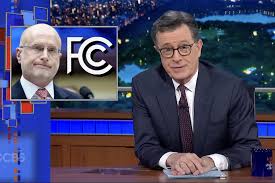
    The tension between journalistic independence and corporate interests reached a boiling point recently when Stephen Colbert, host of CBS’s The Late Show, revealed that network lawyers blocked him from airing an interview with Texas Democratic Senate candidate James Talarico. 

    According to Colbert, the decision was a direct response to threats from Federal Communications Commission (FCC) Chairman Brendan Carr. Carr has signaled his intent to repeal the “news exemption” for talk shows, which currently allows them to interview political candidates without being forced to provide “equal time” to every opposing candidate. While the rule has not yet changed, Colbert noted that CBS is “unilaterally enforcing it as if he had.”

    This “preemptive surrender” highlights a dangerous trend: the use of regulatory “jaw-boning” to silence dissent. By threatening the licenses or the bottom lines of major broadcasters, the executive branch can effectively dictate content without ever passing a law.

    Mergers, Margins, and Media Silence

    The motivations behind this censorship appear to be more financial than legal. Paramount Global, recently acquired by Skydance Media—led by David Ellison and backed by Trump megadonor Larry Ellison—is currently pursuing a massive merger with Warner Bros. Discovery. Because the FCC, led by Carr, must approve such media consolidations, the network has every incentive to remain in the administration’s good graces.

    Evidence of this shift is mounting. The installation of conservative figure Bari Weiss into a leadership role at CBS, despite a lack of broadcast experience, has coincided with the suppression of critical reporting. Most notably, a 60 Minutes segment exposing human rights abuses in an administration-backed El Salvadoran prison was pulled hours before airing, only to be buried later during a low-traffic time slot. 

    Furthermore, the abrupt cancellation of Colbert’s top-rated show—scheduled for 2026—and the resignation of veteran journalist Anderson Cooper from 60 Minutes point to a network prioritizing political alignment over editorial integrity.

    The “Orbanization” of American Media

    Critics argue these tactics mirror those of illiberal regimes, such as Viktor Orban’s Hungary, where the state avoids direct censorship by encouraging “regime-allied” corporations to buy up and neutralize independent outlets. When the FCC investigates programs like ABC’s The View or threatens the licenses of networks that host “uncivil” comedy, it creates a “chilling effect” where media companies become their own censors.

    If the administration’s aim is to limit how critics, comedians, and opposition politicians access the airwaves, the result is a narrowed marketplace of ideas. This raises a fundamental question for the American voter: If the media is too afraid to hold power to account for fear of losing its merger approvals, who is left to protect the truth?

    Sovereignty of the Script

    In a defiant segment, Colbert disposed of a CBS corporate statement in a dog waste bag, asserting that the network’s lawyers approve every script in advance. His frustration underscores a grim reality: when corporate lawyers replace investigative editors as the final arbiters of truth, democracy is the first casualty. 

    As corporate consolidation continues to hand the keys of the media landscape to a few politically connected billionaires, the line between public discourse and state-sanctioned narrative continues to blur.