Tag: Supreme Court

  • Supreme Court’s Delay Thwarts GOP Plan to Gut Black Voting Power Ahead of Midterms

    Supreme Court’s Delay Thwarts GOP Plan to Gut Black Voting Power Ahead of 2026

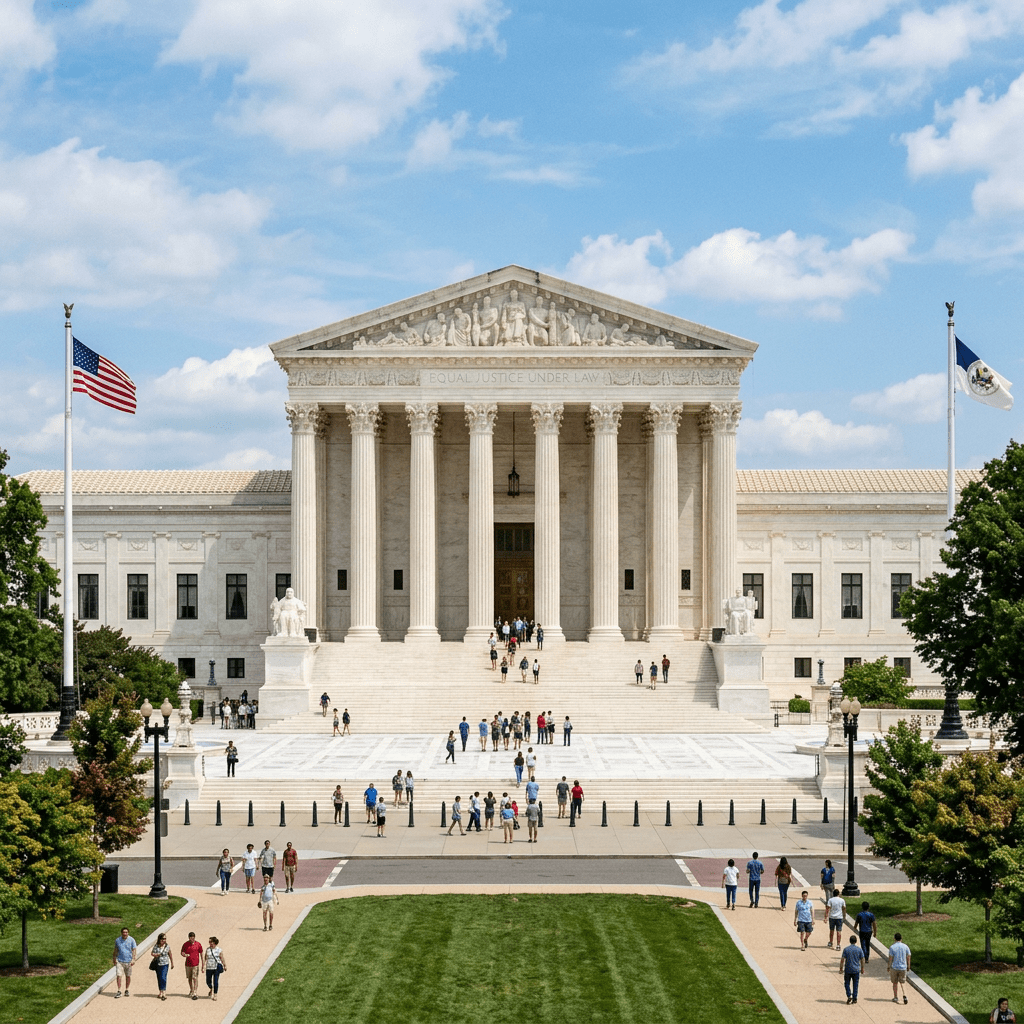
    Blue Press Journal – A Republican-led scheme to systematically dismantle Black-majority congressional districts across the South has been temporarily thwarted, not by a legal defense, but by the Supreme Court’s own delayed timetable, according to election law experts.

    The plan hinged on the high court’s anticipated ruling in Louisiana v. Callais, a case that could severely weaken or outright strike down Section 2 of the landmark Voting Rights Act. This provision prohibits voting practices that discriminate based on race, a critical tool used to prevent the dilution of Black voting power through gerrymandering.

    Had the conservative-majority Court, shaped by three justices appointed by President Donald Trump, issued a ruling gutting the VRA shortly after re-hearing the case in October, it would have greenlit a frantic redistricting process. GOP-controlled state legislatures would have been empowered to “crack” and “pack” Black voters, effectively eliminating districts currently represented by Black Democrats.

    According to a stark analysis by the voting rights group Fair Fight Action, this could have targeted up to 19 House seats across nine Southern states. The move was a blatant partisan power grab, designed to permanently entrench a white conservative majority and make it “increasingly hard for Democrats to win back control of the House,” as reported by HuffPost.

    However, the Court’s failure to issue a decision has now made this scenario “functionally impossible” for the 2026 elections, as primary calendars have rendered it too late for states to redraw maps.

    “We’re at the point where it’s functionally impossible for most Southern states to redraw their maps, unless they do something extraordinary like move or redo primaries,” Michael Li, a redistricting expert at the Brennan Center for Justice, confirmed. States like North Carolina and Texas have already held primaries, while others face imminent deadlines to print ballots for military and overseas voters.

    The GOP’s intent was clear. Louisiana’s Republican Governor, Jeff Landry, called a special legislative session on redistricting last fall, anticipating a swift ruling from the Supreme Court. This tactic aligns with the Republican project, championed by Donald Trump, to roll back voting rights protections for Democratic-leaning minority voters.

    The delayed ruling is a temporary reprieve, but the case remains a loaded weapon aimed at the heart of American democracy.

  • Supreme Court Halts President Trump’s Use of IEEPA to Impose Sweeping Tariffs

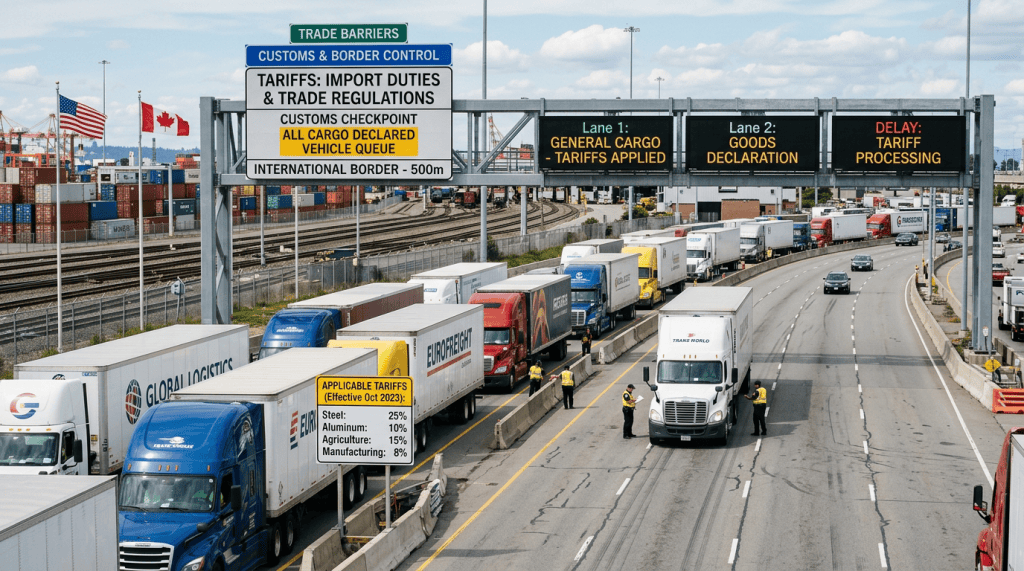
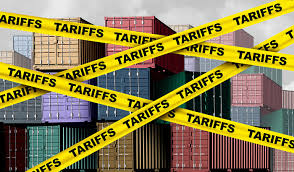
    Blue Press Journal, D.C. – In a decisive 6‑3 ruling, the United States Supreme Court invalidated President Donald Trump’s reliance on the International Emergency Economic Powers Act (IEEPA) to levy a broad set of tariffs that were central to his “America First” trade agenda. The decision marks the first time a president has attempted to use this emergency statute for tariff enforcement, and the Court’s rebuke represents a major legal setback for the administration.

    The Vote and Its Significance

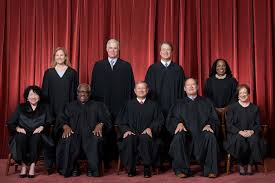
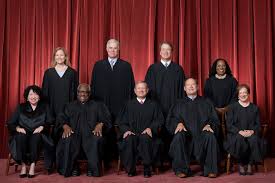
    Chief Justice John Roberts, along with Justices Neil Gorsuch and Amy Coney Barrett— all President Trump’s conservative appointees—joined the Court’s liberal bloc to overturn the bulk of the tariffs. Justice Brett Kavanaugh authored a dissent that Trump praised as “genius,” while Justice Gorsuch’s concurring opinion warned that bypassing Congress undermines the legislative process.

    Market Reaction

    Wall Street experienced heightened volatility throughout the day, but the major indexes closed with modest gains after the ruling, suggesting investor relief despite the lack of a dramatic rally. Companies most exposed to the contested duties, such as Mattel and Crocs, posted the strongest upward moves, reflecting expectations of lower import costs.

    Trump’s Next Move

    Unwilling to abandon his trade strategy, the President signaled that he will turn to other statutory authorities—Section 232 of the Trade Expansion Act and Sections 122 and 301 of the Trade Act of 1974—to impose “even stronger” tariffs. This approach re‑emphasizes the administration’s intent to act unilaterally, a stance Gorsuch subtly rebuked in his concurrence.

    Unresolved Tariff Revenue

    The ruling leaves billions of dollars in already‑collected tariff revenue in legal limbo. Neither the Court nor the administration has offered guidance on whether refunds will be required, an outcome Justice Barrett warned could become a “mess.” Businesses and the Treasury Department now face potential litigation over the disposition of those funds.

    What This Means for Trade Policy

    The decision underscores the Court’s willingness to enforce statutory limits on executive power, reaffirming Congress’s role in shaping U.S. trade policy. As the administration explores alternative legal pathways, stakeholders should monitor forthcoming regulatory actions and potential congressional responses.

  • Supreme Court Strikes Down Trump’s Unilateral Tariffs, Upholds Congressional Taxing Power

    BREAKING NEWS

    BLUE PRESS JOURNAL (D.C) – In a landmark decision, the Supreme Court delivered a significant blow to President Donald Trump’s trade policies, ruling 6-3 on Friday to invalidate certain “emergency” tariffs imposed during his administration. The high court’s verdict decisively reasserts Congress’s constitutional authority over taxation, curtailing unchecked executive power in international trade.

    The ruling centered on the International Emergency Economic Powers Act (IEEPA), which the Court determined did not authorize the President to unilaterally impose tariffs. Chief Justice John Roberts, writing for the majority, critically observed that the expansive interpretation of IEEPA by the administration to levy broad tariffs was unsustainable. “Those words cannot bear such weight,” Roberts stated, referring to the Act’s language.

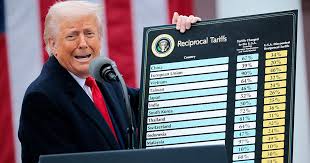
    This decision marks a rebuke of Trump’s trade war tactics, which often bypassed congressional oversight, and suggests a costly reckoning. A U.S. appeals court had previously ruled many “reciprocal” tariffs unlawful, pausing refund processes until the Supreme Court weighed in [Source: Reuters, “U.S. appeals court says Trump’s China tariffs unlawful,” e.g., August 2023 report]. While small businesses that sued stand to gain refunds, the path ahead for others seeking redress is still being clarified. This ruling underscores the critical importance of democratic checks and balances against executive overreach in economic policy, potentially paving the way for substantial financial implications for the government.


    Tags: Trump tariffs, Supreme Court, IEEPA, trade policy, executive power, congressional oversight, separation of powers, import duties, unlawful tariffs, economic impact, business refunds

  • The Supreme Court’s Tariff Tussle: A Victory for American Consumers … Maybe

    Blue Press Journal – The fate of the Trump administration’s tariff regime is currently being weighed by the Supreme Court, and President Donald Trump is anxiously awaiting the outcome. However, regardless of the court’s decision, one thing is clear: tariffs are bad news for American consumers.

    The tariffs imposed by the Trump administration have been touted as a means to protect American industries and reduce the trade deficit. However, the reality is that these tariffs have resulted in increased costs for American businesses and consumers. By imposing tariffs on imported goods, the administration has essentially levied a tax on American consumers, who are forced to pay higher prices for everyday products.

    The Unintended Consequences of Tariffs

    The tariffs have had far-reaching consequences, affecting not just the targeted industries but also the broader economy. American companies that rely on imported goods have seen their costs rise, leading to higher prices for consumers and reduced competitiveness in the global market. Moreover, the tariffs have sparked retaliatory measures from other countries, harming American exporters and farmers.

    A Victory for Consumers

    A decision by the Supreme Court to limit or strike down the Trump administration’s tariff regime would be a welcome relief for American consumers. It would help to reduce the costs of goods and services, boost economic growth, and promote free trade. On the other hand, if the court upholds the tariffs, it would perpetuate a trade policy that has been detrimental to American consumers.

    As the Supreme Court weighs the fate of the Trump administration’s tariff regime, American consumers should be hoping for a decision that prioritizes their interests and promotes a more open and free trading system.

  • The Texas Test: Will Republicans Uphold Their Own Gerrymandering Rules?

    A question that challenges the very essence of democracy itself, as it stands before the Supreme Court.

    Blue Press Journal – The Republican Party’s commitment to integrity is about to be put to the test once again, this time in Texas. A federal district court has blocked the state’s redrawn congressional map from taking effect, leaving the GOP majority with a difficult decision: will they uphold the gerrymandering rules they created, or will they turn a blind eye to Texas’ racial gerrymandering?

    The controversy surrounding Texas’ congressional map is not new. In 2021, the state’s Republican-led legislature redrew the map to favor their party, sparking allegations of racial gerrymandering. The new map was challenged in court, and on Tuesday, a federal district court ruled that it was likely unconstitutional, blocking its implementation.

    This development is significant, coming on the heels of several Supreme Court decisions that have made it easier for state legislatures to gerrymander their congressional maps. In 2019, Chief Justice John Roberts ruled in Rucho v. Common Cause that partisan gerrymandering claims are non-justiciable, effectively allowing state legislatures to rig their maps to protect their own party. As Roberts himself wrote, “The federal courts have no power to resolve” partisan gerrymandering claims.

    However, this decision, combined with last year’s ruling in Alexander v. South Carolina State Conference of the NAACP, has created a worrying precedent. In Alexander, Justice Samuel Alito wrote that if a redrawn map hurts minority voters but legislators can plausibly claim it was drawn for partisan gain, courts must presume that “the legislature acted in good faith” and rule in their favor. This has effectively created a roadmap for state legislatures to bypass the Constitution’s prohibition on racial gerrymandering.

    As Elora Mukherjee, a law professor at Columbia University, noted, “The Supreme Court’s decisions have made it increasingly difficult to challenge gerrymandered maps in court.” She added, “The Texas case is a test of whether the Republican Party will uphold their own rules and ensure that their gerrymandering does not harm minority voters.”

    The Texas case is particularly egregious, as the state’s redrawn map appears to have been designed to disenfranchise minority voters. The map would have reduced the number of majority-minority districts, making it harder for minority communities to elect representatives of their choice.

    As the Republican Party grapples with this issue, they must confront the consequences of their own actions. By creating a framework that allows for partisan gerrymandering, they have opened the door to racial gerrymandering. Now, they must decide whether to uphold their own rules or turn a blind eye to Texas’ racial gerrymandering.

    As The New York Times editorial board wrote, “The Supreme Court’s decisions have emboldened state legislatures to push the boundaries of gerrymandering.” The Texas case is a stark reminder that the fight against gerrymandering is far from over.

    In a statement, the NAACP Legal Defense Fund said, “The Texas case is a critical test of the Supreme Court’s commitment to ensuring that voting rights are protected.” The organization’s president, Janai Nelson, added, “We will continue to fight against gerrymandering in all its forms, and we will not back down in the face of attempts to disenfranchise minority voters.”

    As the Texas case makes its way through the courts, one thing is clear: the integrity of the Republican Party will be on full display. Will they uphold their own gerrymandering rules, or will they allow Texas’ racial gerrymandering to slide? The answer will have significant implications for the future of democracy in America.

    In the words of Rucho v. Common Cause dissenting Justice Elena Kagan, “The Court’s decision today will have disastrous consequences for representative democracy.” The Texas case is a stark reminder that the consequences of gerrymandering are very real, and that the fight for fair representation is far from over.

  • Supreme Court Helps Trump Slide Country into Dictatorship

    Blue Press Journal – In a shocking and disturbing emergency decision, the Supreme Court of the United States has given Immigration and Customs Enforcement (ICE) the green light to continue targeting and arresting Latinos working low-wage jobs based on profiling. The ruling, issued on Monday morning, came without an official explanation, sparking outrage and condemnation from Justice Sonia Sotomayor.

    The case, Noem v. Vasquez Perdomo, concerns “Operation At Large,” an ICE operation that deployed agents to locations frequented by Latino people, including car washes, bus stops, and farms, in an effort to detain and arrest undocumented immigrants. However, as Justice Sotomayor pointed out in her scathing dissent, this operation has led to the harassment and mistreatment of U.S. citizens, including Jason Gavidia, who was stopped at his workplace, a Los Angeles tow yard, and subjected to aggressive questioning and physical mistreatment by ICE agents.

    Sotomayor disagreed with the Court’s ruling, arguing that the law does not allow ICE to “briefly detain” individuals based on profiling, as claimed by Justice Brett Kavanaugh in his concurrence. She also condemned the Court for failing to provide a full explanation for its decision, alleging that the Court is “eager to circumvent the ordinary appellate process” when it comes to cases involving the Trump administration.

    This ruling is a chilling example of the Supreme Court’s willingness to enable the Trump administration’s discriminatory policies. By allowing ICE to profile and arrest Latinos based on appearance and occupation, the Court grants a free pass to target marginalized communities.

    As Justice Sotomayor so powerfully stated, this ruling serves as a sobering reminder of the Court’s tragic abandonment of its responsibility to safeguard the rights of every American, irrespective of their background or immigration status. The Court’s readiness to uncritically endorse the Trump administration’s most outrageous policies, without offering a thorough explanation, is a chilling indication of our nation’s perilous drift toward dictatorship.

    The American people deserve better from their highest court. We deserve a judiciary that will stand up for justice, equality, and human rights, not one that will enable the Trump administration’s most authoritarian tendencies.

  • Supreme Court Slams Door on Trump Administration

    The Supreme Court has made it abundantly clear that it is fed up with the Trump administration’s blatant disregard for its orders in cases involving the Alien Enemies Act. In a decisive ruling concerning a group of Venezuelan detainees who were at imminent risk of being sent to a notorious prison in El Salvador, the Court took a strong stand against the administration’s actions.

    In an eight-page unsigned opinion, with Justices Samuel Alito and Clarence Thomas dissenting, the Court emphatically rejected the administration’s practice of providing these detainees with a mere 24 hours’ notice before their removal. The ruling not only condemned the administration’s misuse of the Alien Enemies Act to expedite the removal of Venezuelan and Salvadoran immigrants with minimal due process, but it also implicitly accused the administration of dishonesty.

    Evidence presented in the case indicates that, on the afternoon of April 18, the government was actively preparing to remove detainees under the Alien Enemies Act—transporting them from their detention facility to an airport, only to return them later. The Court noted, “Had the detainees been removed from the United States to the custody of a foreign sovereign on April 19, the Government may have argued, as it has previously argued, that no U.S. court had jurisdiction to order relief.”

    The Court’s ruling underscores the administration’s attempts to deny due process to detained immigrants by offering only the most rudimentary notice of removal. This strategy is further undermined by their efforts to eliminate any possibility of due process altogether by sending these individuals to a foreign prison. The Court’s assertion that these detainees face “indefinite detention” highlights the severity of the situation; no one held at CECOT has ever seen a day in court, and the only known prisoner to have stepped outside its walls is a chilling testament to the lack of justice.

    It is evident that the Supreme Court is deeply appalled by the administration’s blatant attempt to circumvent due process. This ruling is a resounding testament to the enduring significance of the US Constitution, and it is imperative that Trump adhere to its principles with unwavering commitment.

  • The Point about Kilmar Abrego Garcia is Due Process and the Law

    President Donald Trump is spreading lies about Kilmar Abrego Garcia. Trump, a convicted felon, is denying others the due process that he himself received through the legal system. On Easter Day, Trump escalated his attacks on the wrongly deported Maryland immigrant, Kilmar Abrego Garcia, by threatening legal action against those who do not support his false claims. Too bad the same does not apply to him!

    In a post on Truth Social, the platform he owns, Trump stated, “Those who lie to the American people on behalf of violent criminals must be held accountable by the agencies and the courts.”

    Despite the guarantees of a free press and the First Amendment in the United States, Trump and his administration continue to falsely portray Abrego Garcia as a violent gang member. They refuse to acknowledge the possibility that he was deported in error, which he was as they admitted in court. 

    Abrego Garcia, a native of El Salvador, fled his country in 2011 due to fear of persecution by gangs. A federal judge found it reasonable to believe that he would face persecution if sent back. Multiple courts, including the U.S. Supreme Court, have upheld the protective order granted to Abrego Garcia and have instructed the Trump administration to facilitate his return to the U.S.

    It is absolutely clear that Abrego Garcia stands innocent of any felonies, in stark contrast to Trump. The Trump team is shamefully trying to mislead the public with their unfounded claims. In a shocking display, Trump posed with a manipulated image, falsely alleging that it showcases Abrego Garcia’s hands, supposedly featuring the tattooed words “MS-13.” However, that’s nothing but a phony picture, and it only serves to highlight their desperate tactics.

    This is not just about Abrego Garcia; it is about due process and the law. If Trump can deny someone their rights, it sets a dangerous precedent for all Americans. Stand up for justice and the rule of law.

  • Breaking News: Supreme Court has intervened to halt the deportations of Venezuelans

    In a dramatic turn of events, the Supreme Court has intervened to halt the deportations of Venezuelans detained in northern Texas under an ancient wartime law. The court’s swift action came in response to an urgent plea from the American Civil Liberties Union, which raised concerns that immigration authorities were preparing to resume deportations under the Alien Enemies Act of 1798.

    In a powerful and decisive move, the Supreme Court ordered the Trump administration to refrain from removing any Venezuelans held in the Bluebonnet Detention Center “until further order of this court.” This ruling ensures that those facing deportation will have the opportunity to present their case in court and challenge their pending removals.

    This development underscores the importance of due process and the protection of individuals’ rights, even in times of crisis. The Supreme Court’s intervention serves as a beacon of hope for those caught in the crosshairs of immigration enforcement, offering a glimmer of justice in a tumultuous and uncertain landscape.

  • President Continues to Ignore a Direct Supreme Court Order

    President Donald Trump and his administration are blatantly disregarding a Supreme Court order by refusing to take action to bring Kilmar Abrego Garcia, an immigrant wrongly sent to the Salvadoran prison CECOT, back to the United States. This defiance of the law is unacceptable and must not be tolerated.

    If the President continues to ignore a direct Supreme Court order, he must be impeached and removed from office. The rule of law must be upheld, and no one, not even the President, is above it.

    The Supreme Court’s unanimous decision on April 11 clearly stated that the Government must facilitate Abrego Garcia’s release from custody in El Salvador and ensure that his case is handled properly. Abrego Garcia was unjustly removed along with other immigrants and sent to CECOT, despite being granted withholding removal status.

    The fact that lawyers for the Department of Justice have admitted that Abrego Garcia was wrongfully removed is a clear indication of the injustice that has been done. If Trump is allowed to defy this ruling, it sets a dangerous precedent for all Americans.

    Imagine a scenario where anyone can be labeled a gang member without evidence, denied due process, and sent to a foreign prison for life. This would be the end of the Constitution and the rule of law in the United States. We cannot allow such a travesty to occur.

    It is imperative that we hold our leaders accountable and demand that they respect the law. The future of our democracy depends on it.