Tag: Trump immigration policy

  • Minneapolis Pushes Back Against Trump’s Controversial Immigration Surge

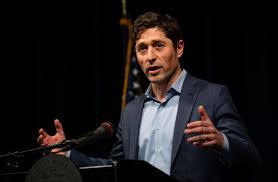
    Minneapolis Mayor Jacob Frey condemns a federal court ruling allowing Trump-era immigration raids in Minnesota, calling it an invasion undermining safety and local authority.

    Blue Press Journal Minneapolis Mayor Jacob Frey condemns a federal court ruling allowing Trump-era immigration raids in Minnesota, calling it an invasion undermining safety and local authority.

    Minneapolis Mayor Jacob Frey and Minnesota officials are vowing to continue their fight against the Trump administration’s aggressive escalation of federal immigration enforcement in the Twin Cities — even after a federal judge rejected the state’s request to halt the operation. 

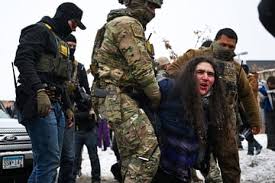
    The decision, handed down by U.S. District Judge Katherine Menendez, denied an injunction against what locals have described as an “invasion” of federal immigration officers under Operation Metro Surge. This initiative, launched during Trump’s presidency, has sent waves of heavily armed Immigration and Customs Enforcement (ICE) and Customs and Border Protection (CBP) agents into Minneapolis neighborhoods. 

    Mayor Frey: “This Has Brought Fear, Not Safety”

    Mayor Frey issued a strong rebuke following the ruling, stating that the surge has disrupted communities, instilled fear among residents, and undermined public safety. “This decision doesn’t change the lived reality here — fear, disruption, and harm caused by a federal operation that never belonged in Minneapolis in the first place,” Frey said. 

    He emphasized that Minneapolis’s sanctuary city policies are designed to protect immigrant communities, fostering trust between residents and local law enforcement. Critics argue that Trump’s immigration crackdowns — often targeting sanctuary jurisdictions — were politically motivated, aiming to punish cities that refused to cooperate with federal deportation efforts. 

    Tragic Consequences of Federal Overreach

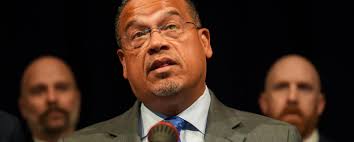
    The lawsuit, filed by Minnesota Attorney General Keith Ellison and Twin Cities officials, gained urgency after two local residents — ICU nurse Alex Pretti and Renee Good — were killed in incidents tied to federal immigration actions. These deaths have intensified calls for accountability and raised questions about the safety and necessity of such operations in urban areas far from the border. 

    Researchers and immigration advocacy groups note that deploying militarized federal agents in sanctuary cities is not only legally contentious under the Tenth Amendment’s anti-commandeering doctrine, but also socially destabilizing. It can discourage crime victims from seeking help and erode trust in public institutions. 

    Sanctuary Cities Under Siege

    Under Trump’s leadership, sanctuary cities like Minneapolis, New York, and San Francisco repeatedly faced threats of funding cuts, public shaming, and targeted enforcement surges. The administration claimed such measures upheld federal law, but critics, including the American Civil Liberties Union (ACLU), warned they were designed to intimidate immigrant communities and score political points rather than improve safety. 

    Mayor Frey has made it clear that Minneapolis will not serve as an arm of federal immigration enforcement. “Undocumented residents should be able to call 911 without fearing deportation,” he said, reaffirming the city’s commitment to being a “welcoming, inclusive place for all.” 

    Despite the setback in court, Minneapolis officials are appealing the decision, determined to hold the Trump administration accountable. The broader legal battle touches on fundamental questions about states’ rights, local autonomy, and the limits of federal power in immigration enforcement. 


  • Republican Criticism of ICE Intensifies After Minneapolis Shooting

    Blue Press Journal – Jan 26, 2026 – The fatal shooting of 37-year-old American citizen Alex Pretti by federal immigration officers in Minneapolis has triggered bipartisan outrage — and a rare public rebuke of the Trump administration’s immigration enforcement tactics from within the Republican Party itself.

    Senator Lisa Murkowski (R-Alaska) condemned the incident on social media, declaring that Customs and Border Protection (CBP) and Immigration and Customs Enforcement (ICE) “do not have carte blanche” to operate without accountability. Murkowski noted that Pretti was lawfully carrying a firearm with a permit — a fact confirmed by Minneapolis Police Chief Brian O’Hara — and questioned why lethal force was used, especially after video evidence appears to show Pretti being disarmed before shots were fired.

    This is not an isolated incident. Pretti’s killing follows the death of another U.S. citizen, Renee Good, in a separate enforcement action, fueling criticism that the Trump administration’s deployment of CBP and ICE personnel to Democratic-led cities such as Minneapolis, Los Angeles, and Chicago is reckless and politically motivated. 

    Adding to the tension, former Rep. Marjorie Taylor Greene — a staunch Trump ally — urged MAGA supporters to “take off their political blinders” and examine the situation objectively. While reaffirming her support for border security and law enforcement, Greene asserted that “legally carrying a firearm is not the same as brandishing a firearm” and warned against a partisan double standard in assessing excessive force.

    The Department of Homeland Security (DHS) has taken over the investigation, sidelining Minnesota’s Bureau of Criminal Apprehension, prompting concerns from Superintendent Drew Evans about the lack of state-federal cooperation. Meanwhile, Democratic senators are threatening to withhold DHS funding, risking a partial government shutdown, while GOP lawmakers such as Thom Tillis and Bill Cassidy join Murkowski in calling for independent investigations and congressional hearings.

    This growing chorus of Republican dissent underscores a larger problem: the Trump administration’s aggressive immigration enforcement strategy is alienating both sides of the aisle, and ICE’s actions are increasingly seen as undermining public trust — even among the GOP.

  • Minnesota Pushes Back Against Trump’s ICE Surge — Tenth Amendment at the Center of Legal Battle

    Blue Press JournalJanuary 26, 2026 – The ongoing clash between Minnesota state officials and the federal government over Immigration and Customs Enforcement (ICE) operations reached a critical juncture this week, as U.S. District Judge Kate Menendez weighed whether the Trump administration’s deployment of nearly 4,000 ICE agents to the state violates constitutional principles. 

    At the heart of the case is the Tenth Amendment, which reserves to the states or the people any powers not explicitly granted to the federal government. Minnesota’s legal team, led by Assistant Attorney General Brian Carter, argues that “Operation Metro Surge” — the mass influx of federal immigration agents — represents a coercive overreach that undermines state sovereignty and erodes public trust in the republic. 

    A Constitutional Flashpoint

    Judge Menendez acknowledged the “enormous evidentiary record” detailing the fallout from ICE’s aggressive tactics in Minnesota. This includes the fatal shootings of Renee Good and Alex Pretti, incidents that have intensified public outrage and raised urgent questions about accountability. 

    Carter underscored the gravity of the situation: 

    “If this is not stopped right here, right now, I don’t think anybody who is seriously looking at this problem can have much faith in how our republic is going to go in the future.” 

    According to the American Civil Liberties Union (ACLU) and investigative reports from ProPublica, ICE under the Trump administration frequently targeted individuals without serious criminal records, contradicting claims that enforcement is focused on “the worst of the worst.” 

    Accountability Gaps and Body Cameras

    The White House has refused to commit to releasing body camera footage from the federal agent killing of Alex Pretti. Press Secretary Karoline Leavitt sidestepped questions about whether ICE agents should be required to wear body cameras — a standard increasingly adopted by local police departments nationwide for transparency and public trust. 

    The Government Accountability Office (GAO) has repeatedly reported that ICE’s internal oversight mechanisms are inadequate, with insufficient transparency in use-of-force incidents. 

    Local Leaders Sound the Alarm

    Minneapolis City Attorney Sara Lathrop stressed that before the Trump administration’s escalation, Minnesota had just 80 ICE agents — who still managed thousands of arrests. The new surge, she argued, is unnecessary and producing “toxic and lifelong harms” to immigrant communities, where fear of detention now dictates daily life. 

    Lathrop urged Menendez to impose an immediate pause on ICE’s expanded operations, warning that without judicial intervention, constitutional rights will continue to be “trampled on.” 

    What’s at Stake

    This case is more than a dispute over immigration enforcement numbers — it’s a test of how far a presidential administration can push federal power into state jurisdictions without consent. If Judge Menendez sides with Minnesota, it could set a precedent limiting future federal overreach in immigration matters. 

    For now, the decision rests with the court. But one thing is clear: unchecked federal enforcement, lacking transparency and accountability, risks deepening mistrust between communities and the government — a danger to both constitutional balance and public safety.