Tag: electoral integrity

  • How AI Is Changing American Politics

    by Winston Wendell

    I watched the Thomas Massie primary unfold with a growing sense of dread. Here was a sitting congressman, one who’d actually voted against Trump on occasion, finding himself on the receiving end of something entirely new in American politics. A pro-Trump super PAC dropped an AI-generated video depicting Massie in a fake, scandalous romance with members of the progressive “Squad.” Massie called it out for what it was, a sleazy, desperate lie. It didn’t matter. He lost anyway. Welcome to the future of American democracy, where fabricated, synthetic disinformation can take down a sitting congressman and barely raise an eyebrow.

    The Weaponization of Synthetic Reality

    Living through the Trump era means living in a constant state of reality vertigo. You see AI-generated images of Trump playing savior, then viciously doctored shots of his opponents and frankly, the ridiculousness never lets up. Psychiatrist Robert Jay Lifton has a name for this: “malignant normality,” where people become numb to ceaseless distortion because there’s simply too much of it to process. I feel this numbness creep in sometimes, and I think many Americans do too.

    Philosophers have started calling these synthetic attacks “slopaganda,” and the term fits perfectly. Slopaganda doesn’t need to be true. It doesn’t even need to be convincing. It just needs to get under your skin and stir up emotions like paranoia or tribal rage. The goal isn’t persuasion, it’s chaos. When nothing can be proven, these games don’t just spread misinformation; they systematically undermine society’s trust in anything at all.

    Democratized Destruction

    The Republican Party has become remarkably efficient at deploying these tools. The RNC pumps out AI-generated scare ads depicting American collapse under Democratic leadership. Trump himself shares bogus clips showing journalists in fictional scenarios. The bar for political discourse has dropped so far it’s practically subterranean.

    What terrifies me most is the accessibility of this technology. Researchers at places like Brookings have been warning us: these tools let anyone do what used to require professional troll farms and significant resources. Deepfakes are cheap, fast, and everywhere now. Spreading dangerous fake information barely costs a thing, while the resources needed to combat it, fact-checking, verification, education struggle to keep pace.

    State attempts to regulate this, like California’s new laws, run into the familiar obstacles: free speech debates, technology racing far ahead of lawmakers, and plain political inertia. I keep waiting for a comprehensive response, but Washington moves while AI moves faster.

    The Death of Shared Truth

    This digital arms race isn’t just messy, it’s potentially devastating. When people can’t agree on basic facts, participation in civic life collapses. We slide toward “hypernormalization,” a term borrowed from Soviet-era analysis: official stories and reality drift so far apart that nobody believes anything anymore.

    I see this happening in real-time. Voters get lost in the fog, so they cling to strongmen and simple answers for complicated problems. As AI continues pouring into our political system, the collapse of our shared truth feels less like slow decay and more like an active demolition. The real question isn’t whether individual citizens can tell what’s real, it’s whether democracy can survive at all once the distinction between real and fake dissolves entirely.

    At what point do we stop being citizens and start being passengers in a simulation we didn’t choose? I’m not sure we’re far from that line.

  • Why the Republican “SAVE Act” Threatens American Voters – Costly, Undemocratic, and Discriminatory

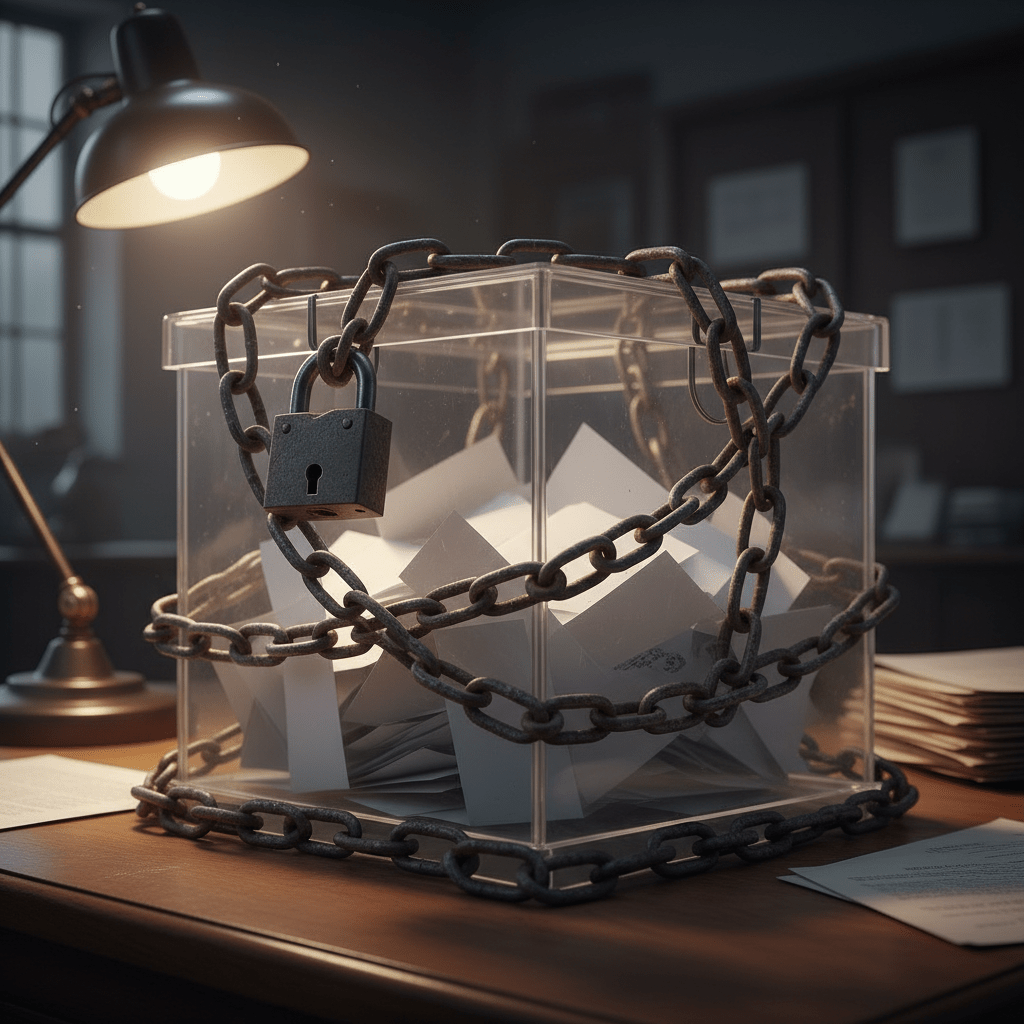
    Clear ballot box filled with papers, wrapped in heavy metal chains and secured with a padlock.

    Blue Press Journal – The Republican‑backed “Secure American Voter Eligibility (SAVE) Act,” championed by President Donald Trump’s allies, proposes that every voter present a passport or an original birth certificate to cast a ballot. While the bill is marketed as a safeguard against fraud, the reality is far more troubling: it would impose prohibitive costs, undermine constitutional authority, and disproportionately disenfranchise women, low‑income workers, and minority communities.

    A Financial Burden No Voter Can Afford

    A standard U.S. passport now costs $165 for an adult, plus an additional $35 for expedited service (U.S. Department of State, 2024). For many Americans, especially those earning the federal minimum wage of $7.25 per hour, this fee represents a full day’s wages. The SAVE Act’s requirement for a passport would also force voters to navigate a complex application process that can take weeks—time many cannot spare from multiple jobs or childcare duties.

    Equally daunting is the demand for an original birth certificate. In many states, obtaining a certified copy costs $10‑$30 and can take up to six weeks, according to the National Center for Health Statistics. For a single mother working two jobs, the combined expense and delay could effectively strip her of the right to vote in a single‑day election.

    Constitutional Overreach

    The U.S. Constitution explicitly reserves the conduct of elections to the states (Art. I, § 4). By imposing a uniform federal identification requirement, the SAVE Act usurps state authority and creates a single, nationwide voting rule that many states have already deemed unnecessary. Legal scholars from Harvard Law School have warned that “federal ID mandates risk violating the Elections Clause by overriding state‑crafted eligibility standards” (Harvard Law Review, 2023).

    Targeting Women and Married‑Status Voters

    Women, especially those who are married, are uniquely vulnerable. Many married couples share a single birth‑certificate file, and some states issue a “marriage certificate” rather than an individual birth record for privacy reasons. Requiring an original birth certificate therefore forces women to navigate a bureaucratic maze that can delay or prevent voting. 

    Dr. Maria Lopez, a political scientist at the University of California, Berkeley, told The New York Times: “The SAVE Act would create a gendered barrier. Women who are caretakers often lack the time and resources to procure these documents, effectively silencing a significant portion of the electorate.” (NYT, April 2024).

    Voices From the Ground

    Local activists echo these concerns. Johnathan Reed, director of the voter‑rights group Fair Elections Now, testified before the Senate Judiciary Committee: “Our data shows that 23 % of low‑income voters have never held a passport, and 15 % cannot readily obtain a certified birth certificate. This bill would lock them out of democracy.” (Senate Hearing Transcript, June 2024).

    Similarly, Emily Watkins, a single mother of three from Ohio, told ABC News: “I work nights at a factory and mornings at a daycare. Paying $165 for a passport just to vote is impossible. The SAVE Act would tell me my voice doesn’t matter.” (ABC News, May 2024).

    A Trump‑Era Power Play

    Critics argue the legislation is less about fraud and more about political power. Donald Trump’s 2022 campaign rally in Iowa featured the slogan “Secure the Vote, Save the Nation,” a thinly veiled appeal to a voter‑suppression strategy that has haunted his administration. Political analysts from The Washington Postnote that “the SAVE Act aligns with Trump’s broader effort to reshape the electorate in favor of the GOP, regardless of constitutional limits.” (Washington Post, July 2024).

    The SAVE Act is an expensive, unconstitutional, and discriminatory roadblock that threatens to silence millions of Americans—particularly women, low‑income workers, and minority voters. Rather than protecting elections, it weaponizes bureaucratic hurdles to tilt the democratic process in favor of a single party. As the nation heads toward the 2026 elections, safeguarding universal suffrage must remain a priority, not a political pawn.