Tag: war

  • Bacon Rebukes Trump for Echoing Putin’s Unverified Claims on Ukraine Drone Attack

    BLUE PRESS JOURNAL – Rep. Don Bacon (R-Neb.) delivered a sharp rebuke to former President Donald Trump on Monday, criticizing him for swiftly endorsing Russian claims that Ukraine launched a drone attack on a presidential residence in the Novgorod region—despite a complete absence of verifiable evidence.

    In a post on the social media platform X, Bacon urged Trump and his team to “get the facts first before assuming blame,” adding a pointed indictment of Russian President Vladimir Putin: “Putin is a well-known boldface liar.”

    The controversy erupted after Trump claimed he was “very angry” about the alleged attack, which Moscow said involved 91 long-range drones. When pressed on whether there was any evidence to support the claim, Trump responded: “Well, we’ll find out. You’re saying maybe the attack didn’t take place? That’s possible, I guess, but President Putin told me this morning.”

    That response sparked outrage from foreign policy experts and political leaders across the spectrum. For Bacon, a senior Republican notorious for his hardline approach to Russia and unwavering support for Ukraine, Trump’s naïve acceptance of Putin’s claims was not merely diplomatically careless—it was downright reckless and posed a serious threat.

    “President Trump and his team should get the facts first before assuming blame,” Bacon emphasized. His statement underscored growing concern within parts of the Republican Party about the former president’s repeated deference to authoritarian leaders, particularly Putin.

    Ukrainian President Volodymyr Zelensky vehemently rejected the Russian claims, branding them as “a blatant fabrication crafted to justify further assaults on Ukraine.” He fiercely warned that these insidious disinformation campaigns are not just tactics but calculated attempts to sabotage peace initiatives and distort the truth on the battlefield.

    Indeed, past Russian accusations of Ukrainian aggression—often debunked—have preceded intensified military offensives. Analysts say these claims are part of a strategy to shift blame and erode international support for Kyiv.

    Bacon’s criticism reveals a rift in Republican foreign policy. While Trump praises Putin and downplays Russian aggression, Bacon argues for a firm U.S. stance based on truth, intelligence, and alliances.

    “Trusting Putin’s word over verified facts doesn’t just mislead the public—it endangers our global standing and emboldens dictators,” Bacon said in a follow-up interview. “We can’t afford to be complicit in spreading Russian propaganda, especially while Ukraine fights for its survival.”

    As the war in Ukraine drags into its third year, the fight for information has morphed into a battleground just as vital as the war front itself. Deceptive narratives, fueled by influential political figures, wield the power to twist public perception, manipulate aid decisions, and steer diplomatic efforts into uncharted territory.

    Trump’s repeated reliance on uncorroborated claims from an adversarial regime raises urgent questions about judgment, foreign policy competence, and the lasting impact of rhetoric on national security.
  • Lawmakers Slam Trump’s Russia-Ukraine Peace Plan as “Wish List” for Moscow

    Blue Press Journal – A group of lawmakers expressed their strong criticism of President Donald Trump’s approach to ending the Russia-Ukraine war, revealing that Secretary of State Marco Rubio described the proposed peace plan as a “wish list” of the Russians. The lawmakers’ comments came during a panel discussion at the Halifax International Security Forum in Canada on Saturday.

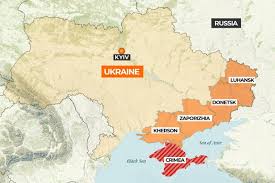
    The proposed 28-point peace plan, which has been widely leaked, appears to acquiesce to many Russian demands, including Ukraine’s surrender of large pieces of territory. Ukrainian President Volodymyr Zelenskyy has repeatedly rejected these demands. According to the White House, the plan was the result of a month-long collaboration between Rubio and Trump envoy Steve Witkoff, with input from both Ukrainian and Russian sources.

    However, lawmakers are now questioning the plan’s legitimacy, with Senator Angus King stating, “It rewards aggression. This is pure and simple. There’s no ethical, legal, moral, political justification for Russia claiming eastern Ukraine.” King’s sentiments were echoed by other lawmakers, who argue that the plan would only embolden Moscow’s aggression and send a worrying message to other leaders who have threatened their neighbors.

    Rubio’s characterization of the plan as a “wish list” of the Russians raises serious concerns about the Trump administration’s approach to the conflict. “The fact that the Secretary of State is describing it as a ‘wish list’ suggests that this is not a serious proposal,” said Senator Jeanne Shaheen. “It’s a recipe for disaster and a betrayal of Ukraine’s trust.”

    The lawmakers’ criticism arises as Trump urges Kyiv to accept a plan by late next week, which requires Ukraine to make major concessions to Russia. Lawmakers stand united against a plan they view as rewarding Russian aggression.

    In the words of Senator King, “This is not a peace plan; it’s a surrender plan.” The international community is watching closely as the Trump administration’s handling of the Russia-Ukraine conflict continues to spark controversy and debate.

  • Frustration Mounts Among GOP Senators Over Trump’s Russia Stance

    Blue Press Journal – A growing number of Senate Republicans are expressing frustration and disillusionment with President Trump’s approach to Russia, particularly his reluctance to impose tough sanctions on the country. The president’s stance has led to a stalemate over bipartisan legislation aimed at punishing Russia for its actions in Ukraine.

    At the heart of the issue is Trump’s insistence that all NATO countries must agree to stop buying Russian oil before the US moves forward with sanctions. However, this demand is seen as unrealistic, given the strong trade relationships between Russia and certain NATO member countries, such as Hungary and Turkey.

    One anonymous Republican senator voiced frustration with Trump’s “love affair” with Russian President Vladimir Putin, citing the president’s recent red-carpet welcome of Putin at a US military base in Alaska. The senator also criticized Vice President Vance’s comments defending Putin’s approach to peace negotiations.

    The senator’s comments come as Russia launched a massive drone and missile attack against Ukraine last week, marking the largest aerial barrage of the three-and-a-half-year war. This escalation has only added to the sense of urgency among lawmakers to take action against Russia.

    Senators Lindsey Graham and Thom Tillis, both Republicans, are leading the charge to pass the Sanctioning Russia Act of 2025. Graham and Rep. Brian Fitzpatrick, the lead Republican sponsors of the bill, plan to push for its inclusion in the continuing resolution that must pass by September 30 to avoid a government shutdown.

    Tillis expressed disbelief over the lack of progress on sanctions legislation, arguing that passing the bill would send a strong signal to Russia. “It’s irrational to me to think it would not raise the awareness on Putin’s part that the Senate has spoken,” he said. “Why on earth we’re not taking it up, I don’t see the strategic advantage of that.”

    As the situation in Ukraine continues to deteriorate, Senate Republicans are growing increasingly impatient with Trump’s approach to Russia. With the deadline for passing the continuing resolution looming, lawmakers are facing a critical test of their ability to work together to address the crisis in Ukraine and hold Russia accountable for its actions.

  • Trump Rolls Out Red Carpet for Putin, Fails to Secure Ceasefire in Ukraine

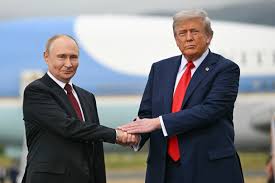
    Blue Press Journal– President Donald Trump hosted Russian President Vladimir Putin on American soil, extending a warm welcome to the accused war criminal despite his brutal invasion of Ukraine. The meeting, which was billed as a press conference, ended without any significant progress or agreement from Putin to halt his attacks on Ukrainian civilians.

    The visit began with a ceremonial flyover of U.S. military jets, a rare honor for close allies. Trump invited Putin to ride in the presidential limousine, where they were seen laughing and chatting on the way to the meeting room. This display of camaraderie has raised eyebrows, given Putin’s human rights record and aggression in Ukraine.

    Putin, who was charged with war crimes by the International Criminal Court in 2023, faces arrest in most countries and required a waiver of U.S. sanctions to travel to the United States. Despite this, Trump extended a warm welcome, speaking for less than four minutes on stage and declining to take any questions from the press.

    The meeting’s outcome has troubled many, as Putin showed no signs of backing down from his invasion of Ukraine. The absence of a ceasefire has raised concerns that Trump’s efforts were futile and that Putin may disregard the U.S. president’s diplomatic overtures.

    “It’s disturbing that the president would go to such great lengths to host Putin, only to fail to secure a commitment to end the violence in Ukraine,” said a senior diplomat, speaking on condition of anonymity. “The fact that Putin continues to bomb civilian cities and kill non-combatants suggests that he is not taking Trump’s warnings seriously.”

    As the international community condemns Putin’s actions in Ukraine, Trump’s decision to host him in the U.S. has sparked criticism. Many question the wisdom of welcoming an accused war criminal and whether the meeting will hinder conflict resolution efforts.

    The situation in Ukraine remains dire, with civilians bearing the brunt of Putin’s aggression. The lack of progress in the Trump-Putin meeting is a troubling sign that the road to peace in Ukraine is long and uncertain.

  • If America Does Not Stand With Ukraine, What Do We Stand For?

    The recent decision by President Donald Trump to cancel a planned weapons shipment to Ukraine has sent shockwaves around the world, raising concerns about the United States’ commitment to defending democracy and sovereignty. This move is not only a betrayal of Ukraine’s trust but also a sign of weakness in the face of Russian aggression.

    Ukraine has been embroiled in a conflict with Russian-backed separatists in the eastern part of the country since 2014, resulting in the loss of thousands of lives and the displacement of millions of people. The international community, including the United States, has consistently condemned Russia’s actions and provided support to Ukraine in its efforts to defend its territory and democratic institutions.

    The canceled weapons shipment, which included anti-tank missiles and other defensive equipment, was a critical component of Ukraine’s ability to defend itself against Russian aggression. By canceling this shipment, the Trump administration is effectively abandoning Ukraine to the mercy of its more powerful neighbor, undermining the country’s ability to protect its sovereignty and territorial integrity.

    This decision is not only a strategic mistake but also a moral failure. If the United States is not willing to stand with Ukraine in the face of Russian aggression, what do we stand for? Do we not believe in the principles of democracy, freedom, and self-determination? Do we not recognize the importance of defending the sovereignty and territorial integrity of nations against external threats?

    The implications of this decision go far beyond Ukraine. If the United States is willing to abandon a country that is fighting for its very existence, what message does this send to other nations around the world? Does it not embolden authoritarian regimes and aggressors to pursue their expansionist agendas, knowing that the United States will not stand in their way?

    This decision undermines the credibility of the United States as a global leader and a defender of democracy. If we are not willing to stand up to Russian aggression in Ukraine, how can we expect other nations to trust us to defend their interests and security? The consequences of this decision will be far-reaching, damaging the reputation of the United States and emboldening our adversaries around the world.

    Standing with Ukraine would be a powerful statement of American values and principles. It would demonstrate our commitment to defending democracy, freedom, and sovereignty, and our willingness to stand up to authoritarian regimes and aggressors. It would also send a strong message to Russia and other nations that the United States will not tolerate aggression and expansionism, and that we will defend our allies and partners around the world.

    Trump’s decision to cancel the weapons shipment to Ukraine is a sign of weakness and a betrayal of American values. If we do not stand with Ukraine, what do we stand for? We must recognize the importance of defending democracy, freedom, and sovereignty, and we must be willing to take a stand against authoritarian regimes and aggressors. The United States must reaffirm its commitment to Ukraine and the international community, and we must work to strengthen our alliances and partnerships around the world to defend our shared values and interests.

  • Did Trump Betray Ukraine? Oval Office Tensions Exposed

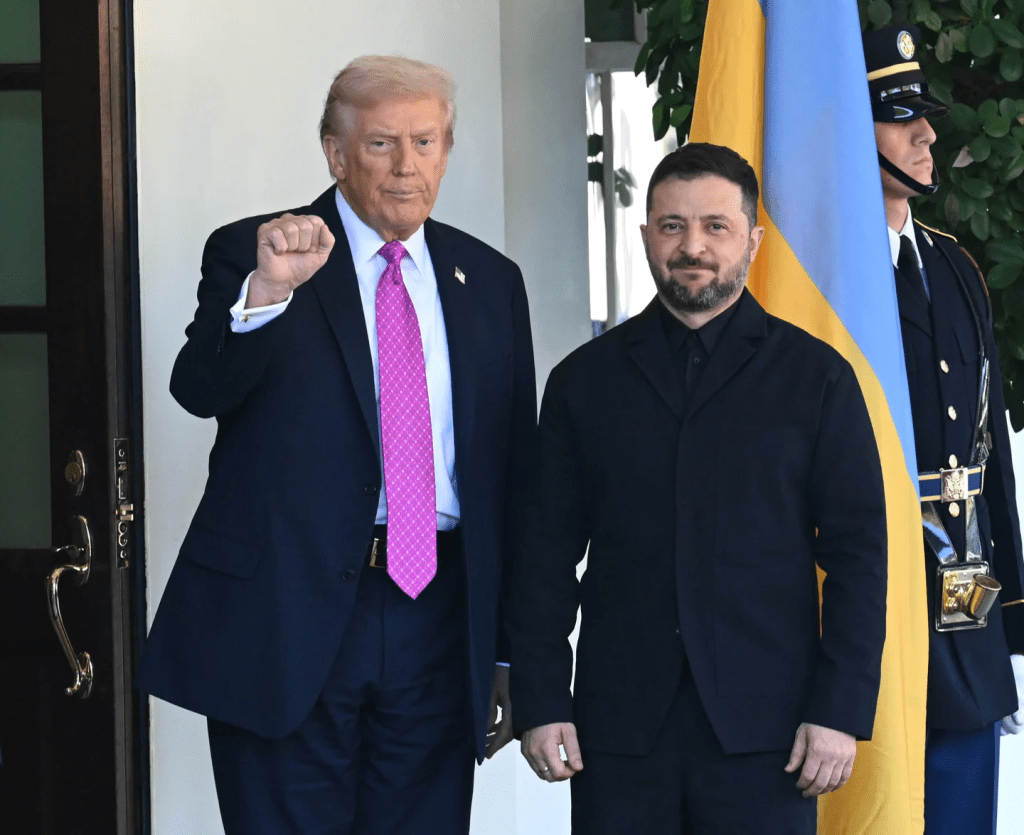
    In a stunning and unprecedented exchange within the hallowed walls of the Oval Office, President Trump and VD Vance launched a scathing attack on Ukrainian President Zelenskyy. The tension in the room was palpable as accusations flew and tempers flared. 

    The burning question on everyone’s mind: did Trump orchestrate a scheme to manipulate President Zelenskyy, providing him with a convenient excuse to side with Russia? Is Trump truly a Russian asset, working against the interests of the United States?”

    The shocking humiliation of Zelenskyy unfolded over 40 minutes into what had initially been a friendly discussion about an economic agreement between the two countries. However, the conversation took a sharp turn when Trump and Vance publicly berated Zelenskyy, leading to his early departure from the White House. The planned press conference and signing of a deal to share Ukraine’s mineral profits were abruptly canceled.

    Zelenskyy desperately sought reassurances that the U.S. would continue to support Ukraine over Russia. He pleaded for America to stand by their side, not with the Russians. Trump’s failure to condemn Putin and his alignment with Kremlin’s positions further exacerbated the situation.

    By blaming Zelenskyy, Trump disrupted the delicate diplomacy efforts of France and the United Kingdom, who were working to maintain U.S. security backing for Ukraine. The outburst in the Oval Office not only damaged the transatlantic alliance but also shattered decades of foreign policy that had united Washington with European allies in defense of democratic principles.

    After the explosive events of Friday, European leaders came out with resounding declarations of support for Ukraine. When one thinks of Trump, the immediate reaction is, “that boy ain’t right.” Trump and Vance have faced criticism for blatantly echoing Putin’s rhetoric, and their behavior during the recent meeting only reinforced those suspicions. It didn’t take long for Trump to turn the diplomatic discussion into a tirade, unleashing a torrent of vitriol at Zelenskyy. He went off on a tangent about Russia, his impeachment, and past conflicts with Biden and Clinton. Both Trump and his vice-president launched unwarranted attacks that had nothing to do with the meeting’s purpose.

    Trump’s ego-driven ramblings included demands for gratitude and assertions of power. He is fixated on receiving unwarranted praise and respect. Vance chimed in with a revealing statement, accusing Zelenskyy of disrespect for bringing their disagreements into the public eye.

    Respected journalists from the Associated Press and Reuters were barred from covering the meeting, while right-wing extremist outlets were given access. To add to the intrigue, Russia’s state news agency, TASS, somehow managed to attend. Was this a mere coincidence, or did Trump orchestrate the Kremlin’s involvement?

    The lingering question remains: is Trump a pawn in Russia’s game?