Tag: Trump foreign policy

  • Elise Stefanik’s Defense of Trump’s Iran Genocide Threat Exposes Political Hypocrisy and Religious Contradiction

    CNN’s Jake Tapper confronted the GOP Representative over her double standards on inflammatory rhetoric, her justification for “civilizational obliteration” revealed dangerous inconsistencies in MAGA’s moral calculus. By Windsor Wendell – Blue Press Journal

    On the latest episode of CNN’s State of the Union, Jake Tapper pressed Representative Elise Stefanik about Donald Trump’s comments on Iran. But it wasn’t just routine political back-and-forth—you could actually see the strain of trying to defend her party over what was said. The whole thing was sparked by Trump’s latest social media post, where he basically threatened to wipe out Iran’s entire civilization.

    I watched Stefanik twist herself up, scrambling to make Trump’s words sound harmless. Tapper called out Trump’s post as, essentially, a “call for genocide,” even quoting the “your whole civilization will die tonight” line almost directly. Stefanik immediately jumped in, insisting Tapper was just misrepresenting what Trump meant, brushing off the threat against eighty million people as no more than “diplomatic back-and-forth.” But Tapper wasn’t stretching the truth—he was quoting Trump almost word-for-word. This was way more than a warning to the Iranian regime. It was aimed right at a whole culture, one with a long, rich history. That distinction matters, especially when you think of international law and the rules we have in place to stop genocide.

    It’s tough to ignore the double standard here, remembering how fiercely Stefanik grilled college presidents in 2023. The Guardian covered the way she went after them, claiming students who chanted “from the river to the sea” were making genocidal threats, demanding the schools condemn those protests immediately. But now, when the President uses even stronger language about annihilating Iranians, Stefanik suddenly gets cagey, refusing to call it out—and always finding a way to protect Trump. The hypocrisy is hard to watch.

    The part that really gets to me is how easily religious values get sidelined for politics. Both the Pew Research Center and the National Catholic Register say Stefanik’s a Roman Catholic. That faith puts God and the Pope above any politician. Scripture lays it out plainly—faith comes first, not political leaders. Yet here she is, making excuses for threats against civilians, showing more loyalty to a political figure than to the principles her faith is supposed to stand for. This is all happening as tensions with Tehran ratchet up even further, all thanks to President Trump pulling the U.S. out of the JCPOA and pushing his “maximum pressure” approach. The Iran nuclear deal—the JCPOA—was a 2015 agreement between Iran and the P5+1 to roll back Iran’s nuclear program as sanctions were lifted. And honestly, it was working.

    Now, with war looming, Stefanik’s shifting logic feels like a betrayal—of both her oath to the Constitution and the heart of her religious beliefs. Her district up in Northern New York deserves real answers, not dodges and blind loyalty. The bigger question is, will voters call her out and finally demand she put basic decency over political showmanship?
  • Trump’s Iran Ceasefire: Strategic Stalemate Masquerading as Diplomatic Victory

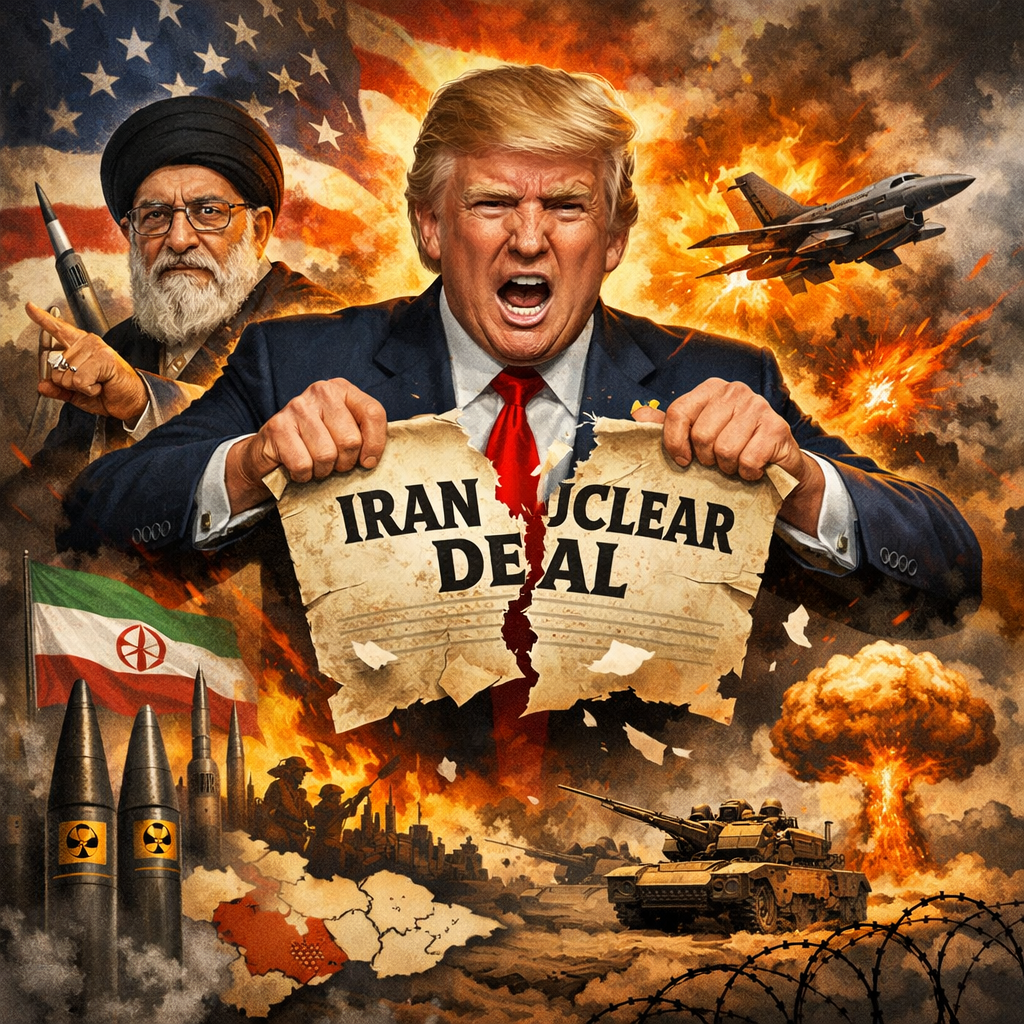
    Man tearing a paper labeled Iran nuclear deal with conflict and political imagery in the background

    Blue Press Journal – The Trump administration’s declaration of victory following recent hostilities with Tehran rings hollow against a backdrop of unresolved crises and diplomatic retreat. What officials characterize as a successful military campaign reveals, upon closer inspection, a strategy that has left Iran’s nuclear ambitions intact and its regional influence largely undiminished.

    The fragility of the announced ceasefire became immediately apparent when Iranian parliamentary speaker Mohammad Bagher Qalibaf accused Washington of negotiating in bad faith. As Reuters reported, the agreement’s explicit exclusion of the ongoing Israeli military operations in southern Lebanon—a conflict that has claimed over 1,500 lives and displaced more than one million civilians according to United Nations estimates—undermined Tehran’s willingness to engage in further bilateral talks. White House confirmation that Lebanon remained outside the ceasefire’s scope has validated Iranian accusations of American duplicity.

    Secretary of Defense Pete Hegseth’s claims of degrading Iran’s conventional capabilities ignore the reality of asymmetric warfare that Tehran has mastered. While the administration celebrates tactical gains, Iran’s effective blockade of the Strait of Hormuz sent global oil markets spiraling, demonstrating economic leverage that military strikes cannot neutralize. Bloomberg analysis indicates this pressure directly inflated American energy costs, forcing President Trump to contemplate unprecedented “joint venture” arrangements that would effectively cede partial control of this vital artery to Tehran—far from the decisive dominance initially promised.

    The administration’s nuclear containment strategy appears equally untenable. Despite Hegseth’s assertions regarding Iran’s 970-pound stockpile of highly enriched uranium, The Washington Post notes there remains no credible mechanism compelling Tehran to voluntarily surrender its ultimate survival deterrent. The regime’s survival—cemented by the seamless succession from Ayatollah Ali Khamenei to his son Mojtaba, as documented by The New York Times—belies administration assumptions that military pressure would catalyze domestic collapse.

    Ultimately, Iran has achieved its primary strategic objective: endurance. The Islamic Republic has weathered American bombardment while retaining the capacity to destabilize regional energy flows. Rather than securing a decisive victory, the Trump administration has engineered a precarious stalemate that leaves the United States negotiating from a position of diminished leverage.

  • Trump Dismisses War Crimes Accountability While Compromising Classified Military Operations

    Blue Press Journal – During a volatile press briefing today, President Donald Trump exhibited a concerning disregard for both international humanitarian law and fundamental operational security, rejecting questions about potential Geneva Conventions violations while inadvertently disclosing sensitive tactical details despite direct warnings from General Dan Caine, Chairman of the Joint Chiefs of Staff.

    When confronted by a New York Times correspondent about the legal implications of targeting civilian electrical grids and transportation infrastructure—clear violations of the Geneva Conventions—Trump deflected substantive inquiry by questioning the outlet’s credibility instead of addressing the issues, according to The Washington Post and The Guardian. His dismissal of established international law protections prompted him to interrupt the reporter, refusing to engage with the fundamental principle that attacks on non-military infrastructure constitute war crimes. Trump’s assertion that he was “not at all” worried about such legal boundaries indicates a troubling departure from American adherence to armed conflict laws, especially with rising tensions regarding potential military intervention in Iran.

    Compounding these legal controversies, Trump simultaneously compromised operational security when discussing the recent F-15 pilot rescue mission. Despite General Caine’s explicit attempt to protect classified information regarding deployment numbers—emphasizing his preference to maintain secrecy—the President immediately disclosed that “hundreds” of personnel participated, contravening his own assurance of discretion. As Reuters and the Associated Press reported, such casual treatment of tactical details contradicts standard intelligence protocols designed to protect service members and future special operations.

    National security experts cited by Axios and CNN warn that this pattern of rejecting legal constraints while mishandling sensitive intelligence undermines American moral authority and tactical advantage, raising serious questions about executive judgment regarding potential military engagement in the Middle East.

  • Trump’s Iran War Triggers Gas Price Spike, Threatening GOP Midterm Strategy Just Days After ‘$1.99’ Boast

    BLUE PRESS JOURNAL – In a striking reversal that threatens to undermine Republican economic messaging ahead of the 2026 midterms, President Donald Trump’s military strikes against Iran have sent domestic fuel costs climbing—barely one week after the administration heralded falling gas prices as a signature achievement.

    During his recent State of the Union address, Trump claimed victory over fuel costs, declaring that gasoline had fallen “below $2.30 a gallon in most states, and in some places, $1.99 a gallon”—a characterization that already strained credulity compared to national averages tracked by AAA and the Energy Information Administration. According to Bloomberg energy analysts, those rosy figures collapsed almost immediately following U.S. military intervention in the Middle East, with the average price per gallon jumping 16 cents to nearly $3.11 in just seven days.

    The volatility stems from Trump’s decision to launch strikes against Iranian targets, a move that has destabilized a region responsible for more than 25% of global oil production. As Reuters reports, renewed conflict near the Strait of Hormuz—where nearly one-fifth of the world’s petroleum shipments pass—has triggered immediate risk premiums in futures markets. Secretary of State Marco Rubio acknowledged the economic trade-off Tuesday, admitting the administration “knew that going in would be a factor” when asked about the surge.

    The political calculus grows increasingly precarious for Republican strategists heading into November’s congressional elections. One veteran GOP operative, speaking anonymously to avoid White House retaliation, warned The Hill that sustained increases could prove “devastating” for candidates already struggling with voter dissatisfaction over persistent inflation in housing and groceries. “If it sustains at all, it’s really bad,” the strategist noted. “Where does that end?”

    Democratic critics have seized on the disconnect between Trump’s “America First” branding and the economic fallout. Representative Ro Khanna (D-Calif.), a potential 2028 presidential contender, wrote in a Tuesday op-ed that Americans “don’t want higher gas prices, which will spike at the pump because of this stupid conflict.” Senator Chris Murphy (D-Conn.) echoed these concerns to NBC News, emphasizing that “nobody in America is asking for their gas prices, their grocery prices, their construction prices to go through the roof.”

    Price Outlook: If hostilities continue through the summer driving season, industry analysts project national averages could climb to $3.40–$3.65 per gallon by late July, potentially erasing the administration’s limited inflation gains and complicating GOP efforts to maintain congressional majorities.

    Trump administration officials insist the spike represents “short-term” turbulence, with the President claiming Tuesday that prices will drop “lower than even before” once conflict ceases. However, with Pentagon officials offering conflicting timelines for operations and Iran vowing continued retaliation against American assets, energy markets remain jittery—leaving American consumers to bear the cost of a war few voters requested.

  • Trump’s Iran War Triggers Global Market Crash: Dow Plunges 1,000 Points as Gas Prices Soar and Oil Nears Crisis Levels

    The Cost of Forever War: Trump’s Iran Escalation Triggers Global Market Meltdown and Gas Price Shock

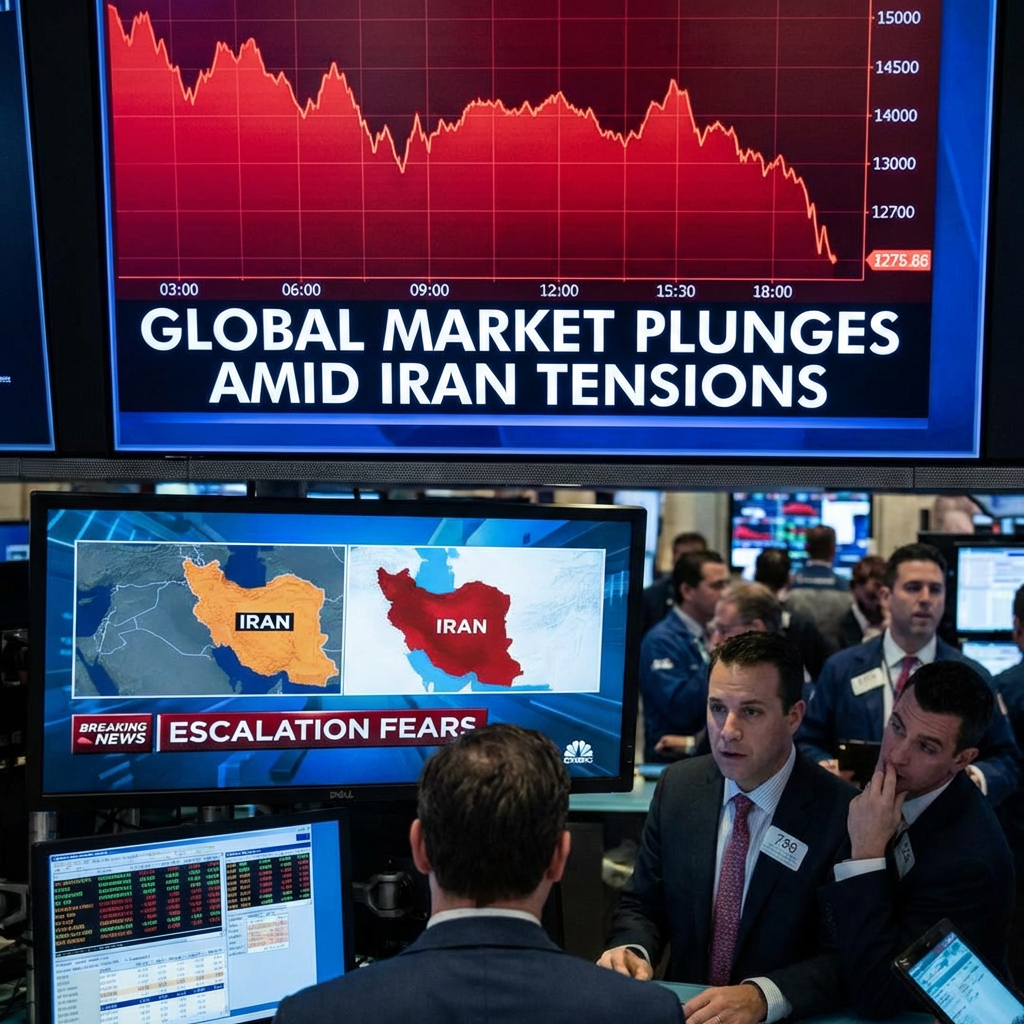
    BLUE PRESS JOURNAL ( 3/3/2026) – Global financial markets plunged into chaos Tuesday as the economic realities of President Donald Trump’s widening war with Iran came crashing down on Wall Street, sending the Dow Jones Industrial Average plummeting over 1,000 points and driving crude oil prices toward the psychologically devastating $100-per-barrel threshold.

    The sell-off—echoing across trading floors from Seoul to Frankfurt—reflects growing panic that the administration’s decision to assassinate Iranian Supreme Leader Ayatollah Ali Khamenei and subsequent strikes on the U.S. Embassy in Riyadh have triggered a conflict with no clear exit strategy, one that threatens to choke global energy supplies just as inflation-weary consumers were hoping for financial relief.

    By 10 a.m. Eastern Time, the Dow had collapsed 1,048 points (2.1%), while the S&P 500 and Nasdaq Composite each shed 2% of their value. The rout extended far beyond American borders. South Korea’s Kospi index cratered 7.2%—its worst single-day decline since 2022—as the energy-import-dependent nation confronted the vulnerability of its supply chains. Germany’s DAX dropped 3.8%, hammered by soaring natural gas prices reminiscent of the energy crisis following Russia’s invasion of Ukraine.

    The Pump Price Punishment

    For American households, the war’s immediate sting is appearing at the gas station. The national average for regular unleaded jumped 11 cents overnight to $3.11 per gallon, according to data from motor club AAA, with analysts warning that prices could spiral toward $4.00 if hostilities disrupt traffic through the Strait of Hormuz—the narrow maritime chokepoint through which roughly 20% of global oil shipments pass daily.

    Brent crude, the international benchmark, surged another 7.5% to $83.58 per barrel, while U.S. West Texas Intermediate climbed 7.6% to $76.64. To put this in context, Brent was trading near $70 less than a week ago—a volatility spike that signals markets pricing in sustained supply risk.

    “This isn’t just a geopolitical crisis; it’s an economic assault on working families,” said economic analysts at the Roosevelt Institute, noting that every $10 increase in oil prices historically translates to roughly 25-30 cents added to the average gallon of gasoline. The timing could scarcely be worse for the Federal Reserve, which has been attempting to guide inflation toward its 2% target after years of price instability.

    Trump’s “Forever War” Doctrine

    The market collapse accelerated late Monday after Trump took to his social media platform to declare that “wars can be fought ‘forever,’ and very successfully” given America’s munitions stockpiles—a statement that extinguished hopes for a swift diplomatic resolution and suggested a prolonged, open-ended military commitment with incalculable economic costs.

    This rhetoric marks a dangerous escalation from the administration’s initial justification for strikes against Iranian leadership. Where officials initially framed the killing of Khamenei as a precision response to specific threats, Trump’s latest comments reveal a strategic framework that could commit the United States to years of asymmetric warfare, mirroring the quagmires of Iraq and Afghanistan but with significantly higher economic stakes for domestic consumers.

    Historical context underscores the risk. During Trump’s first term, the 2020 assassination of Iranian General Qassem Soleimani triggered immediate spikes in oil prices and temporary market instability, though de-escalation followed within days. The current scenario—involving the death of Iran’s supreme leader and attacks on diplomatic facilities in Saudi Arabia—represents a qualitatively superior level of conflict that threatens regional energy infrastructure directly.

    The Fed’s Impossible Position

    The economic fallout extends beyond the pump. Treasury yields spiked Tuesday, with the 10-year note climbing to 4.09% from 4.05% as bond markets priced in “warflation”—the toxic combination of supply shock-driven price increases and stagnating growth. Higher yields translate directly to more expensive mortgages, auto loans, and business financing, potentially choking off the soft landing the Federal Reserve has been carefully engineering.

    Critically, the inflationary pressure from oil shocks severely constrains the Fed’s ability to respond to slowing economic growth. While Trump has aggressively demanded rate cuts in increasingly personal terms targeting Fed Chair Jerome Powell, traders at CME Group are now pushing expectations for monetary easing deeper into the summer, recognizing that cutting rates while energy prices surge would risk unleashing runaway inflation.

    Aviation and Industry in the Crosshairs

    The transportation sector is bearing the immediate brunt. United Airlines cratered 5%, American Airlines dropped 4.4%, and Delta shed 4% as investors recalculated profit margins against jet fuel costs that rise in lockstep with crude prices. The industry, still recovering from pandemic-era disruptions, now faces the dual threat of canceled routes through Middle Eastern airspace and structurally higher operating costs that will inevitably pass to consumers in the form of expensive tickets.

    Gold, which had briefly touched $5,300 during the initial flight to safety, retreated 4.9% to $5,053 as rising yields made the non-interest-bearing asset less attractive, while Bitcoin fell below $67,000—demonstrating that even digital “safe havens” provide little shelter when war drives dollar-denominated borrowing costs upward.

    With inflation expectations unanchoring and global supply chains facing their most severe test since 2022, the economic verdict on Trump’s Iran strategy is becoming clear: this is a war that American households cannot afford, and one that global markets will not tolerate indefinitely.