President Donald Trump has asserted that America has entered upon a new “Golden Age.” This is a far cry from the reality we see on the ground today, where over one hundred thousand jobs have been lost in just the past two months. Gas prices are skyrocketing, and groceries are costing a record amount.
Yet another consequence of the Trump administration’s disastrous war with Iran is that we are facing unprecedented deficits and soaring gas prices. More concerning still, the military’s most vital missiles for the defense of America’s allies and military installations in the Middle East are nearly depleted.
The Washington Post recently reported that the Pentagon’s stores of precision guided missiles and large diameter rockets needed for its most sophisticated missile-defense systems are nearly depleted after more than five months of relentless strikes on Iran. This leaves the president with only limited options regarding renewed attacks on the Islamic Republic.
At the same time, however, Reuters looked at this issue from a different angle, citing security analysts for the statement that the U.S. would be unable to respond adequately to a Chinese attack on Taiwan or other regional provocations if they were to occur, given the current levels of defense readiness. This development is exceptionally concerning given the heightened tensions with China at the moment, and it is not reassuring that the U.S. has so few options available in the event of a large-scale attack on any of its allies.
If Trump decides to continue with his campaign of airstrikes against Iran, the limited number of precision-guided weapons in the Pentagon’s inventory poses a potentially dangerous dilemma for the President. Reuters added that the U.S. is already down to just eight THAAD missiles and thirteen Patriot missiles, having burned through nearly 80% of THAAD and 50% of Patriot since the beginning of hostilities with Iran.
Despite the urgent need, defense officials estimate it will take several years before America’s missile inventory will be back to where it was before the war with Iran began, even if the defense-contracting companies ramp up their production rates to maximum.
It all boils down to the President himself, who, with his unilateral declaration of war on Iran, has placed the U.S. in an exceptionally perilous position both at home and abroad. Neither the American public nor our allies wanted this, and it is clear that Trump thought through the economic impact of his decision much too little. By launching this kind of reckless campaign, he has undermined both the economic and national security of the United States.
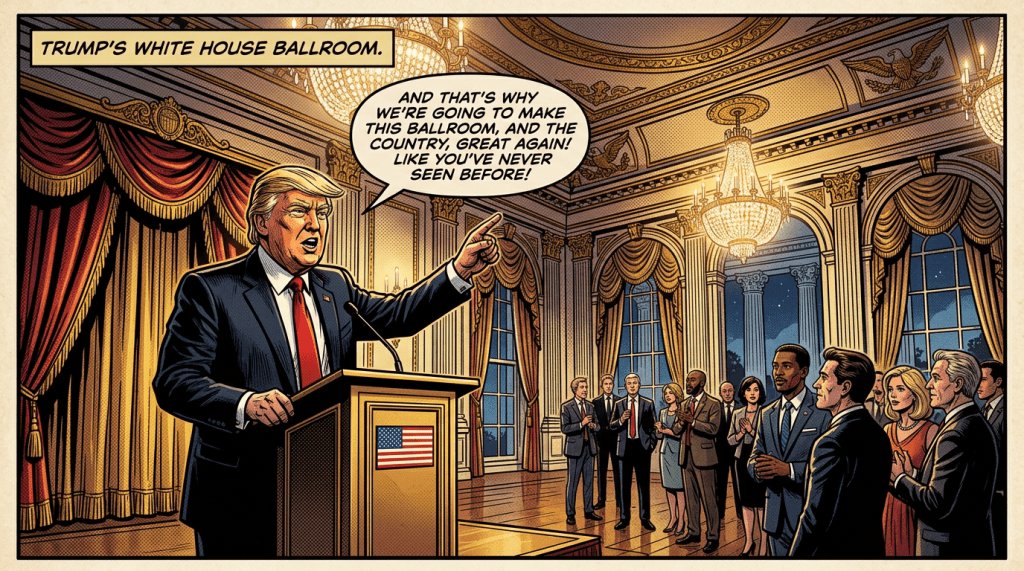
WASHINGTON – A federal appeals court has paused construction on President Donald Trump’s budgeted 400 million-dollar project of the White House ballroom. The court ruled that building the ballroom should be immediately stopped from proceeding with any jobs “above ground”, including features the government claims are necessary security measures.
.
On Friday, a 2-1 panel of the D.C. Circuit Court of Appeals ruled to uphold a preliminary injunction against the President. The National Trust for Historic Preservation, an organization that protects buildings, filed the injunction in December 2025 after the administration began demolition of the East Wing to make way for a 90,000 square foot subterranean ballroom not approved by Congress.
Patricia Millett’s and Bradley Garcia’s opinions, in which they ruled in favor of preservation, were joined by judges who were appointed by President Barack Obama and Joe Biden. They stated that the Constitution does not permit presidential edicts to dictate the use of federal resources.
They continued, “whether a large ballroom should be built…is a decision for Congress, not the President” due to the fact that the Constitution grants spending authority over the federal assets to lawmakers, not the executive branch, despite the security reasons cited by the administration.
However, the decision to halt the work was only made official for two weeks in order to allow the Trump administration to appeal to the U.S. Supreme Court.
Neomi Rao, who was nominated by President Trump, filed a dissenting opinion in response to the majority’s ruling. She stated that the injunction which stopped the work was an act of judicial activism.
“By stepping in and taking control over something as monumental as the White House, the district court engaged in judicial activism,” she wrote. “Courts shouldn’t be running building projects”
The administration’s original plan was to decommission the East Wing while keeping the West Wing as a separate unit. However, the White House Complex’s budget requires funding beyond the president’s official salary so the administration argued that the entire wing be demolished to make way for the expansion of the subterranean chamber.
Furthermore, the administration claims that the ballroom project is part of larger security upgrades to the complex.
President Trump expressed dissatisfaction with the decision in his Truth Social page. He stated that the ruling was “politically motivated and completely illegal.” He argued that not completing the ballroom project endangered future presidents, staff, diplomats, and the general public.
The two-week pause in the construction of the ballroom project means that the future of the project depends on whether or not Trump’s emergency appeal to the Supreme Court is granted.
The Disconnect: Leadership Challenges Amidst Escalating Conflict and Economic Strain by Winston Wendell
The Middle East is inching toward a crisis. Two U.S. service members lost their lives this week, and the Pentagon confirmed it. All out war with Iran doesn’t just seem possible, it feels closer than it has in months. Meanwhile, inflation keeps gnawing away at paychecks, and gas prices are spiking again thanks to more trouble in the Persian Gulf. At home, folks are feeling squeezed, but the White House gives off this strange sense of being elsewhere, almost detached.
Life on Main Street looks pretty rough right now. The latest numbers from the Bureau of Labor Statistics show that prices won’t budge. Every week, it’s the same story: another trip to the grocery store, more sticker shock, and it’s getting tougher and tougher for families just to make it to Friday. People want the president in the thick of things during times like these, steady, present, and reassuring.
That’s not what they’re getting. Instead, public schedules and social media updates show President Donald Trump heading for the golf course instead of the Situation Room. Over the weekend, while everyone waited for updates from the Middle East, he was out golfing at his club in New Jersey.
And this didn’t come out of nowhere, people have noticed a pattern. Analysts and writers, including The Atlantic, keep pointing out: when tension flares abroad, the president’s often seen prioritizing downtime over direct action. Well he is 80 years old. For plenty of Americans, especially anyone worried about national security, this feels out of step with the country’s needs.
Then there’s his upcoming itinerary. It’s right there in the official plan, while families grieve and the economy faces more pressure, President Trump’s next high-profile event is the FIFA World Cup Final at MetLife Stadium, right alongside the First Lady.
So, here’s the tension. The country’s teetering at the edge of war. Prices keep rising. And the president is taking in a soccer match. News sites like Reuters aren’t letting it slide, they’re highlighting how serious things with Iran have become. And regular people are starting to ask, “Is this really the time for leisure?”
That’s the crux of the matter: Americans are demanding their leader to step up, particularly in these tumultuous times. With war looming and expenses skyrocketing, the chasm between public expectations and presidential reality is widening. It’s a question everyone is left grappling with where is President Donald Trump when we need him most?
Blue Press Journal – The escalation of conflict between the United States and Iran has pushed the global economy to the brink, fostering an environment of instability that many experts argue was entirely preventable. By initiating a campaign of military aggression without congressional authorization, the Trump administration has by passed legislative oversight, leaving the American public to bear the brunt of surging inflation and a precarious geopolitical landscape.
Current negotiations center on a fragile two-week ceasefire, yet this “peace” effort remains deeply troubling. Critics argue that using the threat of mass civilian casualties as a bargaining chip to reopen the Strait of Hormuz is not only reprehensible but strategically bankrupt. Data from Lloyd’s List Intelligence confirms that shipping volumes plummeted 90% at the height of the conflict, while reports from the Financial Times indicate that Iran intends to levy hefty cryptocurrency tolls on vessels—effectively turning a vital international waterway into a proprietary toll road.
The administration’s shifting narrative and erratic policy goals have created what many characterize as a “credibility gap.” While the White House touts progress, the Associated Press notes that claims of regional stability are contradicted by continued missile fire reported across Kuwait, the UAE, and Qatar. Furthermore, as the New York Times reports, the imposition of $2 million fees per ship suggests a significant concession that threatens the status of the Strait as an international waterway.
Many military analysts have a scathing assessment of the presidents war describing his current posture as a “total fold.” After weeks of reckless bluster, the U.S. now finds itself negotiating on terms dictated by an Iranian 10-point proposal. We are left asking: What has actually been gained? With Iranian nuclear capabilities degraded, by how much? Now we face the potential for Russian or Chinese rearmament of Iran looming, the administration’s strategy appears to be a reactive, uncoordinated mess.
If an American president cannot maintain a coherent policy, ignores the potential for long-term strategic catastrophe, and accelerates the financial hardship of working families, we must critically evaluate their fitness for office. This unnecessary war, characterized by its lack of transparency and disregard for international norms, remains a defining failure of the Trump administration.
Washington (DC) – Recent revelations from a whistleblower’s attorney have cast a long shadow over the office of the Director of National Intelligence (DNI), specifically questioning actions attributed to DNI Tulsi Gabbard. At the heart of the controversy is an alleged suppression and unorthodox handling of a highly sensitive National Security Agency (NSA) report concerning foreign intelligence discussions about an individual closely associated with former President Donald Trump. These allegations, if substantiated, raise profound questions about intelligence integrity, political influence, and the DNI’s commitment to transparency.
The Allegations: A Deviation from Protocol?
According to attorney Andrew Bakaj, who represents the unnamed whistleblower, the NSA detected an unusual phone call last spring between two foreign intelligence operatives. Their discussion reportedly centered on a person with close ties to Donald Trump. Such intelligence, by standard protocol, would typically be disseminated widely within the intelligence community and, where appropriate, to congressional oversight committees to ensure accountability and informed decision-making.
However, the whistleblower alleges a stark departure from this established process. Instead of allowing NSA officials to follow routine dissemination procedures, DNI Gabbard reportedly took a physical copy of this critical intelligence directly to Susie Wiles, then the president’s chief of staff. Furthermore, the very next day, Gabbard allegedly instructed the NSA not to publish the intelligence report, instead directing that the classified details be transmitted solely to her office. Source: “Whistleblower Claims DNI Gabbard Blocked Sensitive Intel Report,” The Guardian.
This chain of events, if true, presents a troubling picture. Why would a DNI, whose primary role is to oversee and integrate intelligence efforts, circumvent established channels? What was the urgency in delivering this information directly to the White House Chief of Staff while simultaneously halting broader agency distribution? Critics argue that such actions bypass the very checks and balances designed to prevent political interference in intelligence matters.
Wider Implications and Historical Parallels
The intelligence community thrives on its ability to provide objective analysis, unvarnished by political considerations. The alleged actions of DNI Gabbard inevitably spark comparisons to historical instances where intelligence has been accused of being politicized or selectively handled. As one former intelligence official, speaking anonymously to a national security blog, noted, “Any move to centralize and restrict the flow of critical intelligence to a single political appointee’s office, especially concerning figures close to the executive branch, instantly triggers alarm bells about potential misuse or suppression.” Source: “Experts React: DNI’s Alleged Actions Under Scrutiny,” Intelligence Insight Daily.
Moreover, the person close to Trump, central to the foreign intelligence call, is explicitly stated not to be an administration official or a special government employee. This distinction amplifies concerns: if the individual is a private citizen, what specific national security threat did their connection pose, and why was their intelligence handled with such exceptional, and arguably irregular, discretion by the DNI?
The Inspector General’s Role Under Scrutiny
Adding another layer of complexity, the whistleblower formally filed a complaint regarding Gabbard’s actions. However, Acting Inspector General Tamara A. Johnson dismissed the complaint after a swift 14-day review, stating that “the Inspector General could not determine if the allegations appear credible.” This dismissal itself has raised eyebrows. Lawmakers have voiced concerns about the independence of the watchdog’s office, particularly after DNI Gabbard assigned one of her top advisers, Dennis Kirk, to work there just weeks after the initial whistleblower contact. Source: “Congressional Leaders Question IG’s Independence Amid Gabbard Probe,” Capitol Hill Monitor.
The DNI’s office has vehemently denied the allegations, calling the story “false” and asserting that “Every single action taken by DNI Gabbard was fully within her legal and statutory authority.” They further contend that these are “politically motivated attempts to manipulate highly classified information.” While the DNI’s defense points to previous findings by both Biden-era and Trump-appointed Inspectors General deeming allegations against Gabbard “baseless,” the persistent narrative from the whistleblower and their attorney suggests that these previous findings may not fully encompass the scope of the current claims or the timeline of events.
A Call for Transparency and Accountability
For eight months, this intelligence report has reportedly remained under lock and key, despite the whistleblower’s efforts to bring details to congressional intelligence committees. The prolonged secrecy, coupled with the DNI’s alleged sidestepping of established protocols and the swift dismissal by the acting IG, demands greater transparency. The public, and indeed the intelligence community itself, deserves a comprehensive explanation for these extraordinary measures. Was this an act of protecting national security, or an effort to shield specific interests from scrutiny? Without full disclosure, these critical questions will continue to undermine public trust in the integrity of our national security apparatus and the office of the Director of National Intelligence.



 Blue Press Journal