Tag: economic anxiety

  • Rising Gas Prices: What It Means for Everyday Americans

    by Winston Wendell

    Every time I see the numbers ticking higher at my local gas station, I get the strangest sense of déjà vu. We’ve gone through these price spikes before, but this time it feels heavier somehow, almost suffocating. The rising military tension with Iran, which has taken center stage for the Trump administration, isn’t just a headline; it’s merging with everyday life, impacting budgets and cranking up stress for millions across the country.

    This isn’t just another blip, it’s a shift you can feel in the air. CNBC says economic anxiety hasn’t hit these heights since the inflation surge right after the pandemic in late 2023. People are tired, and honestly, the numbers just back up what everyone feels.

    The Grim Reality Behind the Figures

    The CNBC All-America Economic Survey doesn’t pull any punches. Sixty-one percent of people are now pretty pessimistic about the country’s financial future. Only around a quarter are still holding out hope.

    So, what’s really lighting this fire? It’s basic stuff. Anyone in line at the grocery store or waiting to fuel up will tell you, it’s all about the cost of just getting by. Food and gas aren’t minor expenses anymore, they’re completely reworking how people live.

    Sacrificing the Basics

    This squeeze is making people choose between necessities. The latest survey hits hard:

    Almost half of Americans (47%) are skimping on essentials, things like medical care, groceries, everyday basics, just to keep their heads above water.

    Two out of three have slashed anything extra. The empty restaurants and quiet movie theaters are proof enough that people are choosing survival over fun.

    Policy-Driven Discontent

    Frustration is clear, and it’s pointed straight at the White House. Right now, President Trump’s handling of the economy gets just 38% approval, with about 60% giving him a thumbs down.

    The administration’s approach to Iran is just as divisive. Only 35% of voters support the military moves, while 63% are against them. The link between decisions overseas and money woes at home is starting to look obvious to everyone.

    The “Trauma” of Persistent Inflation

    So why does the anxiety stick around, even when prices dip for a while? Democratic pollster Jay Campbell put it plainly to CNBC: that brief break in gas prices earlier this year didn’t fix the “financial trauma” everyday people feel.

    Even when prices drop, nobody forgets what it felt like when they were sky-high for two years. That memory sticks, so small changes just don’t erase the frustration.

    What the Pump Is Telling Us

    AAA backs this up with tough stats. Last Friday, the national average for a gallon of regular gas hit $3.98, a ten-cent jump in just a week. Diesel’s hitting even harder, climbing past $5 per gallon and putting more pressure on the folks who keep the trucks and supply chains running.

    Implications for Washington

    Even with all these grim numbers, the political fallout is, for now, kind of muted. Democrats still have a slight four-point edge for Congress, but Campbell warns there’s no massive political wave building, not yet.

    But things feel shaky. With the Iran conflict not cooling down and people’s savings evaporating, anxiety is running high. Folks across the country are just holding their breath, wondering if the costs of Trump’s foreign policy will end up outweighing the price of keeping things steady at home.
    Fediverse Reactions
  • Trump’s Billion-Dollar Ballroom: A Waste of Public Funds?

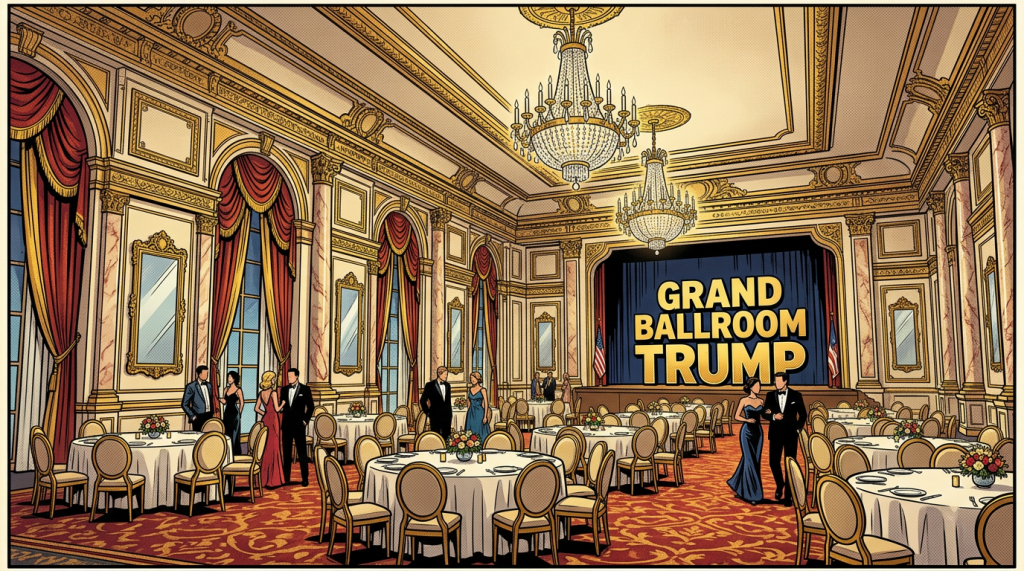
    Luxurious ballroom with round tables, chandeliers, and people in formal attire

    by Winston Wendell

    I’ve been closely monitoring political scandals for quite sometime, but let me tell you, nothing has highlighted the chasm between campaign promises and reality like this outrageous White House ballroom debacle involving Donald Trump. It all began as a so-called privately funded renovation, an ambitious yet dubious plan to dismantle the west wing and build a grand ballroom. Now, it has exploded into a staggering billion-dollar bill funded by taxpayers, mired in evasions and skyrocketing costs, while Republicans in Congress sit idly by.

    It’s not just the price tag, which let’s face it, is jaw-dropping for a single room. What really stands out is the sheer disregard for public accountability. When Trump rolled out the plan to tear down part of the East Wing and build a fancy ballroom, he promised no federal money would be used. Corporate sponsors and private donors would foot the bill not taxpayers. This wasn’t an accident it was carefully staged to let him chase his luxury dream without being accused of wasteful spending the very thing he’d spent so much time railing against.

    That promise fell apart on Monday night. Senator Chuck Grassley revealed that the Republican budget earmarked $1 billion for the ballroom. What was supposed to run $200 million and be paid for by private donations is now a full on federal takeover. Now very penny will come from taxpayers. It’s a giant flip: the president looked the public in the eye, made a promise, and then his Republican friends in Congress did the exact opposite.

    It’s not just the dollars that bug me, though. The deafening silence from Republicans is almost as bad. Not one Republican senator or representative has spoken out against this shift even though it flies in the face of everything the party says it believes. They ran on cutting government waste and giving power back to the people. Now, they’re quietly signing off on a billion-dollar ballroom most Americans don’t even want. Take the numbers: a Washington Post poll found just 28 percent support for the project, while 56 percent oppose it. Even Republican voters aren’t buying in. If a president can’t get majority support from his own base on a signature project, something’s seriously broken.

    Let’s talk about the cost hike. This thing started at $200 million and suddenly needs $1 billion, a fivefold jump that just doesn’t add up. The official explanation is “security features” like bulletproof windows, reinforced walls, drone detectors. Sure, security’s important, but those upgrades aren’t worth a billion bucks. And if $600 million for security was included before, where’s the detailed accounting? All we get are vague promises and a blank check. Normally, big projects handled by private companies have competitive bidding, contracts, and audits. Here, there’s barely any oversight rules that apply to everyday government spending seem to vanish when the president’s interests are on the line. The Republican congress just lines up behind this stupid idea without questions or oversight.

    The timing couldn’t be worse, either. While Trump obsesses over floor layouts, marbel and gold trimming, the middle class is struggling. Buying a house? Nearly impossible. Health insurance? Premiums keep climbing. Groceries? More expensive every week. And at the pump, four bucks a gallon is the new normal with the price increasing everyday. Daniel Pfeiffer, who worked for Obama, nailed it when he said Trump’s priorities are “fiddling while Rome burns.” It sounds cliché, but honestly, it fits the moment.

    Internationally, the situation is even messier. Tensions with Iran are driving up gas prices, and Americans are caught in the fallout. All of this lands squarely on working families with already tight budgets. Against that backdrop, asking taxpayers to pay for a presidential ballroom shows either a total disconnect or a flat-out abandonment of priorities. He campaigned on America first, but it sure looks like Donald Trump first!

    This ballroom won’t make us safer. It won’t bring down gas prices. It won’t fix healthcare or help anyone who’s struggling at the kitchen table. It’s just another monument to one man’s comfort and ego. The absolute lack of pushback from congressional Republicans shows they’re willing to drop their supposed principles to stay loyal to party over country.

    So, when exactly did we start accepting this nonsense? The chaos in the ballroom isn’t merely a display of government waste or political posturing; it hints at something far more concerning. It seems that accountability is just a choice for those in power, while duty has been sacrificed on the altar of convenience. A thousand people can throw a party in that ballroom, yet it appears that not a single principal managed to survive the festivities.