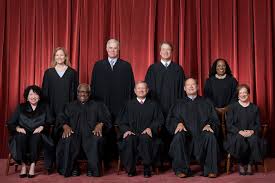
Washington: 6/25/2026– In Wolford v. Lopez (2026), the U.S. Supreme Court struck down a Hawaii law that stopped licensed individuals from carrying firearms on private property open to the public unless the owner gave explicit permission. Justice Samuel Alito, writing for the majority, said the statute violated the Second and Fourteenth Amendments because it placed too heavy a burden on the right to carry firearms for self-defense.
This law turned the usual common-law rule on its head. Normally, anyone—including legal gun carriers—can enter public-facing businesses unless the owner says otherwise. Hawaii’s law reversed that, demanding affirmative consent before someone could enter with a firearm. The Court said this change made everyday errands legally risky for permit holders and restricted routine activities.
Using the test from New York State Rifle & Pistol Assn. v. Bruen (2022), the Justices decided the law plainly restricted conduct protected by the Second Amendment. They dismissed Hawaii’s historical arguments, noting that past laws covered hunting or trespassing and didn’t resemble modern limitations on carrying firearms in public.
Justice Alito stressed that geography doesn’t change constitutional rights. He wrote, “merely local attitudes can neither shrink nor inflate the meaning of fundamental Bill of Rights guarantees.” He also wrote that Hawaii’s method “severely hampers the ability of law-abiding citizen[s] to exercise” the right to self-defense.
Broader Impact Across States
This decision goes beyond Hawaii. The opinion points out that states like California, New York, New Jersey, and Maryland have similar laws, making gun carriers get explicit permission before entering private property open to the public. Since the Court said Hawaii’s approach was unconstitutional, those states’ laws are now at risk of being challenged. The decision doesn’t wipe those laws off the books automatically, but it sets a clear precedent that lower courts will probably follow when looking at similar restrictions.
There were strong dissents. Justice Kagan argued that there were enough historical analogues to support Hawaii’s law, and Justice Ketanji Brown Jackson saw the case as mainly about property rights, not gun rights.
All in all, the Court doubled down on a broad view of the Second Amendment and made it harder for states to limit carrying firearms in everyday public-facing places.
The United States Supreme Court was founded to interpret the Constitution impartially, protecting both individual rights and guarding against the excesses of major political parties. Yet in the past decade, the Court shifted—becoming a political tool for a narrow, far-right coalition. Recent decisions on abortion, voting rights, gun regulation, and climate policy clash with most Americans’ views, exposing a structural flaw: a minority shapes the nation’s most powerful law-making body.
Most Americans support reproductive freedom, common-sense gun safety, robust environmental protections, and strong voting-rights laws. Polls confirm this again and again. But the Court’s recent rulings—Dobbs v. Jackson Women’s Health Organization (overturning Roe v. Wade), West Virginia v. EPA (weakening the agency’s climate authority), and New York State Rifle & Pistol Association v. Bruen (expanding gun rights)—came from a six-justice majority whose beliefs line up with a small, conservative electorate, not the nation as a whole. The Court’s decisions aren’t rooted in “the true meaning and purpose” of the Constitution, as Chief Justice Earl Warren once urged; they’re grounded in a rigid ideological agenda.
The problem isn’t just the justices, it’s also the process behind their appointments. The Senate was supposed to be a deliberative body, offering stability, but now it amplifies voices from the least populated states. A Wyoming voter has about seventy times more influence over Supreme Court appointments than a California voter. The twenty-five smallest states—most of them Republican—hold most Senate seats, yet their combined population makes up less than half the country.
When Senate Republicans blocked Obama’s 2016 nominee Merrick Garland, letting the seat sit empty for an entire year, they created a partisan advantage that let Trump install a conservative bloc. That maneuver ignored what most Americans wanted: to fill the vacancy. The Court’s direction changed drastically as a result.
Lifetime appointments once made sense when people lived just thirty-five years on average. Now, justices can stay for four or five decades, outlasting the presidents who picked them and the voters who supported those presidents. Justice Clarence Thomas, appointed in 1991, has been on the bench for over thirty years, often writing opinions that stray from mainstream sentiment. The only way to remove a justice is by impeachment a nearly impossible hurdle, so accountability is lost.
Reforming the Court doesn’t mean tearing up the Constitution; it just needs a modest amendment to restore democratic balance. An eighteen-year term, with a new justice appointed every two years, guarantees regular turnover while protecting judicial independence. Each president gets to appoint two justices in a single four-year term, and the Court’s makeup would reflect the electorate’s current will not old political preferences from decades past.
Critics insist that life tenure shields judges from politics, pushing them to rule on principle, not popularity. But the truth is, lifetime appointments have cut the Court off from democratic accountability and allowed politics to take over unchecked. Fixed terms would free justices from daily electoral pressures yet give the Court a steady rhythm of renewal the balance the founders imagined for an adaptable judiciary.
America’s democracy is built on the idea that government draws its legitimacy from the people’s consent. When a minority seizes control of the Supreme Court, that consent breaks down. Setting term limits, plus modest changes to the Senate’s confirmation process, would bring the Court back in line with the majority’s will. Elected officials, especially Democrats who claim to defend democratic norms should champion this change without hesitation.
Only by reclaiming the Court for the people can the United States guarantee that constitutional interpretation stays living, responsive, and truly representative.
Have we crossed the line of disregard for the rule of law? The arrest of sitting state Judge Hannah Dugan outside of her courthouse was a shocking move by the Trump administration, showing a blatant attack on the judiciary and sanctuary jurisdictions. Targeting a state judge for arrest over an alleged obstruction of detaining an undocumented migrant may not raise the same constitutional concerns as defying federal court judges, but the handling of this case is part of a larger campaign to intimidate and erode the rule of law.
FBI Director Kash Patel’s actions were highly unusual, tweeting, deleting, and reposting about the arrest, then taking it a step further by posting a photo of the arrest on social media. This behavior is not normal, appropriate, or okay.
Attorney General Pam Bondi also crossed a line by appearing on Fox News to comment extensively on the case and launch attacks on the defendant and the judiciary as a whole. These public statements about pending cases are typically prohibited by DOJ policy and legal ethics rules, but Bondi ignored them to cater to a Trump-friendly media outlet.
It is clear that the top law enforcement officials in the United States are playing politics and trying to spin a false narrative about the Judge to taint the Wisconsin judge’s case. This behavior is unacceptable and undermines the integrity of our legal system.
Why the Federal Case will Fall Apart
The allegations against Judge Dugan arise from an incident on April 18, during which federal agents sought to apprehend a defendant, Eduardo Flores-Ruiz, outside her courtroom. It is crucial to note that the agents were in possession of an “administrative warrant” issued by Immigration and Customs Enforcement (ICE), rather than a judicial warrant.
Despite the circumstances, Judge Dugan took appropriate measures to safeguard the integrity of her courtroom proceedings. She instructed the federal agents to address their concerns with the Chief Judge and ensured that the defendant’s hearing proceeded without interference from external sources.
The recent statements made by the FBI Director regarding this case are concerning, as they appear to prejudge the defendant and undermine the principles of due process. Such extrajudicial comments have the potential to bias the case, infringe upon the defendant’s rights, and erode public trust in the judicial system.
In accordance with standard procedures and in respect of judicial independence, felony charges against a member of the judiciary are typically presented to a grand jury for review. By circumventing this process and arresting Judge Dugan without following established protocols, the prosecutors have raised questions about the political motivations behind the case.
Furthermore, it is important to consider the limitations of administrative warrants, which do not authorize forced entry or detention without judicial oversight. The context in which the warrant was issued must not be overlooked in evaluating the legality of the actions taken.
The assertion that Judge Dugan should have regarded an administrative warrant as binding authority is a significant misinterpretation of the law, reflecting more on political agendas than on actual violations of federal statutes. Judge Dugan’s legal predicament is part of a larger pattern that has characterized Trump’s political career: the deliberate targeting and disparagement of strong, independent women who resist submitting to his control.
The arrest of Judge Dugan highlights a double standard that persists in the Trump era. While a local judge faces federal prosecution for actions aimed at upholding constitutional boundaries, the Trump administration itself has displayed blatant disregard for legal standards. Enforcement is applied selectively, used to punish dissenters and shield allies.
It is crucial for the public to perceive the case against Judge Dugan not as an isolated conflict, but as a cautionary tale. If the Trump administration can detain a judge for her handling of a defendant’s movements within a courthouse, what constraints remain?
Could a judge be apprehended for challenging the legitimacy of an executive order? For postponing a hearing to allow a defendant to seek legal counsel? For suppressing unlawfully obtained evidence? Each of these fundamental judicial functions could be reinterpreted as “obstruction” under the current aggressive, politically charged approach.
The nation must not become desensitized to these tactics. They signify a departure from democratic governance towards authoritarian practices where legal pretext supersedes due process.
Judge Dugan’s case calls for a thorough and transparent examination of the facts, as well as a call to action for all who believe in the primacy of the law over politics, rather than bending it to serve political interests.
The arrest was a clear message. The nation’s response will determine whether the messenger succeeds in stifling independent judgment.
In recent days, the Trump Administration has faced significant legal setbacks as their actions have been deemed in violation of the law by the US Court system.
Now, Supreme Court Chief Justice John Roberts has issued a stern warning to Trump. In response to Trump’s calls for the impeachment of a judge who ruled against him, Chief Justice Roberts defended the federal courts. He stated that impeachment is not an appropriate response to judicial decisions, as there is a normal appellate review process in place for that purpose.
Trump has been particularly fierce in his call for the impeachment of U.S. District Judge James Boasberg, following Boasberg’s bold decision to order two deportation flights to be turned around. Outraged, Trump invoked the Alien Enemies Act of 1798 in an attempt to justify the deportations, claiming that those on board were part of a violent Venezuelan gang. Yet, Boasberg stood firm, ruling that even if they were indeed gang members, a mere gang cannot be equated with the legal status of a hostile foreign government. The Trump Administration shockingly failed to provide any evidence to support their claims of gang membership!
It is evident that the Trump administration is blatantly disregarding the orders of our court system, the very system that protects our rights. Regardless of personal opinions, we must uphold our system of rights that safeguards us all.
If we fail to defend our rights, we risk losing them. Remember, might does not make right. We are governed by a system of laws, not by kings. Stand up for justice before it’s too late.
The chaos and confusion caused by the OMB memo were felt across the nation, with payments portals for essential programs like Medicaid, Head Start, and housing suddenly going dark. Health centers, daycares, and support programs for the disabled were left hanging in uncertainty.
President Donald Trump’s relentless assault on federal institutions during his first three weeks in office has even shocked Republican-appointed judges. The Washington Post’s Aaron Blake noted that Chief Justice John Roberts, a key figure in the judiciary, has grown weary of the drama Trump is bringing to the courts. Roberts recently criticized public officials for attempting to intimidate judges and baselessly accusing them of political bias.
It is time for the Trump administration to respect the rule of law and comply with court orders. Judge McConnell’s demand to immediately restore frozen funding must be heeded to ensure the stability and integrity of our federal programs. The judiciary will not tolerate any attempts to undermine the independence and impartiality of the courts.
According to Justice Department rules, special counsels must provide reports detailing their legal conclusions at the conclusion of their investigations. Just as Garland previously made public Special Counsel Robert Hur’s findings on President Biden’s handling of classified information, he will also release Smith’s report on Trump, albeit with necessary redactions.
Trump’s insistence on suppressing Smith’s report serves as a stark reminder of his aversion to truthful depictions of January 6th, particularly those supported by sworn testimony from numerous individuals, including former associates. Let’s not forget Trump’s disdain for the House January 6th Committee.
If we ever hope to restore integrity to American politics, we must confront the reality of January 6th head-on.
Of course, Trump will continue his efforts to rewrite the narrative of January 6th. He will pardon those involved in storming the Capitol, appoint conspiracy theorists to key positions, and attack anyone who dares to challenge him, from Liz Cheney to Jack Smith. While some of Trump’s more respectable defenders may not openly celebrate January 6th, they will certainly downplay or excuse the events.
For the sake of truth and democracy, it is imperative that the report be made available to the public. We need honesty and transparency in politics. It appears Trump is afraid of the truth.




 Blue Press Journal