
Tag: federal overreach

  • Why the Republican “SAVE Act” Threatens American Voters – Costly, Undemocratic, and Discriminatory

    Clear ballot box filled with papers, wrapped in heavy metal chains and secured with a padlock.

    Blue Press Journal – The Republican‑backed “Secure American Voter Eligibility (SAVE) Act,” championed by President Donald Trump’s allies, proposes that every voter present a passport or an original birth certificate to cast a ballot. While the bill is marketed as a safeguard against fraud, the reality is far more troubling: it would impose prohibitive costs, undermine constitutional authority, and disproportionately disenfranchise women, low‑income workers, and minority communities.

    A Financial Burden No Voter Can Afford

    A standard U.S. passport now costs $165 for an adult, plus an additional $35 for expedited service (U.S. Department of State, 2024). For many Americans, especially those earning the federal minimum wage of $7.25 per hour, this fee represents a full day’s wages. The SAVE Act’s requirement for a passport would also force voters to navigate a complex application process that can take weeks—time many cannot spare from multiple jobs or childcare duties.

    Equally daunting is the demand for an original birth certificate. In many states, obtaining a certified copy costs $10‑$30 and can take up to six weeks, according to the National Center for Health Statistics. For a single mother working two jobs, the combined expense and delay could effectively strip her of the right to vote in a single‑day election.

    Constitutional Overreach

    The U.S. Constitution explicitly reserves the conduct of elections to the states (Art. I, § 4). By imposing a uniform federal identification requirement, the SAVE Act usurps state authority and creates a single, nationwide voting rule that many states have already deemed unnecessary. Legal scholars from Harvard Law School have warned that “federal ID mandates risk violating the Elections Clause by overriding state‑crafted eligibility standards” (Harvard Law Review, 2023).

    Targeting Women and Married‑Status Voters

    Women, especially those who are married, are uniquely vulnerable. Many married couples share a single birth‑certificate file, and some states issue a “marriage certificate” rather than an individual birth record for privacy reasons. Requiring an original birth certificate therefore forces women to navigate a bureaucratic maze that can delay or prevent voting. 

    Dr. Maria Lopez, a political scientist at the University of California, Berkeley, told The New York Times: “The SAVE Act would create a gendered barrier. Women who are caretakers often lack the time and resources to procure these documents, effectively silencing a significant portion of the electorate.” (NYT, April 2024).

    Voices From the Ground

    Local activists echo these concerns. Johnathan Reed, director of the voter‑rights group Fair Elections Now, testified before the Senate Judiciary Committee: “Our data shows that 23 % of low‑income voters have never held a passport, and 15 % cannot readily obtain a certified birth certificate. This bill would lock them out of democracy.” (Senate Hearing Transcript, June 2024).

    Similarly, Emily Watkins, a single mother of three from Ohio, told ABC News: “I work nights at a factory and mornings at a daycare. Paying $165 for a passport just to vote is impossible. The SAVE Act would tell me my voice doesn’t matter.” (ABC News, May 2024).

    A Trump‑Era Power Play

    Critics argue the legislation is less about fraud and more about political power. Donald Trump’s 2022 campaign rally in Iowa featured the slogan “Secure the Vote, Save the Nation,” a thinly veiled appeal to a voter‑suppression strategy that has haunted his administration. Political analysts from The Washington Postnote that “the SAVE Act aligns with Trump’s broader effort to reshape the electorate in favor of the GOP, regardless of constitutional limits.” (Washington Post, July 2024).

    The SAVE Act is an expensive, unconstitutional, and discriminatory roadblock that threatens to silence millions of Americans—particularly women, low‑income workers, and minority voters. Rather than protecting elections, it weaponizes bureaucratic hurdles to tilt the democratic process in favor of a single party. As the nation heads toward the 2026 elections, safeguarding universal suffrage must remain a priority, not a political pawn.
  • The Troubling Intersection of Election Denial and Federal Overreach in Minnesota

    The Dangerous Intersection of Election Denial and Federal Overreach: A Critical Look at Trump’s Actions in Minnesota

    Blue Press Journal – In an alarming display of federal overreach, former President Donald Trump has leveraged the power of Immigration and Customs Enforcement (ICE) to pursue his unfounded claims of election fraud in Minnesota. Critics argue that his obsession with the state stems from a desperate need to validate his belief that he won Minnesota in 2016, 2020, and 2024—claims that have been thoroughly dismissed by the courts and factual evidence.

    Norm Eisen, a former White House lawyer under Barack Obama, bluntly captures the chaos: “It’s almost unbelievable to think that election denial wasn’t a key factor driving his reckless animus, which in turn led to the ICE surge and the horrific fallout. This entire debacle reeks of a concoction built on nothing but lies.”

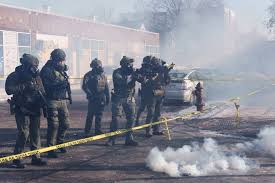
    The Trump administration’s recent tactics in Minnesota include a demand from Attorney General Pam Bondi for extensive voter data. This request arrives amid a backdrop of tragic incidents related to ICE operations, including the recent shooting of protester Alex Pretti. Bondi’s assertion that obtaining this data is essential for “free and fair elections” is seen by many as a thinly veiled attempt to intimidate voters and suppress legitimate electoral participation.

    In 2020, courts across the nation refuted Trump’s baseless allegations of widespread voter fraud, yet he continues to propagate these falsehoods. During a gathering in St. Paul in May 2024, Trump proclaimed, “I thought we won in 2016. I know we won it in 2020.” This starkly contrasts with the reality that he lost Minnesota in all three elections, including a 7.1-point defeat to Joe Biden in 2020—one of many losses that continue to fuel his unfounded claims.

    Democratic National Committee Chair Ken Martin, a Minnesota native, emphasized the absurdity of Trump’s fixation: “Minnesota voters rejected Donald Trump three times, a fact that he either willingly ignores or his addled, aging brain can’t remember.” Martin further noted that Trump’s obsession with Minnesota is intertwined with his administration’s unlawful ICE tactics aimed at instilling fear among voters.

    Marc Elias, a prominent election lawyer, pointed out that Bondi’s request for voter data is part of a broader strategy to suppress Democratic votes in upcoming elections. “He is punishing those states by sending in federal officers, federal officials to terrorize the population,” Elias stated. This alarming strategy underscores how Trump is willing to weaponize federal agencies to support his false narrative of election fraud.

    The troubling reality is that Trump’s historical pattern of claiming electoral theft dates back to his first political run. After losing the Iowa caucuses in 2016 to Ted Cruz, he immediately accused Cruz of cheating. Following his electoral victory, Trump continued to claim that he lost the popular vote to Hillary Clinton due to illegal immigrant voting—a conspiracy theory he later abandoned after a task force found no evidence to substantiate it.

    As recently as his speech in Davos, Switzerland, Trump reiterated his false claims, stating, “It was a rigged election. Everybody now knows that they found out. People will soon be prosecuted for what they did.” This rhetoric not only undermines democracy but also threatens the integrity of federal institutions, as Trump continues to blur the lines between political ambition and lawful governance.

    The situation in Minnesota serves as a critical reminder of the potential dangers posed by the abuse of federal power in the pursuit of unfounded claims. As federal agencies like ICE become entangled in Trump’s political vendettas, the safety and rights of citizens hang in the balance, raising urgent questions about the future of democracy in America.

  • Federal Judge Blocks DHS From Destroying Evidence in Minneapolis CBP Shooting — Growing Concerns Over Transparency and Federal Overreach

    Blue Press Journal (MN) — January 25, 2026 — In a late-night ruling that could reshape the relationship between federal agencies and state-level law enforcement, a federal judge in Minnesota has blocked the Department of Homeland Security (DHS) from destroying or altering evidence in the fatal shooting of Alex Pretti, a 37-year-old Minneapolis resident killed by a Customs and Border Protection (CBP) agent on January 24. 

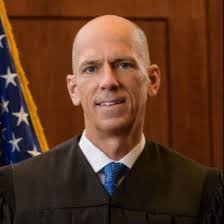
    The order — issued by Judge Eric C. Tostrud, a Trump-appointed United States District Court judge — comes amid escalating tensions between Minnesota’s investigative authorities and federal agencies over transparency, accountability, and jurisdiction in officer-involved shootings. 


    The Court’s Intervention

    In his temporary restraining order (TRO), Judge Tostrud prohibited DHS, Immigration and Customs Enforcement (ICE), CBP, and U.S. Border Patrol from “destroying or altering evidence related to the fatal shooting involving federal officers” near 26th Street and Nicollet Avenue in South Minneapolis. 

    The lawsuit was brought forward jointly by the Minnesota Bureau of Criminal Apprehension (BCA), the Hennepin County Attorney’s Office, and the Minnesota Attorney General’s Office. At its core, the legal action seeks to preserve crucial evidence in a case where state investigators say they’ve been deliberately excluded by federal authorities. 

    “We’re in uncharted territory here,” BCA Superintendent Drew Evans said during a Saturday press conference. “It’s been a long-standing understanding, both within our state and across the country, that entities like the BCA — which conduct the vast majority of officer-involved shooting investigations — are asked to investigate federal agents involved in shootings. That’s not happening here.” 


    DHS and CBP Under Scrutiny

    This case is not an isolated incident. Earlier in January 2026, another ICE officer fatally shot Renee Good, also 37, in Minneapolis. In that case, state and local law enforcement — including the BCA — were similarly shut out of the investigation. 

    Critics say this pattern reflects a deliberate strategy by DHS and CBP to avoid independent oversight in fatal use-of-force cases. According to reporting by The Washington Post (source) and The Hill (source), federal agencies have increasingly resisted state-level investigative involvement, citing “internal protocols” and “operational security.” 

    However, civil rights advocates argue that this approach undermines public trust and may violate accountability norms established after decades of efforts to ensure transparency in officer-involved shootings. 


    The Trump Administration’s Legacy on Federal Accountability

    Judge Tostrud’s involvement adds a political layer to the controversy. Appointed by former President Donald Trump in 2018, Tostrud has historically sided with federal agencies in jurisdictional disputes. Yet, in this case, his TRO represents a rare rebuke of DHS’s handling of evidence in deadly force incidents. 

    It’s worth noting that the Trump administration repeatedly expanded the authority of federal immigration and border enforcement agents while limiting state oversight. According to ProPublica (source), these policies — including allowing CBP officers broader latitude in use-of-force situations — have been linked to increased incidents of deadly shootings involving federal agents. 


    Minnesota Leaders Demand Transparency

    Following the court ruling, Attorney General Keith Ellison issued a sharp statement: 

    “Alex Pretti was killed by DHS agents in broad daylight in front of all