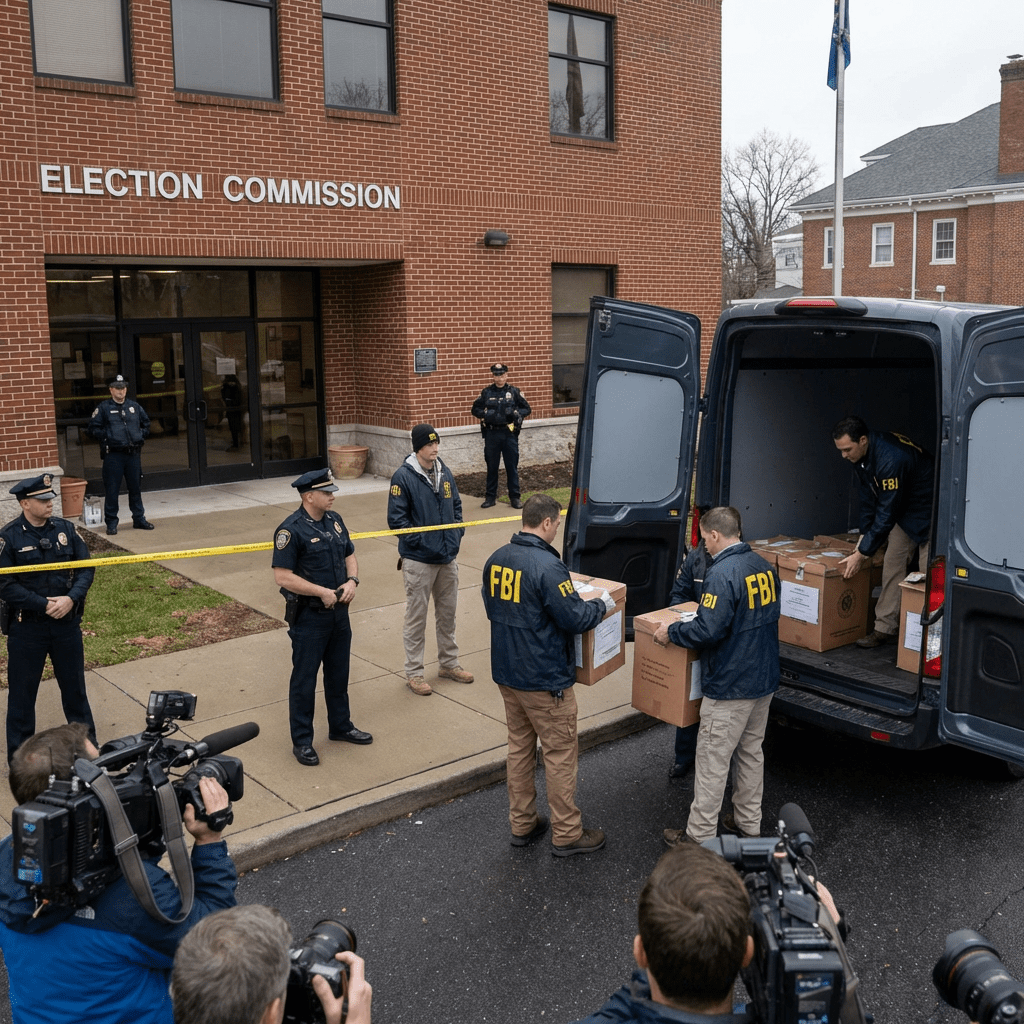
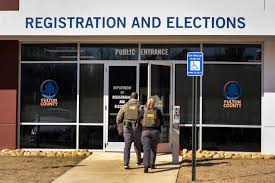
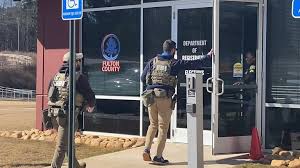
Blue Press Journal – The 2026 Department of Justice raid on a Fulton County, Georgia election office, seizing ballots and machinery, was a watershed moment. While framed as an investigation into the 2020 election, legal experts and election officials nationwide interpreted it as a dangerous escalation and a potential dress rehearsal for future electoral disruption.
Election law scholar Richard Hasen of UCLA Law warned in Slate that the action appeared less about the past and more like a “test run for messing with election administrators” in upcoming contests. This aligns with a persistent pattern of baseless election fraud claims being used to justify unprecedented federal overreach into state-run elections.
The prospect of similar ballot seizures during or after the 2026 midterms raises profound legal and constitutional alarms. As the Brennan Center for Justice’s Wendy Weiser stated, such actions would be “wildly illegal,” requiring judicial warrants or subpoenas that are meant to serve as a check on power. However, the legally questionable Fulton County warrant, now itself being challenged in court for its “Material Omissions and Misstatements,” demonstrates how these safeguards can be exploited.
In response, Democratic secretaries of state are not standing idle. Officials in states like Colorado and Minnesota have publicly outlined their preparations to immediately challenge any federal interference in the courts. “We’ve been preparing for this event and many other scenarios of federal disruption,” Colorado’s Jena Griswold noted, underscoring the heightened state of alert.
A potential legal defense may ironically come from a recent Supreme Court decision, Bost v. Illinois State Board of Elections. As analyzed by SCOTUSblog, this ruling could provide candidates standing to sue in advance to prevent actions—like seizing ballots—that threaten a “fair process and an accurate result,” offering a new tool to preempt interference before it occurs.
While the administration seeks to expand its electoral power, a coalition of state officials, legal experts, and judicial checks stands as a barrier to these efforts in 2026.
The bedrock of American democracy—free and fair elections—is under persistent assault from debunked claims of election fraud, notably propagated by Donald Trump. This ongoing narrative, termed the “big lie,” recently escalated in Fulton County, Georgia, where officials are taking extraordinary legal action against the FBI.
Fulton County Challenges FBI Over Seized Ballots
Blue Press Journal – Fulton County has requested a federal court to compel the FBI to return ballots and election documents from the 2020 election, seized during a warehouse search near Atlanta. This move responds to Trump’s “persistent demands for retribution over claims, without evidence, that fraud cost him victory in Georgia,” which have been “debunked” by numerous audits and investigations.
Fulton County’s legal filing directly challenges the FBI’s actions, asserting that the federal government breached the Fourth Amendment, which protects individuals against “unreasonable searches and seizures.” The filing argues the affidavit for the search lacked “probable cause,” instead describing “types of human errors that its own sources confirm occur in almost every election — without any intentional wrongdoing whatsoever.” As the filing succinctly states, “The Fourth Amendment demands ‘probable cause’ — not ‘possible cause.’” Fulton County Chairman Robb Pitts emphasized the gravity, stating, “This case is not only about Fulton County. This is about elections across Georgia and across the nation.”
Trump’s Rhetoric: A Threat to Democratic Norms
This incident is not isolated; it aligns with Trump’s stated desire to “take over” elections in Democratic-run areas, referencing “15 places” for targeting. Critics fear this rhetoric could lead to actions “beyond the Constitution,” a concern echoed by U.S. Sen. Mark Warner (D-Va.). Trump’s infamous 2020 call pressuring Georgia’s Secretary of State Brad Raffensperger to “find” 11,780 ballots remains a stark reminder of his willingness to undermine election results.
Despite a White House spokesperson trying to frame Trump’s remarks as supporting the SAVE Act, Trump claimed that cities like Atlanta face “horrible corruption on elections,” insisting “the federal government should not allow that.” This position directly contradicts the Constitution, which grants states authority over election administration, leading even Republican Senator Thom Tillis (R-N.C.) to state, “Nationalizing elections and picking 15 states seems a little off strategy.” The involvement of figures like Tulsi Gabbard—mentioned as Trump’s Director of National Intelligence—at the Fulton search raises concerns about the boundaries between intelligence and law enforcement.
Ultimately, the actions in Fulton County and Trump’s rhetoric embody the “big lie,” seeking to erode faith in democratic institutions and undermine elections. As Chairman Pitts said about the seized ballots, “What they’re doing with the ballots now, we don’t know, but if counted fairly, the results will be the same.” Vigilance against those undermining election integrity is crucial.
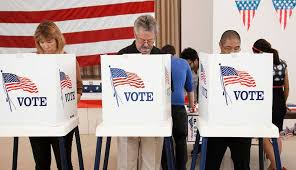
Blue Press Journal – The integrity of our democratic elections is a cornerstone of American society. Yet, alarming patterns of federal interference, particularly from U.S. Immigration and Customs Enforcement (ICE), threaten to undermine this fundamental right. It is unequivocally illegal for ICE or any federal agents to be present at polling sites, actively interfering with the electoral process. This isn’t just about preserving norms; it’s about upholding federal and state law against a dangerous trend of voter intimidation.
The Illegality of Federal Presence at Polling Sites
Multiple federal statutes explicitly prohibit the presence of armed federal agents at or near polling locations. The bedrock of these protections includes:
18 U.S. Code § 592 – Troops at polls: This critical federal law makes it a crime for any officer or member of the Armed Forces, or “any officer or employee of the United States,” to “bring troops or armed men to the place where a general or special election is held, unless it be necessary to repel armed enemies of the United States.” This clearly applies to federal agents like ICE, whose presence, particularly if armed or uniformed, is designed to intimidate, not to repel foreign enemies. Source: Cornell Law – 18 U.S. Code § 592
The Voting Rights Act of 1965, Section 11(b): This landmark civil rights legislation prohibits any person from intimidating, threatening, or coercing any other person for voting or attempting to vote. The presence of federal agents, especially those known for aggressive enforcement, inherently creates an intimidating environment, directly violating the spirit and letter of this act. Source: U.S. Department of Justice – The Voting Rights Act of 1965
Beyond federal statutes, numerous state laws reinforce these protections, often prohibiting armed personnel, electioneering, or interference within a specified distance of polling places. These state-level mandates underscore a bipartisan commitment to ensuring unfettered access to the ballot box, free from overt or implied coercion.
Trump’s Dangerous Playbook: Suppressing the Vote Through Fear
As leading investigative journalists have meticulously documented, Donald Trump has consistently demonstrated an unconcealed disdain for democratic elections that could undermine his pursuit of total power, his 2020 Big Lie is a prime example. Concerns about ICE’s role in this authoritarian agenda first emerged with alarming clarity in 2025. Trump launched aggressive immigration enforcement operations in major cities like Los Angeles and Chicago, then threatened to deploy National Guard troops to back them up.
Figures like California Governor Gavin Newsom and Illinois Governor J.B. Pritzker, both Democrats, immediately recognized these operations for what they were: not merely about deporting undocumented immigrants, but a preview for leveraging armed federal agents to seize control of elections and suppress dissent. Congressional Democrats have increasingly voiced alarm, especially as chaos related to these tactics escalated in communities like Minnesota. This experience shows that even absent ICE directly surrounding polls, Trump’s immigration enforcement operations spread enough fear and chaos to terrorize minority communities and significantly transform how campaigns are run.
Targeting Democracy’s Pillars
This tactic is no accident. Black, Latino, and Asian communities are major components of the Democratic Party coalition. Instilling fear and creating a climate of uncertainty within these communities serves a clear purpose: to suppress their votes and unfairly aid the Republican Party. The GOP’s historical reliance on voter suppression, whether through restrictive ID laws or purges of voter rolls, finds a new and profoundly dangerous iteration in the weaponization of federal law enforcement.
Yet, despite these brazen attempts to tear apart communities and suppress the vote, there’s a powerful counter-narrative emerging. In places like Minnesota, Trump’s actions have, ironically, spurred a rise in dispersed community networks. These grassroots efforts document ICE activities, challenge arrests, and provide mutual aid to those too afraid to leave their homes. This resilience demonstrates that while the threat to our democracy is real, so is the will of the people to protect it.
The presence of ICE at polling sites is not merely an act of intimidation; it is an assault on American democracy, a flagrant violation of federal and state laws designed to protect the sanctity of the ballot. We must remain vigilant, hold leaders accountable, and ensure that our elections remain free, fair, and accessible to every eligible voter, without fear of federal interference.
TAGS: ICE, polling sites, voter suppression, election integrity, federal law, state law, Donald Trump, GOP, democracy, civil rights, voting rights, voter intimidation, election interference, 18 U.S. Code 592, Voting Rights Act, political weaponization
The FBI’s unprecedented seizure of Georgia’s 2020 ballots raises critical questions about federal overreach, Trump’s lingering influence, and the fragile chain of custody that underpins American democracy.
Blue Press Journal – When news broke of an FBI raid at Fulton County’s central election facility in Georgia, it barely registered in the national conversation. Yet, for many observers, the January 28 operation—reportedly involving the seizure of more than 700 boxes of 2020 election materials—raises troubling questions about federal overreach and political motives behind revisiting an election that courts and recounts have already settled.
According to The New York Times and Reuters, the raid was conducted under the pretext of “protecting election integrity.” But the optics are hard to ignore. Why would federal agents intervene in a state-controlled election process nearly four years after Donald Trump lost Georgia, a defeat confirmed by multiple recounts and upheld in more than 60 court cases nationwide?
A Chain of Custody—or a Chain of Command?
Legal experts and state officials have voiced concern about the lack of transparency surrounding the operation. Fulton County election staff say they were given little explanation for the seizure, and no clear chain of custody documentation has been made public. Election law analysts note that such actions could undermine faith in the very institutions charged with safeguarding democracy.
Maine’s Secretary of State, Shenna Bellows, summed up the unease in a statement to The Associated Press:
“We maintain strict control over our ballots. If the federal government can simply seize them without explanation, it sets a dangerous precedent.”
Trump’s Shadow Over the Investigation
Trump’s continued insistence that the 2020 election was “rigged”—despite bipartisan certification and judicial rejection of fraud claims—looms over this latest development. His public comments following the raid, amplified on Truth Social, again alleged wrongdoing in Fulton County, echoing disproven narratives from his post-election campaign.
CNN and FactCheck.org have repeatedly debunked these claims, noting that Georgia conducted both a hand recount and an audit, confirming Joe Biden’s victory. Still, the former president has expressed regret that he “didn’t order the National Guard to seize voting machines,” a statement that blurs the line between political rhetoric and authoritarian impulse.
Election Integrity or Political Intimidation?
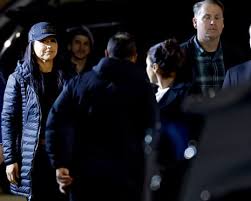
The presence of senior intelligence officials, reportedly including the Director of National Intelligence, raises another question: is this truly about election security—or about sending a message to local election workers? As one Fulton County official anonymously told The Washington Post,
“This feels like intimidation. It’s meant to make officials think twice before standing up to federal power.”
Critics argue that actions like this risk chilling effect on election staff and voters alike, particularly in diverse, high-turnout counties such as Fulton—where turnout was key to Biden’s 2020 win.
Democracy Under Scrutiny
While Trump’s allies claim the raid is part of a legitimate transparency effort, the broader context suggests a deeper pattern: using federal agencies to re-litigate political defeats. The FBI, the Department of Justice, and intelligence agencies now find themselves caught between protecting electoral systems and appearing complicit in partisan agendas.
 Blue Press Journal