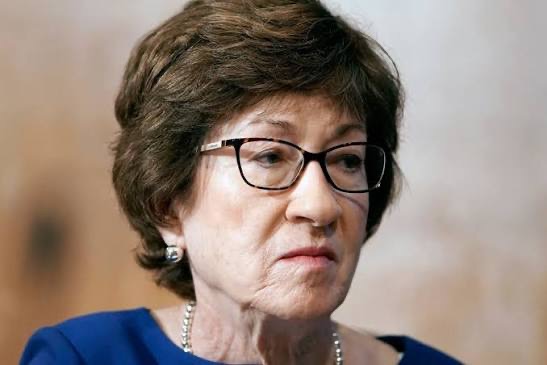
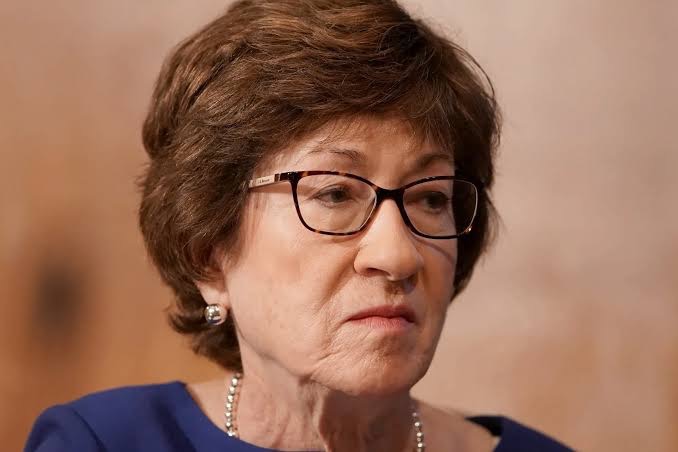
When Maine residents vote, they need to demand integrity and transparency from their senior. However, Senator Susan Collins has consistently been at odds with transparency and has attracted the FBI’s suspicion on multiple occasions. Even though her campaign’s dark money contributions have been scrutinized in the past, it seems that Mrs. Collins has managed to secure a steady stream of untraceable funds. Thanks to Donald Trump’s DOJ they buried the investigation.
According to recent reports, there is a minimum of $7.4 million in dark money that has been allocated to Collins’ campaign. Additionally, these contributions closely mirror the pattern of suspicious shell-donor payments that had previously aroused FBI’s interest. If true, these allegations could severely damage Collins’trust as a senator since her actions suggest that she may be willing to accept large sums of money from unknown sources in exchange for political favors.
Senator Collins may want to present herself as a fair and impartial political figure, but the facts speak for themselves. Her campaign’s finances have been invaded by middlemen and billionaires for the past several years, and it appears that Mrs. Collins is quite comfortable with this.
The amount of dark money in the system is utterly unacceptable, as it has the potential to swallow up any minority donations from Mainers’ voices. Susan Collins needs to prove to the people of Maine that she can be a trusted political figure in the state, and not bought to the highest bidder!
A new ProPublica report details a potentially explosive source of controversy in the re-election bid of Sen. Susan Collins (R-Maine) , shifting Democratic criticism of the senator away from her legislative voting record and towards allegations of significant political corruption.
The report follows up on an investigative trail beginning with Martin Kao, the former CEO of defense contractor Navatek, a Hawaii-based company. At the time of the 2022 campaign finance indictment, Kao was cooperating with federal authorities and met with Scott Reed, who headed a super PAC that had been associated with Collins. Kao allegedly offered to provide a $500,000 donation to the super PAC, which would have circumvented contributions from government contractors to get around bans on donations from government contractors in order to secure dozens of millions of federal naval contracts for Navatek. Reed supposedly assured Kao that the senator would be aware of where the money came from, and internal emails later suggested that Collins was committed to obtaining $32 million in contracts.
FBI agents had investigated the possibility of a bribery investigation connected to these allegations, but the probe died out after the new election cycle began, and federal law enforcement purges, particularly those orchestrated by the Trump administration, that undermined public corruption investigations. An FBI spokesperson said that the bureau ultimately found nothing implicating Collins or her campaign.
Collins’ office and campaign have strongly rebutted the allegations, describing Kao’s statements as “outlandish” and noting that the campaign was never a target of FBI investigation, cooperating fully with authorities.
Despite these denials, the report threatens to derail the final weeks of the Maine Senate race, with Collins’ Democratic rival, Troy Jackson, quickly capitalizing on the story, claiming the allegations represented “corruption of the highest order” and calling for full transparency, which is sure to be a major issue for voters ahead of election day.
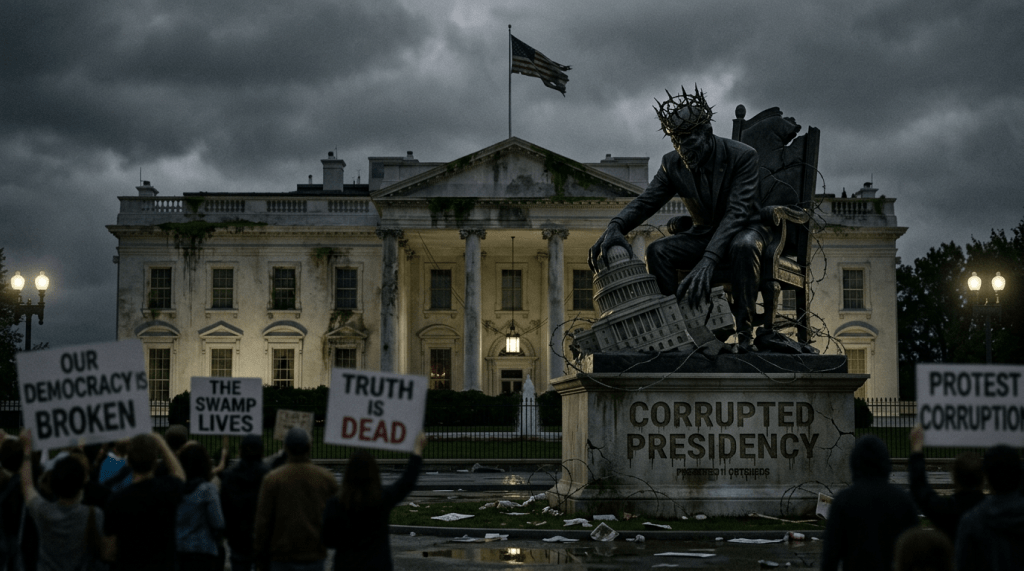
As I look at the current administration’s recent direction, something troubling stands out: the line between running the country and personal financial gain keeps getting harder to see. This isn’t just ordinary governing, it looks like President Tump is linking his decisions to his own investments.
It’s hard to ignore the evidence. Again and again, Donald Trump’s stock moves seem to either predict or closely follow moves by his administration that help those same holdings. There’s the Nvidia stock purchase right before the Department of Commerce green-lit chip exports to China, buying Dell shares just ahead of public praise for the brand, and glowing statements about Apple soon after investing in the company, these moments keep lining up almost too well.
When you put it all together, it looks like the presidency itself is being used to grow personal wealth. Maybe it’s no surprise that Forbes recently pointed out a $1 billion jump in the president’s net worth in the last year. If this happened when Biden or Obama were president, congress would be having nonstop investigators over it. Yet, inside this administration, it’s just accepted as business as usual. Main Street media’s response, second page news.
However, the financial controversy extends beyond the realm of stocks. There exists a new $1.7 billion “anti-weaponization fund” allocated within the Department of Justice, established following a settlement from a $10 billion lawsuit the president’s own litigation against his own government a legal strategy that detractors deem devoid of merit.
Here’s the real worry: what happens with that money? A lot of people are concerned those taxpayer dollars will support individuals convicted for their roles in the January 6 Capitol riot. Using public funds to help people who tried to disrupt democracy isn’t just a budget issue, it’s a serious ethical breach. For many, this turns the U.S. treasury into a reward of cash for a group of convicted criminals. That’s before the president pardoned them, but the ethics and legality of that is for another article.
This isn’t just partisan drama. It cuts right into the heart of what the presidency is supposed to mean. When public trust becomes just another asset and government policy gets treated like a tool for personal profit, the foundations of government start crumbling and we are seeing it now. Voters are noticing: New York Times/Siena College polls now show the president’s approval rating slipping to new lows for his second term. People aren’t just worried about gas prices or groceries, they’re anxious about the future of the country itself.
A president’s job is to look out for the public, not cash in on power. When personal gain and shielding friends take priority over the common good, it’s Americans who end up paying the price, 1.7 billion to be exact. We all have to ask, is this what we want from our leaders, or is it time to demand better ethics and transparency? No matter where you stand politically, the signs of deep corruption should make anyone who cares about democracy sit up and take notice.
Blue Press Journal – Former Georgia Representative Marjorie Taylor Greene, once a staunch ally of Donald Trump, has publicly turned against the former president, calling his “Make America Great Again” (MAGA) slogan a “lie.” In a recent interview with journalist Kim Iversen, Greene sharply criticized Trump’s second administration, claiming it prioritizes big donors and corporate interests over ordinary Americans.
According to Greene, the MAGA agenda has become a vehicle for wealthy benefactors who bankroll Trump’s political operations. “It was a big lie for the people,” she said, noting that Trump’s closest financial supporters are the ones “getting special favors, government contracts, and even pardons.”
Greene’s comments come after her highly publicized resignation from Congress, where she cited deep divisions within the GOP, concerns about rising health care costs, and frustration over the U.S. role in the Gaza conflict. Her departure underscores a broader rift within the Republican Party as more conservative figures question Trump’s leadership and political motives.
Reports from outlets such as Reuters and The Washington Post have corroborated Greene’s claims that Trump has increasingly leaned on private donors to fund projects like a planned White House ballroom and the 250th anniversary celebration of U.S. independence—initiatives critics say blur the line between public service and personal gain.
Greene also accused Trump of focusing on foreign policy that benefits corporate and global interestsrather than addressing domestic challenges. “It’s the big corporations and foreign countries running the show,” she warned, describing what she believes is a “new world order” emerging under Trump’s leadership.
Her remarks add to a growing body of criticism suggesting that the MAGA movement no longer represents working-class Americans, but rather the wealthy elite it once claimed to oppose.