Tag: Iran conflict

  • Trump’s Attack on Pope Leo XIV Is a Test of Faith for Catholic Conservatives

    Historic stone church with tall steeple, stained glass, and wooden doors

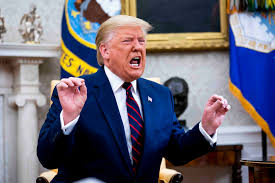
    I never thought I’d see an American president openly attack the Vicar of Christ. Yet that’s where we are—President Donald Trump, after promising to protect the dignity of every person, is launching unprecedented attacks against Pope Leo XIV. Meanwhile, Vice President J.D. Vance, a new Catholic, jumps in with theological arguments that sound more invented than inherited.

    Calling this just “non-presidential” doesn’t begin to cover it. It’s a basic misunderstanding of what American leadership and Catholic teaching really are. When Trump and Vance tell the Pope to stay out of discussions on war, they show they’ve missed the point entirely. They treat the Successor of Peter as just another pundit, not the guardian of a moral tradition that stretches back millennia.

    Vance, especially as someone who just joined the Church, should understand this. Catholic faith isn’t a buffet—you’re not supposed to pick and choose the teachings that suit your political goals. The doctrine of just war theory, shaped and refined from Augustine to Aquinas for over a thousand years, doesn’t bend for convenient military actions. The Catechism lays it out: “the use of arms must not produce evils and disorders graver than the evil to be eliminated.”

    That gets us to the root issue: the President’s apparent conflict with Iran. The administration claims the Pope has gone too far by commenting on “politics.” But the Pope isn’t speaking as a politician—he’s speaking as Christ’s representative, reminding us, “just wars are defense and after no other road is possible.” Wars aren’t something you choose if there’s still a chance for negotiation.

    Several diplomatic sources confirm that talks with Iran weren’t just possible—they were close to working out. Choosing violence while peace is still possible isn’t self-defense. It’s aggression dressed up as strength. The Pope, whose duty is to defend human life, can’t stay silent while thousands are put at risk because of one man’s pride.

    “The Church is based on morality, peace, and how we treat our fellow man.” That’s what I remind myself when I read the White House spin. This isn’t a partisan catchphrase—it’s what the Gospel actually says. When the Vicar of Christ speaks on war, he’s not acting like a pundit. He’s voicing two thousand years of Christian opposition to unjust violence.

    So, to Catholics still defending these attacks: look inward. Ask yourself if your political loyalty has overtaken your religious values. Be honest—would you defend this rhetoric if it targeted your own parish priest who was urging peace? The faith Vance embraced demands more than showing up on Sundays. It calls for real courage—standing up to power when it tramples on human dignity.

    The Church has survived rulers who thought they stood above moral law. It will survive this president, too. The real question is whether American Catholics will come through this with their consciences intact. We can’t serve two masters. When Trump’s administration demands silence from the Pope on war and peace, they’re asking us to ignore Christ’s teachings.

    I stand with the Pope. I choose tradition. I choose innocent lives over the bruised ego of a president who confuses restraint with weakness. The faith makes it clear: war must always be the last resort—not the first option. Any Catholic who takes their faith seriously needs to recognize that truth, even if it means sacrificing political convenience.

  • Trump Dismisses War Crimes Accountability While Compromising Classified Military Operations

    Blue Press Journal – During a volatile press briefing today, President Donald Trump exhibited a concerning disregard for both international humanitarian law and fundamental operational security, rejecting questions about potential Geneva Conventions violations while inadvertently disclosing sensitive tactical details despite direct warnings from General Dan Caine, Chairman of the Joint Chiefs of Staff.

    When confronted by a New York Times correspondent about the legal implications of targeting civilian electrical grids and transportation infrastructure—clear violations of the Geneva Conventions—Trump deflected substantive inquiry by questioning the outlet’s credibility instead of addressing the issues, according to The Washington Post and The Guardian. His dismissal of established international law protections prompted him to interrupt the reporter, refusing to engage with the fundamental principle that attacks on non-military infrastructure constitute war crimes. Trump’s assertion that he was “not at all” worried about such legal boundaries indicates a troubling departure from American adherence to armed conflict laws, especially with rising tensions regarding potential military intervention in Iran.

    Compounding these legal controversies, Trump simultaneously compromised operational security when discussing the recent F-15 pilot rescue mission. Despite General Caine’s explicit attempt to protect classified information regarding deployment numbers—emphasizing his preference to maintain secrecy—the President immediately disclosed that “hundreds” of personnel participated, contravening his own assurance of discretion. As Reuters and the Associated Press reported, such casual treatment of tactical details contradicts standard intelligence protocols designed to protect service members and future special operations.

    National security experts cited by Axios and CNN warn that this pattern of rejecting legal constraints while mishandling sensitive intelligence undermines American moral authority and tactical advantage, raising serious questions about executive judgment regarding potential military engagement in the Middle East.

  • Trump’s Shadow War: Are U.S. Boots on the Ground in Iran Inevitable?

    7% AMERICANS SUPPORT TROOPS IN IRAN WAR. Source: Public Opinion Poll Data (Stylized).

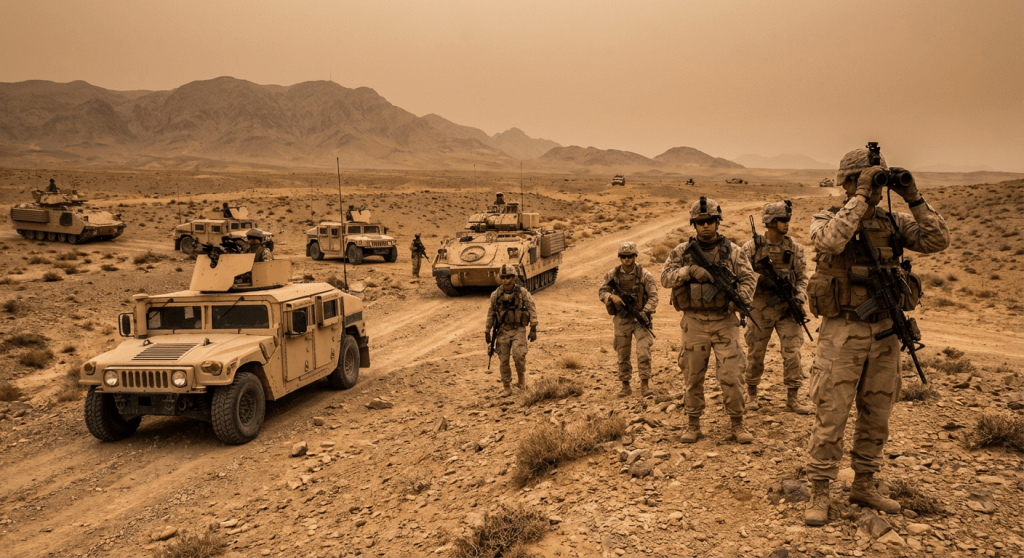
    Blue Press Journal – Despite President Trump’s insistence that he is “not putting troops anywhere,” The Hill reports the Pentagon is rapidly deploying thousands of Marines to the Middle East, fueling speculation that ground forces will soon enter Iran. Military sources confirm the 11th Marine Expeditionary Unit, comprising over 2,200 personnel, is heading to U.S. Central Command aboard the USS Boxer, even as the administration publicly denies escalation plans.

    The contradiction highlights growing Republican anxiety over the conflict’s third week. GOP lawmakers now engage in semantic contortions, with Rep. Haridopolos suggesting to C-SPAN that occupying Kharg Island—handling 90% of Iranian oil exports—would not constitute “boots on the ground.” Meanwhile, Reuters reports that 65% of Americans believe Trump will order a large-scale ground war, yet only 7% support such action. With casualty counts rising to 232 wounded and 13 killed, according to defense officials, the administration’s refusal to pursue ceasefires while accelerating troop deployments reveals a dangerous disconnect between military reality and political deception.

  • Trump’s Russia Sanctions Relief Exposes Iran War Fallout

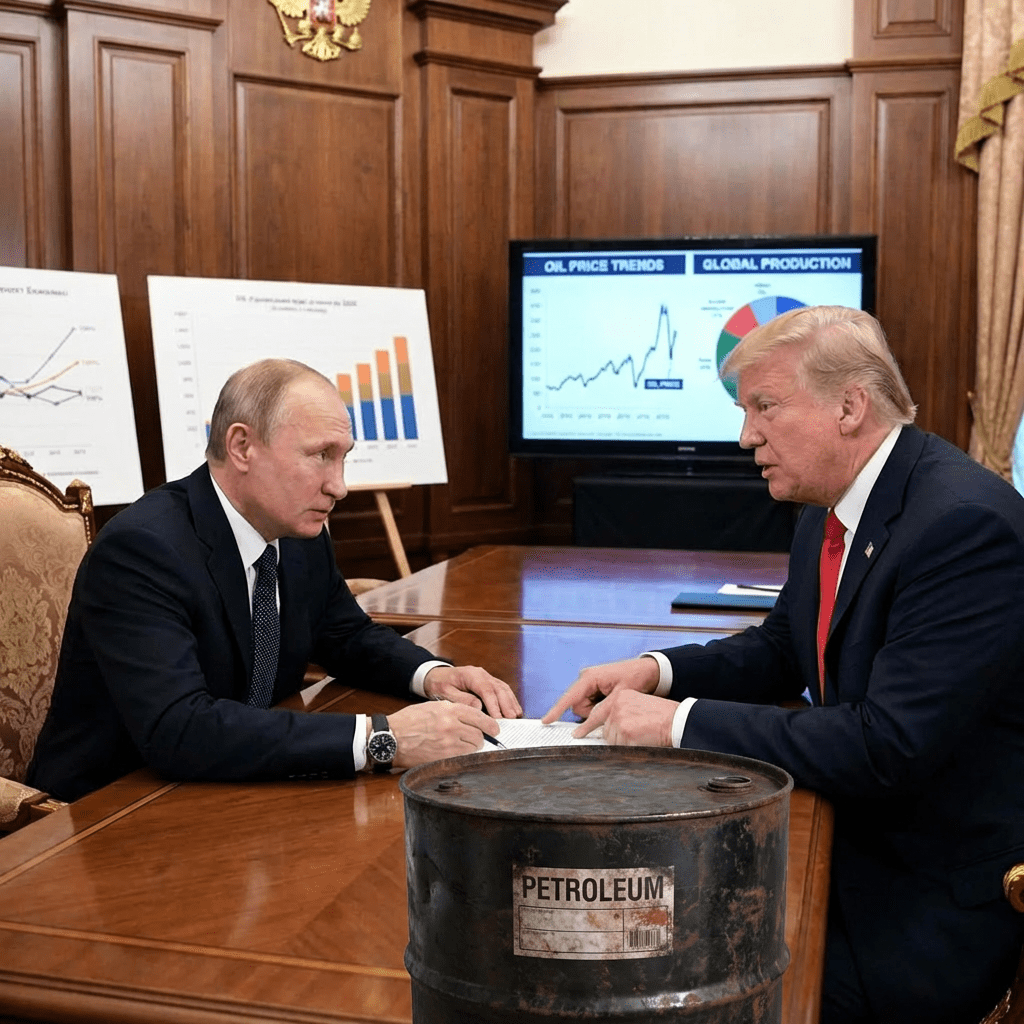
    Trump’s gift to Vladimir Putin

    Donald Trump and Vladimir Putin reviewing documents and economic charts during a formal meeting.

    Blue Press Journal – The Trump administration’s temporary lifting of Russian oil sanctions represents a stark admission that its Iran military campaign is backfiring economically. In a move rich with geopolitical irony, the White House is easing restrictions on Moscow—a direct concession to Vladimir Putin—to counteract crude price spikes triggered by the President’s own Persian Gulf escalation (The Guardian).

    The decision undermines years of bipartisan measures designed to punish Russia’s Ukraine invasion while revealing acute strategic shortsightedness. According to CNN, officials failed to contingency-plan for Iran’s threatened Strait of Hormuz closure despite this scenario being “a bedrock principle of US national security policy for decades” (CNN). By treating Putin’s regime as an economic “pressure relief valve,” Trump prioritizes electoral survival over principled opposition to Russian aggression, deepening scrutiny of the administration’s crisis planning and longstanding Kremlin entanglements.

  • Trump’s Self‑Inflicted Economic Spiral Undermines GOP Prospects

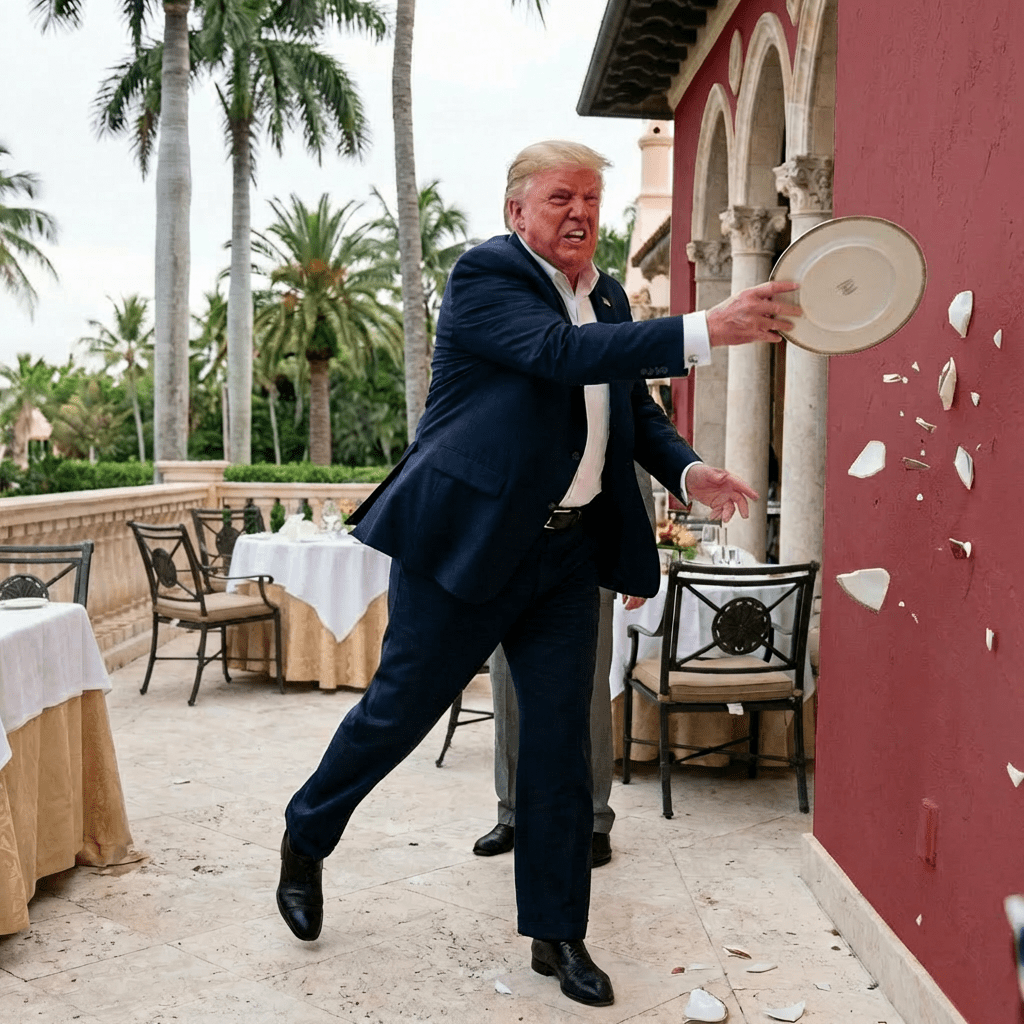
    Figure resembling Donald Trump throwing a plate against a wall as shocked onlookers watch.

    Blue Press Journal – The past week has laid bare the consequences of President Trump’s overreach—a mix of policy missteps and self‑inflicted damage that is tanking his poll numbers and eroding congressional support. A stagnant labor market, combined with skyrocketing gas prices tied to the Iran‑U.S. conflict, is pushing the U.S. economy toward stagflation, a scenario Wall Street analysts now warn could become a reality (Reuters, March 5).

    Trump’s immigration agenda, already unpopular, hit a new low with the abrupt removal of DHS Secretary Kristi Noem. Critics argue the move was less about policy competence and more about political retaliation, exposing the administration’s chaotic leadership style  (The New York Times, March 4). The fallout has amplified voter frustration, as households grapple with higher gasoline costs that directly counter the president’s “America First” promises to ease living expenses.

    Meanwhile, the labor market shows little sign of recovery. The Bureau of Labor Statistics reported a flat employment growth rate for the second consecutive month, while wages remain stagnant  (BLS, March 2). This paradox of weak job creation and rising inflation undermines the administration’s narrative that its tax cuts and deregulation are revitalizing the economy.

    Polls reflect the shifting tide. A recent Quinnipiac survey placed Trump’s approval at a historic low, with many Republicans citing “economic anxiety” as the primary concern  (Quinnipiac, March 3). As the GOP struggles to keep voters focused on its agenda, the cascade of bad news threatens to derail any attempt to regain momentum before the midterm elections.