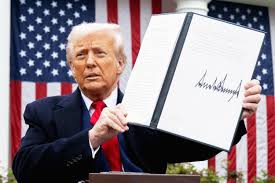
Blue Press Journal – A recent Supreme Court decision has delivered a significant legal setback to former President Donald Trump’s trade agenda, curtailing his ability to unilaterally impose tariffs under the International Emergency Economic Powers Act (IEEPA). However, this judicial review appears to be little more than a momentary speed bump for an administration determined to reconstitute its protectionist apparatus, with grave implications for American consumers and businesses.
The 6-3 ruling, issued Friday, clarified that while IEEPA grants the president power to regulate trade for national security in emergencies, it does not extend to levying tariffs – a power reserved exclusively for Congress. This decision validates the concerns of thousands of businesses, potentially opening avenues for tariff refunds. Yet, Trump, undeterred, quickly announced his intent to employ alternative legal frameworks, vowing “much higher” tariffs for any nation perceived to be challenging his trade policies.
Economists like Diane Swonk of KPMG suggest the White House anticipated this outcome, noting the administration has been “preparing for this” by identifying other levers. Trump’s immediate response included moving to impose a 10 percent universal tariff via Section 122 of the Trade Act of 1974, ostensibly to address balance of payments issues – a justification many experts find dubious. More enduringly, the administration is now pivoting towards Section 301 of the Trade Act of 1974 and Section 232 of the Trade Expansion Act of 1962.
Section 301 empowers the president to impose tariffs in response to a foreign country’s unfair trade practices. This provision has a lengthy history, notably used by Trump against China during his first term. Its established precedent makes it a formidable tool, with experts like Edward Alden of the Council on Foreign Relations believing courts are unlikely to second-guess executive judgment under this authority.
Meanwhile, Section 232 grants expansive power to impose tariffs on products deemed a threat to national security. Trump previously applied this to steel and aluminum imports, later extending it to goods like autos, lumber, and even furniture, often with questionable national security justifications. While some applications of Section 232 appear tenuous, courts historically defer to presidential assessments of national security, making challenges difficult.
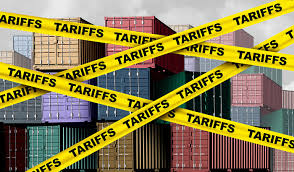
Crucially, regardless of the legal mechanism, tariffs are not paid by foreign governments or producers; they are a tax levied on domestic importers, which is then passed directly to American consumers in the form of higher prices. This hidden tax reduces purchasing power and stifles economic growth. As Goldman Sachs analysts Alec Phillips, Elsie Peng, and David Mericle warn, this constant recalibration of trade policy introduces significant volatility, disrupting global supply chains and creating uncertainty for businesses. The Supreme Court may have pruned one branch of Trump’s tariff strategy, but the root system remains deeply entrenched, promising continued turbulence and higher costs for ordinary Americans.
 Blue Press Journal