National Counterterrorism Director Resigns Over Trump’s “Manufactured” Iran Conflict
Blue Press Journal
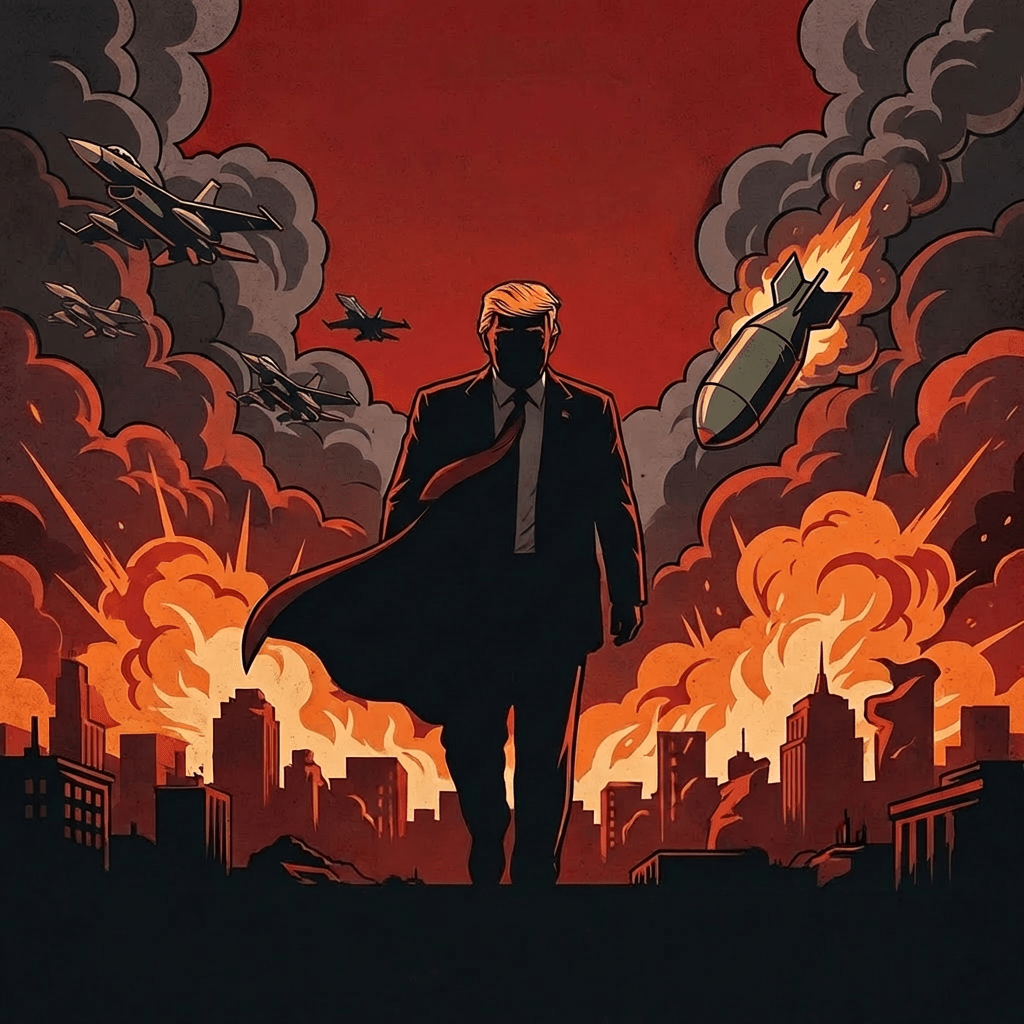
The National Counterterrorism Center (NCTC) is without its director following Joe Kent’s dramatic resignation over President Donald Trump’s escalating military campaign against Iran. In a scathing departure letter obtained by multiple outlets, the former Green Beret accused the administration of launching an unjustified war under foreign influence, marking the highest-level protest yet against Trump’s third-week offensive in the Persian Gulf.
Kent, who assumed the post last summer under Director of National Intelligence Tulsi Gabbard, charged that the President was manipulated into military action by Israeli officials and domestic lobbying interests. According to The Washington Post, Kent asserted that Tehran presented “no imminent threat” to American security, contradicting administration justifications for a conflict that has already claimed thirteen U.S. service members’ lives and injured approximately 200 others.
“The same tactics used to draw us into Iraq are being deployed again,” Kent wrote, referencing what he called a coordinated “misinformation campaign” by Israeli leaders and media allies. The Associated Pressnoted that Kent’s letter drew parallels between current Iran policy and the 2003 Iraq invasion, while alleging Israeli involvement in “manufacturing” regional conflicts—claims that have drawn fierce rebuttals from the White House.
The resignation underscores growing contradictions in Trump’s “President of Peace” branding, a central campaign promise now overshadowed by aerial bombardments and failed diplomacy. Despite Trump’s pledge to end “endless wars,” his unilateral withdrawal from the Iran nuclear accords and reliance on non-expert envoys—real estate figures Steve Witkoff and Jared Kushner—paved the path to confrontation, The New York Times reported.
With American casualties on the rise and diplomatic avenues shut down, Kent’s resignation underscores a growing institutional opposition to a conflict he cautioned provides “no advantage to the American people.”
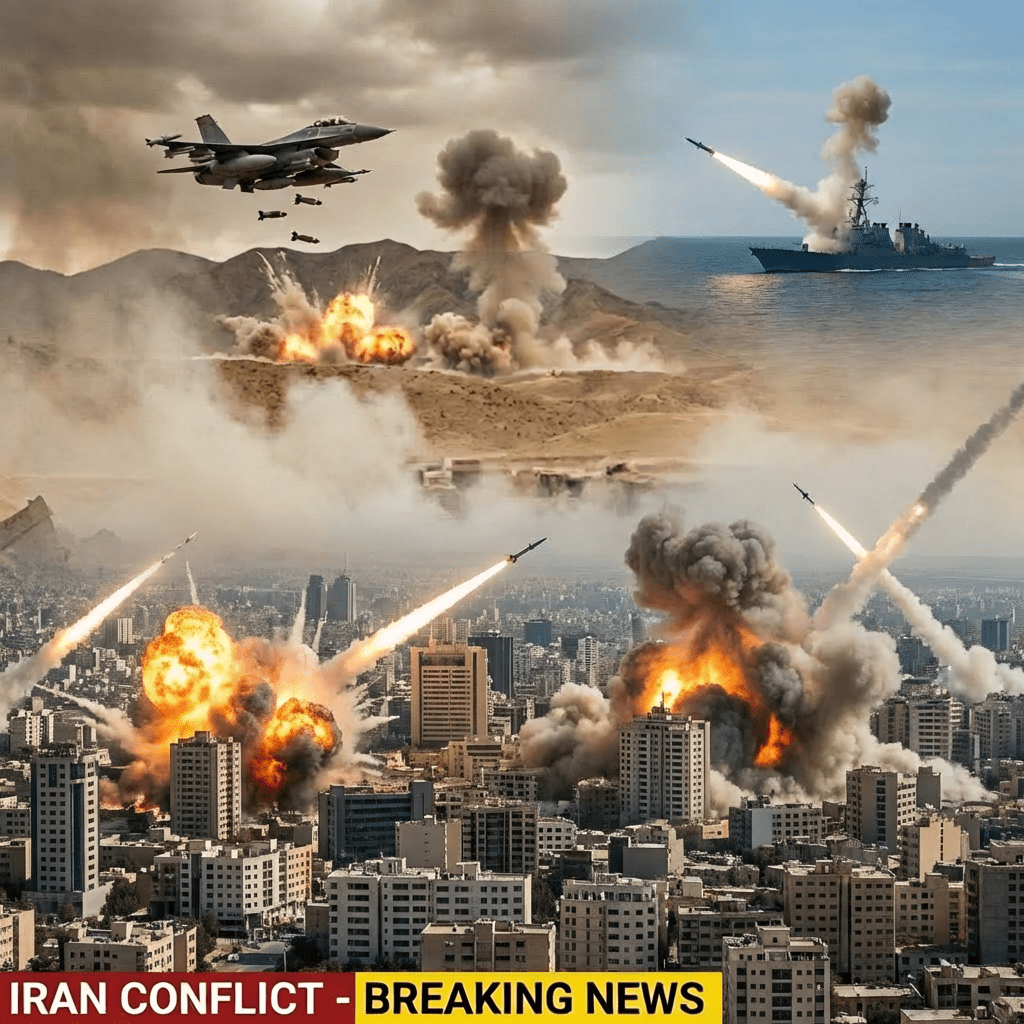
The drums of war are beating once again, but the price tag attached to a kinetic confrontation with the Islamic Republic of Iran is a figure that the American taxpayer may not be prepared to stomach. Donald Trump authorized a broad-scale strike today, the immediate financial, military, and logistical drain would be astronomical, potentially eclipsing the early phases of the Iraq and Afghanistan interventions.
In a move critics describe as a reckless escalation that prioritizes “maximum pressure” over diplomatic stability, the costs of a one-week campaign against a sophisticated adversary like Iran would reach into the tens of billions of dollars.
These figures are not precise; they are derived from publicly available sources and are not meant to serve as official data. Our understanding of the military strategy is limited to information provided by public news sources.
1. The Opening Salvo: Missiles and Munitions
A standard “shock and awe” opening against Iranian air defenses would rely heavily on stand-off weapons to minimize U.S. pilot casualties.
Tomahawk Land Attack Missiles (TLAM): A single Tomahawk Block V missile costs approximately $2.1 million. In a scenario similar to the 2018 strike on Syria—but scaled for Iran’s much larger territory—the U.S. would likely fire upwards of 200–300 missiles in the first 24 hours to disable radar and S-300 surface-to-air missile batteries.
24-Hour Cost: ~$420 million to $630 million.
Precision Guided Munitions (PGMs): Strikes by F-35s and B-2 Spirits would utilize GBU-57 “Bunker Busters” (MOP) specifically for hardened sites like Fordow. These specialized munitions cost millions per unit, with standard JDAMs adding several hundred thousand dollars per sortie.
2. The Naval Price Tag: The Carrier Strike Group (CSG)
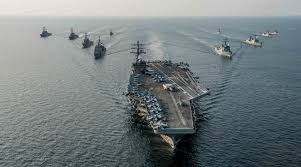
To launch such an attack, the U.S. requires at least two Carrier Strike.
Daily Operating Costs: According to the Congressional Research Service (CRS), it costs roughly $6.5 million per day to operate a single Carrier Strike Group. For two CSGs, that is $13 million a day, regardless of whether a single shot is fired.
One-Week Total: ~$91 million in base operations alone. This does not include the “combat pay” for the approximately 7,500 sailors and 2,000 Marines typically attached to such an expeditionary force.
3. Air Power: The Cost of the Skies
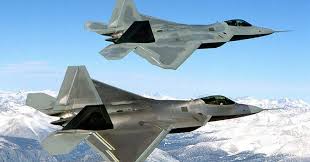
Iran possesses the most sophisticated air defense network the U.S. has faced since the Cold War. Maintaining air superiority would be a costly endeavor involving F-35s, F-22s, and B-21 or B-2 bombers.
Flight Hour Costs:
F-35A/C: ~$42,000 per hour.
F-22 Raptor: ~$85,000 per hour.
B-2 Spirit: ~$130,000 per hour.
The Weekly Bill: Assuming 24/7 Combat Air Patrols (CAP) and refueling missions (KC-46 tankers), the aerial fuel and maintenance bill for a seven-day campaign could easily exceed $1.5 billion.
4. Personnel and Logistics: The “Hidden” Costs
Critics of military intervention often overlook the logistical tail. Moving fuel, spare parts, and specialized personnel into the CENTCOM Area of Responsibility (AOR) requires a massive uptick in Department of Defense (DoD) spending.
Hazardous Duty Pay: For tens of thousands of service members, a transition to active combat status triggers immediate budgetary increases for “Hostile Fire Pay” and “Hardship Duty Pay.”
Global Stock Market Reaction: Historically, U.S. strikes in the Middle East cause a spike in oil prices. Analysts suggest a week-long conflict could push Brent Crude to over $100–$130 per barrel, effectively acting as a “tax” on every American consumer at the pump.
5. Stocks and The Defense Industry
While the broader market usually reacts with volatility, “Defense Primes” (Lockheed Martin, Raytheon, Northrop Grumman) often see their stocks surge during such escalations.
The Irony of Conflict: As the national debt nears $35 trillion, a conflict with Iran would require a supplemental “Emergency Funding” bill from Congress. Based on historical data from the Watson Institute’s Costs of War Project, localized conflicts in the Middle East have a “tail cost” involving veteran healthcare and interest on borrowed money that triples the initial expenditure over time.
The Journalist’s Assessment: A Reckless Expenditure?
From a critical perspective, the attack today represents more than just a military maneuver; it is a massive transfer of public wealth into the military-industrial complex for a conflict with no clear “exit strategy.” Unlike the 1991 Gulf War, Iran has a significant “asymmetric” capability to retaliate via proxies in Iraq, Lebanon, and Yemen, meaning the “one-week” cost is a fantasy.
Should the conflict expand to the Strait of Hormuz—through which 20% of the world’s oil passes—the global economic damage could reach trillions of dollars, making the cost of the missiles look like pocket change.
In the eyes of many foreign policy experts, this is not just a military risk; it is an economic suicide mission.
Blue Press Journal – In a scathing rebuke that cuts to the heart of constitutional governance, Senator Tim Kaine (D-Va.) has publicly questioned whether President Donald Trump possesses the mental acuity to recognize that his own foreign policy decisions catalyzed the current crisis with Tehran. Following the launch of “Operation Epic Fury”—a massive aerial bombardment targeting Iranian nuclear and governmental facilities—Kaine asked whether Trump is “too mentally incapacitated to realize that we had a diplomatic agreement with Iran that was keeping its nuclear program in check, until he ripped it up during his first term” (The Hill).
The Virginia senator’s critique centers on the 2015 Joint Comprehensive Plan of Action (JCPOA), the multilateral agreement that had effectively severed Iran’s pathway to nuclear weaponization before Trump unilaterally withdrew the United States in 2018. By abandoning diplomacy for military escalation, critics argue, the administration has not only reignited a dormant nuclear threat but potentially violated Article I of the Constitution, which reserves the power to declare war exclusively for Congress.
Constitutional Crisis and Unauthorized War
The strikes, which commenced early Saturday morning following the breakdown of Geneva negotiations mediated by Oman, represent a dramatic expansion of American military involvement in the Middle East. Unlike the limited June 2024 attacks that Trump falsely claimed had “obliterated” Iran’s nuclear infrastructure, Operation Epic Fury reportedly targets governmental centers in Tehran, including areas proximate to the presidential palace and National Security Council (The Hill).
Legal scholars and lawmakers immediately challenged the administration’s justification—that the attacks were necessary to neutralize “imminent threats” to the American people. “For months, I have raised hell about the fact that Americans want lower prices, not more wars – especially wars that aren’t authorized by Congress, as required by the Constitution,” Kaine stated, echoing bipartisan demands for a War Powers Resolution vote to terminate unauthorized hostilities.
The constitutional violation appears stark: Article I, Section 8 explicitly grants Congress alone the authority to declare war, a constraint the War Powers Resolution of 1973 reinforces by requiring presidential notification and congressional approval within 60 days of introducing armed forces into hostilities. By launching regime-change operations—including Trump’s explicit call for Iranians to “take over your government” following bombardment—without legislative authorization, the administration risks embroiling the nation in an open-ended conflict with catastrophic regional implications (New York Times).
Motivations and Conservative Backlash
Complicating the legal and strategic picture are indications that Trump’s motivations may extend beyond immediate national security concerns. According to Drop Site News, the President posted on Truth Social attempting to justify the strikes by alleging Iranian interference in the 2020 and 2024 U.S. elections—a rationale that shifted abruptly from the “imminent threat” narrative deployed in his official video address.
The dissonance between Trump’s isolationist campaign promises and his current bellicosity has triggered significant backlash within conservative circles. Meghan McCain, conservative commentator and daughter of the late Senator John McCain, noted the irony that MAGA personalities who previously denounced her family as “blood thirsty neocon warmongers” now silent as Trump pursues explicit regime change in Tehran. Meanwhile, Gateway Pundit writer Cassandra MacDonald amplified warnings from Turning Point USA’s Charlie Kirk, who cautioned that “regime change will result in a bloody civil war, killing hundreds of thousands and creating another massive Muslim refugee crisis.”
Escalation Risks and Diplomatic Fallout
As regional tensions metastasize, The New York Times reports that Iranian forces have retaliated by targeting U.S. military installations across the Persian Gulf, including facilities in the United Arab Emirates and Qatar—nations now placed under shelter-in-place orders for American citizens. With Israeli Defense Minister Israel Katz declaring a national state of emergency and F-35s, F-22s, and dual aircraft carriers positioned for sustained operations, the region teeters on the precipice of a wider war that Congress never authorized.
Senator Kaine’s assessment encapsulates the growing alarm: “These strikes are a colossal mistake, and I pray they do not cost our sons and daughters in uniform and at our embassies throughout the region their life.” Whether the judiciary or legislature can restrain an executive branch determined to reshape the Middle East through force—while potentially obscuring strategic failures behind claims of electoral interference—remains the pressing constitutional question of the moment.
 Blue Press Journal