In a surprising development, Belarussian President Alexander Lukashenko refuted the reports of a major potash deal between the US and Belarus. Lukashenko asserted that there were no such volumes of potash for sale to make such a deal, despite Trump’s insistence that a significant discount on Belarusian potash would benefit the American farmers.
President Trump announced the deal on his social media platform called Truth Social, claiming that the US is “working on a massive Deal with respect to the purchase of Potash from Belarus” at a price lower than the current Canadian rate. However, President Lukashenko of Belarus spoiled the deal by telling Trump that all of their available potash has already been ordered and that they do not have any for sale.
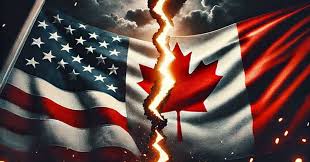
Trump’s long-running dispute between Canada and the United States has upended the potash market and has had a clear outcome: American farmers supply has decreased and costs have increased. Canada is the world’s largest producer of potash, and about 53% of its output is exported to the United States. Overall, roughly 80% of the potash used on American farms comes from Canada, while Belarus supplies only about 2%.
As the dust is settling on the Belarus potash debacle, it is hard to say with a degree of certainty whether Trump was being truthful about the purported deal or he was just engaging in some self-promotion from the outset. The American farmers are left scratching their heads in bewilderment over the actual state of affairs with respect to their fertilizers. The bottom line is Trump is solely to blame for the critical shortage!
Tariffs, escalating conflicts, and soaring closures reveal a painful economic reality for American agriculture.
by Winston Wendell
In the 2024 presidential election, farmers in America voted overwheming for Donald Trump, betting that the president would stand by their interests. However, an objective review of Trump’s activity as a president demonstrates that his policies have diverged significantly from the interests of the rural population. The president’s support for free trade undermined the position of farmers, resulting in substantial losses.
His foreign policy, which started a war against Iran, contributed to the current panic in the world markets. Causing oil to skyrocket. The Trump administration has pursued a policy of imposing high tariffs on imports, which have led to the loss of foreign markets for many farmers. Clearly the president’s policies do not support farmers’. For example, family-owned farms are disappearing as enterprises with vast resources swallow up small players or they just go bankrupt.
Trump’s high tariffs resulted in billions of dollars in payments to farmers by the Treasury Department from our tax dollars increasing the national debt. His foreign policy has also affected agricultural production in the country, as Canada is a leading producer of fertilizers in north America have now been tariffed.
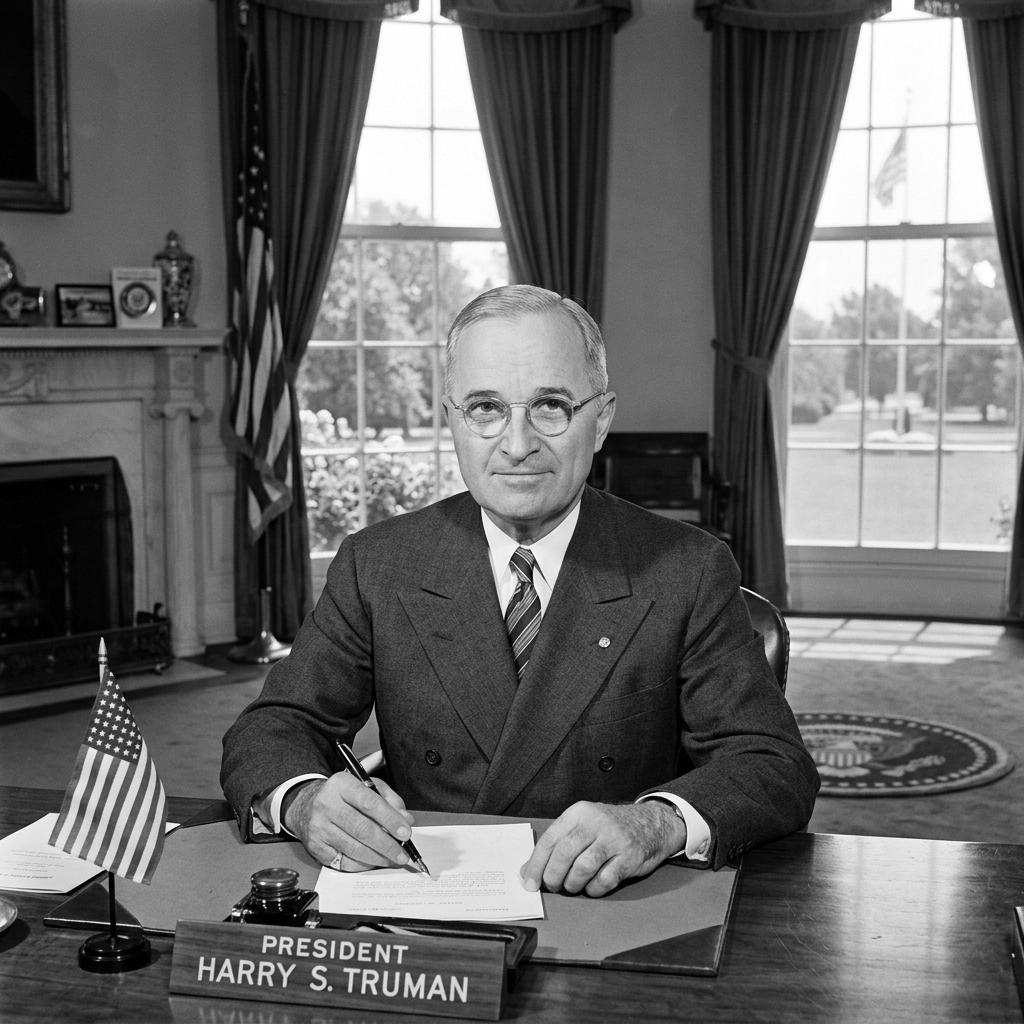
In the 1948 presidential race, Harry S. Truman warned voters not to back populist candidates in the West.
Truman warned farmers that Republicans are trying to “put a pitchfork in the farmer’s back.” The presidential candidate emphasized that he would fight to protect the integrity of free enterprise against monopolies and tariffs. Thus, Trump’s actions in the direction of protectionism and provocative foreign policy destroyed the positions of farmers, family-owned farms in particular.
Farmers who voted for Trump in the hope of improving the situation in the their lives were clearly deceived by Donald Trump, and it is clear that they have not learned the lesson of history.
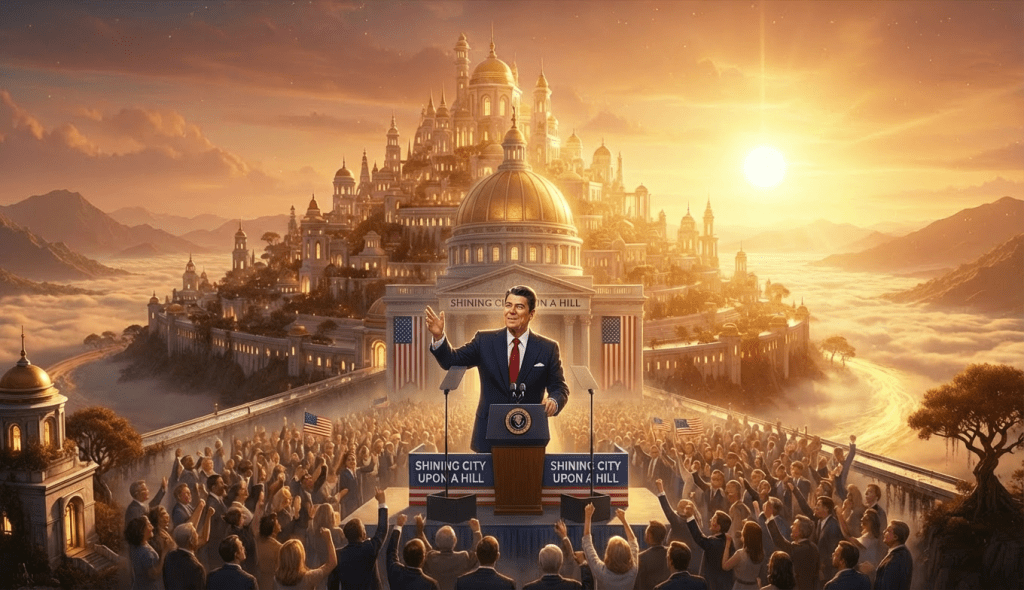
Blue Press Journal – There was a time when American presidents spoke of the nation as Ronald Reagan did: a “shining city on a hill,” a beacon of democracy and prosperity visible to the entire world. That imagery suggested permanence—a promise that no matter the challenges, the United States would remain the moral and economic anchor of the free world. Today, that light is flickering. Under President Donald Trump’s leadership, we are witnessing not the preservation of American greatness, but the deliberate dismantling of the very foundations that made it possible.
The economic architecture of global cooperation has been shattered by a trade policy that treats allies as adversaries. Trump’s aggressive tariff regime has strained relations with virtually every major trading partner, transforming decades of diplomatic capital into resentment and retaliation. These are not the calculated negotiations of a nation securing its interests; they are the erratic maneuvers of an isolationist agenda that makes America poorer while promising prosperity. When the world’s largest economy retreats behind protectionist walls, the cost is borne not by abstract institutions, but by American consumers facing inflated prices and disrupted supply chains.
Equally troubling is the administration’s incoherent approach to foreign policy, particularly regarding Ukraine and Russia. Trump’s hot-and-cold support for Kyiv—alternating between gestures of solidarity and open contempt—has left allies uncertain of American commitment. More alarming is his refusal to demand accountability from Moscow for its aggression, effectively absolving Russia of consequences while undermining Ukrainian sovereignty. This is not diplomacy; it is capitulation dressed in nationalist rhetoric, and it signals to the world that American security guarantees are negotiable commodities rather than sacred obligations.
The recent escalation against Iran represents perhaps the most dangerous departure from presidential norms. Launching military actions without notifying allied democracies, only to later demand their support for a conflict that “makes no sense,” treats international partnerships as transactional burdens rather than strategic assets. The immediate consequence—rising gas prices—is already extracting pain from American households, translating geopolitical chaos into economic hardship at the pump. This is governance by impulse, not strategy, and the cost is measured in both dollars and diminishing American influence.
Beneath these policy failures lies a more fundamental threat: the president’s apparent disregard for constitutional norms and his evident desire to function as a King rather than a servant of the republic. The separation of powers, the rule of law, and the peaceful transfer of authority—these are not inconveniences to be circumvented by executive fiat, but the essential guardrails of democratic governance. When a leader rejects these constraints, he does not merely damage his administration; he corrodes the public’s faith in the institutions that define American liberty.
We are told we are entering a new golden age, but the reality is the end of the great American era that Trump and his MAGA movement have brought upon us. We are no longer the Reagan-esque “shining city on the hill”—that symbol of hope and ordered liberty. Instead, we have become an erratic power, rich in military might but increasingly impoverished in moral authority and economic stability. The policies of this administration are making America not greater, but smaller; not freer, but more constrained by the whims of authoritarian instinct.
The city is still there, but the light is dimming. Whether it can be rekindled depends on whether we remember that true American greatness was never found in tariffs, isolationism, or the concentration of power in a single hand, but in our willingness to lead the world through principle rather than abandon it through pride
Blue Press Journal – In a move that has once again ignited concerns across the economic landscape, the Trump administration has announced a sweeping 10% tariff on goods imported to the U.S. from across the globe. This comes hot on the heels of a Supreme Court ruling on Friday, which deemed the administration’s previous use of the International Emergency Economic Powers Act (IEEPA) for issuing tariffs as unjustified. Despite this judicial setback, the President quickly pivoted, citing Section 122 of the 1974 Trade Act to impose these new levies, which are set to take effect on February 24th.
While the administration touts these “import taxes” as a strategy to address “large and serious” trade deficits, the overwhelming consensus among economists and trade experts is clear: tariffs are not paid by foreign producers; they are a tax paid by American consumers and businesses.
The Illusion of Protection: Who Really Pays?
The notion that tariffs are a punitive measure exclusively against foreign nations is a dangerous misconception that has plagued Trump’s economic policy. In reality, when a tariff is imposed, it’s the American importer—a company, large or small, that brings goods into the country—who pays that tax to the U.S. Treasury. To recoup these costs, importers typically do one of two things:
Raise Prices: They pass the increased cost directly onto consumers through higher retail prices.
Absorb Costs: They absorb the cost, leading to reduced profits, which can translate into lower wages for employees, less investment in their businesses, or even job cuts.
A comprehensive analysis by the National Bureau of Economic Research (NBER), for instance, found that “U.S. tariffs were almost entirely borne by U.S. domestic consumers and importers.” This sentiment is echoed by the Peterson Institute for International Economics (PIIE), which concluded that the burden of previous Trump administration tariffs fell “almost entirely on American consumers and firms.” These aren’t abstract economic theories; they are concrete realities felt in every American household.The Hidden Costs of Tariffs for American Households
Impact Category
Description
**Higher Consumer Prices**
Increased costs for everyday goods, from clothing and electronics to household appliances, directly reducing purchasing power.
**Reduced Business Investment**
Companies face uncertainty and higher input costs, leading to less investment in expansion, innovation, and job creation.
**Slower Wage Growth**
As profits are squeezed, businesses have less capacity to offer competitive wages or bonuses.
**Supply Chain Disruptions**
Forced reshuffling of global supply chains can lead to inefficiencies, product shortages, and further price hikes.
**Retaliatory Tariffs**
Other countries often impose their own tariffs on U.S. exports, harming American farmers and manufacturers who rely on international markets.
A Familiar, Flawed Playbook
This latest round of tariffs, while excluding agricultural products, pharmaceuticals, electronics, certain vital minerals and metals, and goods from Canada and Mexico (due to a 2020 trade agreement), still casts a wide net over the global economy. It’s a return to the same protectionist policies that characterized the administration’s first term, often leading to costly “trade wars” that hurt American industries and consumers alike.
The economic consequences of such policies are often multifaceted:
Inflationary Pressures: Tariffs contribute to rising prices across the board, fueling inflation and eroding the value of American wages.
Supply Chain Instability: Businesses struggle to plan and maintain efficient supply chains, leading to higher operational costs and potential product shortages.
Reduced Competitiveness: American companies that rely on imported components become less competitive globally.
Facing Domestic Opposition
Even within his own party, the President’s tariff strategy is facing significant pushback. Rep. Don Bacon (R-Neb.) was quick to signal that these tariffs will likely “be defeated” in Congress. As he told CNN in an interview, “It may not have a veto-proof majority, but it will have a majority that will go against that 10 percent global tariff, so I think the president is making a mistake here.”
This confidence stems from the foundational principle that under the 16th Amendment, lawmakers hold broad authority over federal taxes, including tariffs. The legislative branch has the power to reject what many view as an economically damaging policy being unilaterally imposed.
The True Cost of Protectionism
The evidence is overwhelming: tariffs are a self-inflicted wound. They masquerade as a solution to trade imbalances but function as a regressive tax on hardworking American families and a burden on businesses. Instead of fostering economic growth, they invite retaliatory measures, disrupt supply chains, and ultimately make everyday life more expensive for millions.
It’s time to move past the misleading rhetoric and embrace policies that truly strengthen the American economy through open markets, fair trade, and genuine competitiveness, rather than punishing our own citizens with higher taxes disguised as patriotism.
President Trump’s latest 100% tariff threat against Canada will hurt American consumers, damage U.S. industries, and strain vital trade relationships. Learn why Trump’s trade war is bad economics and worse policy.
Blue Press Journal – President Donald Trump’s recent threat Satruday to impose a 100% tariff on Canadian imports has sent shockwaves through North American trade circles. The move, aimed at punishing Canada for its newly negotiated trade concessions with China, reflects the same protectionist instincts that have defined Trump’s economic agenda since his first term. But beyond the political theater, tariffs like these come with a steep price — one paid directly by American consumers, businesses, and workers.
The Canada-China Trade Context
Earlier this month, Canadian Prime Minister Mark Carney announced a deal with China to lower tariffs on Chinese electric vehicles in exchange for reduced import taxes on Canadian agricultural products. While Canada maintains no free-trade agreement with China, the arrangement was crafted to support Canadian farmers and diversify trade relationships amid global tensions.
Trump initially praised the deal, but quickly reversed course, accusing Canada of becoming a “drop-off port” for Chinese goods destined for the U.S. His retaliation? Threatening a 100% import tax on Canadian goods if Ottawa proceeds — a move that would affect everything from steel to agricultural products to critical minerals.
Why Tariffs Hurt Americans More Than They Help
Tariffs are often sold to voters as a way to protect domestic industries, but the reality is that tariffs operate as a hidden tax on U.S. consumers. When the U.S. imposes tariffs, importers pay higher costs, which are then passed along to businesses and consumers in the form of higher prices.
According to a 2019 study by the Federal Reserve Bank of New York, U.S. tariffs during the Trump administration’s first trade war with China led to $1.4 billion in additional costs per month for American consumers. Similarly, research from the Peterson Institute for International Economics found that the average U.S. household paid $800 more per year due to tariff-driven price increases.
For context:
Canada is the largest export destination for 36 U.S. states.
Nearly $2.7 billion USD in goods and services cross the Canada-U.S. border daily.
Canada supplies 60% of U.S. crude oil imports and 85% of U.S. electricity imports.
It is also a key supplier of steel, aluminum, uranium, and critical minerals essential for the auto industry, defense and technology.
Imposing a 100% tariff on these imports would cause instant price spikes in energy, manufacturing, and consumer goods — directly hitting U.S. households and industries.
Economic Fallout of Trump’s Tariff Threat
If enacted, Trump’s proposed tariffs would:
Raise Costs for Energy and Manufacturing – U.S. industries dependent on Canadian oil, electricity, and metals would face supply shortages and higher costs.
Damage Cross-Border Supply Chains – The deeply integrated Canada-U.S. manufacturing sector, especially in automotive and aerospace, would be disrupted.
Invite Retaliation from Canada – Ottawa could respond with its own tariffs on U.S. exports, hurting American farmers, particularly in states that rely on agricultural trade with Canada.
Undermine NATO and Western Alliances – Trump’s antagonistic stance toward Canada, paired with his push to acquire Greenland and social media provocations, risks alienating a key ally.
Political Theater vs. Economic Reality
Trump’s rhetoric — including calling Carney “Governor Carney” and posting altered maps showing Canada as part of U.S. territory — may play well to a certain political base. But such antics undermine serious diplomatic relationships and erode trust among allies.
Carney’s speech at the World Economic Forum in Davos, urging “middle powers” to unite against coercive tactics by great powers, clearly struck a nerve with Trump. As Carney’s popularity rises on the world stage, Trump’s trade threats appear less about protecting American workers and more about retaliating against political rivals.
The Consumer’s Perspective
For the average American, tariffs mean:
Higher grocery bills (due to increased costs on Canadian agricultural imports).
More expensive cars and electronics (Canadian manufacturing is a key part of U.S. supply chains).
Higher energy costs (Canadian oil, electricity, and uranium are essential to U.S. energy security).
In short: Tariffs punish consumers first, industries second, and political rivals last.
So What Does it Mean
President Trump’s threat of a 100% tariff on Canadian goods is more than a diplomatic provocation — it’s an economic self-inflicted wound. Canada is one of America’s most important trading partners, and disrupting that relationship will raise prices, strain industries, and weaken alliances.
If history is any guide, Trump’s tariffs will not force Canada to change course with China. Instead, they will drive up costs for American families, hurt U.S. competitiveness, and isolate the United States in a world where cooperation — not coercion — is the key to economic success.
Blue Press Journal (DC) – As the Trump administration prepares to announce a $12 billion farm aid package on Monday, it’s clear that the president’s trade war with China has taken a devastating toll on American farmers. The aid, which will be doled out to farmers who grow crops such as corn, soybeans, and wheat, is a tacit admission that Trump’s economic policies have failed.
The trade dispute with China has been particularly brutal for soybean and sorghum farmers, who rely heavily on exports to China. With more than half of their crops shipped overseas each year, the imposition of tariffs has effectively shut off their biggest market. It’s no surprise, then, that these farmers are being targeted for relief.
But here’s the rub: this bailout is not just a necessary evil to help struggling farmers; it’s also a symptom of a broader problem. The Trump administration’s aggressive trade policies have created uncertainty and chaos in the agricultural sector, and now taxpayers are being asked to foot the bill.
As a nation, we’re being told that this is the price we must pay for Trump’s “America First” agenda. But is it really worth it? By subsidizing one group of Americans over others, we’re abandoning the free market principles that have made our economy great. In a true free market, businesses that can’t compete go out of business. It’s the way the system is supposed to work.
But under Trump’s administration, it seems we’re moving towards a more socialist model, where the government picks winners and losers. It’s a disturbing trend, and one that Republicans should be particularly concerned about. After all, the GOP has long been the party of small government and free enterprise.
The fact that Trump’s farm bailout is being framed as a reward for farmers who supported his tariffs is even more galling. It’s a brazen attempt to buy off a key constituency, rather than addressing the underlying issues that are driving the agricultural sector’s woes.
As the administration prepares to announce this massive bailout, it’s worth asking: what’s next? Will we see more handouts for other industries that are struggling as a result of Trump’s policies? The answer, unfortunately, is likely yes.
For now, American taxpayers will be forced to foot the bill for Trump’s trade war. It’s a costly experiment, and one that we’re all being forced to pay for. As we watch the $12 billion farm bailout unfold, it’s clear that the real losers here are not just the farmers, but the American people as a whole.
Ford stated that the goal of the campaign was to “initiate a conversation about the kind of economy that Americans want to build and the impact of tariffs on workers and businesses.” He claimed that this goal had been achieved, as the ad had reached high levels of the US government. The decision to pull the ad was made after a discussion with the Prime Minister, with the aim of restarting trade negotiations.
It’s evident that Donald Trump isn’t driven by facts or what’s best for America when it comes to trade decisions; instead, he operates on the whims of his own inflated ego. In short, he comes across as nothing more than a petulant man-child.
Yes, we are still in the midst of a trade war. The world is currently facing a 10% tariff on all goods, with Canada experiencing a 25% tariff on major items. Despite what the mainstream media may be saying, it is clear that the White House is dictating the narrative. President Trump’s lack of understanding and unclear end game is evident in his actions.
Following Beijing’s response to Trump’s tariffs with equal measures, Trump raised the tariffs even further, only to be met with a similar response from China. The escalating tariffs have now reached 84% on U.S. products going to China. In a bold but stupid move, Trump has announced that Chinese imports to the U.S. will face a 125% tariff, citing China’s lack of respect for global markets.
The situation leaves little room for negotiation, as both sides refuse to back down. The mainstream media’s portrayal of the situation as less severe is misleading. The EU, Canada, and China are all engaged in a trade war with the U.S., with significant consequences for consumers. It won’t be long before the impact is felt, with prices of goods likely to skyrocket. The reality of this trade war is far from what is being portrayed.
As Trump prepared to impose tariffs on Canada, Mexico, and China, U.S. stock markets plummeted at the opening on Monday.
The S&P 500 fell by 1.7% in early trading, while The Dow Jones Industrial Average dropped 557 points, according to AP. The Nasdaq composite was down by 2.1% at the opening bell.
This sharp decline indicates that the markets are skeptical of the president’s plan to implement a series of import taxes starting tomorrow.
Tariffs of 25% will be imposed on Mexico and Canada, while Chinese products will face duties of 10%.
Trump acknowledged over the weekend that his trade war could result in “a little pain” for American families. It seems the markets don’t agree!
The uncertainty surrounding these tariffs has clearly rattled investors, leading to a significant downturn in the stock markets. It remains to be seen how this trade war will impact the economy in the long run.
The White House announced on Saturday that the imposition of tariffs was deemed necessary in order to hold China, Mexico, and Canada accountable for their commitments to stop the influx of harmful drugs into the United States.
However, Prime Minister Trudeau refuted the notion that the shared border posed a security threat, stating that less than 1% of fentanyl entering the US originates from Canada. He also pointed out that less than 1% of illegal migrants cross the border into the US, emphasizing that tariffs are not the most effective means of collaboration to protect lives.
Economists are expressing considerable concern regarding the potential disruptions these tariffs may create for the U.S. economy. President Trump’s request for the Federal Reserve to reduce interest rates may be complicated by the turmoil induced by these tariffs. Financial markets are expected to be unstable, akin to a house of cards in a windstorm, despite the administration’s assertions of being fundamentally pro-business.
American business groups are not thrilled about these tariffs, with the U.S. Chamber of Commerce calling them a “recipe for decline.” Canada wasted no time in retaliating, slapping their own tariffs on American goods. Prime Minister Justin Trudeau is playing hardball, hitting American beer, wine, bourbon, and even household appliances with a 25% tariff. Looks like the trade war has officially begun between these two friendly neighbors.
In a move that is sure to make everyone’s lives more complicated, Canada is also considering levies on lumber, plastics, and even non-tariff measures related to critical minerals and procurement. Because who doesn’t love a good trade war, right?