Tag: Global Economy

  • The Trump’s Avoidable Crisis: Looking Back at the Collapse of the Iran Nuclear Deal

    by Winston Wendell

    President Barack Obama defended the Joint Comprehensive Plan of Action (JCPOA) with a blunt warning: “The choice we face is ultimately between diplomacy or some form of war.”
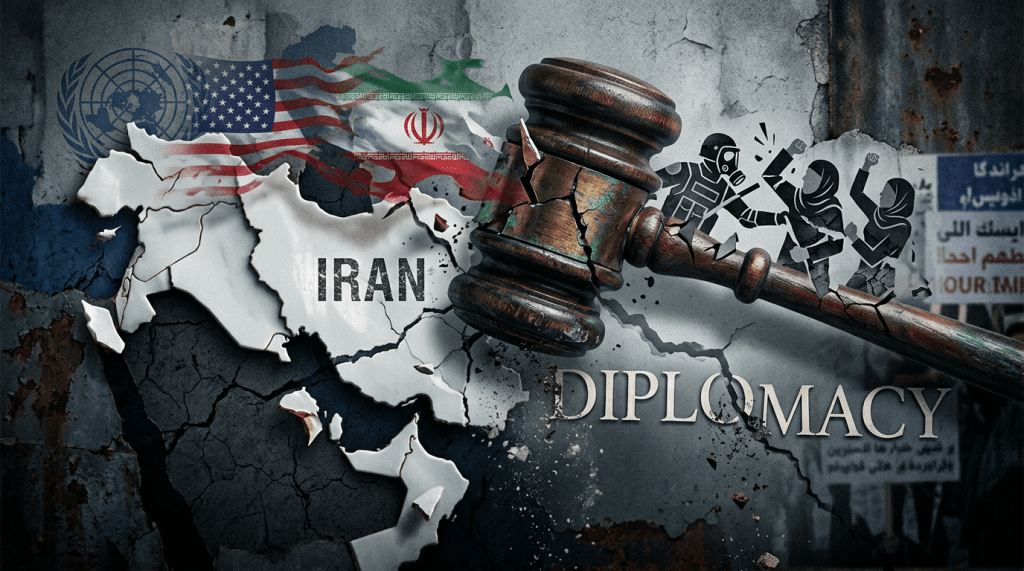
    Cracked gavel breaking over map of Iran with USA and Iran flags and protest figures

    Now, years later, I watch that warning turn painfully real. When Donald Trump pulled the United States out of a nuclear deal that had kept Tehran’s nuclear ambitions in check, his administration threw the country into a disaster of its own making.

    On the military front, this war’s a failure from every angle. Targeted strikes came and went, and the Iranian government endures, now with even tougher hardliners from the Islamic Revolutionary Guard Corps in charge. Iran still holds most of its missile stock, its mobile launchers, its underground bunkers. Drone and missile factories keep running. Worst of all, Tehran’s grip on the Strait of Hormuz—is even tighter. Those photos of commercial ships stuck near Larak Island say it all. Washington’s shortsighted choices gave our adversaries control of some of the world’s most important economic lifelines.

    The cost? It’s staggering, both in dollars and lives. We burned through about $25 billion at the start, and the spending hasn’t stopped. At home, Americans feel it everywhere, gas prices, groceries, you name it. But it’s the human cost that hurts most. U.S. service members have died, and hundreds cope with wounds they’ll never shake, all for a conflict with no clear end, no real transparency, and not a word of congressional approval. Like millions of others, I feel deep frustration. This is a war with no purpose, no strategy, and no exit.

    Trump’s aggressive reversal left America boxed in with terrible options. If Washington caves to Tehran—giving up huge sums of money or control over the Strait of Hormuz—we abandon the basic principle of free maritime navigation. Global commerce depends on that. An emboldened Iranian regime, flush with cash, will just buy new air defenses, load up on missiles, and use the Strait for leverage as long as it wants.

    No one wins here. There’s only the bitter fallout of a war we never needed, a conflict that put America’s security at risk, bled our economy, and left the world less stable than ever.
    Fediverse Reactions
  • The High Cost of Chaos: Questioning the Trump Administration’s Iran Strategy

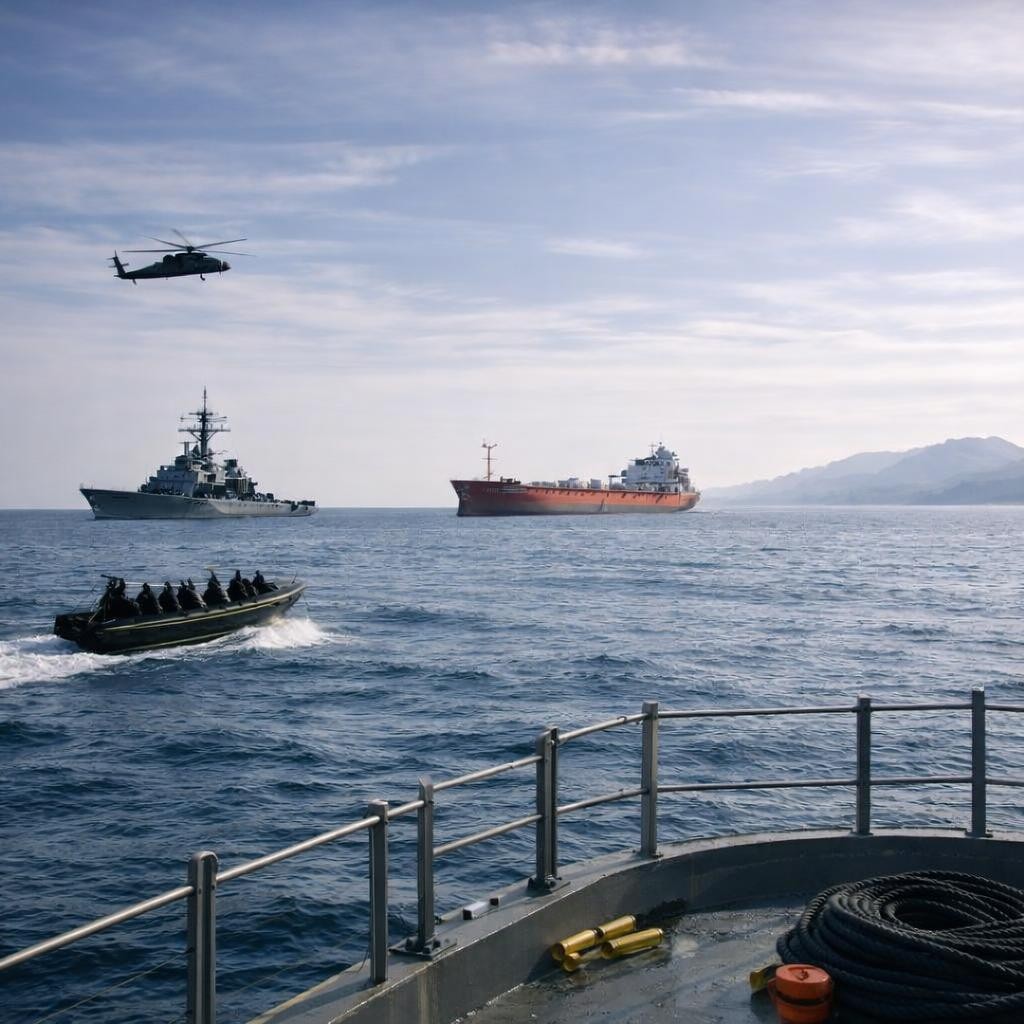
    Naval combat scene with burning ships, missiles, helicopters, and a soldier operating a gun on a boat

    Blue Press Journal – The escalation of conflict between the United States and Iran has pushed the global economy to the brink, fostering an environment of instability that many experts argue was entirely preventable. By initiating a campaign of military aggression without congressional authorization, the Trump administration has by passed legislative oversight, leaving the American public to bear the brunt of surging inflation and a precarious geopolitical landscape.

    Current negotiations center on a fragile two-week ceasefire, yet this “peace” effort remains deeply troubling. Critics argue that using the threat of mass civilian casualties as a bargaining chip to reopen the Strait of Hormuz is not only reprehensible but strategically bankrupt. Data from Lloyd’s List Intelligence confirms that shipping volumes plummeted 90% at the height of the conflict, while reports from the Financial Times indicate that Iran intends to levy hefty cryptocurrency tolls on vessels—effectively turning a vital international waterway into a proprietary toll road.

    The administration’s shifting narrative and erratic policy goals have created what many characterize as a “credibility gap.” While the White House touts progress, the Associated Press notes that claims of regional stability are contradicted by continued missile fire reported across Kuwait, the UAE, and Qatar. Furthermore, as the New York Times reports, the imposition of $2 million fees per ship suggests a significant concession that threatens the status of the Strait as an international waterway.

    Many military analysts have a scathing assessment of the presidents war describing his current posture as a “total fold.” After weeks of reckless bluster, the U.S. now finds itself negotiating on terms dictated by an Iranian 10-point proposal. We are left asking: What has actually been gained? With Iranian nuclear capabilities degraded, by how much? Now we face the potential for Russian or Chinese rearmament of Iran looming, the administration’s strategy appears to be a reactive, uncoordinated mess.

    If an American president cannot maintain a coherent policy, ignores the potential for long-term strategic catastrophe, and accelerates the financial hardship of working families, we must critically evaluate their fitness for office. This unnecessary war, characterized by its lack of transparency and disregard for international norms, remains a defining failure of the Trump administration.


  • Geopolitical Turbulence: How the Iran Conflict, Ignited Under Trump, Threatens Global Economic Stability

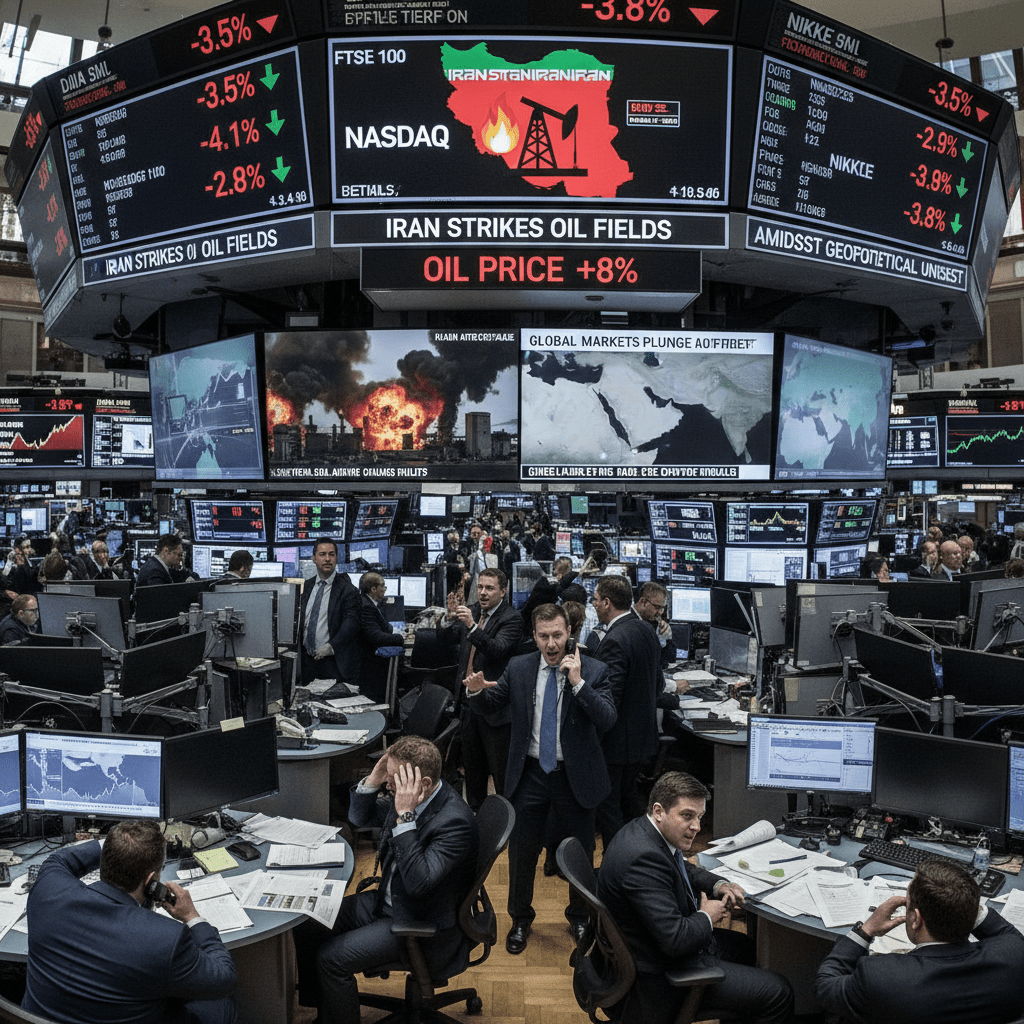
    Trading floor with screens showing IRAN STRIKES OIL FIELDS and falling stock indices.

    The Economic Fallout of Trump’s Iran Conflict

    Blue Press Journal – The global energy landscape is currently facing a catastrophic destabilization. Following targeted Iranian strikes on critical energy infrastructure in the Gulf—specifically two major refineries in Kuwait and Qatar’s vital Ras Laffan natural gas terminal—Brent crude has surged toward the $115 mark. As Tehran’s offensive disrupts the flow of approximately 20% of the world’s liquefied natural gas (LNG), the specter of a “macro wrecking ball” hanging over the global economy has become a grim reality.

    A Manufactured Crisis and the Trump Administration

    While the physical damage to the Strait of Hormuz and surrounding facilities is undeniable, financial analysts and geopolitical experts are increasingly pointing the finger at the White House. Critics argue that the Trump administration’s decision to initiate this conflict was a strategic blunder of historic proportions. According to reports from The New York Times, high-level security officials previously indicated there was no immediate or imminent security threat from Iran that warranted a full-scale kinetic engagement. 

    By prioritizing a hawkish foreign policy over regional stability, the administration has arguably invited the very energy crisis it claimed to prevent. This “war of choice” has now pushed the national average price of gas to a staggering $3.88 per gallon as of March 19, 2026, placing an immense burden on American households.

    Global Market Contagion

    The economic repercussions are being felt far beyond U.S. borders. On Thursday, Brent crude jumped 6% to $113.77 per barrel, a massive leap from the sub-$73 levels seen prior to the commencement of hostilities. The Financial Times reports that European natural gas benchmarks have doubled in just thirty days, threatening a wave of “debilitating inflation” across the continent.

    Global indices are reflecting this instability:

    • Japan’s Nikkei 225 plummeted 3.4% as the Bank of Japan froze interest rates.
    • Germany’s DAX and London’s FTSE 100 both saw losses exceeding 2%.
    • Wall Street futures remain in the red as the Federal Reserve warns that persistent inflation, fueled by the war, limits their ability to provide further interest rate relief.

    As the Strait of Hormuz remains effectively shuttered to tanker traffic, the question remains: was the pursuit of this conflict worth the systematic dismantling of global economic stability? For now, the world pays the price at the pump and in the markets for a war that many intelligence experts claim was entirely avoidable.