Tag: history

  • NATO Allies Pay the Price While Trump Undermines Unity

    “I Served There. And I Lost Friends There” – Prince Harry Rebukes Trump’s False NATO Claims

    Blue Press Journal – When President Donald Trump took the stage at the World Economic Forum in Davos, his remarks on NATO sent shockwaves across the transatlantic alliance. Trump claimed that NATO members would not come to America’s aid if called upon — a statement that flies in the face of historical fact. 

    On Friday, Prince Harry, Duke of Sussex, delivered a pointed rebuttal rooted in lived experience. Having served two tours in Afghanistan — including a harrowing 10-week stint in Helmand province — Harry is no stranger to the realities of war. 

    “I served there. I made lifelong friends there. And I lost friends there,” Harry said. “In 2001, NATO invoked Article 5 for the first — and only — time in history. It meant that every allied nation was obliged to stand with the United States in Afghanistan, in pursuit of our shared security. Allies answered that call.”

    The Truth About NATO’s Sacrifice

    In the wake of the September 11 attacks, NATO’s collective defense principle — Article 5 — was activated for the first time since the alliance was founded in 1949. The United Kingdom, Canada, Germany, France, Poland, Denmark, and other NATO nations deployed troops alongside U.S. forces in Afghanistan. 

    The cost was staggering

    • United Kingdom: 457 service members killed 
    • Canada: 158 killed 
    • Germany: 59 killed 
    • France: 86 killed 
    • Poland: 44 killed 
    • Denmark: 43 killed

    These numbers represent more than statistics — they tell stories of young lives cut short, families shattered, and nations standing shoulder-to-shoulder with the U.S. in its longest war. 

    Trump’s Draft-Dodging Past

    Trump’s dismissal of NATO’s contributions is even more striking given his own history. While tens of thousands of Americans served — and thousands died — in Vietnam, Trump avoided the draft five times: four student deferments and one medical deferment for alleged bone spurs. 

    For someone who never wore the uniform to question the loyalty and sacrifice of allied forces is, critics argue, both historically inaccurate and morally tone-deaf. 

    Why Truth Matters in Diplomacy

    Prince Harry’s words resonate not only because of his royal status, but because of his credibility as a veteran. His reminder is clear: diplomacy and military alliances are built on trust, truth, and shared sacrifice. 

    When leaders distort history, they undermine the very alliances that have safeguarded global stability for decades. NATO’s solidarity after 9/11 was real, and it came at a heavy human cost. 

    Harry’s closing reflection serves as a warning: 

    “Those sacrifices deserve to be spoken about truthfully and with respect, as we all remain united and loyal to the defense of diplomacy and peace.”

    In an era of rising geopolitical tension, remembering the truth about NATO’s commitment is not just good history — it’s essential for the future of global security. 


  • Transatlantic Rift Deepens as Trump’s Greenland Tariffs Ignite Calls for EU ‘Trade Bazooka’

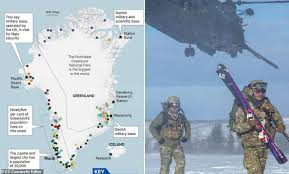
    Donald Trump’s punitive tariffs on European nations supporting Greenland security have sparked unprecedented EU retaliation talks, risking a historic breakdown in transatlantic relations.

    Blue Press Journal – The fragile fabric of transatlantic relations is fraying at an alarming pace, as U.S. President Donald Trump’s decision to impose tariffs on European nations involved in Greenland security exercises triggers outrage across the European Union. What began as a geopolitical skirmish over the Arctic has rapidly escalated into a confrontation that EU leaders say could fundamentally reshape the balance of power between Washington and Brussels. 

    At the heart of the crisis is Trump’s move to punish countries — including France, Germany, Sweden, Finland, Norway, and the Netherlands — that deployed troops to participate in a Danish-led military exercise in Greenland. The exercise, part of a broader European effort to secure the Arctic amid rising Russian and Chinese activity, was described by participating governments as entirely defensive and non-provocative. Yet Trump’s administration framed the deployments as a direct affront to U.S. interests, slapping punitive tariffs in a move critics say is both reckless and diplomatically corrosive. 

    Europe’s Retaliatory Options: From Restraint to Confrontation

    For months, EU leaders have tolerated Trump’s unpredictable foreign policy in the hope of preserving NATO unity. They have weathered his wavering support for Ukraine, his pressure for lopsided trade agreements, and his demands for massive defense spending increases. But the Greenland tariffs appear to have crossed a line. 

    French President Emmanuel Macron has emerged as one of the loudest voices demanding a robust response, calling for the activation of the EU’s Anti-Coercion Instrument — a powerful trade retaliation tool originally designed to counter China’s economic intimidation. Deploying it against the United States would be unprecedented, signaling a profound shift in the EU’s willingness to confront Washington head-on. 

    “The EU must resist humiliation and economic vassalization,” said Jérémie Gallon, a former French diplomat now based in Washington. His sentiment echoes a growing consensus among centrist and left-leaning EU lawmakers who argue that Europe must assert itself as a geopolitical actor rather than simply react to U.S. pressure. 

    Diplomatic Fallout and Strategic Calculations

    Even leaders with warmer ties to Trump, such as Italian Prime Minister Giorgia Meloni, have acknowledged the severity of the rift. While urging dialogue to avoid escalation, Meloni conceded that tariffs on NATO allies “are a mistake” and risk undermining shared security goals. 

    The European Parliament is already signaling its readiness to derail ratification of a recently negotiated EU-U.S. trade deal — a move that would have been unthinkable only months ago. Blocking the agreement would be a symbolic yet potent act, but triggering the Anti-Coercion Instrument would represent a direct economic counterstrike. 

    The Bigger Picture: Europe’s Geopolitical Awakening

    This crisis coincides with the EU’s broader push for strategic autonomy. European Commission President Ursula von der Leyen has announced a new security framework, while plans to bolster cybersecurity are set to be unveiled imminently. The Greenland standoff may accelerate this trajectory, forcing Europe to invest in defense and economic resilience without relying on U.S. goodwill. 

    The fact that Trump’s tariffs came just days after the EU signed a major trade deal with Latin America adds insult to injury, deepening perceptions that the U.S. is willing to use economic coercion to undermine Europe’s global aspirations. 

    As EU leaders return from Latin America to Brussels for emergency talks, the stakes could not be higher. The decision they face — whether to retaliate against their most powerful ally — may define Europe’s role on the world stage for decades. 

  • The Trump DOJ’s Attack on the Federal Reserve: A Dangerous Precedent That Could Damage the U.S. Economy

    Trump DOJ’s Attack on Federal Reserve Independence Threatens U.S. Economic Stability

    Blue Press Journal (DC) – In a stunning and unprecedented move, the Trump Administration’s Department of Justice (DOJ) has issued subpoenas to the Federal Reserve and threatened criminal indictment against Fed Chair Jerome Powell. The action stems from Powell’s testimony before the Senate Banking Committee in June regarding the Fed’s $2.5 billion renovation of two office buildings — a project President Trump criticized as excessive. 

    While the stated justification for the investigation is alleged misuse of taxpayer funds, Powell has bluntly called the charges a “pretext” designed to undermine the central bank’s independence. This is not a routine dispute over budgetary planning — it is a direct confrontation that could shatter the long-standing separation between America’s political leadership and its monetary policy authority.

    Why the Federal Reserve’s Independence Matters

    The Federal Reserve is not a partisan institution. Its ability to set interest rates based solely on economic data, rather than political pressure, is a cornerstone of stable economic governance. Market confidence in the U.S. dollar, Treasury bonds, and the overall financial system depends heavily on the perception that Fed decisions are insulated from political whims.

    If political actors can intimidate or remove Fed officials for refusing to follow a preferred interest rate path, the consequences will be severe. Investors may begin to doubt whether U.S. monetary policy is being driven by sound economic analysis or short-term electoral calculations. That uncertainty could increase borrowing costs, destabilize markets, and weaken the dollar’s position as the world’s reserve currency.

    The Risk to Markets and the Economy

    President Trump has repeatedly attacked Powell for not cutting interest rates as aggressively as he wants — especially with an eye toward stimulating short-term growth. But artificially low rates set for political purposes can have damaging effects:

    • Inflation Risk: Sustained rate cuts without economic justification can overheat the economy, driving up consumer prices. 
    • Asset Bubbles: Cheap credit can fuel excessive speculation in housing, stocks, and other markets, leading to bubbles that eventually burst. 
    • Weakened Global Confidence: If international investors believe the Fed is being controlled by political operatives, they may reduce exposure to U.S. assets, raising borrowing costs and hurting the dollar.

    History offers clear warnings. Countries where central banks have been politicized — such as Turkey and Argentina — often face runaway inflation, capital flight, and prolonged economic instability.

    Weaponizing the DOJ Against Independent Institutions

    The DOJ’s role in this episode is equally troubling. Traditionally, the Justice Department has operated independently from the White House, refraining from targeting political adversaries without clear and compelling evidence. Under the Trump Administration, however, the DOJ has pursued investigations against a growing list of perceived opponents.

    Serving subpoenas to the Fed in the midst of a dispute over interest rates sends a chilling message: any independent official who resists political directives could face criminal investigation. This politicization of law enforcement erodes public trust, not only in the DOJ but in the broader legal system.

    Even some Republican lawmakers are sounding alarms. Senator Thom Tillis of North Carolina has stated that this legal maneuver removes any doubt about efforts within the administration to dismantle the Fed’s independence — warning that credibility is now at stake for both the DOJ and the Federal Reserve.

    Short-Term Politics, Long-Term Damage

    While the administration may view the investigation as a way to pressure Powell into lowering rates before his term ends in May, the long-term damage far outweighs any short-term gain. The moment global investors suspect that U.S. monetary policy is politically manipulated, they will adjust their strategies — moving capital elsewhere, demanding higher returns on U.S. debt, and hedging against instability.

    Economic stability is built on trust in the institutions that manage it. Undermining that trust for political advantage is a dangerous gamble that could cost the United States dearly.

    Defending the Fed Means Defending the Economy

    The Federal Reserve’s independence is not a luxury — it is a necessity. Strong economies require central banks to act based on evidence, not election-year strategy. The Trump DOJ’s aggressive move against Jerome Powell is about more than building renovations; it is about whether America’s monetary policy will remain guided by data and public interest, or whether it will be subordinated to political intimidation.

    If history teaches us anything, it’s that once the credibility of a central bank is lost, restoring it is painfully difficult. The United States must resist any effort to politicize the Fed — because protecting its independence is protecting the future of the American economy.

  • ICE Shooting in Minnesota Raises Serious Questions About Use of Force

    ICE shooting in Minnesota

    Blue Press Journal – The recent fatal shooting of Renee Nicole Good, a 37-year-old Minneapolis woman, by an Immigration and Customs Enforcement (ICE) agent has sparked intense public debate, political outrage, and calls for accountability. The incident, captured in video footage and widely shared on social media, has drawn scrutiny not only for the circumstances surrounding the shooting, but also for how federal officials have framed the event.

    Conflicting Narratives and Political Reactions

    In the hours following the shooting, Minnesota Senator Tina Smith expressed her shock and dismay after reviewing eyewitness accounts and video evidence. Contrary to federal claims that Good had committed “an act of domestic terrorism” by attempting to run over an agent, Smith noted the footage did not support such assertions. Homeland Security Secretary Kristi Noem’s remarks, amplified by former President Donald Trump and Vice President JD Vance, were criticized as politically charged and at odds with the evidence.

    Minnesota’s Bureau of Criminal Apprehension (BCA) has been blocked from participating in the investigation by the FBI, further deepening community mistrust. The lack of transparency has fueled concerns about federal overreach and the erosion of public trust in law enforcement.

    Officer Protocols: Never Stand in Front of a Car

    Law enforcement training across the United States emphasizes that officers should never position themselves directly in front of a vehicle. Law enforcement experts and modern police training generally teach that 
    officers should never intentionally position themselves directly in front of a vehicle due to the extreme danger and the potential for creating a situation (officer-created jeopardy) that forces the use of deadly force. Doing so significantly increases the risk of injury or death and can escalate situations unnecessarily. Best practice dictates that officers should maintain safe angles and use cover where possible, reducing the likelihood of confrontations that end in lethal force.

    In this case, questions arise about why the ICE agent placed themselves in proximity to the vehicle, and why shots were fired after any immediate threat had passed. Video analysis suggests that two of the three shots occurred when the agent was at the side of the car — a position that training guidelines typically recognize as lower risk compared to standing in front.

    Why Were Three Shots Fired?

    The decision to discharge a firearm is governed by strict use-of-force policies. These policies require that lethal force only be used when there is an imminent threat to life. Public concern has grown over the fact that two of the shots were fired when the car was no longer headed toward the officer, raising the possibility that the threat had diminished. This discrepancy underscores the importance of transparent investigations and adherence to established safety protocols.

    The Need for Accountability and Public Trust

    The Minnesota ICE shooting illustrates the urgent need for clear, unbiased investigations when law enforcement actions result in fatalities, especially in the Trump lead administration. Political rhetoric and conflicting narratives undermine public confidence and obscure the facts. For communities to feel safe and respected, law enforcement agencies must follow established safety procedures, ensure proportional responses, and remain transparent in their actions.

  • House Republicans Release Jack Smith Deposition Transcript: Five Key Revelations on Trump Investigations

    Blue Press Journal – On New Year’s Eve, House Republicans released the long-anticipated 255-page transcript of former special counsel Jack Smith’s deposition before the House Judiciary Committee. The timing of the release has sparked debate among legal experts and journalists, with some calling it “suspicious” given its proximity to the holidays and ongoing scrutiny of President Donald Trump. The document adds fuel to the fire as the Trump administration faces mounting pressure to address the FBI’s recent unsealing of files linking Trump to disgraced financier Jeffrey Epstein. Here’s a breakdown of the most significant claims from Smith’s testimony and their broader implications. 


    1. Smith Vows to Prosecute a Former President “Regardless of Party”

    Jack Smith, the special counsel overseeing multiple investigations into Trump, asserted that the evidence against the former president and his allies is “powerful.” He emphasized that the speed and confidence of his team’s work reflect their belief that they could secure convictions at trial. When asked if he would prosecute a former president based on the same facts today, Smith replied unequivocally: “I would do so regardless of whether that President was a Republican or a Democrat.” This statement underscores the gravity of the case and signals a commitment to impartial justice. 


    2. Supreme Court’s Trump Immunity Ruling Didn’t Exonerate Jan. 6 Actions

    During the hearing, Democratic Rep. Jamie Raskin questioned Smith about the Supreme Court’s controversial 2024 decision granting Trump broad immunity. Smith rejected the notion that the ruling absolved Trump of accountability for his role in the January 6, 2021, Capitol attack. “I don’t think it was an exoneration,” he stated, reiterating that “substantial evidence” supports a criminal case against Trump. The remark highlights the legal ambiguity surrounding presidential immunity and its potential limits post-presidency. 


    3. Smith Warns of Potential Retaliation from Trump

    Smith acknowledged the risks of his work, noting that Trump has a history of targeting critics. “I am eyes wide open that this President will seek retribution against me if he can,” he said, citing examples like Trump’s litigation against New York Attorney General Letitia James and former FBI Director James Comey. The warning underscores the polarized climate surrounding these investigations and the personal stakes for those involved. 


    4. Congressional Members Were Part of Trump’s “Criminal Scheme”

    Smith revealed that Trump and his associates attempted to pressure members of Congress to overturn the 2020 election results. “President Trump and his associates tried to call Members of Congress in furtherance of their criminal scheme,” he said, clarifying that Trump, not his legal team, selected those contacted. This admission could intensify scrutiny of lawmakers’ roles in the effort to subvert the election. 


    5. Smith Denies Claims of Political Bias

    Throughout the deposition, Republicans tried to frame Smith as a partisan prosecutor. Smith pushed back, stating: “I wouldn’t stand for it, and the people who worked in my office wouldn’t stand for that either.” His defense of his integrity reinforces the credibility of the investigations and counters accusations that the probe was politically motivated. 


    Why This Deposition Matters

    Smith’s testimony occurs amid a charged political landscape. The FBI’s recently unsealed Epstein files, which detail Trump’s ties to the financier, have further complicated the former president’s legal challenges. Meanwhile, the Supreme Court’s immunity ruling and pressure on Congress to release more documents keep the spotlight on Trump’s conduct. Smith’s deposition adds a pivotal layer to these narratives, offering insights into the strength of the case against Trump and the legal principles at stake. 

    Transcript here:

  • CBS News Faces Backlash For Jan. 6 Report: “An Outrage”

    CBS News anchor Tony Dokoupil sparks backlash for “both sides” framing in a Jan. 6 anniversary segment

    Blue Press Journal – CBS News is facing widespread criticism following a controversial segment marking the fifth anniversary of the January 6, 2021, attack on the U.S. Capitol. The report, anchored by CBS Evening News host Tony Dokoupil, has been condemned by journalists and media critics for minimizing the gravity of the event and employing a “both sides” framing that many viewed as misleading.

    A Controversial Segment and Its Fallout

    During the broadcast, Dokoupil summarized the day’s political statements with what critics describe as a false equivalence between former President Donald Trump and Democratic leaders. The segment was widely circulated on social media after a short clip appeared on X (formerly Twitter). In it, Dokoupil stated that “President Trump today accused Democrats of failing to prevent the attack on the Capitol, while House Democratic leader Hakeem Jeffries accused the president of ‘whitewashing it.’”

    Observers argue that this summary stripped away crucial historical context. The January 6 attack left five people dead and injured more than 140 police officers. The violence was incited by Trump’s repeated false claims of election fraud and his call for supporters to “fight like hell” to halt the certification of the 2020 election. By failing to highlight these facts, critics say CBS News appeared to downplay the former president’s role in the insurrection.

    Critics Demand Accountability

    Political analyst Larry Sabato called the coverage “an outrage,” urging CBS journalists to publicly condemn the segment. Sports and political commentator Keith Olbermann went further, calling for Dokoupil’s removal from the air. Their critiques underscore a growing concern among media watchers that CBS News, under new editorial leadership, may be drifting toward a dangerous form of “both sides journalism” that equates fact and falsehood in the name of balance.

    Comparing CBS to Other Networks

    Notably, CNN’s Anderson Cooper offered a sharply different approach in his own Jan. 6 coverage. Cooper described the day as a violent attack by “a mob of Trump supporters lied to by the president and his allies,emphasizing accountability and historical accuracy. The contrast between CBS’s restrained tone and CNN’s fact‑driven framing has fueled debate about the responsibilities of major networks in covering democracy‑defining events.

    The Broader Implications for CBS News

    The backlash to CBS’s Jan. 6 report raises deeper questions about the network’s editorial direction. Under editor‑in‑chief Bari Weiss, whose previous ventures have been criticized for amplifying right‑wing viewpoints, CBS appears to be recalibrating its news identity. Whether this shift reflects a deliberate strategy to appeal to conservative audiences or a broader institutional misjudgment remains to be seen. 

    Still, the reaction from journalists and viewers alike suggests that CBS risks eroding trust at a moment when public confidence in media is already fragile. For a news organization with decades of credibility, the stakes could not be higher.

  • DOJ Walks Back Trump Claim on Venezuela’s Alleged ‘Cartel de los Soles’

    BLUE PRESS JOURNAL (NYC) – In a stunning courtroom admission, the (Trump) U.S. Department of Justice (DOJ) has now acknowledged that the so-called Cartel de los Soles — once touted as the centerpiece of the Trump administration’s anti-Venezuela narrative — is not an actual criminal organization. This admission undermines years of political rhetoric, raises serious questions about U.S. foreign policy credibility, and reignites comparisons to past military interventions justified by questionable intelligence.

    From “Kingpin” to Fictional Cartel

    The Trump administration declared Venezuelan President Nicolás Maduro a “kingpin” of international drug trafficking, claiming he headed the Cartel de los Soles. The name, which translates to “Cartel of the Suns,” was presented as evidence of a sophisticated criminal syndicate. 

    However, as Latin American experts have long explained — and as the New York Times reported — Cartel de los Soles is not a literal cartel. Instead, it is a colloquial expression dating back to the 1990s, used to refer to corrupt Venezuelan military officials accused of involvement in drug smuggling. The “suns” refer to insignia worn by Venezuelan generals, much like stars worn by American officers. 

    The DEA’s own National Drug Threat Assessment has never listed Cartel de los Soles among recognized trafficking organizations. Nor has the United Nations Office on Drugs and Crime included it in its World Drug Report.

    Why the DOJ’s Admission Matters

    Following Maduro’s capture by U.S. forces, a new indictment dropped the claim that Cartel de los Solesexists. While the DOJ continues to allege Maduro’s involvement in drug trafficking, it has abandoned one of its most high-profile accusations — likely because proving the cartel’s existence in court would be impossible. 

    This reversal casts doubt on the integrity of the original charges. As Elizabeth Dickinson of the International Crisis Group told the New York Times, labeling Cartel de los Soles as a foreign terrorist organization was “far from reality.” 

    Ben Norton, editor of the Geopolitical Economy Report, argued that the abrupt change reveals “the entire US war is based on lies,” drawing a direct parallel to the false “weapons of mass destruction” narrative used to justify the 2003 Iraq invasion.

    Oil Reserves, Not Drug Boats?

    Initially, Trump’s escalation against Venezuela was framed as a mission to stop drug shipments from reaching U.S. shores. But Trump later admitted the real goal was to seize control of Venezuela’s vast oil reserves and hand them over to American companies. 

    This revelation further supports the view that the Cartel de los Soles narrative was a manufactured pretext for economic and geopolitical gain, rather than a legitimate counter-narcotics operation.

    A Pattern of Manufactured Threats

    The DOJ’s retreat on this claim is not an isolated incident. It fits a broader historical pattern in which U.S. adminstrations — have used exaggerated or false threats to justify sanctions, regime change, and even military intervention. 

    From Iraq’s alleged WMDs to Libya’s “imminent massacre,” the tactic is familiar: craft a compelling but misleading danger, rally public support, and pursue strategic objectives under the guise of humanitarian or security concerns.

    Accountability Is Overdue

    The erosion of the Cartel de los Soles narrative should serve as a wake-up call. If U.S. government agencies can promote unfounded claims to justify aggressive foreign policy, public trust is at risk — and so is the integrity of democracy itself. 

    As the DOJ’s courtroom admission shows, truth eventually surfaces. But for Venezuela, and for the American public, the cost of these fabricated narratives is measured in human lives, economic destabilization, and decades of mistrust.

  • Trump Repeats Debunked Claim That Protesters Were “Paid” Amid Rising Opposition to U.S. Actions in Venezuela

    BLUE PRESS JOURNAL (DC) – In yet another display of misinformation, President Donald Trump has revived a long-debunked conspiracy theory — that Americans protesting his policies are “paid” to do so. Speaking today to a group of Republicans at the Kennedy Center, Trump claimed that thousands who demonstrated against his administration’s recent military action in Venezuela were compensated for their activism. 

    “They will pay people, most of these people are paid,” Trump falsely asserted, pointing to the quality of protesters’ signs as supposed evidence. The comments came after widespread demonstrations erupted across the country, including a thousand-strong march in New York City where citizens chanted, “No more coups, no more wars, Venezuela’s not yours!” 

    Trump’s remarks not only dismiss the genuine outrage many Americans feel over reckless foreign interventions, but also insult the civic spirit behind peaceful protest. Suggesting that dissent can only exist if someone funds it reflects a profound misunderstanding — or rejection — of democratic values. 

    Critics argue that by repeating baseless claims, Trump seeks to delegitimize public opposition and distract from the real issues surrounding U.S. involvement abroad. Instead of addressing concerns about military overreach, he fixates on the “beautiful” printed signs, joking that he’d like their creator to work for his campaign. 

    Americans not only have the right but also the imperative to unleash their dissent against actions done in their name. To dismiss protests as mere “paid” efforts is to blatantly attack that right and tear away the very fabric of trust needed for genuine democratic dialogue. In a landscape saturated with misinformation that distorts political discourse, it’s crucial for citizens to be fiercely vigilant, armed with facts, and bold enough to challenge power head-on.

  • The Art of the Denial: Trump’s Five Most Startling Environmental Claims of 2025

    Blue Press Journal – It is often said that a leopard doesn’t change its spots. In 2025, we’ve learned that a former president doesn’t change his rhetoric, either. After years of dismissing the climate crisis as a “hoax,” Donald Trump has returned to the forefront of politics with a renewed and aggressive assault on environmental science. This year, however, his claims have evolved from mere skepticism into a category of their own: spectacularly detached from reality. In a year littered with dubious assertions, five stand out as the most startling.

    First was the infamous “beautiful coal” speech, where he claimed a single, modern coal plant could power the entire Eastern Seaboard with “zero emissions.” This is not just an exaggeration; it’s a fundamental misunderstanding of both physics and basic economics. Second, he asserted that rising sea levels were a net positive, creating “tremendous amounts of new beachfront property,” callously ignoring the millions of people and trillions of dollars in infrastructure threatened by coastal erosion.

    The third startling claim was his declaration that modern wind turbines are the primary cause of whale beachings along the Atlantic coast, a theory so baseless it was immediately debunked by marine biologists. Fourth came his promise to bring back banned, lead-based paints for being “more durable and patriotic,” a proposal that is not only dangerous but represents a shocking desire to reverse decades of public health progress.

    Finally, perhaps the most audacious lie of the year was his assertion that he could lower the global temperature “by two degrees, maybe three,” simply by “unleashing American energy.” This reduces the complex, planetary crisis to the level of a magic trick, an insult to the intelligence of every voter.

    These aren’t just political gaffes; they are a concerted effort to muddy the waters and dismantle progress. As we move forward, it is critical to see these statements for what they are: a dangerous fantasy that threatens to derail meaningful action on the most pressing issue of our time.

  • Donald Trump’s Christmas Meltdown: A Disturbing Sign of Mental Decline

    BLUE PRESS JOURNAL – While most Americans were spending Christmas Eve with family, friends, and traditions steeped in warmth, Donald Trump was doing something else entirely: furiously posting online well past midnight. In a torrent of over 100 posts, the former president lashed out at his usual list of perceived enemies — Democrats, people of color, and anyone who dares question his legacy. He even went so far as to once again rage about the 2020 election, a grievance he has refused to let go more than three years later.

    The language was particularly ugly. Trump referred to his political opponents as “Radical Left Scum,” a phrase that, aside from its cruelty, underscores his inability to engage in the kind of unifying rhetoric expected from a national leader. It was a performance not of strength, but of bitterness, pettiness, and obsession.

    An Unraveling in Public View

    Trump’s late-night posting spree is part of a broader pattern that has become more visible over the past year: an almost compulsive need to relitigate the past, settle scores, and portray himself as a perpetual victim. Instead of presenting coherent policy ideas or offering a positive vision for the future, his public communication is increasingly dominated by personal vendettas and conspiracy-laden grievances.

    It’s not simply that these angry outbursts are unbecoming — they are politically self-destructive. Every minute spent rehashing old battles is a minute not spent persuading undecided voters, articulating solutions to real-world problems, or showing leadership in moments of national challenge. For someone seeking (or holding) high office, that’s a glaring red flag.

    The Epstein Cloud

    One of the more telling aspects of this latest meltdown is the apparent sensitivity Trump shows whenever Jeffrey Epstein’s name comes up. While public records confirm that Trump and Epstein knew each other in the late 1980s and early 1990s, Trump has since tried to distance himself. Yet, his social media eruptions suggest the mere mention of Epstein still touches a nerve. The defensiveness is striking — and it fuels curiosity about why this particular topic provokes such an intense reaction.

    Why It Matters

    Even if one sets aside the moral and ethical concerns about Trump’s rhetoric, the practical political consequences are significant. A leader who spends Christmas Eve in a rage spiral online is not projecting stability, discipline, or focus. Instead, he is reinforcing an image of someone consumed by grudges, unable to move forward, and increasingly out of step with the broader electorate.

    For his base, these moments might feel like evidence of “fighting” against the establishment. But for everyone else — including moderates and independents — they serve as a reminder of why Trump remains one of the most polarizing and exhausting figures in American politics.

    If this pattern continues, it won’t simply be a problem for Trump’s public image. It will raise deeper questions about his capacity to lead — questions that grow louder every time he chooses rage over reason.