Tag: energy crisis

  • The Economic Consequences of Trump’s Leadership

    Right now, it’s tough to ignore how Donald Trump’s policies have a direct impact on the struggles regular Americans deal with every day. Whether people are stretching their paychecks at the grocery store or worrying about their retirement funds, you can feel stability slipping away—and it’s obvious that the President Trump and his administration played a major role in this.

    You can see it in everybody’s wallets. AAA reports the national average for a gallon of gas has jumped to $4.04, way up from last year’s $3.17, according to the EIA.

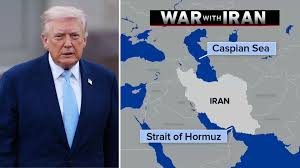
    But this spike isn’t random. Ongoing chaos in energy markets—especially around the Strait of Hormuz and Trump’s war with Iran—has thrown oil supply chains all over the world into disarray. That little waterway handles a fifth of the planet’s oil every day. Industry experts say these shipping problems are here to stay, and you shouldn’t expect gas to drop below $3 anytime soon, maybe not even next year.

    People aren’t blind to all this. Polls show that Trump’s approval is dropping. In a Quinnipiac poll, 65% said Trump’s policies deserve at least “some” or “a lot” of the blame for higher gas prices. Then there’s the stock market—wild swings, driven by the Trump’s unpredictable announcements and trade moves like tariffs, are now blowing up the retirement plans folks thought were safe.

    But honestly, it runs deeper than just the numbers. The way the national conversation is shifting feels heavy and exhausting. There have been organized attacks on the free press, and weird feuds, like Trump going after the Pope. The war on Iran stands totally opposed to the “Just War Doctrine” at the heart of the Christian faith, exactly as the Vicar of Christ put it.

    What really has people worried is the reckless language Trump uses around foreign conflicts. He fired off a warning on Truth Social, saying a “whole civilization will die” when talking about Iran. Jake Tapper from CNN brought up how Republicans—like Rep. Elise Stefanik (R-N.Y.)—rush to criticize campus protesters but stay quiet about these apocalyptic threats from the president. The administration loves acting strong on national security, but all this tough talk only isolates the country and stirs up global danger. Talk about leaving NATO? That’s not just irresponsible—it’s a big risk for America’s security.

    Manufacturing jobs keep disappearing. Food prices keep climbing. The United States’ reputation is getting shakier. Blaming everything on bad luck is just a way to look away from reality. This is what happens when a president’s leadership is all about picking fights instead of working together or thinking things through.

    If you look at slowdowns in manufacturing, shrinking savings, and a pushier attitude on the world stage, you start to see the pattern. America’s problems aren’t just random—they’re the result of leaders. Trump, who care more about grudges than solving real problems. Americans deserve more—leadership that brings stability, sticks to the facts, and fights for actual peace around the world. We deserve better than Donald Trump and the Republican leadership in Congress.
  • Trump’s Iran Conflict Fuels Highest Wholesale Inflation in Three Years

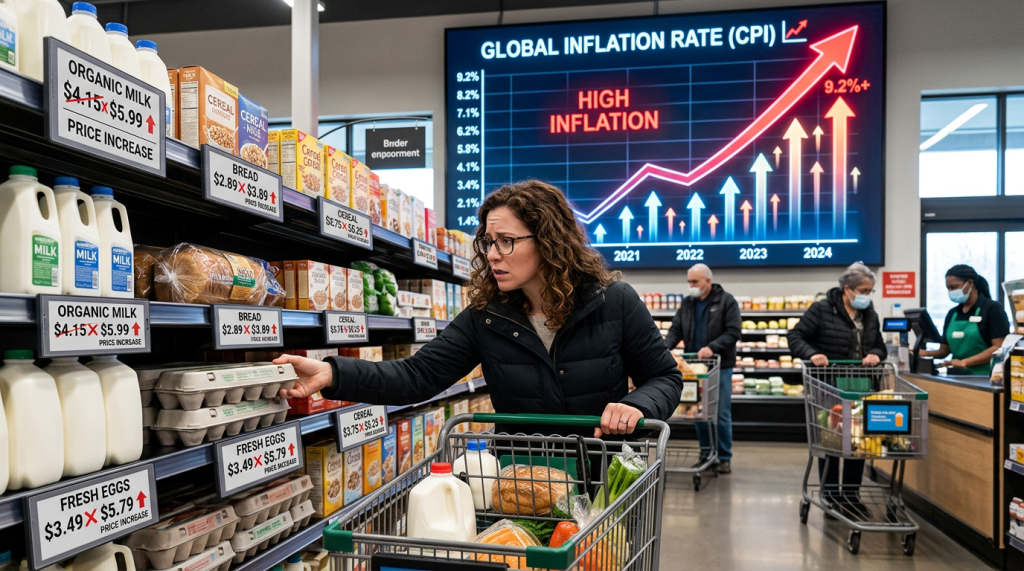
    Grocery store shelves showing price increases on milk, bread, eggs, and cereal

    Blue Press Journal (DC) – The escalating military engagement with Iran has propelled American producer inflation to its highest level in over three years, with the Labor Department confirming that the Producer Price Index surged 0.5% in March 2026 and climbed 4% annually. According to Bloomberg, the spike stems primarily from an 8.5% monthly explosion in energy costs as regional hostilities disrupt critical supply chains, while the Washington Post reports that retail gasoline prices have pushed consumer inflation to 3.3% over the past year.

    In spite of this growing pressure, President Trump continues to insist on reducing interest rates further, an action that the Financial Times observes runs counter to the emerging agreement between policymakers that there is a need to adopt stricter measures to avoid the economy from overheating. Even though inflation growth was only 0.1% when volatile industries were stripped off, Reuters points out that the International Energy Agency has recently made its first reduction of global oil demand forecasts since the COVID-19 period due to infrastructure sabotage and the closing of the Strait of Hormuz.

    Given that food costs offer little in terms of relief following the volatility seen in February, the potential disconnect between the government’s military and economic policies suggests that market uncertainty may persist even after the mid-term elections.

  • Why Donald Trump’s War on Iran Was a Costly Mistake

    Blue Press Journal – Donald Trump’s decision to launch a full‑scale war on Iran has already proven disastrous for the U.S. economy. By disrupting the Strait of Hormuz—through which about 20 % of global oil shipments flow—the conflict spiked crude prices by nearly 12 % in just two weeks, Reuters. Higher pump prices translate directly into elevated consumer‑price inflation, eroding purchasing power for American families already strained by lingering post‑pandemic price hikes, Bloomberg.

    Beyond the immediate fuel shock, the war has forced the Federal Reserve to confront a new inflationary spiral, prompting talks of an accelerated rate‑hike cycle that could choke off economic growth,Wall Street Journal. The longer‑term fallout is even more severe: sustained military spending drains fiscal resources, drives up the national debt, and distorts capital allocation away from productive sectors such as renewable energy and infrastructure—areas critical for long‑term competitiveness, NY Times.

    Critics argue that Trump’s reckless foreign policy ignored diplomatic alternatives and ignored expert warnings that a regional conflict would trigger a global supply‑chain crunch, AP News. The result is a distorted economy, soaring living costs, and an American public paying the price for a war that could have been avoided.

  • Trump’s Iran War Sparks a Chaotic Market Correction: Stocks Plunge as Economic Turmoil Escalates

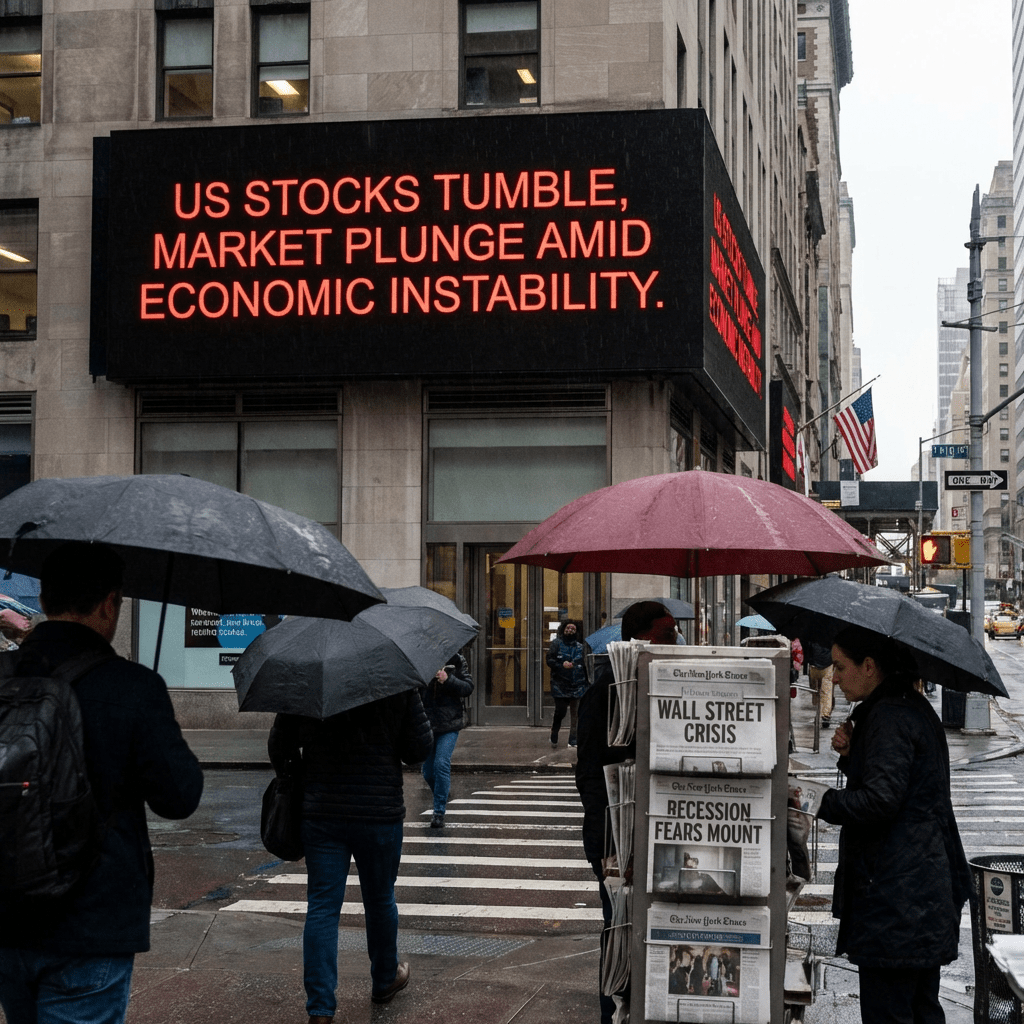
    Digital sign: US STOCKS TUMBLE, MARKET PLUNGE AMID ECONOMIC INSTABILITY. Newspapers: WALL STREET CRISIS, RECESSION FEARS MOUNT.

    Blue Press Journal – President Donald Trump’s escalating military confrontation with Iran has precipitated a severe market selloff, sending U.S. stocks tumbling Friday as investors grapple with mounting economic instability. The aggressive posture toward Tehran has triggered widespread anxiety across global financial centers, with the Russell 2000 index of small-cap firms plunging 2.7% into official correction territory—defined as a decline exceeding 10% from recent peaks—according to CNN.

    Major indices suffered parallel losses, with the Dow Jones Industrial Average dropping 444 points (0.96%), the S&P 500 sinking 1.51%, and the Nasdaq Composite falling 2.01%, briefly entering correction territory during Friday’s session. “The stock market remains in negative territory for the year, and has made new 2026 lows this week, which suggests that the market may not have yet found its bottom,” David Laut, chief investment officer at Kerux Financial, told CNN.

    The administration’s war strategy has exacerbated inflationary risks as energy costs spike, forcing central banks worldwide to reconsider interest rate trajectories. This uncertainty propelled U.S. Treasury yields to their highest levels since last July, while gold experienced its worst weekly performance since 1983, Reuters reports. Business leaders now face heightened volatility as military expansion threatens sustained economic disruption.

  • Geopolitical Turbulence: How the Iran Conflict, Ignited Under Trump, Threatens Global Economic Stability

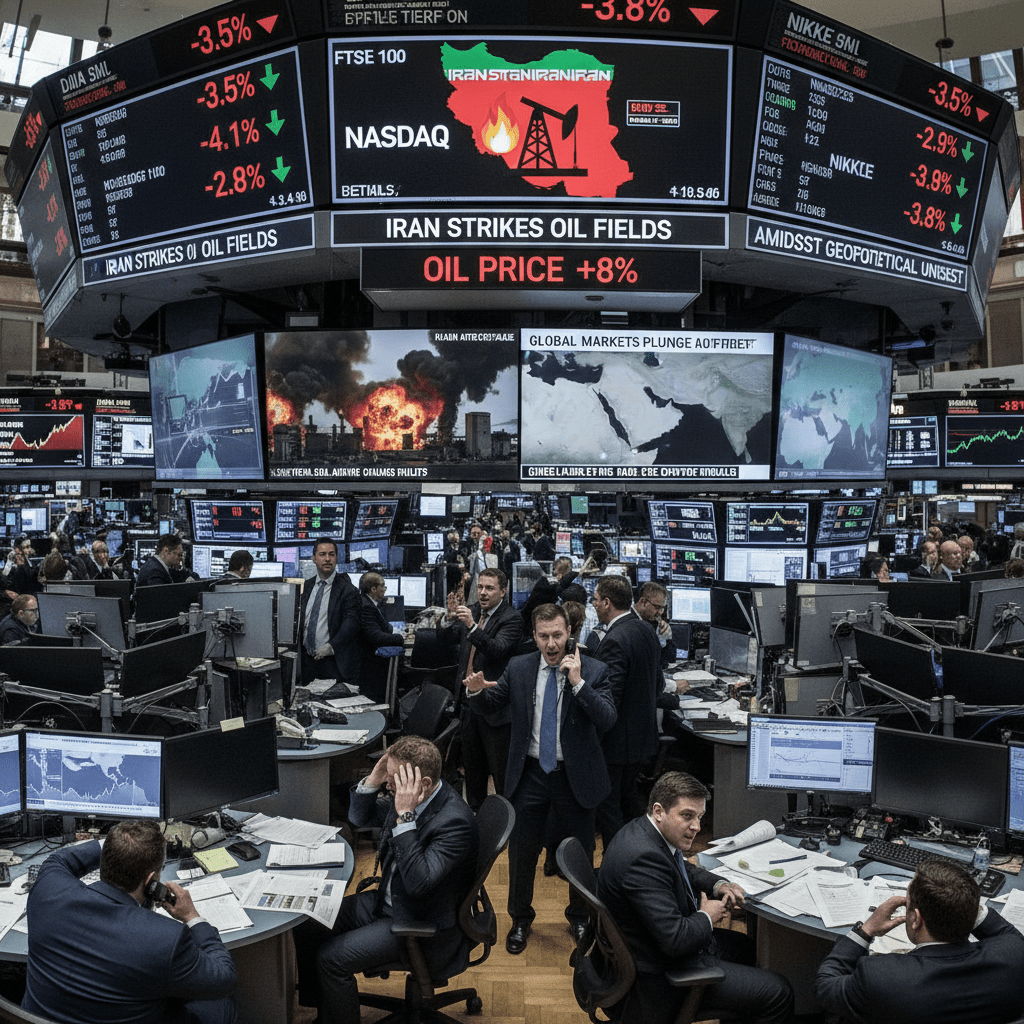
    Trading floor with screens showing IRAN STRIKES OIL FIELDS and falling stock indices.

    The Economic Fallout of Trump’s Iran Conflict

    Blue Press Journal – The global energy landscape is currently facing a catastrophic destabilization. Following targeted Iranian strikes on critical energy infrastructure in the Gulf—specifically two major refineries in Kuwait and Qatar’s vital Ras Laffan natural gas terminal—Brent crude has surged toward the $115 mark. As Tehran’s offensive disrupts the flow of approximately 20% of the world’s liquefied natural gas (LNG), the specter of a “macro wrecking ball” hanging over the global economy has become a grim reality.

    A Manufactured Crisis and the Trump Administration

    While the physical damage to the Strait of Hormuz and surrounding facilities is undeniable, financial analysts and geopolitical experts are increasingly pointing the finger at the White House. Critics argue that the Trump administration’s decision to initiate this conflict was a strategic blunder of historic proportions. According to reports from The New York Times, high-level security officials previously indicated there was no immediate or imminent security threat from Iran that warranted a full-scale kinetic engagement. 

    By prioritizing a hawkish foreign policy over regional stability, the administration has arguably invited the very energy crisis it claimed to prevent. This “war of choice” has now pushed the national average price of gas to a staggering $3.88 per gallon as of March 19, 2026, placing an immense burden on American households.

    Global Market Contagion

    The economic repercussions are being felt far beyond U.S. borders. On Thursday, Brent crude jumped 6% to $113.77 per barrel, a massive leap from the sub-$73 levels seen prior to the commencement of hostilities. The Financial Times reports that European natural gas benchmarks have doubled in just thirty days, threatening a wave of “debilitating inflation” across the continent.

    Global indices are reflecting this instability:

    • Japan’s Nikkei 225 plummeted 3.4% as the Bank of Japan froze interest rates.
    • Germany’s DAX and London’s FTSE 100 both saw losses exceeding 2%.
    • Wall Street futures remain in the red as the Federal Reserve warns that persistent inflation, fueled by the war, limits their ability to provide further interest rate relief.

    As the Strait of Hormuz remains effectively shuttered to tanker traffic, the question remains: was the pursuit of this conflict worth the systematic dismantling of global economic stability? For now, the world pays the price at the pump and in the markets for a war that many intelligence experts claim was entirely avoidable.

  • The White House had a war plan but no economic plan—and American drivers paid the price

    Trump’s 2026 Iran War: How $140 Oil Tanked the American Economy

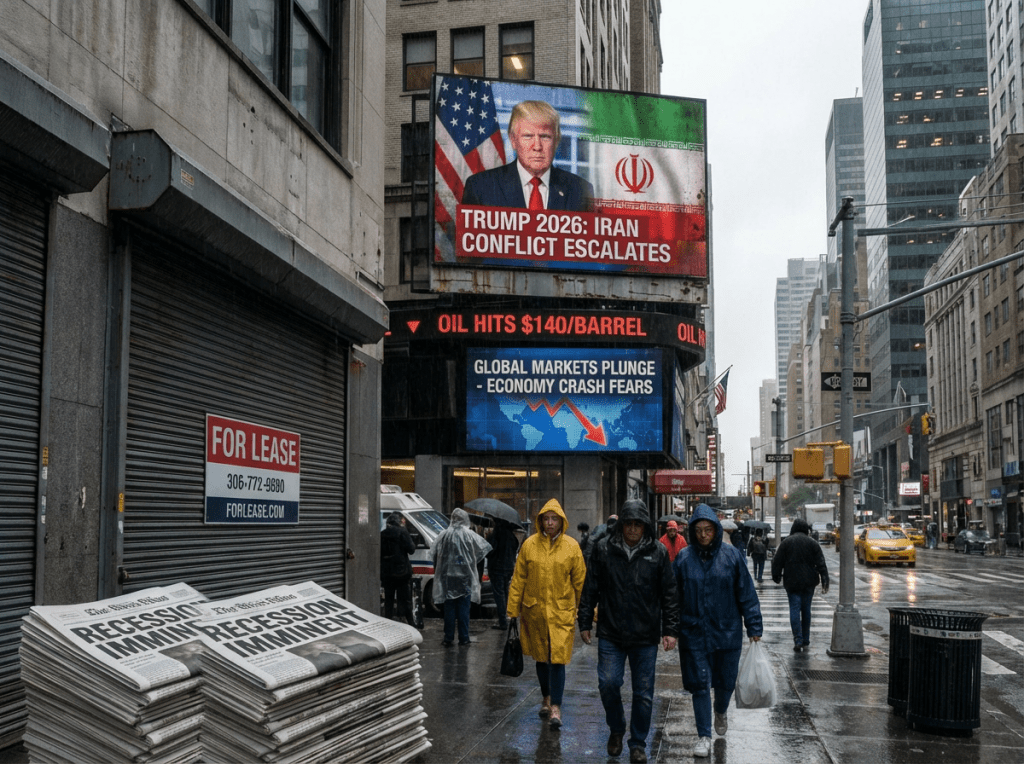
    Billboards display headlines about Trump 2026 Iran conflict, oil prices, and market crashes.

    Blue Press Journal – When President Trump ordered strikes on Iran, administration officials promised a “short, decisive conflict.” What Donald Trump failed to calculatecatastrophically—was the immediate collapse of energy markets and the devastating ripple effect across the American economy.

    West Texas Intermediate (WTI) Crude vs. Retail Gasoline Prices – Jan 2026 → Apr 2026based on estimates

    MonthWTI Crude (USD / bbl)Retail Gas (USD / gal)
    Jan$86.0$2.98
    Feb$100.0$3.48
    Mar$114.0 +$3.86
    Apr projected$140.0 +$6.80

    The economic impact was immediate and brutal. As Iranian mines and missile threats choked the Strait of Hormuz, global supply chains seized. American consumers can face $6+ per gallon gasoline within weeks, triggering which will cause inflationary pressure that will erase wage gains, stock market prices and crush discretionary spending. The transportation sector will hemorrhaged profits while manufacturing faced energy costs not seen since 2008.

    The administration’s war planning contained no credible energy contingency strategy. Despite Pentagon warnings that Hormuz closure would disrupt 20% of global oil shipments, Trump dismissed price concerns as “temporary fluctuations” and failed to coordinate with allies on alternative supply routes. Strategic Petroleum Reserve releases will provide insufficient against sustained disruption.

    The result: can be a stagflationary spiral that pushes the economy into recession by Q3 2026, with middle-class families bearing the burden of strategic miscalculation.

    DateS&P 500 Index
    Feb 1, 20264500
    Feb 15, 20264200
    Feb 28, 20264000
    Mar 1, 20263800