by Winston Wendell
The individuals leading the Trump administration believe that the significant policy changes they are implementing are aimed at restoring America to its “greatness.” But for anyone born between the late nineties and the early 2010s, things look a lot darker. As Donald Trump’s second term picks up speed, Gen Z and Millennials are facing a blunt truth: the American Dream isn’t just on hold it’s getting destroyed by his policies.
The current political scene feels way bigger than just another round of debates in Washington. It’s more like a high-stakes battle over whether the future is even viable for young Americans. With climate protections getting rolled back or shelved and economic pressures tightening, Trump’s “America First” agenda is starting to look like “America Last”!
The Environmental Foreclosure
The administration’s sudden shift back toward fossil fuels is a significant point. Despite breaking new records for global temperatures, the Trump White House has systematically dismantled the Inflation Reduction Act’s green energy programs and pulled out of the Paris Accords. The New York Times reported that their “energy dominance” plan, if that’s what you call it, sidelines renewables, even though those sectors were poised to create millions of tech jobs for young college graduates.
For a 22-year-old graduating college student trying to start their career, “drill, baby, drill” isn’t just a political slogan but it’s a threat to the green economy that was supposed to emerge. By going for short-term oil profits instead of long-term climate stability, the administration is basically selling out the planet’s and their future’s for quick political wins. Now with the price of oil with the Iran War … we clearly see the need for a back-up plan the green energy gird would provide America. The rest of the world sees renewable energy as the future, Trump is still stuck in the 20th century.
The Housing Market is Stuck in a State of Stagnation
Young Americans are feeling the economic squeeze like never before. While Trump policies keep propping up corporate and billionaire tax cuts, the average young American sees a housing market that’s more like a fortress than a welcoming community. The hope for the American dream, like them owning their own home is slipping away.
Interest rates are still high mostly to blame to the famous “Trump Tariffs” and the total lack from Trump of an economic plan other than huge tax breaks for billionaires. The administration isn’t doing much about the shortage of affordable housing either. So the dream of owning a home just keeps slipping away. It’s clear that tariffs are increasing the cost of construction materials and deregulation has already made housing even pricier. That may be helping the rich but it’s leaving first-time buyers stranded. For many young people, living with their parents is their only option with the cost of housing now.
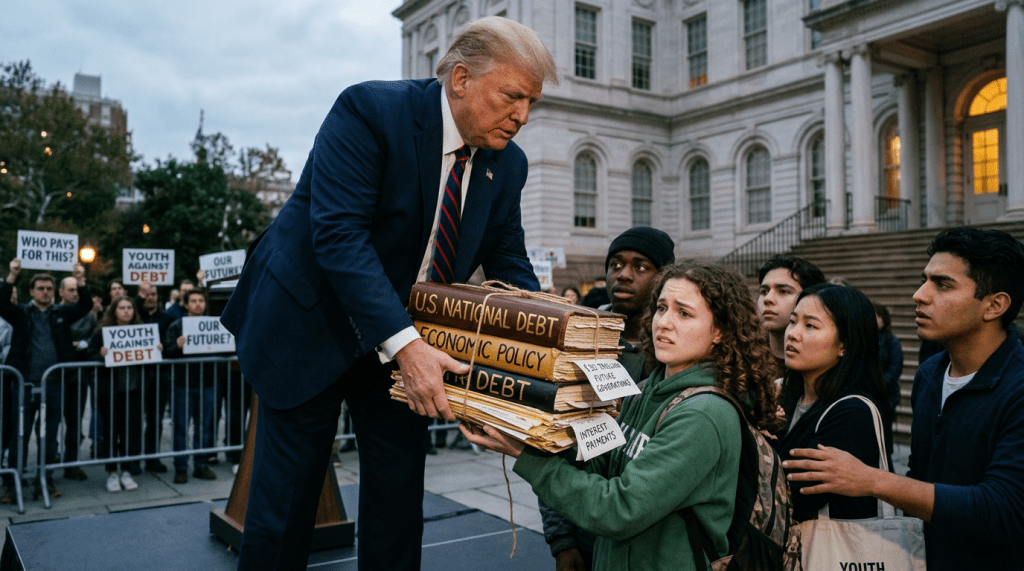
The Student Debt Anchor
No issue shows the generational divide as sharply as student loans. While the Biden administration tried ways to ease this burden and forgive a portion of the loans, the current Trump Department of Education is making things tougher by eliminating programs that help student debt.
America’s $1.7 trillion student debt problem is more than just numbers, it’s a heavy weight holding young people down and out of the economy. By the administration removing flexible repayment options and slowing and eliminating relief programs, Trump is basically locking an entire generation out of economy. The reverting to a profit-driven approach for federal lending transforms education into a trap rather than a public good. For young workers, this doesn’t feel like “fiscal responsibility”, it’s a strategic blow to their hopes of starting a business, buying a home, or building a family. You know the “American Dream”.
Healthcare: The safety net is deteriorating
The 2025-2026 budget proposals the Republicans-Trump are advancing targets the Affordable Care Act (ACA), which has been critical for young adults who stay on their parents’ plans until they’re 26. Trump’s push to “end” or “replace” the ACA—without a clear alternative risks leaving millions of freelancers and gig workers exposed.
Plus, new Medicaid work requirements and fewer mental health subsidies come just as mental health crises among young people hit record highs. These changes undoubtedly will land hardest on young low-income workers, opening up a “health gap” that could take decades to close.
Will frustration in 2026 translate into votes?
The Trump administration and Congressional Republican policies have adversely impacted young Americans and their future prospects. The question arises whether their frustrations will translate into action and votes against the Republican Party in the 2026 congressional elections. Current polling indicates a potential Democratic takeover of at least the House of Representatives. That outcome would at least provide a barrier against Trump’s most severe budget cuts. While it may sound simplistic, it is crucial to for them to recognize that they hold the power to shape their own futures.