BLUE PRESS JOURNAL – February 28, 2026.
The drums of war are beating once again, but the price tag attached to a kinetic confrontation with the Islamic Republic of Iran is a figure that the American taxpayer may not be prepared to stomach. Donald Trump authorized a broad-scale strike today, the immediate financial, military, and logistical drain would be astronomical, potentially eclipsing the early phases of the Iraq and Afghanistan interventions.
In a move critics describe as a reckless escalation that prioritizes “maximum pressure” over diplomatic stability, the costs of a one-week campaign against a sophisticated adversary like Iran would reach into the tens of billions of dollars.
These figures are not precise; they are derived from publicly available sources and are not meant to serve as official data. Our understanding of the military strategy is limited to information provided by public news sources.
1. The Opening Salvo: Missiles and Munitions
A standard “shock and awe” opening against Iranian air defenses would rely heavily on stand-off weapons to minimize U.S. pilot casualties.
- Tomahawk Land Attack Missiles (TLAM): A single Tomahawk Block V missile costs approximately $2.1 million. In a scenario similar to the 2018 strike on Syria—but scaled for Iran’s much larger territory—the U.S. would likely fire upwards of 200–300 missiles in the first 24 hours to disable radar and S-300 surface-to-air missile batteries.
- 24-Hour Cost: ~$420 million to $630 million.
- Precision Guided Munitions (PGMs): Strikes by F-35s and B-2 Spirits would utilize GBU-57 “Bunker Busters” (MOP) specifically for hardened sites like Fordow. These specialized munitions cost millions per unit, with standard JDAMs adding several hundred thousand dollars per sortie.
2. The Naval Price Tag: The Carrier Strike Group (CSG)
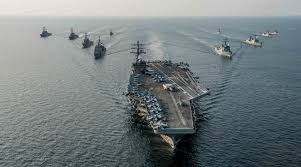
To launch such an attack, the U.S. requires at least two Carrier Strike.
- Daily Operating Costs: According to the Congressional Research Service (CRS), it costs roughly $6.5 million per day to operate a single Carrier Strike Group. For two CSGs, that is $13 million a day, regardless of whether a single shot is fired.
- One-Week Total: ~$91 million in base operations alone. This does not include the “combat pay” for the approximately 7,500 sailors and 2,000 Marines typically attached to such an expeditionary force.
3. Air Power: The Cost of the Skies
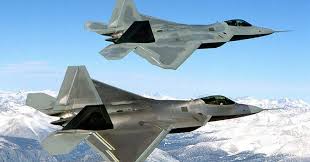
Iran possesses the most sophisticated air defense network the U.S. has faced since the Cold War. Maintaining air superiority would be a costly endeavor involving F-35s, F-22s, and B-21 or B-2 bombers.
- Flight Hour Costs:
- F-35A/C: ~$42,000 per hour.
- F-22 Raptor: ~$85,000 per hour.
- B-2 Spirit: ~$130,000 per hour.
- The Weekly Bill: Assuming 24/7 Combat Air Patrols (CAP) and refueling missions (KC-46 tankers), the aerial fuel and maintenance bill for a seven-day campaign could easily exceed $1.5 billion.
4. Personnel and Logistics: The “Hidden” Costs
Critics of military intervention often overlook the logistical tail. Moving fuel, spare parts, and specialized personnel into the CENTCOM Area of Responsibility (AOR) requires a massive uptick in Department of Defense (DoD) spending.
- Hazardous Duty Pay: For tens of thousands of service members, a transition to active combat status triggers immediate budgetary increases for “Hostile Fire Pay” and “Hardship Duty Pay.”
- Global Stock Market Reaction: Historically, U.S. strikes in the Middle East cause a spike in oil prices. Analysts suggest a week-long conflict could push Brent Crude to over $100–$130 per barrel, effectively acting as a “tax” on every American consumer at the pump.
5. Stocks and The Defense Industry
While the broader market usually reacts with volatility, “Defense Primes” (Lockheed Martin, Raytheon, Northrop Grumman) often see their stocks surge during such escalations.
- The Irony of Conflict: As the national debt nears $35 trillion, a conflict with Iran would require a supplemental “Emergency Funding” bill from Congress. Based on historical data from the Watson Institute’s Costs of War Project, localized conflicts in the Middle East have a “tail cost” involving veteran healthcare and interest on borrowed money that triples the initial expenditure over time.
The Journalist’s Assessment: A Reckless Expenditure?
From a critical perspective, the attack today represents more than just a military maneuver; it is a massive transfer of public wealth into the military-industrial complex for a conflict with no clear “exit strategy.” Unlike the 1991 Gulf War, Iran has a significant “asymmetric” capability to retaliate via proxies in Iraq, Lebanon, and Yemen, meaning the “one-week” cost is a fantasy.
Should the conflict expand to the Strait of Hormuz—through which 20% of the world’s oil passes—the global economic damage could reach trillions of dollars, making the cost of the missiles look like pocket change.
In the eyes of many foreign policy experts, this is not just a military risk; it is an economic suicide mission.
.
 Blue Press Journal