by Winston Wendell
While energy prices soar and the war enters its seventh month, the President is attempting to rewrite his initial promises of a “short excursion.”
As the midterms approach, a tidal wave of voter frustration is hitting the administration. The culprit? A seven-month war with Iran that has stretched far beyond the break-even point that President Donald Trump promised. That “short” strike, remember, has driven up the price of gas and inflation, hurting the economy.
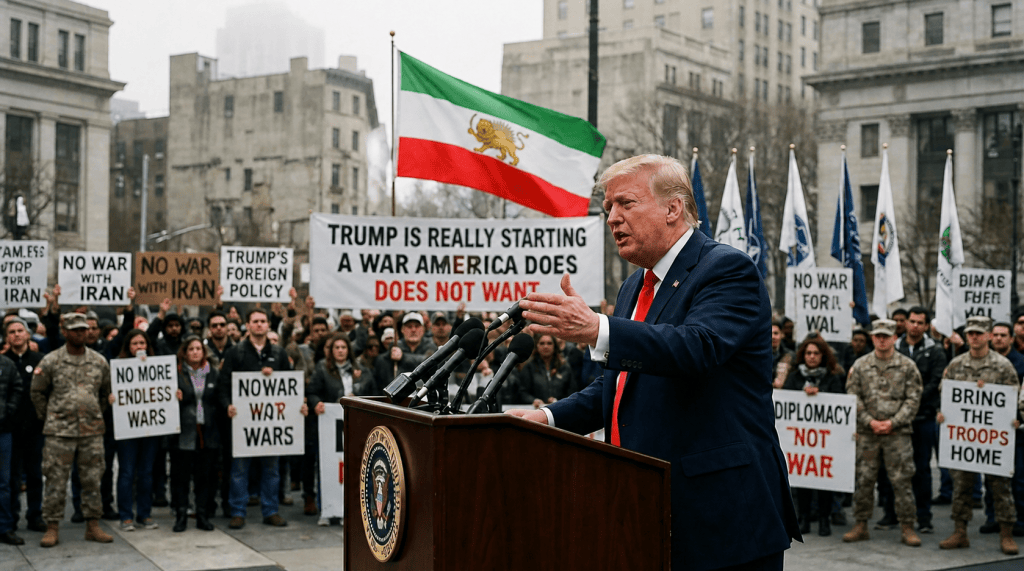
Now, facing anger on the campaign trail, Mr. Trump is pushing to revise the history of the war.
In a move that would make movie-makers weep, the President is claiming he accomplished his main goal almost immediately.
The “One Night” Rewrite
President Trump began his revisionist history on Truth Social on October 1.
“I stated, numerous times, that it would take 4-6 weeks to get rid of THE IRAN NUCLEAR THREAT, and I did it in one night!” he boasted. “This is a MAINTENANCE mission to keep it that way!”
He repeated that line in Oklahoma City, hours later, when he told voters that the Iranian nuclear threat was “eliminated right away” and that he had “completed” his “4-to-6-week” mission “in one night.”
But history tells a different story.
As the war started in earnest along with Israel on February 28, Mr. Trump always used the 4-6 week time frame for the entire war, not just to take out Iran’s nuclear facilities.
A Review of the Public Record
When Time magazine asked him in late-September what he meant — as he suggested in late-September that the “short excursion” should have been shorter — he blamed the press for suggesting he needed more time.
“I wanted to go farther. I wanted to go more! Everyone’s talking about the 4-to-6-week period, but it wasn’t about the nuclear facilities.” he argued.
But the evidence indicates otherwise.
From March 1, when he and Vladimir Putin were watching the first Tomahawk missiles hit Iran from the deck of the USS Eisenhower, to March 31 — a full month into the war — Mr. Trump has discussed the time-line for hostilities:
March 1 & 2nd:
After the Tomahawk strikes opened the war, Mr. Trump told
The New York Times and CNN that he envisioned the war lasting “four to five weeks,” and that “we’re ahead of schedule” in his view.
March 7:
While on Air Force One, Mr. Trump described the assault on Iran as a “short excursion.”
Days later, Mr. Trump tweeted that the United States had “already won.”
March 31:
A month into the war, Mr. Trump said in the Oval Office that the conflict would last “within two weeks maybe, two weeks, maybe three.”
Not once during his briefings on the war did the President specify that the 4-to-6-week plan only applied to the nuclear aspects, while the regular war would be ongoing. When the White House was asked for comments on this, they could not find any comments from Mr. Trump this year stating this.
Experts: Did Trump Really “Liquidate the Threat”?
That’s not the only problem with Mr. Trump’s assertion that he “got rid of the Iranian nuclear threat in one night.” Intelligence experts say that while February 28 was a “huge blow” to Iran’s nuclear program, the President has a long way to go before he can say he has “eliminated” their nuclear capabilities.
According to experts, the February 28 drone strike that killed Supreme Leader Ayatollah Ali Khamenei was probably “destabilizing” of Iran’s nuclear program, but “significant amounts of highly enriched uranium remain unaccounted for,” and whether or not the equipment necessary to enrich that uranium was destroyed is “unclear.”
Pentagon, and the Prolonged “Excursion.
While Mr. Trump has been rewriting the clock, Defense Secretary Pete Hegseth has been much more circumspect. Not only did Mr. Hegseth avoid giving a firm time-frame for the war throughout March, when he was asked if Mr. Trump’s claim that the war would be over in four weeks was wrong, he said that the President simply “has latitude to talk about how long it lasts.”
By mid-March, Mr. Hegseth had grown even more cagey, saying that the war would last “as long as it takes” to accomplish the United States’ goals, and that “the President controls the throttle.”
What’s Trump Got Us Into?
The President is currently in damage control after claiming the war in Iran would be over in 4 to 6 weeks when he announced it in early-March. By stating he accomplished his main goal — taking out Iran’s nuclear arsenal — in “one night,” Mr. Trump hopes to retrofit his initial comments to the war.
Unfortunately for him, history shows that for the first two months of the war, he consistently told the American people the “short excursion” would last “four to six weeks. With gas prices rising and the midterms approaching, that narrative may prove very expensive, to America.

March–May
- Early March average: $3.15 per gallon
- Mid-March average: $3.63 per gallon
- End of March average: $4.13 per gallon
- April peak average: $4.25 per gallon
- May high average: $4.61 per gallon