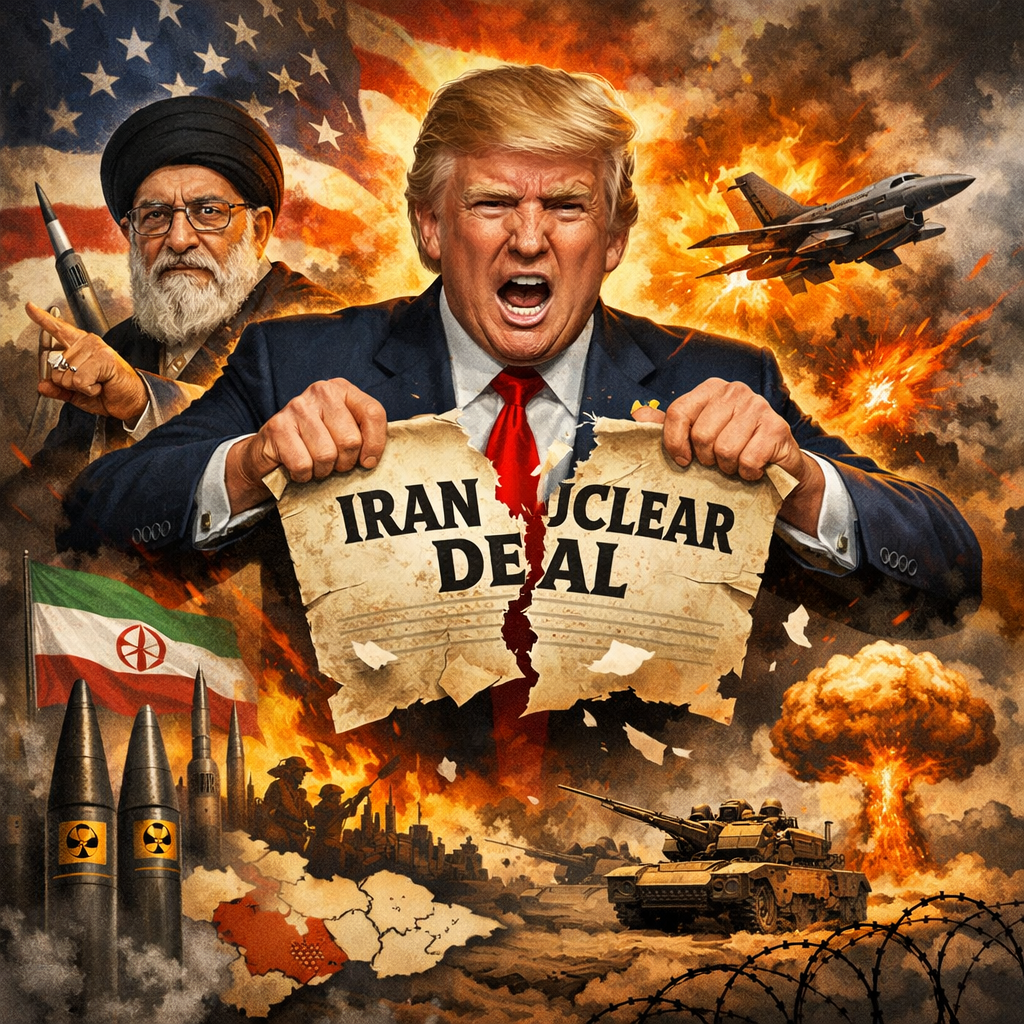
Blue Press Journal – The Trump administration’s declaration of victory following recent hostilities with Tehran rings hollow against a backdrop of unresolved crises and diplomatic retreat. What officials characterize as a successful military campaign reveals, upon closer inspection, a strategy that has left Iran’s nuclear ambitions intact and its regional influence largely undiminished.
The fragility of the announced ceasefire became immediately apparent when Iranian parliamentary speaker Mohammad Bagher Qalibaf accused Washington of negotiating in bad faith. As Reuters reported, the agreement’s explicit exclusion of the ongoing Israeli military operations in southern Lebanon—a conflict that has claimed over 1,500 lives and displaced more than one million civilians according to United Nations estimates—undermined Tehran’s willingness to engage in further bilateral talks. White House confirmation that Lebanon remained outside the ceasefire’s scope has validated Iranian accusations of American duplicity.
Secretary of Defense Pete Hegseth’s claims of degrading Iran’s conventional capabilities ignore the reality of asymmetric warfare that Tehran has mastered. While the administration celebrates tactical gains, Iran’s effective blockade of the Strait of Hormuz sent global oil markets spiraling, demonstrating economic leverage that military strikes cannot neutralize. Bloomberg analysis indicates this pressure directly inflated American energy costs, forcing President Trump to contemplate unprecedented “joint venture” arrangements that would effectively cede partial control of this vital artery to Tehran—far from the decisive dominance initially promised.
The administration’s nuclear containment strategy appears equally untenable. Despite Hegseth’s assertions regarding Iran’s 970-pound stockpile of highly enriched uranium, The Washington Post notes there remains no credible mechanism compelling Tehran to voluntarily surrender its ultimate survival deterrent. The regime’s survival—cemented by the seamless succession from Ayatollah Ali Khamenei to his son Mojtaba, as documented by The New York Times—belies administration assumptions that military pressure would catalyze domestic collapse.
Ultimately, Iran has achieved its primary strategic objective: endurance. The Islamic Republic has weathered American bombardment while retaining the capacity to destabilize regional energy flows. Rather than securing a decisive victory, the Trump administration has engineered a precarious stalemate that leaves the United States negotiating from a position of diminished leverage.
 Blue Press Journal