Author: Staff Reporter

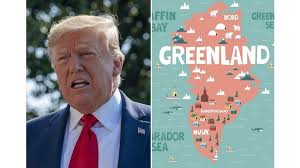
  • President Trump’s Greenland Tariffs and Military Threat: A Strategic Misstep That Risks NATO Unity

    Trump Risks to NATO and Global Stability

    Blue Press Journal – President Donald Trump’s recent announcement of a 10 percent tariff on Denmark and key European allies — paired with hints at possible military action to acquire Greenland — has sparked outrage across the political spectrum. Criticism has poured in not only from Democrats but also from prominent Republican senators like Thom Tillis (R-N.C.) and Lisa Murkowski (R-Alaska), who warn that these moves could fracture the NATO alliance, damage U.S. businesses, and hand geopolitical advantages to adversaries such as Russia and China.


    The Tariff Announcement

    On Saturday, Trump announced that 10 percent import taxes would be applied to Denmark, Norway, Sweden, France, Germany, the United Kingdom, the Netherlands, and Finland starting February 1, with rates rising to 25 percent by June 1. This sweeping measure targets some of America’s closest allies — nations that form the backbone of the North Atlantic Treaty Organization (NATO).

    The timing was no accident. Just days earlier, troops from several European countries arrived in Greenland to participate in joint military exercises led by Denmark. Rather than view this as a sign of allied cooperation, Trump framed it as a challenge to U.S. ambitions to control Greenland — ambitions he has been vocal about since 2019, when he publicly expressed interest in buying the territory.


    Greenland: Strategic Importance and Diplomatic Tensions

    Greenland’s location in the Arctic makes it strategically vital for defense and trade routes, especially as melting ice opens new shipping lanes. The U.S. already maintains a presence at Thule Air Base, but Trump’s suggestion of outright acquisition — and now the threat of military force — represents a sharp escalation.

    According to Danish officials, Greenland is not for sale. Denmark’s Prime Minister Mette Frederiksen famously called Trump’s proposal “absurd” in 2019, a remark that reportedly prompted Trump to cancel a state visit. That diplomatic rift has never fully healed, and the new tariffs risk deepening the divide.


    Republican Pushback

    While Trump often enjoys unified support from his party, this issue has triggered rare public dissent. Senator Thom Tillis criticized the idea of seizing territory from a NATO ally as “beyond stupid,” warning that it undermines Trump’s own stated goal of strengthening NATO.

    Lisa Murkowski echoed these concerns, calling the tariffs “unnecessary, punitive, and a profound mistake.” She stressed that such actions push European allies further away while offering zero tangible benefit to U.S. national security.

    Their warnings align with polling data showing that Americans overwhelmingly oppose military action to acquire Greenland. The notion of using force against an ally has alarmed foreign policy experts, who argue that it sets a dangerous precedent and erodes trust.


    Risks to NATO and Global Stability

    NATO’s strength lies in unity and mutual defense commitments. By imposing punitive tariffs on member states and suggesting military intervention against one of them, Trump risks splintering the alliance. This plays directly into the hands of leaders like Vladimir Putin, who have long sought to weaken NATO from within.

    The Danish-led exercises in Greenland were intended to bolster Arctic security against potential Russian expansion. Trump’s hostile response undermines that effort, forcing allies to divert resources toward defending against a hypothetical U.S. incursion rather than focusing on shared threats.


    Economic Consequences

    Beyond geopolitical fallout, Trump’s tariffs will likely hurt American businesses and consumers. Denmark and other targeted allies export high-quality goods — from pharmaceuticals to renewable energy technology — that support U.S. industries. Tariffs will raise costs, reduce competition, and strain supply chains at a time when global markets are already volatile.

    Trade wars have historically led to retaliatory measures. European nations could respond with tariffs of their own, further escalating tensions and harming sectors like agriculture, manufacturing, and technology.


    A Path Toward Diplomacy, Not Division

    President Trump’s aggressive stance toward Greenland — combining economic punishment with the possibility of military force — represents a high-stakes gamble that could damage U.S. credibility, weaken NATO, and aid rival powers. The bipartisan criticism from Senators Tillis and Murkowski underscores that this is not a partisan issue, but a matter of national interest and international stability.

    Rather than pursuing coercive tactics, the United States should focus on collaborative Arctic strategies with Denmark and its allies. Diplomacy, joint security initiatives, and respect for sovereignty are far more likely to strengthen America’s position in the Arctic than tariffs or threats.
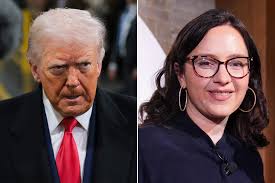

  • Bari Weiss Accused of Pushing Dubious Pro-Trump Propaganda at CBS Amid Plummeting Ratings

    Exposing Bari Weiss’s reckless editorial decisions at CBS News, her allegiance to Trump-era narratives, and the network’s 40% decline in viewership.

    Blue Press Journal – Amid a deepening crisis of credibility and a historic collapse in viewership, CBS News, under the leadership of Editor-in-Chief Bari Weiss, is facing intense internal backlash for publishing a thinly-sourced report that appears to amplify Trump administration talking points. The controversial story, which claimed an ICE agent suffered severe “internal bleeding” after a fatal shooting, was approved by Weiss despite strenuous objections from senior staff who warned it was unverified and likely political propaganda.

    The report, based solely on anonymous sources regarding the shooting of 37-year-old Renee Nicole Good by ICE agent Jonathan Ross, immediately triggered red flags within the CBS newsroom. According to sources, two senior network officials sounded the alarm, pointing out the report’s lack of crucial details and questionable provenance. Their concerns were not just noted; they were actively overruled in a decision that has demoralized journalists committed to basic factual standards.

    Internal emails reveal a desperate plea for journalistic integrity that was ultimately ignored by top leadership. A medical producer urgently cautioned that the vague claim of “internal bleeding” required clarification, asking what specific treatment the agent received and whether he had undergone surgery. CBS News Senior Vice President David Reiter echoed these concerns in a scathing email, protesting the rush to publication. “I’m no doctor, but internal bleeding is a very broad term,” Reiter wrote, adding, “We do know that the ICE agent walked away from the incident—we have that on camera.” His warning was a clear signal that the narrative being pushed was, at best, misleading and, at worst, a deliberate fabrication.

    Despite these reservations from experienced news and medical personnel, Weiss reportedly expressed intense interest in pushing the story forward during an editorial call, steamrolling any and all opposition. As one beleaguered CBS staffer characterized the climate, “There was big internal dissension about the ‘internal bleeding’ report here last night. It was viewed as a thinly-veiled, anonymous leak by the Trump administration to someone who’d carry it online.” Under Weiss’s leadership, CBS News has seemingly become that carrier, eagerly publishing unverified claims that benefit a right-wing political agenda.

    Viewership Plummets as Trust Evaporates
    Weiss’s tenure has been marked by a steep decline in CBS News’ credibility and audience. Since her appointment in May 2022, CBS Evening News has seen its prime-time viewership drop by 40%—from an average of 2.8 million viewers in 2022 to just 1.68 million by late 2024. The network’s digital reach has also contracted, with social media engagement down 35%. Critics argue that Weiss’s push for Trump-sympathetic stories and her penchant for controversial, unverified claims have alienated both audiences and advertisers.

    The decision to run the dubious ICE agent story serves as a stark illustration of a news division at war with itself. With agenda-driven leadership overriding the cautions of its own journalists, CBS News under Bari Weiss is facing a catastrophic loss of trust—from its staff and the public alike. As ratings continue to freefall, the network’s future appears inextricably linked to the controversial and damaging path charted by its editor-in-chief.

  • Pentagon Blasted For Turning U.S. Military Newspaper Into Trump ‘Mouthpiece’

    Critics say the Trump administration’s move to limit editorial independence at Stars and Stripes threatens press freedom for U.S. service members

    Blue Press Journal – The Pentagon faced a backlash following its decision to effectively take control of the legendary U.S. military newspaper Stars and Stripes and crack down on its apparent “woke” tendencies.

    Defense Department spokesperson Sean Parnell on Thursday announced the publication would be returning to “its original mission: reporting for our warfighters.”

    It follows a controversial Pentagon’s press corps edict that saw scores of reporters leave the building, and a new Trump “loyalty test” for Stars and Stripes reporters.

    But free speech advocates hit out at out the decision to throttle an outlet that was first published during the Civil War, and whose editorial independence is mandated by Congress despite being part of Defense Department.

    Tim Richardson, journalism and disinformation program director of PEN America, said the country “needs more independent reporting – not less” as Trump’s foreign policy positions turn increasingly aggressive. 

    “American troops overseas deserve credible, trustworthy news guaranteed by the First Amendment, a cornerstone of the Constitution they defend,” he said in a statement. “Instead, the Pentagon is trying to turn this independent newsroom into a mouthpiece for the administration’s political messaging.”

    In a message to staff published in Stars and Stripes, Erik Slavin, the newspaper’s editor-in-chief, said “the people who risk their lives in defense of the Constitution have earned the right to the press freedoms of the First Amendment.”

    “We will not compromise on serving them with accurate and balanced coverage, holding military officials to account when called for,” he added.

  • Why Trump’s Healthcare Plan Fails Americans: A Critique of Vagueness, Risk, and Political Strategy

    Trump’s Healthcare Plan He Released Today Fails Americans

    Blue Press Journal (DC) – Donald Trump’s “affordability framework” for healthcare, touted as a solution to soaring drug prices and insurance premiums, has sparked significant criticism from experts, advocacy groups, and even within Congress. While the plan aims to address a pressing issue—healthcare costs for millions of Americans—the lack of concrete details, its potential risks, and its divergence from existing safeguards under the Affordable Care Act (ACA) render it inadequate, if not outright counterproductive. 

    Vagueness and Exclusion of Preexisting Conditions

    Trump’s proposal calls for allowing individuals to use government subsidies to purchase insurance plans of their choice. However, the plan conspicuously avoids specifying whether these plans would adhere to ACA mandates, including coverage for preexisting conditions. This omission has raised alarm among healthcare advocates, who argue that without such protections, people with chronic illnesses could face discrimination, unaffordable premiums, or outright denial of coverage. 

    The advocacy group Protect Our Care, among others, has lambasted the plan as a “joke” and a “gimmick,” emphasizing that Trump’s past policies have already weakened consumer protections. For instance, Trump’s administration rolled back the ACA’s community rating rules, allowing insurers to charge older Americans up to three times more than younger counterparts. Critics warn that his latest plan could exacerbate this problem by enabling insurers to offer cheaper, watered-down policies with minimal coverage, leaving vulnerable populations unprotected. 

    Failure to Address Expired ACA Subsidies

    One of the most urgent issues facing healthcare affordability today is the expiration of enhanced ACA premium subsidies, which led to a dramatic spike in costs for millions of Americans. The House passed a bipartisan three-year extension of these subsidies, which the Congressional Budget Office (CBO) estimates would add 3 million insured Americans by 2027 and 4 million by 2028. Yet Trump and Senate Republicans have stalled action on the extension, with Senate Majority Leader John Thune refusing to bring it to a vote. 

    Instead of supporting the proven solution, Trump advocates for subsidies to go directly to individuals rather than insurers—a shift that lacks a clear implementation strategy or funding mechanism. Protect Our Care accused the administration of “gaslighting” Americans by ignoring the root cause of the crisis: Trump’s own cuts to Medicaid and his refusal to reauthorize subsidies, which have left 22 million Americans in a coverage gap. “The solution isn’t rocket science,” the group stated. “It’s a clean extension of the ACA credits that passed the House.” 

    Vague Funding and No Concrete Cost-Containment Strategies

    Trump’s framework offers a broad outline but provides no specifics on how it would be funded or how it would lower drug prices—a central promise of the proposal. While Trump has long railed against pharmaceutical companies, his administration has failed to implement aggressive price negotiations that could reduce costs. Meanwhile, critics argue that his plan’s focus on subsidizing individuals rather than regulating insurers or drug manufacturers ignores systemic issues like hospital consolidation and insurance company profiteering. 

    The White House called the plan “comprehensive,” but the absence of legislative text or cost projections has led experts to question its feasibility. Without clear mechanisms to hold insurers and pharmaceutical companies accountable, the plan risks merely shifting costs rather than addressing them. 

    Undermining the ACA’s Infrastructure

    Rather than building on the ACA’s success in expanding coverage to 20 million Americans, Trump’s proposal risks destabilizing the existing healthcare market. By bypassing the ACA’s insurance marketplace rules, the plan could disrupt the system that subsidizes coverage for low- and middle-income families. Furthermore, Trump’s past attempts to repeal the ACA—and his cuts to Medicaid funding—have already eroded trust in his commitment to healthcare access. 

    Senators who blocked the House’s subsidy extension (via a unanimous consent agreement) underscored the political nature of the stalemate. Protect Our Care accused Trump of prioritizing “tax breaks for billionaires” over the needs of working families, noting that his administration’s policies have “taken a hammer to American healthcare.” 

    The Need for a Proven, Bipartisan Solution

    Trump’s healthcare plan lacks the substance, protections, and funding to meaningfully lower costs or expand access. Its omissions—particularly regarding preexisting conditions and expired subsidies—highlight its reliance on vague promises rather than tangible reforms. In contrast, the House’s three-year ACA subsidy extension, supported by bipartisan majorities and backed by the CBO, offers a clear, data-driven path forward. 

    As the midterm elections loom, Americans are sick of empty political theater and demand genuine solutions. Congress better wake up and prioritize the House’s critical extension to stabilize insurance markets or risks a public outcry as premiums spiral out of control. Meanwhile, Trump’s so-called plan is nothing more than a hollow shell, fixated on fleeting optics instead of ensuring real healthcare stability for the long haul. As Protect Our Care rightly asserts, “The American people deserve real solutions, not gimmicks.”

  • Media Manipulation: How CBS News is Spinning the Renee Good Story for the Trump Administration

    The Battle for Public Perception

    Blue Press Journal – In the chaotic aftermath of the shooting death of Renee Good by ICE agent Jonathan Ross, the Trump administration has struggled to maintain control of the public narrative. After initial attempts to label Good as a “domestic terrorist” failed to resonate with the American public, the White House appears to be shifting tactics. The new strategy relies on drip-feeding carefully curated information to a seemingly sympathetic media landscape.

    The latest chapter in this unfolding saga involves a report from CBS News, citing anonymous sources regarding the physical state of the ICE agent involved. For observers of both media ethics and political accountability, this incident raises troubling questions about the integrity of news reporting and the influence of political appointees within legacy media institutions.

    The “Sympathetic” Leak: Anatomy of the CBS Report

    Yesterday, CBS News published a report that immediately rippled through conservative media circles. The article claimed that Jonathan Ross, the ICE agent who shot and killed Renee Good, “suffered internal bleeding to the torso following the incident.” The report attributed this information to “two U.S. officials.”

    While the headline-grabbing claim of “internal bleeding” suggests a violent, life-threatening struggle, a closer look at the reporting reveals significant gaps:

    • Vague Terminology: “Internal bleeding to the torso” is a broad medical description. Without hospital records, diagnostic imaging, or independent medical verification, the phrase remains unsubstantiated.
    • Anonymous Sourcing: The officials who provided the tip have not been named, nor have they responded to follow-up inquiries, according to CBS’s own reporting.
    • Timing Ambiguity: The phrase “following the incident” is temporally vague. It could imply an injury sustained during the encounter, or a medical condition that arose hours or days later.

    Visual Evidence vs. Official Claims

    One of the most significant contradictions in this narrative lies in the available visual evidence. Video footage taken moments after the shooting depicts Agent Ross walking unassisted, handling his equipment with precision, and appearing notably composed.

    Critics have pointed out that an individual suffering from severe internal bleeding—a life-threatening condition involving hemorrhage within the abdominal cavity—would likely exhibit signs of shock, distress, or physical incapacitation. Yet, footage shows Ross drawing his weapon, maintaining his balance, and inspecting Good’s vehicle without any visible signs of distress.

    This discrepancy between the visual record and the anonymous leaks suggests that the administration’s narrative may be more about public relations than forensic fact-finding.

    The Role of the New CBS News Leadership

    To understand how such a thinly sourced story made it to air, one must look at the recent leadership changes at CBS News. In a move that critics view as an attempt to align the network’s editorial stance with the administration’s interests, the Trump administration has installed a new director widely perceived as a political loyalist.

    This appointment marks a significant shift in CBS’s editorial independence. Under this new leadership, the network’s standards for vetting information appear to have changed abruptly. While a rigorous, months-long investigation into torture at CECOT (the Terrorism Confinement Center in El Salvador) was reportedly suppressed—allegedly due to the administration’s refusal to provide an on-camera response—a dubious, anonymously sourced claim about an ICE agent’s health was published with minimal verification.

    This “two-tiered” approach to journalism—strict scrutiny for administration critics and leniency for administration allies—undermines the network’s credibility. It suggests that the new director may be functioning effectively as a “plant” for the administration, facilitating the flow of propaganda rather than independent news.

    Political Reaction: Weaponizing the Leak

    The leaked report to CBS quickly became a tool for political messaging. Vice President JD Vance took to social media to mock the public’s skepticism, stating, “While much of left has lied about this case, it turns out ramming a law enforcement officer with a car causes injuries. Who knew!”

    This reaction highlights the administration’s strategy: utilizing media leaks as “smoking gun” evidence to shut down debate. By framing the discussion around an unverified medical claim, the administration diverts attention from the central issue—the use of lethal force by a federal agent against a civilian.

    Demand Transparency and Accountability

    The reporting on Renee Good’s death has become a case study in modern information warfare. The Trump administration’s manipulation of the narrative, combined with the willingness of a compromised CBS News to act as a conduit for unverified leaks, distorts the public’s understanding of the event.

    By reporting an unverified claim from anonymous sources that aligns perfectly with the White House’s preferred narrative, Bari Weiss, as the editor-in-chief of CBS News, is not acting as a watchdog but as a stenographer. This erodes public trust and creates an environment where official narratives—no matter how thin—can be presented as fact.

  • Greenland Chooses Denmark and NATO Amid Renewed U.S. Annexation Push

    Greenland’s Prime Minister rejects U.S. annexation calls from President Trump

    Blue Press Journal — In a decisive statement on Tuesday, Greenlandic Prime Minister Jens-Frederik Nielsenre affirmed his nation’s commitment to Denmark and NATO, rejecting former President Donald Trump’s renewed calls for the United States to annex the Arctic territory. “We choose Denmark. We choose NATO,” Nielsen told reporters ahead of Wednesday’s scheduled visit by U.S. Vice President J.D. Vance and Secretary of State Marco Rubio. 

    The remarks come amid escalating rhetoric from Trump, who has revived his controversial proposal to bring Greenland into the U.S. union — a plan he first floated during his presidency in 2019 and now again in 2026. Trump has argued that Greenland’s strategic position and natural resources make it vital to American security, going so far as to suggest that military measures could be considered if diplomatic efforts fail. 

    Existing U.S.–Greenland Military Agreements

    While Trump has called for full political annexation, the United States already maintains a military presence on the island under longstanding agreements with Denmark. The Thule Air Base, a key U.S. Air Force installation in northwest Greenland, has operated for decades as part of NATO’s defense infrastructure. This cooperation provides the U.S. with early-warning radar capabilities and Arctic air operations — without the need to claim sovereignty over the territory. 

    Political Fallout in Washington

    Trump’s remarks have drawn criticism not only from Democrats but also from a growing number of Senate Republicans in 2026. Several GOP lawmakers — including Senators Lisa Murkowski, have publicly condemned the idea of using military force to acquire Greenland, calling it “reckless” and “damaging to America’s reputation as a global partner.” 

    “Greenland is already part of our defensive network through NATO and our bilateral agreements,” said Senator Murkowski. “Annexation talk undermines trust with our allies and ignores the reality that military coercion has no support from the American people.” 

    Their stance reflects national polling: Only 8% of Americans favor military action to seize Greenland, while 68% oppose it outright. Political analysts note that these numbers suggest little public appetite for an aggressive policy shift in the Arctic. 

    Diplomatic Tensions

    Danish Foreign Minister Lars Løkke Rasmussen has requested a formal meeting with Secretary of State Rubio in Copenhagen to address the growing tensions. Danish officials have emphasized that Greenland’s status as an autonomous territory within the Kingdom of Denmark is non-negotiable, and that NATO’s cooperative framework already ensures regional security. 

    Strategic Context

    Greenland’s location between North America and Europe makes it a key asset in Arctic geopolitics. With climate change opening new shipping lanes and resource exploration opportunities, nations are reassessing their Arctic strategies. For the U.S., its existing agreements and NATO alliance already guarantee access to Greenland’s strategic advantages without the diplomatic fallout annexation would bring. 

    As Vice President Vance and Secretary Rubio prepare for their visit, the discussion around Greenland raises questions about America’s role in the Arctic. Greenland’s leadership has clearly stated they prefer partnerships through NATO and Denmark, not U.S. sovereignty. Amid bipartisan skepticism and public resistance to military intervention, the Trump administration faces significant political and diplomatic challenges regarding Greenland.

  • Rising Costs Show Trump Administration’s Failure to Deliver Affordability for Americans

    Rising Food & Housing Costs Under Trump: Americans Struggle as Prices Climb

    Blue Press Journal – The Trump administration has repeatedly promised to put “America First” and make life more affordable for working families. Yet the latest data from the Bureau of Labor Statistics paints a starkly different picture: Americans are paying more for food, housing, and essential services, while wages have not kept pace with rising costs. 

    In December, food prices jumped 0.7% in just one month and are now 3.1% higher than a year ago. The food at home index rose 2.4% year-over-year, while food away from home skyrocketed 4.1%. For many households, this means weekly grocery bills have surged, straining budgets already stretched thin. Meats, poultry, and fish are up a staggering 6.9% compared to last year, hitting families who rely on protein staples. 

    Even though egg prices fell by 20.9% due to easing supply shortages, the overall food inflation trend reveals a troubling reality: under Trump’s leadership, the cost of feeding a family has gone up substantially. Fruits and vegetables climbed 0.5% both monthly and annually, further eroding affordability for healthy diets. 

    Housing and Energy Costs Continue to Rise

    Housing — the largest monthly expense for most Americans — increased 0.4% in December and is now 3.2% higher than last year. The shelter index was the single biggest driver of December’s overall CPI increase. Tenants’ and household insurance costs rose 1% in December and have soared 8.2% over the past year, adding to the burden on renters and homeowners alike. 

    Energy prices also moved higher, up 0.3% for the month and 2.3% year-over-year. Gas prices fell slightly in December, but electricity costs have surged 6.7% in the past year, making utilities more expensive for households already dealing with rising rents and food bills. 

    Trump’s Ford Plant Visit Highlights Misplaced Priorities

    While Americans are struggling to afford everyday necessities, President Trump chose to visit a Ford manufacturing plant today — a trip heavy on political optics but light on solutions for skyrocketing consumer costs. Instead of addressing the immediate economic pain caused by rising food, housing, and utility prices, the administration continues to focus on photo opportunities and corporate relationships. 

    For families facing higher grocery bills, mounting rent, and growing insurance costs, these visits do little to address the underlying affordability crisis. The Ford plant trip underscores a broader pattern: prioritizing headlines over policies that actually reduce costs for everyday Americans. 

    The Bottom Line

    The latest inflation data confirms what many households already feel — under the Trump administration, the cost of living continues to climb while relief remains out of reach. From the kitchen table to utility bills and rent payments, Americans are paying more and getting less. 

    Real leadership requires more than speeches and factory tours; it demands concrete measures to bring down prices and make life affordable. Until the administration shifts its focus from corporate showcases to the needs of ordinary citizens, the affordability gap will continue to widen.

  • The Trump DOJ and the Politicization of Justice: A Deep Dive into Failed Indictments and Partisan Power Plays

    An investigative look at the Trump Department of Justice’s alleged misuse of prosecutorial power to target political opponents and the erosion of nonpartisan justice in America.

    Blue Press Journal

    Under the Trump administration, the U.S. Department of Justice (DOJ) faced mounting criticism for what many legal experts and watchdogs saw as a pattern of politically motivated prosecutions. Time and again, federal prosecutors pursued high-profile cases against individuals perceived as adversaries of the president — only to be rebuffed by grand juries or judges due to insufficient evidence or procedural missteps. 

    A Pattern of Targeting Political Opponents

    From former FBI Director James Comey to New York Attorney General Letitia James, the DOJ under Trump appeared eager to pursue indictments against figures who had clashed with the administration. Yet these efforts often collapsed under legal scrutiny. 

    In one notable incident, an attempted prosecution of Comey was thrown out after a court determined that the interim U.S. Attorney overseeing the case had been unlawfully appointed — a procedural failure that undermined the legitimacy of the indictment (source: Washington Post). Similarly, efforts to re-indict Letitia James were rejected twice by federal grand juries, suggesting prosecutors lacked compelling evidence despite the politically charged nature of the case. 

    Weak Cases, Strong Political Undertones

    Grand juries are designed to evaluate whether enough evidence exists to proceed with criminal charges. Importantly, these proceedings are one-sided — no defense attorney is present to challenge the prosecutor’s narrative. Yet, even with this advantage, Trump’s DOJ often failed to secure indictments against targeted individuals. 

    Legal analysts argue that such repeated failures point not to bad luck, but to cases being built on shaky foundations. According to Reuters , former DOJ officials expressed concern that leadership under Trump prioritized loyalty and political alignment over prosecutorial independence, resulting in “revenge-driven” investigations that were weak on substance. 

    The Powell Investigation and the Broader Implications

    The announcement by Federal Reserve Chairman Jerome Powell that he was under DOJ criminal investigation further fueled suspicions of political targeting. Critics noted that Powell had occasionally clashed with Trump over monetary policy — raising questions about whether the investigation was rooted in genuine criminal suspicion or political retaliation. 

    The Erosion of DOJ’s Impartiality

    The DOJ’s credibility depends on its ability to function as an independent arbiter of justice, free from political influence. Under Trump, numerous former prosecutors, judges, and legal scholars warned that this independence was being eroded (source: Brookings Institution). When prosecutorial decisions appear driven by partisan motives rather than evidence, public trust in the justice system suffers — and the risk of weaponizing law enforcement against political opponents becomes dangerously real. 

    A Call for Restoring Nonpartisan Justice

    Regardless of political affiliation, Americans should be alarmed by any administration that wields prosecutorial power as a tool for vengeance. As we move forward, safeguarding the DOJ’s independence is critical to preventing future abuses and ensuring that justice is blind — not partisan.

  • Trump Allies Stall Key Epstein Evidence as GOP Targets Clintons in Political Showdown


    Trump and GOP Stall Epstein Files as Clinton Testimony Battle Deepens

    Blue Press Journal – The House’s Jeffrey Epstein inquiry took another contentious turn this week as former President Bill Clinton and former Secretary of State Hillary Clinton formally refused to testify — a move that has further inflamed partisan tensions and exposed deep dysfunction in Congress. 

    In an eight-page legal letter sent to House Oversight Chair Rep. James Comer (R-Ky.), the Clintons rejected subpoenas as “invalid and legally unenforceable,” signaling they are prepared for a protracted legal fight. They accused the committee of political grandstanding rather than pursuing truth, writing, “Every person has to decide when they have seen or had enough and are ready to fight for this country, its principles and its people, no matter the consequences. For us, now is that time.” 

    While GOP leaders have been quick to frame the Clintons’ refusal as a stonewalling tactic, critics argue that Republicans themselves — under the influence of Donald Trump — have been far more culpable in stalling the most critical piece of the investigation: the release of the full Epstein files. 

    The Epstein case, which involves a network of powerful figures allegedly tied to sex trafficking and abuse, has been the subject of public outrage for years. Yet despite repeated promises of transparency, Republican leadership has consistently delayed the disclosure of key documents. Multiple sources within the House have suggested that Trump allies fear the release could implicate individuals in the GOP’s donor and political circles

    While Comer and his allies have threatened contempt charges against the Clintons, they have conspicuously failed to move forward on releasing the “Epstein Files” — flight logs, visitor lists, and sealed depositions — that could implicate powerful figures across the Republican political spectrum. Multiple sources inside the committee have confirmed that Trump-aligned members have repeatedly delayed votes and procedural steps necessary for public disclosure.

    This obstructionism has turned what should have been a bipartisan effort to expose Epstein’s network into a partisan circus. Instead of focusing on delivering justice for victims and accountability for perpetrators, the committee has spent months engaging in selective subpoenas and political theatrics, while shielding certain names from ever seeing the light of day. 

    The public deserves to know all the names. Every log, every deposition, every document should be released without redaction. Anything less is complicity. And every day those files remain hidden, the Republican Congress proves it’s not committed to justice — only to preserving the sanctity of its own corrupt inner circle.

    #EpsteinFiles #GOPObstruction. #Trump

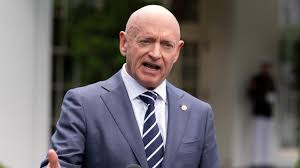
  • Sen. Mark Kelly Takes Stand Against Pentagon Over Alleged First Amendment Violations

    Sen. Mark Kelly’s Lawsuit Against Pentagon Marks Historic Defense of First Amendment and Legislative Independence

    Blue Press Journal – In a bold move underscoring the importance of constitutional protections for lawmakers, Senator Mark Kelly (D-AZ) filed a federal civil lawsuit Monday against the Pentagon, Secretary of Defense Pete Hegseth, the U.S. Navy Department, and Navy Secretary John Phelan. The suit alleges that the Trump administration’s decision to cut Kelly’s military retirement pay—following his participation in a video message to U.S. troops—constitutes an unprecedented attack on legislative independence and the First Amendment. 

    Kelly’s complaint, filed in U.S. District Court in Washington, argues that the government’s actions “trample on protections the Constitution singles out as essential to legislative independence.” His legal team points out that never in American history has the Executive Branch sought to impose military sanctions on a sitting Member of Congress for engaging in political speech disfavored by those in power. 

    “The First Amendment forbids the government and its officials from punishing disfavored expression or retaliating against protected speech,” the lawsuit asserts. “That prohibition applies with particular force to legislators speaking on matters of public policy.” 

    Historical Precedent and Constitutional Stakes

    Kelly’s case touches a nerve in the ongoing debate over separation of powers and free speech. The framers of the Constitution designed the Speech or Debate Clause in Article I, Section 6 to ensure legislative independence, shielding lawmakers from intimidation or retaliation by the executive branch. Past disputes—such as United States v. Johnson (1966), where the Supreme Court protected a congressman’s speeches from executive interference—have reaffirmed that principle. 

    Similarly, cases involving retaliation against political expression—like the landmark New York Times Co. v. United States (1971), which defended the right to publish the Pentagon Papers—reinforce that government actors cannot suppress speech simply because it is inconvenient or critical. Kelly’s lawsuit echoes these foundational rulings, framing the Pentagon’s move as not only punitive but corrosive to the core democratic values of checks and balances. 

    Why This Matters

    Kelly, a former Navy combat pilot and astronaut, has dedicated his career to public service. His military retirement pay is not merely a personal benefit—it symbolizes the nation’s recognition of that service. Punishing him for participating in a video for troops sets a dangerous precedent, risking a chilling effect on lawmakers who speak out on military or national security issues. 

    At a time when political polarization threatens institutional trust, Kelly’s stand represents more than a personal legal battle—it’s a defense of constitutional freedoms that protect all Americans. If the executive branch can wield military benefits as a political weapon against sitting senators, the independence of Congress itself is at stake. 

    Kelly’s lawsuit is not just about his pay—it’s about preserving the voice of legislators in matters of public concern. In standing up to the Pentagon, he’s standing up for the principles that have kept American democracy resilient for over two centuries.