Tag: 2020 Election

  • Analysis of Upcoming Presidential Discourse on Electoral Integrity

    Let’s keep to the facts

    By Winston Wendell

    I’m at my desk, coffee going cold next to a stack of briefing notes, trying to make sense of the noise before Trump’s primetime address on July 16, tonight. Networks keep dropping hints, he’ll talk about “integrity of the U.S. electoral process.” No surprise there. He’s been crying about this topic ever since 2020, and the tension tonight isn’t just about midterms coming up. There’s hype about new declassified intel that’ll supposedly back up claims of foreign meddling.

    After years following these political showdowns, I see three simple layers.

    First, Trump’s story really hasn’t changed much. Since 2016, he’s warned that mail-in ballots and voting machines are risks. His warnings turned into bills like the SAVE America Act, which push for stricter voter ID and tighter registration. Even when his own team ran election security in 2020, he stuck to the same talking point: the system’s rigged and only tough reforms can rebuild trust.

    Second, the intel folks and outside experts don’t buy it. Renee DiResta at Georgetown reminds everyone that Trump’s own appointees led security through the last election, and oversight was intense. Her point, echoed by Lawrence Norden at the Brennan Center, is that you have to separate foreign “influence”, the usual disinformation, from actual “interference,” which would mean someone hacked votes or tampered with databases. All the credible sources say that just didn’t happen in a way that could’ve shifted results. In 2021, the NIC, DOJ, and DHS all agreed: sure, Russia, Cuba, and Venezuela ran influence ops, but nobody messed with the vote counts themselves.

    Third, the courts didn’t see any evidence, either. Over sixty lawsuits challenged the results, none succeeded. The 2020 election was watched closer than any before, and Biden’s 306 electoral votes and seven-million lead stand. In 2022, a bipartisan panel went through everything again and said the same. Despite all the noise and lawsuits, the system worked.

    So what’s Trump going to say? If the new “declassified” info just recycles old news about small-scale influence campaigns, it’ll land as more rerun than revelation. But the goal is pretty transparent: keep doubts alive, energize his base, push for stricter voting rules, and keep this issue hot as 2024 gets closer.

    As the clock drags toward primetime tonight, I wonder what viewers are really in for, a real call for better election security, or another round of practiced accusations, heavy on suspicion, short on facts. All the data points one way. In the end, the question is whether Americans can tell the difference between a real threat and a story told for political effect from Trump’s deranged mind. 

    Fediverse Reactions
  • The Unrelenting Shadow of the Big Lie: Trump’s Assault on Election Integrity

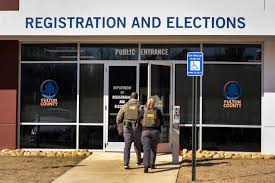
    The bedrock of American democracy—free and fair elections—is under persistent assault from debunked claims of election fraud, notably propagated by Donald Trump. This ongoing narrative, termed the “big lie,” recently escalated in Fulton County, Georgia, where officials are taking extraordinary legal action against the FBI.

    Fulton County Challenges FBI Over Seized Ballots

    Blue Press Journal – Fulton County has requested a federal court to compel the FBI to return ballots and election documents from the 2020 election, seized during a warehouse search near Atlanta. This move responds to Trump’s “persistent demands for retribution over claims, without evidence, that fraud cost him victory in Georgia,” which have been “debunked” by numerous audits and investigations.

    Fulton County’s legal filing directly challenges the FBI’s actions, asserting that the federal government breached the Fourth Amendment, which protects individuals against “unreasonable searches and seizures.” The filing argues the affidavit for the search lacked “probable cause,” instead describing “types of human errors that its own sources confirm occur in almost every election — without any intentional wrongdoing whatsoever.” As the filing succinctly states, “The Fourth Amendment demands ‘probable cause’ — not ‘possible cause.’” Fulton County Chairman Robb Pitts emphasized the gravity, stating, “This case is not only about Fulton County. This is about elections across Georgia and across the nation.”

    Trump’s Rhetoric: A Threat to Democratic Norms

    This incident is not isolated; it aligns with Trump’s stated desire to “take over” elections in Democratic-run areas, referencing “15 places” for targeting. Critics fear this rhetoric could lead to actions “beyond the Constitution,” a concern echoed by U.S. Sen. Mark Warner (D-Va.). Trump’s infamous 2020 call pressuring Georgia’s Secretary of State Brad Raffensperger to “find” 11,780 ballots remains a stark reminder of his willingness to undermine election results.

    Despite a White House spokesperson trying to frame Trump’s remarks as supporting the SAVE Act, Trump claimed that cities like Atlanta face “horrible corruption on elections,” insisting “the federal government should not allow that.” This position directly contradicts the Constitution, which grants states authority over election administration, leading even Republican Senator Thom Tillis (R-N.C.) to state, “Nationalizing elections and picking 15 states seems a little off strategy.” The involvement of figures like Tulsi Gabbard—mentioned as Trump’s Director of National Intelligence—at the Fulton search raises concerns about the boundaries between intelligence and law enforcement.

    Ultimately, the actions in Fulton County and Trump’s rhetoric embody the “big lie,” seeking to erode faith in democratic institutions and undermine elections. As Chairman Pitts said about the seized ballots, “What they’re doing with the ballots now, we don’t know, but if counted fairly, the results will be the same.” Vigilance against those undermining election integrity is crucial.