Tag: 60 Minutes

  • Our Democracy is in Grave Danger without Trustworthy Independent Media

    When powerful figures twist the rules of journalism to fit their narratives, they turn democracy into a silent, sightless puppet.

    BLUE PRESS JOURNAL – In the pantheon of American journalism, 60 Minutes has long stood as a beacon of investigative reporting. But when a flagship media institution like CBS News begins erasing hard-earned stories under political pressure, the implications ripple far beyond the television screen. The recent removal of a segment exposing the Trump administration’s deportation of Venezuelan men to El Salvador—amid broader changes at CBS—serves as a chilling reminder: democracy cannot thrive without independent media. 

    The Case of 60 Minutes and the El Salvador Deportation Story

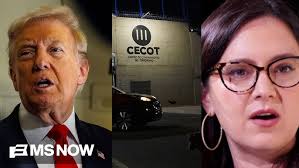
    Last week, 60 Minutes pulled a segment that detailed the plight of Venezuelans forcibly returned to El Salvador, a country the U.S. had long designated as a “safe third country” despite evidence of violent gangs and systemic corruption. The piece, which highlighted harrowing accounts of individuals sent to a Salvadoran prison described as “brutal,” was removed at the behest of Bari Weiss, the newly appointed editor-in-chief of CBS News. Weiss, a prominent anti-“woke” opinion journalist with no prior experience in broadcast journalism, reportedly demanded changes to the segment, citing ideological disputes. 

    This incident follows a broader restructuring at CBS under new owner David Ellison, which includes gutting Diversity, Equity, and Inclusion (DEI) policies and appointing right-wing commentator Kenneth R. Weinstein as an “ombudsman”—a role typically tasked with upholding journalistic ethics, not advancing partisan agendas. These moves signal a troubling shift: media leaders prioritizing ideological conformity over factual rigor. 

    The Historical Cost of Media Suppression

    History shows us what happens when press freedom erodes. During the rise of authoritarian regimes in the 20th century, from Nazi Germany to apartheid South Africa, state-controlled media became tools of propaganda, obscuring truths and justifying human rights abuses. In the U.S., investigative journalism has repeatedly safeguarded democracy—think The Pentagon Papers or Watergate—by holding power to account. When media entities capitulate to political pressure, they enable corruption and misinformation to fester. 

    Today, we see echoes of this danger in the Trump administration’s escalating efforts to suppress criticism, coupled with media conglomerates leaning into partisan realignment. When a network like CBS—a longstanding pillar of the Fourth Estate—starts rewriting narratives under external influence, the public loses a critical check on power. 

    The Role of Independent Media in Democracy

    Independent media isn’t a luxury; it’s a lifeline. According to a 2023 report by the Nieman Foundation for Journalism at Harvard University, public trust in the U.S. media remains alarmingly low, hovering around 30%. Yet, without trustworthy institutions that pursue accountability journalism, democracies face collapse. Media diversity—ideological, cultural, and professional—ensures multiple angles are explored, preventing groupthink and amplifying marginalized voices. 

    The gutting of DEI policies at CBS, for instance, risks narrowing the range of stories told and the sources cited. Meanwhile, the appointment of figures like Weiss and Weinstein raises concerns about editorial decisions driven by ideology over expertise. As the scholar Amanda Taub wrote in The New York Times, “Democracy depends on knowing the truth. If the dominant narrative is manufactured by the powerful, the machinery of liberty grinds to a halt.” 

    An Urgent Appeal for Action

    The removal of the 60 Minutes segment is not an isolated incident but part of a pattern: media owners and political actors increasingly weaponizing editorial control to stifle dissent. While individual shows or networks can be replaced, the erosion of a free press is far harder to reverse.

  • Censored 60 Minutes Segment Exposes CECOT Prison in Canada – WATCH HERE

    BLUE PRESS JOURNAL – In a stunning turn of events, a banned “60 Minutes” segment exposing El Salvador’s notorious CECOT prison made it to air in Canada before being yanked by CBS News chief Bari Weiss. The exposé, which detailed the horrific treatment of Venezuelans deported by the Trump administration, accidentally surfaced on the Global-TV app in Canada. 

    See it at this link:

    https://www.muellershewrote.com/p/watch-the-60-minutes-cecot-segment

    Jason Paris in Canada, who spotted the mistake, recorded about 13 minutes of the segment before it was taken down. HuffPost subsequently obtained and viewed the footage, which featured Venezuelans recounting inhumane conditions at CECOT, including violent security handling. Human Rights Watch confirmed most of the detainees had no criminal records, having sought asylum in the U.S.

    The unfinished segment ended with “60 Minutes” stating that the Department of Homeland Security declined their interview requests and referred all questions to El Salvador’s unresponsive government. Weiss claimed the piece wasn’t ready due to the lack of administration commentary. The incident has sparked controversy and questions about censorship, highlighting the global reach and power of social media to bypass traditional broadcasting constraints.

  • Censorship, Not News: How CBS’s Editorial Interference With ’60 Minutes’ Reeks of Political Maneuvering

    The esteemed reputation of “60 Minutes,” long a bastion of investigative journalism, is under scrutiny following reports of a segment on El Salvador’s notorious CECOT prison being abruptly pulled. The incident, as described by the program’s own executive producer, Tanya Simon, has ignited concerns about editorial independence and the potential for political influence dictating what stories reach the public at CBS News. While the specific incident doesn’t directly involve former President Donald Trump, the opaque nature of the decision-making process feeds into the very criticisms of media bias and “playing politics” that Trump and his allies frequently leverage against mainstream news organizations.

    According to a transcript of a staff meeting obtained by The Washington Post, Tanya Simon informed her colleagues that she “had to comply” with a last-minute decision from CBS News’s editor-in-chief to scrap the CECOT prison segment. Simon reportedly explained, “In the end, our editor-in-chief had a different vision for how the piece should be, and it came late in the process, and we were not in a position to address the notes… We pushed back, we defended our story, but she wanted changes, and I ultimately had to comply.”

    This candid admission from an executive producer tasked with upholding the journalistic standards of “60 Minutes” is deeply troubling. It paints a picture of a story, thoroughly researched and defended by its creators, being sidelined at a late stage by a higher authority with a “different vision.” Such an intervention, especially when the reasons are not clearly articulated, raises a spectrum of questions: What was so objectionable about the piece that it couldn’t be aired? Why did this “different vision” emerge so late in the production cycle? And crucially, what kind of pressure or agenda informs such a powerful, last-minute veto?

    It is imperative to address a significant factual error presented in the initial premise: independent journalist Bari Weiss is not the editor-in-chief of CBS News. However, the core concern remains profound: a senior executive at CBS News reportedly exercised last-minute veto power over a prepared “60 Minutes” segment, forcing its withdrawal despite the production team’s vigorous defense. This highlights a power dynamic where the journalistic integrity and efforts of a dedicated team can be overridden, leaving observers to wonder about the true motivations behind the decision.

    The Specter of “Playing Politics”

    While the pulled CECOT prison segment ostensibly focuses on human rights and conditions in El Salvador—topics far removed from the direct political theater involving Donald Trump—the manner in which it was sidelined plays directly into the broader narrative of media organizations “playing politics.” Trump and his supporters have long accused mainstream media of having an agenda, of curating narratives, and of suppressing stories that don’t align with a particular ideological viewpoint. When a prestigious program like “60 Minutes” has a segment pulled for vague reasons, it inevitably fuels these suspicions.

    Critics could argue that such executive interference diminishes public trust by suggesting that editorial decisions are not solely based on journalistic merit, but perhaps on considerations of optics, political sensitivity, or an unspoken editorial line. In the highly polarized media landscape, where every journalistic action is scrutinized for potential bias, incidents like this lend credence to accusations that major networks are not impartial arbiters of truth but rather active participants in the political arena.

    The lack of transparency around the “different vision” that led to the segment’s cancellation exacerbates concerns. Without a clear explanation for why a seemingly ready piece on a significant global issue was deemed unfit for broadcast, speculation arises, often leaning towards assumptions of political or corporate maneuvering rather than journalistic judgment. To skeptics of media fairness, such actions are seen not as editorial rigor but as attempts to control information, thus “playing politics” by shaping public discourse.

    Eroding Trust and the Path Forward

    The “60 Minutes” controversy serves as a stark reminder of the delicate balance between executive oversight and journalistic independence. When a program’s executive producer feels compelled to “comply” despite having “pushed back” and “defended our story,” it signals a breakdown in that vital equilibrium. This kind of heavy-handed intervention, shrouded in ambiguity, erodes the very trust that news organizations depend on.

    For CBS News, if it wishes to counter the persistent criticisms of political bias—often articulated forcefully by figures like Donald Trump—it must embrace transparency and defend its journalistic integrity. Allowing segments developed by experienced producers to be pulled without rigorous, public justification only adds fuel to the fire of those who believe the media is not merely reporting the news, but actively shaping it to a particular end.

  • Trump’s Pardon of Binance Founder Raises Questions About His Sanity or Honesty

    Blue Press Journal – In a jaw-dropping interview with “60 Minutes” that aired on Sunday, former President Donald Trump claimed he didn’t know Changpeng Zhao, the founder of Binance cryptocurrency exchange, despite pardoning him just two weeks ago. The stunning revelation has sparked outrage and raised serious concerns about Trump’s mental fitness or his willingness to deceive the American public.

    According to “60 Minutes” correspondent Norah O’Donnell, Zhao was convicted in 2023 of violating anti-money-laundering laws, causing “significant harm to U.S. national security” by allowing terrorist groups like Hamas to launder millions of dollars. Trump’s response to O’Donnell’s questioning was astounding: “I don’t know who he is. I know he got a four-month sentence or something like that. And I heard it was a Biden witch hunt.”

    The facts surrounding Zhao’s pardon are damning. Binance, under his leadership, failed to report suspicious activity, including transactions linked to terrorist organizations and child exploitation websites. Zhao pleaded guilty to failing to maintain an effective anti-money-laundering program and stepped down as head of the company. Moreover, Binance has had a suspiciously cozy relationship with the Trump family, supporting their lucrative foray into cryptocurrency ventures.

    The hypocrisy is glaring. Trump’s allies have long railed against President Joe Biden’s use of an autopen, claiming it invalidated his actions. Yet, when confronted with his own pardon of Zhao, Trump claims he didn’t know who he was pardoning. The double standard is stark.

    It’s impossible to give Trump the benefit of the doubt. Either he is suffering from dementia, unable to recall significant decisions he made as President, or he is lying to the American people. The evidence suggests the latter is more plausible, given the lucrative ties between Binance and the Trump family.

    Read full transcript here: