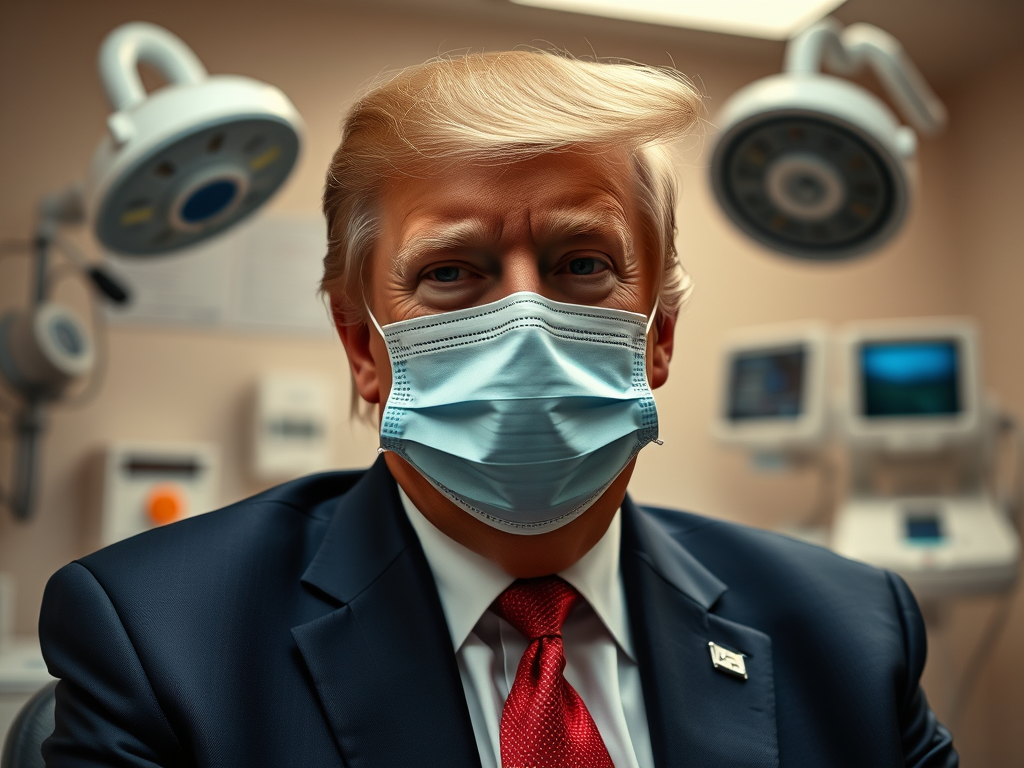
Trump’s Healthcare Plan He Released Today Fails Americans
Blue Press Journal (DC) – Donald Trump’s “affordability framework” for healthcare, touted as a solution to soaring drug prices and insurance premiums, has sparked significant criticism from experts, advocacy groups, and even within Congress. While the plan aims to address a pressing issue—healthcare costs for millions of Americans—the lack of concrete details, its potential risks, and its divergence from existing safeguards under the Affordable Care Act (ACA) render it inadequate, if not outright counterproductive.
Vagueness and Exclusion of Preexisting Conditions
Trump’s proposal calls for allowing individuals to use government subsidies to purchase insurance plans of their choice. However, the plan conspicuously avoids specifying whether these plans would adhere to ACA mandates, including coverage for preexisting conditions. This omission has raised alarm among healthcare advocates, who argue that without such protections, people with chronic illnesses could face discrimination, unaffordable premiums, or outright denial of coverage.
The advocacy group Protect Our Care, among others, has lambasted the plan as a “joke” and a “gimmick,” emphasizing that Trump’s past policies have already weakened consumer protections. For instance, Trump’s administration rolled back the ACA’s community rating rules, allowing insurers to charge older Americans up to three times more than younger counterparts. Critics warn that his latest plan could exacerbate this problem by enabling insurers to offer cheaper, watered-down policies with minimal coverage, leaving vulnerable populations unprotected.
Failure to Address Expired ACA Subsidies
One of the most urgent issues facing healthcare affordability today is the expiration of enhanced ACA premium subsidies, which led to a dramatic spike in costs for millions of Americans. The House passed a bipartisan three-year extension of these subsidies, which the Congressional Budget Office (CBO) estimates would add 3 million insured Americans by 2027 and 4 million by 2028. Yet Trump and Senate Republicans have stalled action on the extension, with Senate Majority Leader John Thune refusing to bring it to a vote.
Instead of supporting the proven solution, Trump advocates for subsidies to go directly to individuals rather than insurers—a shift that lacks a clear implementation strategy or funding mechanism. Protect Our Care accused the administration of “gaslighting” Americans by ignoring the root cause of the crisis: Trump’s own cuts to Medicaid and his refusal to reauthorize subsidies, which have left 22 million Americans in a coverage gap. “The solution isn’t rocket science,” the group stated. “It’s a clean extension of the ACA credits that passed the House.”
Vague Funding and No Concrete Cost-Containment Strategies
Trump’s framework offers a broad outline but provides no specifics on how it would be funded or how it would lower drug prices—a central promise of the proposal. While Trump has long railed against pharmaceutical companies, his administration has failed to implement aggressive price negotiations that could reduce costs. Meanwhile, critics argue that his plan’s focus on subsidizing individuals rather than regulating insurers or drug manufacturers ignores systemic issues like hospital consolidation and insurance company profiteering.
The White House called the plan “comprehensive,” but the absence of legislative text or cost projections has led experts to question its feasibility. Without clear mechanisms to hold insurers and pharmaceutical companies accountable, the plan risks merely shifting costs rather than addressing them.
Undermining the ACA’s Infrastructure
Rather than building on the ACA’s success in expanding coverage to 20 million Americans, Trump’s proposal risks destabilizing the existing healthcare market. By bypassing the ACA’s insurance marketplace rules, the plan could disrupt the system that subsidizes coverage for low- and middle-income families. Furthermore, Trump’s past attempts to repeal the ACA—and his cuts to Medicaid funding—have already eroded trust in his commitment to healthcare access.
Senators who blocked the House’s subsidy extension (via a unanimous consent agreement) underscored the political nature of the stalemate. Protect Our Care accused Trump of prioritizing “tax breaks for billionaires” over the needs of working families, noting that his administration’s policies have “taken a hammer to American healthcare.”
The Need for a Proven, Bipartisan Solution
Trump’s healthcare plan lacks the substance, protections, and funding to meaningfully lower costs or expand access. Its omissions—particularly regarding preexisting conditions and expired subsidies—highlight its reliance on vague promises rather than tangible reforms. In contrast, the House’s three-year ACA subsidy extension, supported by bipartisan majorities and backed by the CBO, offers a clear, data-driven path forward.
As the midterm elections loom, Americans are sick of empty political theater and demand genuine solutions. Congress better wake up and prioritize the House’s critical extension to stabilize insurance markets or risks a public outcry as premiums spiral out of control. Meanwhile, Trump’s so-called plan is nothing more than a hollow shell, fixated on fleeting optics instead of ensuring real healthcare stability for the long haul. As Protect Our Care rightly asserts, “The American people deserve real solutions, not gimmicks.”
 Blue Press Journal