Tag: Alex Pretti shooting

  • Trump’s Comments on Alex Pretti Shooting Raise Alarming Second Amendment Concerns


    Blue Press Journal (DC) – In a recent statement that has sent shockwaves through the conservative base, former President Donald Trump suggested that Alex Pretti, the 37-year-old ICU nurse fatally shot by immigration officers in Minneapolis, was responsible for his own death because he exercised his Second Amendment rights.

    While addressing reporters before departing for a rally in Iowa, Trump was asked about the fatal encounter. Rather than defending the constitutional right to bear arms, the former President placed the blame squarely on the victim. “You can’t walk in with guns,” Trump stated, referring to Pretti’s decision to bring his registered handgun to document agents’ behavior (Source: Reuters).

    The Incident and the Second Amendment

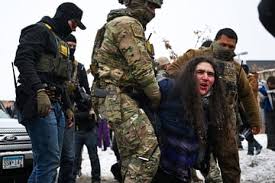
    Alex Pretti, a licensed concealed-carry permit holder, was attempting to assist a woman who had been shoved to the ground by federal agents. According to reports, Pretti was pepper-sprayed, tackled, disarmed, and subsequently shot multiple times. His weapon was holstered and legally owned.

    When pressed by a reporter on how this incident relates to the Second Amendment, Trump doubled down on his restrictive stance: “You can’t walk in with guns. You can’t do that. It’s just a very unfortunate incident.”

    This rhetoric concerns gun rights advocates because the Second Amendment guarantees the right to keep and bear arms, which Pretti was exercising lawfully. By framing a legal gun owner’s presence as the cause of their death, Trump suggests that a firearm’s presence justifies lethal force by the state, regardless of intent or legal standing.

    A Double Standard in Gun Rights Advocacy?

    The silence from major gun rights organizations regarding Trump’s comments is deafening. When FBI Director Kash Patel made similar remarks following the shooting, gun-rights groups were quick to condemn the logic, arguing that there is no law prohibiting the carry of a weapon in public spaces, including protests, provided it is done legally (Source: The Reload).

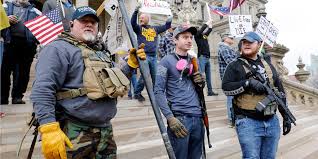
    Critics are now asking: Where are the NRA and other 2A organizations? When a civilian is killed by government agents while legally armed, and a prominent political figure blames the civilian for carrying a weapon, it should trigger an immediate and forceful response from constitutional defenders. Yet, the lack of pushback against Trump suggests a troubling double standard. Pro-Trump groups have frequently brought firearms to protests without facing lethal force, highlighting a disparity in how the right to bear arms is perceived and policed depending on the political affiliation of the carrier.

    The shooting of Alex Pretti is a tragedy that underscores the fragility of Second Amendment rights. However, Donald Trump’s response—blaming a legal gun owner for his own death—signals a shift toward anti-gun rhetoric that prioritizes state authority over individual liberty.
  • Republican Criticism of ICE Intensifies After Minneapolis Shooting

    Blue Press Journal – Jan 26, 2026 – The fatal shooting of 37-year-old American citizen Alex Pretti by federal immigration officers in Minneapolis has triggered bipartisan outrage — and a rare public rebuke of the Trump administration’s immigration enforcement tactics from within the Republican Party itself.

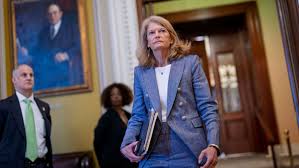
    Senator Lisa Murkowski (R-Alaska) condemned the incident on social media, declaring that Customs and Border Protection (CBP) and Immigration and Customs Enforcement (ICE) “do not have carte blanche” to operate without accountability. Murkowski noted that Pretti was lawfully carrying a firearm with a permit — a fact confirmed by Minneapolis Police Chief Brian O’Hara — and questioned why lethal force was used, especially after video evidence appears to show Pretti being disarmed before shots were fired.

    This is not an isolated incident. Pretti’s killing follows the death of another U.S. citizen, Renee Good, in a separate enforcement action, fueling criticism that the Trump administration’s deployment of CBP and ICE personnel to Democratic-led cities such as Minneapolis, Los Angeles, and Chicago is reckless and politically motivated. 

    Adding to the tension, former Rep. Marjorie Taylor Greene — a staunch Trump ally — urged MAGA supporters to “take off their political blinders” and examine the situation objectively. While reaffirming her support for border security and law enforcement, Greene asserted that “legally carrying a firearm is not the same as brandishing a firearm” and warned against a partisan double standard in assessing excessive force.

    The Department of Homeland Security (DHS) has taken over the investigation, sidelining Minnesota’s Bureau of Criminal Apprehension, prompting concerns from Superintendent Drew Evans about the lack of state-federal cooperation. Meanwhile, Democratic senators are threatening to withhold DHS funding, risking a partial government shutdown, while GOP lawmakers such as Thom Tillis and Bill Cassidy join Murkowski in calling for independent investigations and congressional hearings.

    This growing chorus of Republican dissent underscores a larger problem: the Trump administration’s aggressive immigration enforcement strategy is alienating both sides of the aisle, and ICE’s actions are increasingly seen as undermining public trust — even among the GOP.

  • Minnesota Pushes Back Against Trump’s ICE Surge — Tenth Amendment at the Center of Legal Battle

    Blue Press JournalJanuary 26, 2026 – The ongoing clash between Minnesota state officials and the federal government over Immigration and Customs Enforcement (ICE) operations reached a critical juncture this week, as U.S. District Judge Kate Menendez weighed whether the Trump administration’s deployment of nearly 4,000 ICE agents to the state violates constitutional principles. 

    At the heart of the case is the Tenth Amendment, which reserves to the states or the people any powers not explicitly granted to the federal government. Minnesota’s legal team, led by Assistant Attorney General Brian Carter, argues that “Operation Metro Surge” — the mass influx of federal immigration agents — represents a coercive overreach that undermines state sovereignty and erodes public trust in the republic. 

    A Constitutional Flashpoint

    Judge Menendez acknowledged the “enormous evidentiary record” detailing the fallout from ICE’s aggressive tactics in Minnesota. This includes the fatal shootings of Renee Good and Alex Pretti, incidents that have intensified public outrage and raised urgent questions about accountability. 

    Carter underscored the gravity of the situation: 

    “If this is not stopped right here, right now, I don’t think anybody who is seriously looking at this problem can have much faith in how our republic is going to go in the future.” 

    According to the American Civil Liberties Union (ACLU) and investigative reports from ProPublica, ICE under the Trump administration frequently targeted individuals without serious criminal records, contradicting claims that enforcement is focused on “the worst of the worst.” 

    Accountability Gaps and Body Cameras

    The White House has refused to commit to releasing body camera footage from the federal agent killing of Alex Pretti. Press Secretary Karoline Leavitt sidestepped questions about whether ICE agents should be required to wear body cameras — a standard increasingly adopted by local police departments nationwide for transparency and public trust. 

    The Government Accountability Office (GAO) has repeatedly reported that ICE’s internal oversight mechanisms are inadequate, with insufficient transparency in use-of-force incidents. 

    Local Leaders Sound the Alarm

    Minneapolis City Attorney Sara Lathrop stressed that before the Trump administration’s escalation, Minnesota had just 80 ICE agents — who still managed thousands of arrests. The new surge, she argued, is unnecessary and producing “toxic and lifelong harms” to immigrant communities, where fear of detention now dictates daily life. 

    Lathrop urged Menendez to impose an immediate pause on ICE’s expanded operations, warning that without judicial intervention, constitutional rights will continue to be “trampled on.” 

    What’s at Stake

    This case is more than a dispute over immigration enforcement numbers — it’s a test of how far a presidential administration can push federal power into state jurisdictions without consent. If Judge Menendez sides with Minnesota, it could set a precedent limiting future federal overreach in immigration matters. 

    For now, the decision rests with the court. But one thing is clear: unchecked federal enforcement, lacking transparency and accountability, risks deepening mistrust between communities and the government — a danger to both constitutional balance and public safety.