Tag: Arctic Security

  • Trump’s Greenland Fixation and False Claims at Davos, About NATO Risk Damaging U.S. Alliances

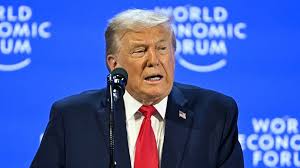
    Donald Trump reignited his Greenland takeover idea at the World Economic Forum in Davos, misrepresented NATO’s history, and repeated false 2020 election claims

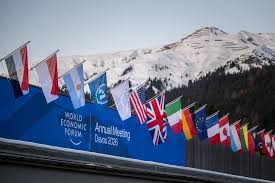
    Blue Press Journal – At the 2026 World Economic Forum in Davos, Switzerland, former President Donald Trump reignited his unusual obsession with acquiring Greenland — again suggesting that Denmark should hand over the Arctic territory to the United States. Speaking to an audience of European leaders, Trump dismissed Denmark’s sovereignty over Greenland and falsely claimed that NATO has “never done anything” for the United States. 

    Trump’s remarks drew concern among diplomats and policy analysts, as they not only misrepresented historical facts but also undermined the credibility of America’s commitments to its allies. According to BBC News, Trump has repeatedly floated the idea of buying Greenland since 2019, despite Danish officials calling the proposal “absurd.” His comments in Davos revived tensions with Denmark and risked alienating NATO members at a time when global security cooperation is crucial.

    Greenland: A Strategic but Sovereign Territory

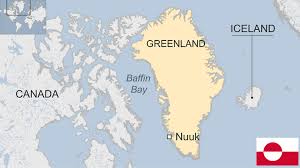
    Greenland, a self-governing territory within the Kingdom of Denmark, holds significant strategic value due to its Arctic location and natural resources. Trump claimed the U.S. should have kept Greenland after World War II — a statement that ignores the fact that Greenland was never formally U.S. territory. His speech inaccurately portrayed Denmark as incapable of defending itself, citing its rapid fall to Nazi Germany in 1940 as justification for American ownership. 

    Security experts note that such rhetoric undermines the principle of national sovereignty, a cornerstone of international law. As Reuters reported, Danish leaders have reaffirmed that Greenland is “not for sale” and that U.S.-Danish relations should be based on mutual respect, not coercion.
    NATO’s Proven Commitment to U.S. Security

    Trump’s claim that NATO has “never done anything” for America is demonstrably false. The North Atlantic Treaty Organization invoked its Article 5 mutual defense clause for the first and only time after the September 11, 2001 terrorist attacks — committing all member states to the defense of the United States. NATO troops fought alongside U.S. forces in Afghanistan for nearly two decades, as documented by The Guardian

    Far from being a one-sided arrangement, NATO provides the U.S. with strategic military bases, intelligence-sharing networks, and rapid-response capabilities that strengthen American security. The alliance is widely regarded by defense analysts as a cornerstone of Western stability in the face of evolving threats from Russia, China, and global terrorism.

    Election Claims and Tariff Threats

    In addition to his Greenland comments, Trump repeated false claims that the 2020 U.S. presidential election was “rigged” — assertions rejected by U.S. courts, state election officials, and the Department of Justice. As CNN reported, more than 60 lawsuits filed by Trump and his allies failed due to lack of evidence, and multiple recounts confirmed President Joe Biden’s victory. 

    Trump also threatened economic retaliation against NATO allies that participated in military exercises in Greenland, proposing tariffs as high as 25%. Economists warn such tariffs would harm American businesses and consumers, contradicting Trump’s claim that foreign nations bear the cost.

    Undermining Alliances in a Time of Global Challenges

    Foreign policy analysts caution that Trump’s rhetoric at Davos risks weakening U.S. alliances at a time when coordinated action is essential to address security challenges, climate change, and economic instability. NATO remains one of America’s most valuable strategic partnerships, with proven benefits that extend far beyond military defense. 

    By dismissing NATO’s contributions and attempting to strong-arm allies over Greenland, Trump’s approach stands in stark contrast to the cooperative spirit that has defined transatlantic relations for decades. As tensions rise in the Arctic and beyond, reaffirming trust and respect within NATO will be critical to safeguarding both U.S. interests and global security.
  • Transatlantic Rift Deepens as Trump’s Greenland Tariffs Ignite Calls for EU ‘Trade Bazooka’

    Donald Trump’s punitive tariffs on European nations supporting Greenland security have sparked unprecedented EU retaliation talks, risking a historic breakdown in transatlantic relations.

    Blue Press Journal – The fragile fabric of transatlantic relations is fraying at an alarming pace, as U.S. President Donald Trump’s decision to impose tariffs on European nations involved in Greenland security exercises triggers outrage across the European Union. What began as a geopolitical skirmish over the Arctic has rapidly escalated into a confrontation that EU leaders say could fundamentally reshape the balance of power between Washington and Brussels. 

    At the heart of the crisis is Trump’s move to punish countries — including France, Germany, Sweden, Finland, Norway, and the Netherlands — that deployed troops to participate in a Danish-led military exercise in Greenland. The exercise, part of a broader European effort to secure the Arctic amid rising Russian and Chinese activity, was described by participating governments as entirely defensive and non-provocative. Yet Trump’s administration framed the deployments as a direct affront to U.S. interests, slapping punitive tariffs in a move critics say is both reckless and diplomatically corrosive. 

    Europe’s Retaliatory Options: From Restraint to Confrontation

    For months, EU leaders have tolerated Trump’s unpredictable foreign policy in the hope of preserving NATO unity. They have weathered his wavering support for Ukraine, his pressure for lopsided trade agreements, and his demands for massive defense spending increases. But the Greenland tariffs appear to have crossed a line. 

    French President Emmanuel Macron has emerged as one of the loudest voices demanding a robust response, calling for the activation of the EU’s Anti-Coercion Instrument — a powerful trade retaliation tool originally designed to counter China’s economic intimidation. Deploying it against the United States would be unprecedented, signaling a profound shift in the EU’s willingness to confront Washington head-on. 

    “The EU must resist humiliation and economic vassalization,” said Jérémie Gallon, a former French diplomat now based in Washington. His sentiment echoes a growing consensus among centrist and left-leaning EU lawmakers who argue that Europe must assert itself as a geopolitical actor rather than simply react to U.S. pressure. 

    Diplomatic Fallout and Strategic Calculations

    Even leaders with warmer ties to Trump, such as Italian Prime Minister Giorgia Meloni, have acknowledged the severity of the rift. While urging dialogue to avoid escalation, Meloni conceded that tariffs on NATO allies “are a mistake” and risk undermining shared security goals. 

    The European Parliament is already signaling its readiness to derail ratification of a recently negotiated EU-U.S. trade deal — a move that would have been unthinkable only months ago. Blocking the agreement would be a symbolic yet potent act, but triggering the Anti-Coercion Instrument would represent a direct economic counterstrike. 

    The Bigger Picture: Europe’s Geopolitical Awakening

    This crisis coincides with the EU’s broader push for strategic autonomy. European Commission President Ursula von der Leyen has announced a new security framework, while plans to bolster cybersecurity are set to be unveiled imminently. The Greenland standoff may accelerate this trajectory, forcing Europe to invest in defense and economic resilience without relying on U.S. goodwill. 

    The fact that Trump’s tariffs came just days after the EU signed a major trade deal with Latin America adds insult to injury, deepening perceptions that the U.S. is willing to use economic coercion to undermine Europe’s global aspirations. 

    As EU leaders return from Latin America to Brussels for emergency talks, the stakes could not be higher. The decision they face — whether to retaliate against their most powerful ally — may define Europe’s role on the world stage for decades. 

  • Why Annexing Greenland Would Be a Strategic Mistake for the United States 

    President Trump’s push to acquire Greenland threatens to fracture NATO. Here is why the U.S. military presence is already secure, and why upsetting the world order over the Arctic is a geopolitical error.


    Blue Press Journal – In recent weeks, the geopolitical chatter has shifted drastically toward the Arctic, with President Donald Trump reviving a controversial ambition: the acquisition of Greenland. From floating the idea of a purchase to alluding to the use of military force, the rhetoric has escalated quickly.

    However, a closer look at the geopolitical landscape, existing military infrastructure, and the unwavering will of the Greenlandic people reveals that upsetting the current world order to seize this territory is not just diplomatically volatile—it is strategically unnecessary.

    A Sovereign Nation, Not a Commodity

    The most glaring flaw in the proposal to “take” Greenland is the dismissal of its sovereignty. Greenland is not uninhabited real estate; it is a self-governing nation within the Kingdom of Denmark.

    In a unified and emphatic statement, European leaders—including French President Emmanuel Macron, German Chancellor Friedrich Merz, and UK Prime Minister Keir Starmer—declared that “Greenland belongs to its people.” They made it clear that decisions regarding the island are for Denmark and Greenland alone.

    This sentiment is echoed on the ground. In a rare show of political unity, Greenland’s party leaders issued a joint statement firmly rejecting Trump’s overtures. “We don’t want to be Americans, we don’t want to be Danes, we want to be Greenlanders,” the statement read. This aligns with public sentiment; a poll conducted last January found that 85 percent of the population opposes joining the United States.

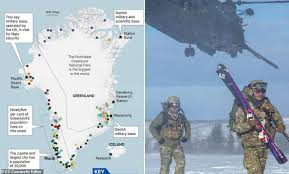
    Furthermore, the claim that the U.S. needs to seize the island for “national security” ignores the fact that Washington already maintains a significant military footprint there. The Pituffik Space Base (formerly Thule Air Base) provides critical early warning and space surveillance capabilities. The U.S. does not need to own Greenland to secure it; the current alliance structure guarantees access.

    The Cost to NATO and the West

    Beyond the question of necessity lies the question of cost. Attempting to force the acquisition of Greenland would likely shatter the Western alliance system.

    Denmark asserts control over Greenland in the same legal framework the United States uses to govern Alaska or Vermont. If Washington were to use military force against Copenhagen—a NATO ally—it would trigger a constitutional crisis within the alliance. It would mark the first time in history that a NATO member has threatened military action against another.

    Such a move would validate the narratives of adversaries like Russia and China by fracturing the unity of the West. As Danish Prime Minister Mette Frederiksen noted in her joint statement with European leaders, security in the Arctic must be achieved collectively. Unilateral aggression undermines the very principles of sovereignty and territorial integrity that the U.S. and its allies are sworn to protect.

    Climate Integrity vs. Resource Extraction

    Finally, there is the matter of values. Trump’s vision for Greenland often implies resource extraction, yet the island has charted its own course regarding the climate crisis. In 2021, Greenland passed legislation banning all new oil exploration and drilling. The government described this as a “natural step,” signaling that the nation prioritizes climate integrity over economic exploitation.

    Ignoring this local governance to pursue resource interests highlights a fundamental misunderstanding of the territory’s priorities.

    The rhetoric of acquiring Greenland makes for sensational headlines, but the reality is a diplomatic minefield. The United States already possesses the military access it needs, the indigenous population is vehemently opposed to the idea, and the move would alienate America’s closest allies in Europe.

    In the Arctic, security is best maintained through cooperation and respect for sovereignty, not through the upending of the post-World War II order.