Tag: budget bill

  • Rural Hospitals Face Uncertain Future and Closures After Trump Signs Budget Bill into Law

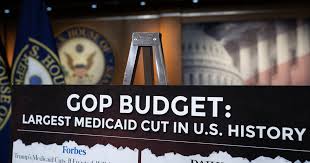
    Blue Press Journal: In a move that has left many in the healthcare community reeling, President Donald Trump signed a budget bill into law on July 4 that is expected to have devastating consequences for rural hospitals across the country. The legislation, which includes significant cuts to Medicaid, is estimated to put 380 independent rural hospitals “at serious risk of closure nationwide,” according to Families USA, a non-partisan consumer health care nonprofit.

    The impact of these cuts will be felt disproportionately in rural areas, where residents rely heavily on Medicaid for their healthcare needs. In an effort to mitigate the damage, GOP lawmakers included a $50 billion “Rural Health Transformation Fund” in the bill, ostensibly to support struggling rural health facilities. However, public health experts argue that this amount is woefully insufficient to offset the estimated $137 billion in losses that rural health facilities are expected to incur under the legislation.

    Furthermore, the distribution methods for the $50 billion fund have been criticized as opaque and seemingly partisan. This lack of transparency has raised concerns that the funds may not be allocated in a way that effectively addresses the needs of rural hospitals and the communities they serve.

    The situation is further complicated by the fact that rural hospitals will be forced to absorb the estimated 16 million uninsured patients that the Medicaid cuts are likely to create. This will put an unsustainable strain on already-overburdened healthcare systems, exacerbating existing shortages of health professionals in rural areas.

    The potential consequences of these cuts are dire, with many rural hospitals facing the very real possibility of closure. This would not only deprive communities of essential healthcare services but also have a devastating impact on local economies. As the full effects of the budget bill begin to unfold, it remains to be seen whether the $50 billion Rural Health Transformation Fund will be enough to stem the tide of hospital closures and ensure that rural communities continue to have access to quality healthcare.

  • KILL the BILL

    Elon Musk has gone beyond merely labeling the bill a “disgusting abomination”; he has made it clear that he intends to actively oppose it.

    The former White House advisor has intensified his criticism of the large Republican bill that proposes significant tax cuts and Medicaid reductions, urging Americans to contact their lawmakers and oppose the legislation. While Musk’s reasons differ from those of Democrats, both sides share a common goal: to avoid increasing the national debt further. Historically, Republican presidents have contributed slightly more to the national debt per term than their Democratic counterparts, according to inflation-adjusted data from the U.S. Treasury Department and the Bureau of Labor Statistics dating back to 1913. Notably, President Trump is the largest contributor, having added an estimated $7.1 trillion to the national debt during his first term from 2016 to 2020.

    This legislation is intended to represent the full scope of President Donald Trump’s domestic policy agenda for a his second term, making Musk’s strong opposition—just one week after stepping down as a senior adviser to the president—particularly noteworthy.

    The Republican bill combines over $4 trillion in tax cuts and new spending with less than $2 trillion in cuts to Medicaid and other social programs, resulting in a net deficit increase of $2.4 trillion, according to the Congressional Budget Office. The tax cuts predominantly benefit the wealthy and corporations, which some argue are not paying their fair share.

    On Wednesday, Musk posted, “A new spending bill should be drafted that doesn’t massively grow the deficit and increase the debt ceiling by 5 TRILLION DOLLARS.”

    Musk is asking the public to trust someone who can land rockets vertically and develop self-driving cars more than the Republican lawmakers who passed this bill by a single vote under pressure from Trump and wealthy interests.

    Now, the question remains whether the Republican-controlled Senate will stand firm or yield to Trump and his affluent allies.

  • GOP Bill Provision Threatens Legal Challenges to Trump

    Concern is intensifying over a single paragraph hidden deep within the GOP bill, as its implications may ripple through our society in unprecedented ways.

    A recently passed spending bill by the GOP-controlled House of Representatives contains a concerning provision that could significantly hinder legal challenges against the Trump administration. This clause would require individuals challenging the administration to post a bond, a financial burden that many cannot afford. As a result, it would effectively restrict the ability to contest the powerful actions of one of the most formidable figures in the country to those who are wealthy.

    In the text found on pages 562 and 563 of the 1,116-page bill, concerns have been raised for reasons unrelated to America’s budget, safety-net programs, or national debt. The cited paragraph references a federal rule regarding civil court procedures, which mandates that any individual seeking an injunction or temporary restraining order to prevent an action by the Trump administration must post a financial bond.

    Democracy watchdogs are alarmed by this provision, fearing it will create an environment where only affluent individuals or entities can afford to stand up against an administration that has repeatedly demonstrated its contempt for oversight and judicial authority. The provision would increase the costs associated with pursuing legal actions against Trump’s policies, particularly for those seeking injunctions against presidential orders or directives. This added financial hurdle represents a clear tactic to discourage opposition and protect the administration from accountability.

    By implementing this financial barrier, the intention to shield the Trump administration from judicial scrutiny becomes evident. Both the House and the Senate must reject this measure to uphold the integrity of judicial power and ensure that all individuals have the ability to challenge governmental overreach, regardless of their financial status.

  • Impact of GOP Budget Bill on U.S. Debt: A $3.8 Trillion Concern

    The recent passage of the Republican budget bill vote, passed under cover of a late night vote, has raised significant concerns about the future of U.S. debt levels, with several analyses suggesting a troubling trajectory. Over the next decade, this GOP bill could potentially cost the nation a staggering $3.8 trillion, as highlighted in a report earlier this month by the Joint Committee on Taxation. This report meticulously examined the implications of the proposed tax measures in comparison to spending cuts.

    Wall Street is already feeling the tremors of these risks. On Friday, Moody’s Ratings downgraded the nation’s debt, citing the likelihood that the new bill could add an alarming $4 trillion to the federal primary deficit—excluding interest payments—over the next ten years. Economists and policy experts alike warn that this surge in debt could ultimately constrain federal spending, as the U.S. would likely face escalating interest payments. Such a scenario could jeopardize funding for essential programs like Social Security, which is already under strain as baby boomers reach retirement age. Additionally, it could hinder investments in critical infrastructure initiatives that are vital for stimulating economic growth.

    While the bill does propose some spending cuts, recent analyses indicate that these reductions are insufficient to counterbalance the extensive tax breaks. The nonpartisan Bipartisan Policy Center estimated in a May 14 analysis that the tax cuts would amount to a staggering $7.7 trillion over the next decade, while the proposed spending cuts would only offset $3.9 trillion during the same period. This results in a significant shortfall of $3.8 trillion—an arithmetic reality that prompted Moody’s to downgrade its rating on U.S. debt from the highest tier of Aaa to Aa1.

    Moreover, the implications of the proposed GOP bill raise significant concerns for the lowest-income Americans. According to a May 19 analysis from the Penn Wharton Budget Model, a research group at the University of Pennsylvania that evaluates the fiscal impact of public policies, the bottom 20% of earners—despite potential savings from tax cuts—will face a $1,035 reduction in 2026 when the cuts to Medicaid and other programs are taken into account, affecting middle class earners.

    Just remember, Trump has sent a wave of bankruptcy crashing through several of his businesses, and now, against all odds, MAGA has handed over the country’s checkbook to him. God help us all!

  • The One Big, Ugly Bill

    On Thursday morning, the House of Representatives narrowly passed a bill with a vote of 215 to 214. In a stunning display of unity, all Democrats and two brave Republicans stood against it, while one Republican opted for the ever-mysterious “present” vote.

    Dubbed the “One Big Beautiful Bill Act,” this legislative masterpiece combines a staggering $1 trillion in cuts to federal health and food programs with nearly $4 trillion in tax cuts, primarily benefiting billionaires with just crumbs for the middle class. Who needs health insurance anyway? After all, the Congressional Budget Office has estimated that these spending cuts could leave around 8 million Americans without health coverage, primarily due to the slashing of Medicaid. But hey, who’s counting?

    The Congressional Budget Office also chimed in this week, warning that the legislation would significantly reduce resources for lower-income households, thanks to its generous cuts to Medicaid and the Supplemental Nutrition Assistance Program and raise the national debt!  

    “This is one big, ugly bill that House Republicans are trying to jam down the throats of the American people, under the cover of darkness,” declared House Democratic leader Hakeem Jeffries (N.Y.) in a passionate speech just before the vote. “This legislation will not make life better for the American people.” 

  • The GOP’s Claims of Deficit Reduction: A Deceptive Facade

    We often hear the Republican Party touting its commitment to reducing the national deficit. However, the reality is starkly different. Their actions reveal a troubling truth: they prioritize tax giveaways for the wealthy over the financial well-being of the average American. This latest tax bill is a prime example, offering massive tax cuts to affluent individuals and corporations while simultaneously exacerbating the deficit and stripping healthcare from millions.

    Despite their rhetoric, Republican leaders in Congress are championing a tax proposal that would not only funnel resources to the rich by dismantling essential programs for working-class families but would also add a staggering $3.8 trillion to the U.S. deficit. Maintaining the top income tax rate cut means that a shocking 25% of the benefits will flow directly to the top 1% of earners.

    To put this into perspective, the average household in the top 1% earns approximately $2.5 million annually and stands to gain a tax break of around $55,000. Meanwhile, the top 400 taxpayers could receive an eye-popping $800 million in tax cuts each year. In contrast, working families can expect a meager benefit of only $40 to $50. One particularly egregious provision grants tech giants like Apple, Amazon, Google, Meta, and Tesla a staggering $75 billion in tax cuts.

    As it stands, the national debt has ballooned to $36.2 trillion. The Joint Committee on Taxation (JCT) recently released an analysis indicating that the Republican tax bill would cost an additional $3.8 trillion through 2034, further inflating the deficit rather than reducing it.

    It is clear that the GOP is heading in the wrong direction, misleading the public and voters alike. The time has come for accountability and transparency in our nation’s fiscal policies. We must demand a tax system that prioritizes the needs of all Americans, not just the wealthy elite.

  • Mike Johnson’s Budget: A Betrayal of His Constituents

    The saying goes “people before politics,” but it seems like House Speaker Mike Johnson (R-La.) and his deep-red congressional district have never heard of it. Shockingly, approximately one in four residents under the age of 65 in Johnson’s district rely on Medicaid for health insurance, while one in five residents depend on food stamps to afford groceries. Despite this, the budget resolution passed by the House last month on a party-line vote would cut Medicaid by $880 billion and slash food stamp spending by $230 billion.

    Johnson’s budget, supported by Republicans, will not only hurt his senior citizens but also a large percentage of his voters. The Republican budget package would expand Trump’s 2017 tax cuts through Fiscal Year 2035, costing an estimated $4.5 trillion according to the Congressional Budget Office. The Center on Budget and Policy Priorities (CBPP) has criticized this legislation as skewed towards the rich, expensive, and failing to deliver on its promises. The CBPP estimated that the richest households would receive more than triple the tax cuts compared to lower and middle-class households.

    It is truly baffling that Johnson is voting for and promoting budget policies that would harm his own constituents. It appears that his voters are unknowingly voting against their own interests. The hypocrisy and disregard for the well-being of the people in his district is both shocking and disappointing.

  • House Republicans have ignored their constituents and chosen their billionaire donors.

    The Republicans are currently discussing the possibility of cutting Medicare, Medicaid, Social Security, VA benefits, and other essential programs that millions of Americans rely on after their passage of a budget bill Tuesday in a party line vote. All but one republican voting for with Democrats all against. This is all in order to push through a $4.5 trillion tax cut that Trump wanted that primarily benefits the wealthy.

    A recent national survey shows that most voters are totally not cool with Congress giving more tax cuts to rich people (76% are against it) and big corporations (70% think it’s a bad idea). Cutting Medicaid? No way, that’s just not acceptable. Overall, voters were even more against that, with 82 percent saying it’s a bad move.

    House Republicans hastily passed their budget blueprint late Tuesday, with President Donald Trump pressuring members to vote in favor of the resolution. This resolution kickstarts the process of making drastic cuts to Medicaid and other vital programs to fund massive tax cuts for the rich.

    Their bill will cause immense hardship for hardworking Americans, slashing Medicaid and the Affordable Care Act to fund lavish tax breaks for billionaires like Elon Musk. Instead of listening to their constituents, House Republicans have chosen to prioritize the interests of their billionaire donors and party leaders by pushing an extreme budget bill that benefits the wealthy elite at the expense of workers and families.

    The resolution mandates the House Energy and Commerce Committee to propose changes to reduce the deficit by at least $880 billion over the next decade. This committee has authority over Medicaid, which Republicans have repeatedly targeted for cuts. In fact, leaked GOP documents suggest over $2 trillion in cuts to the program.

    Republicans have also rejected Democratic amendments that would have prevented cuts to Medicaid and SNAP in the upcoming budget reconciliation process. Their budget bill will strip essential services from millions of working and middle-class Americans to fund Trump’s $5 trillion in tax breaks for the wealthy.

    The cost of extending tax cuts for the top 1% alone is estimated at $1.1 trillion. This blatant disregard for the well-being of everyday Americans in favor of the wealthy elite is unacceptable and must be challenged.