Tag: CBS

  • Censored 60 Minutes Segment Exposes CECOT Prison in Canada – WATCH HERE

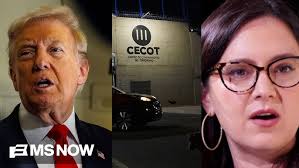
    BLUE PRESS JOURNAL – In a stunning turn of events, a banned “60 Minutes” segment exposing El Salvador’s notorious CECOT prison made it to air in Canada before being yanked by CBS News chief Bari Weiss. The exposé, which detailed the horrific treatment of Venezuelans deported by the Trump administration, accidentally surfaced on the Global-TV app in Canada. 

    See it at this link:

    https://www.muellershewrote.com/p/watch-the-60-minutes-cecot-segment

    Jason Paris in Canada, who spotted the mistake, recorded about 13 minutes of the segment before it was taken down. HuffPost subsequently obtained and viewed the footage, which featured Venezuelans recounting inhumane conditions at CECOT, including violent security handling. Human Rights Watch confirmed most of the detainees had no criminal records, having sought asylum in the U.S.

    The unfinished segment ended with “60 Minutes” stating that the Department of Homeland Security declined their interview requests and referred all questions to El Salvador’s unresponsive government. Weiss claimed the piece wasn’t ready due to the lack of administration commentary. The incident has sparked controversy and questions about censorship, highlighting the global reach and power of social media to bypass traditional broadcasting constraints.

  • Censorship, Not News: How CBS’s Editorial Interference With ’60 Minutes’ Reeks of Political Maneuvering

    The esteemed reputation of “60 Minutes,” long a bastion of investigative journalism, is under scrutiny following reports of a segment on El Salvador’s notorious CECOT prison being abruptly pulled. The incident, as described by the program’s own executive producer, Tanya Simon, has ignited concerns about editorial independence and the potential for political influence dictating what stories reach the public at CBS News. While the specific incident doesn’t directly involve former President Donald Trump, the opaque nature of the decision-making process feeds into the very criticisms of media bias and “playing politics” that Trump and his allies frequently leverage against mainstream news organizations.

    According to a transcript of a staff meeting obtained by The Washington Post, Tanya Simon informed her colleagues that she “had to comply” with a last-minute decision from CBS News’s editor-in-chief to scrap the CECOT prison segment. Simon reportedly explained, “In the end, our editor-in-chief had a different vision for how the piece should be, and it came late in the process, and we were not in a position to address the notes… We pushed back, we defended our story, but she wanted changes, and I ultimately had to comply.”

    This candid admission from an executive producer tasked with upholding the journalistic standards of “60 Minutes” is deeply troubling. It paints a picture of a story, thoroughly researched and defended by its creators, being sidelined at a late stage by a higher authority with a “different vision.” Such an intervention, especially when the reasons are not clearly articulated, raises a spectrum of questions: What was so objectionable about the piece that it couldn’t be aired? Why did this “different vision” emerge so late in the production cycle? And crucially, what kind of pressure or agenda informs such a powerful, last-minute veto?

    It is imperative to address a significant factual error presented in the initial premise: independent journalist Bari Weiss is not the editor-in-chief of CBS News. However, the core concern remains profound: a senior executive at CBS News reportedly exercised last-minute veto power over a prepared “60 Minutes” segment, forcing its withdrawal despite the production team’s vigorous defense. This highlights a power dynamic where the journalistic integrity and efforts of a dedicated team can be overridden, leaving observers to wonder about the true motivations behind the decision.

    The Specter of “Playing Politics”

    While the pulled CECOT prison segment ostensibly focuses on human rights and conditions in El Salvador—topics far removed from the direct political theater involving Donald Trump—the manner in which it was sidelined plays directly into the broader narrative of media organizations “playing politics.” Trump and his supporters have long accused mainstream media of having an agenda, of curating narratives, and of suppressing stories that don’t align with a particular ideological viewpoint. When a prestigious program like “60 Minutes” has a segment pulled for vague reasons, it inevitably fuels these suspicions.

    Critics could argue that such executive interference diminishes public trust by suggesting that editorial decisions are not solely based on journalistic merit, but perhaps on considerations of optics, political sensitivity, or an unspoken editorial line. In the highly polarized media landscape, where every journalistic action is scrutinized for potential bias, incidents like this lend credence to accusations that major networks are not impartial arbiters of truth but rather active participants in the political arena.

    The lack of transparency around the “different vision” that led to the segment’s cancellation exacerbates concerns. Without a clear explanation for why a seemingly ready piece on a significant global issue was deemed unfit for broadcast, speculation arises, often leaning towards assumptions of political or corporate maneuvering rather than journalistic judgment. To skeptics of media fairness, such actions are seen not as editorial rigor but as attempts to control information, thus “playing politics” by shaping public discourse.

    Eroding Trust and the Path Forward

    The “60 Minutes” controversy serves as a stark reminder of the delicate balance between executive oversight and journalistic independence. When a program’s executive producer feels compelled to “comply” despite having “pushed back” and “defended our story,” it signals a breakdown in that vital equilibrium. This kind of heavy-handed intervention, shrouded in ambiguity, erodes the very trust that news organizations depend on.

    For CBS News, if it wishes to counter the persistent criticisms of political bias—often articulated forcefully by figures like Donald Trump—it must embrace transparency and defend its journalistic integrity. Allowing segments developed by experienced producers to be pulled without rigorous, public justification only adds fuel to the fire of those who believe the media is not merely reporting the news, but actively shaping it to a particular end.

  • CBS Faces Backlash Over “Late Show” Cancellation Amid Allegations of Political Motives

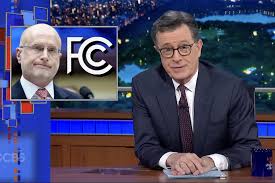
    In a move that has sparked widespread criticism and skepticism, CBS has announced the cancellation of “The Late Show with Stephen Colbert,” effective May 2026. The decision comes just three days after Colbert used his platform to lambast the network’s parent company, Paramount, over a $16 million legal settlement with President Donald Trump.

    Colbert had been vocal about the settlement, which was reached over an interview with former Vice President Kamala Harris that aired on “60 Minutes” ahead of the 2024 election. The host called the settlement a “big fat bribe” to end a “nuisance lawsuit,” and has been a frequent critic of Trump on his show.

    CBS executives have attempted to downplay any suggestion that the cancellation was motivated by politics, instead attributing the decision to financial considerations. However, many are expressing doubt about the network’s claims, citing the timing of the announcement and Colbert’s history of criticizing Trump.

    Senator Bernie Sanders (I-Vt.) was among those who questioned the coincidence of the cancellation coming so soon after Colbert’s comments on the settlement. “It’s hard to believe that this is just a coincidence,” Sanders said.

    Parker Molloy, writing for The New Republic, was more blunt in her assessment. “The Late Show isn’t dying because people stopped watching late-night TV,” she wrote. “It’s being murdered because Stephen Colbert spent the last decade being one of Trump’s most persistent critics on network television, and the billionaires about to take over CBS need Trump’s approval for their merger.”

    The cancellation of “The Late Show” has sparked a wider debate about the role of corporate interests in shaping the media landscape and the potential for political censorship. As the media industry continues to evolve and consolidate, many are worried about the implications for free speech and the ability of journalists and commentators to hold those in power accountable.